ALSOS Behavioral Health
Comparison facts and sources
Network of campus-specific drug and alcohol treatment centers. Current location pages list medical detox, residential treatment, medication-assisted treatment and, at some campuses, outpatient care. · United States network of nine Grove Recovery centers across Arkansas, Colorado, Indiana, Kentucky and Ohio
- Published fee information
- Quote required
- Before admission
- Landmark Recovery now operates as ALSOS Behavioral Health, and current facilities use individual Grove Recovery names. This is a network profile, not one campus, and the legacy slug is intentionally preserved.
- Continuing care
- The corporate site does not publish one universal aftercare program. Continuing-care, alumni and outpatient options must be confirmed for the selected Grove Recovery center.
Source record ·
Provider-published information checked October 14, 2026.
Luxury rehab comparison · Fees and inclusions · Selection methodology
Landmark Recovery now operates as Alsos Behavioral Health. The former Landmark website redirects to the Alsos network, whose current centers use individual Grove Recovery names. This profile covers the network rather than a single campus.
Alsos currently lists nine open Grove Recovery centers across Arkansas, Colorado, Indiana, Kentucky and Ohio. The published levels of care vary by center: medical detox, residential addiction treatment and medication-assisted treatment are listed at multiple campuses, while outpatient treatment is explicitly listed at Cedar Grove Recovery on Fern Valley Road in Louisville. Golden Grove Recovery opened in Louisville on September 28, 2026 with residential and medication-assisted treatment. Confirm the exact campus and level of care before arranging admission.
The network admissions line is 615-234-9155 and is advertised as answered around the clock. Alsos states that Medicaid is accepted at most centers and that coverage is verified for the selected campus. No fixed network-wide program fee, tax treatment, standard duration or universal age range was verified. Request a campus-specific written estimate.
Understanding the ALSOS network and its separate centers
ALSOS Behavioral Health’s network overview identifies the company as the owner and operator of the Grove Recovery centers. The individual names identify actual treatment locations, rather than different packages at one resort. A person comparing the network should therefore decide which center can address their needs before comparing travel, accommodation, or price. An admission offer should name the receiving center, its street address, the planned level of care, and the team responsible for the handoff.
The company reports Joint Commission accreditation across its nine centers and additional ASAM level-of-care certification through CARF for Cedar Grove and Painted Grove. These are different credentials, held at the center level. They do not establish that all locations offer identical services or that a particular person will qualify. Ask the selected center which credential covers the proposed program and whether any part of treatment will occur elsewhere.
Checking coverage across a multistate network
The ALSOS homepage says Medicaid is accepted at most centers and that coverage is checked during the admissions call. That qualification matters: a network operating in five states does not have one interchangeable Medicaid arrangement. Confirm both the state program and the exact managed-care plan for the chosen location. A favorable conversation about insurance is different from a completed authorization for a specific course of care.
Request an explanation of any patient responsibility, services outside the authorized plan, and the process if further treatment becomes clinically appropriate. Someone who has been refused elsewhere can explain the previous barrier, such as medical complexity or an insurance mismatch, without assuming the same answer will apply here. The company’s stated willingness to consider complex needs is an invitation to assessment; it cannot establish suitability or an available bed by itself.
Oak Grove in Westerville: treatment near Columbus
Oak Grove Recovery describes a Westerville campus offering detox, residential treatment, and medication-assisted care. Its residential model includes individual, group, and family therapy. The site identifies Ohio Medicaid and specific commercial arrangements, including a VA Community Care Network listing, but benefits still require verification for the individual admission. A veteran should clarify the referral and authorization route before expecting those benefits to pay.
The provider describes family therapy in person or virtually with the patient’s written consent. Its published visiting schedule differentiates women’s and men’s visits and requires scheduling through the counselor. Families should confirm that schedule for the intended admission rather than arriving unannounced. The stated 120-bed capacity describes the campus, not current availability or a private-room entitlement. Ask which accommodation is offered, how nursing and medical support work overnight, and how continuing treatment will be arranged closer to home if needed.
Olympia Grove in Euclid: continuity of existing medication
Olympia Grove Recovery serves Greater Cleveland from Euclid with residential addiction treatment for men and women, medical withdrawal management, and medication-assisted treatment. One particularly useful statement on its current site concerns people already receiving methadone: the program says they can continue rather than being required to taper. This should prompt an advance discussion about the actual prescribing, dispensing, transportation, and verification arrangements. It does not mean every medication request or new prescription will be approved.
The provider also describes family education before visits and family therapy, in person or virtually, with written patient consent. Those opportunities should be coordinated with the clinical team and the person’s preferences. Ask how the program will manage any established psychiatric prescription and communicate with outside clinicians. Its Ohio insurance participation and residential offering should be checked separately from the arrangements at the network’s Westerville center.
Sheridan Grove in Aurora: a defined treatment approach
Sheridan Grove Recovery describes adult addiction care on South Blackhawk Street in Aurora, with medical detox, residential treatment, medication-assisted treatment, and aftercare planning coordinated by one team. Its site explicitly says it does not offer EMDR or holistic programming. Someone looking for a particular trauma method should therefore ask about the therapies actually provided, rather than transferring a description from another Grove center to this location.
The program says it addresses co-occurring mental health needs within its addiction service and accepts Health First Colorado. Ask whether the proposed treatment can safely address the person’s current combination of substance use, physical health, and psychiatric symptoms. Medical complexity or housing instability should be explained during assessment so that the receiving team can plan appropriate support. Confirm the discharge destination and outside appointments early, especially when the person will return to a community beyond the Denver–Aurora area.
Spring Grove in Colorado Springs: family participation
Spring Grove Recovery describes an 80-bed program for men and women with substance-use disorders and co-occurring mental health conditions. Its listed services include medically supervised detox, residential care, medication-assisted treatment, and aftercare planning. The site identifies Health First Colorado and notes that residential coverage commonly requires prior authorization. Published capacity should not be read as a count of beds available today.
Family participation has a concrete local format: the provider lists a Friday afternoon education group before visitation and in-person family therapy with written patient consent. Confirm the current time, booking requirements, and who may attend before planning travel. A relative who cannot attend that session can ask what other communication is appropriate, rather than assuming a virtual substitute is included. The assessment should also clarify whether the person starts with withdrawal management or residential treatment and how any required medical follow-up will continue after discharge.
Cedar Grove on Fern Valley Road: outpatient options
Cedar Grove Recovery is the Louisville location that explicitly describes a continuum extending from detox and residential care to medication-assisted treatment and outpatient support. This distinction is useful when the goal is to continue structured care while living outside a residential setting. Ask which outpatient level is available, its weekly timetable, whether direct admission is possible, and what clinical assessment determines a suitable transition.
The center accepts Kentucky Medicaid and explains that an insurance contract is different from an individual coverage decision. Its website also describes approved visits on Fridays after the first seven days. That is a local visiting policy, not a network-wide rule or a guarantee that every person can receive visitors immediately. Confirm eligibility, communication preferences, transport, and any separate housing arrangements. A possible same-day admission remains dependent on the actual assessment and placement process rather than an automatic result of calling.
Painted Grove on Preston Highway: residential care for men
Painted Grove Recovery describes a 56-bed residential addiction program for men, with medical detox and medication-assisted treatment. Its current page expressly distinguishes this service from partial hospitalization, intensive outpatient, and standalone outpatient care. It also says mental health symptoms are supported within the addiction program, while psychiatric medication is coordinated with outside prescribers; psychiatric services are not provided on site.
Those limits are important when a person needs specialist psychiatric review or a step-down program after residential treatment. Confirm how appointments, prescriptions, and urgent changes in symptoms would be handled. The center says its Medicaid contracts are Kentucky plans, so out-of-state Medicaid should not be assumed usable even when the person lives nearby in Southern Indiana. Private payment is described as an alternative for people from elsewhere. Family therapy requires written patient consent, and its availability does not establish unrestricted visiting or disclosure of clinical information.
Golden Grove in Louisville: assessment for a newer program
Golden Grove Recovery describes residential treatment for adults with stimulant or opioid problems and co-occurring mental health conditions. Its listed approach combines therapy with medication when clinically appropriate. Men and women are housed separately. The site welcomes inquiries from pregnant women and describes relationships with hospital discharge teams, courts, and primary care providers; these statements should lead to individualized coordination, not an assumption that every medical or obstetric need can be managed at the center.
The public page mentions Kentucky Medicaid, commercial insurance, and self-pay. Request a written explanation for the selected program rather than treating those payer categories as universal authorization. The admissions discussion should establish the starting level of care, whether withdrawal management is needed elsewhere, any specialist appointments, and transport. As a newer network location, its current staffing, availability, and practical routines deserve direct confirmation before a person commits to travel or payment.
Jasper Grove in Indianapolis: individual plans within shared care
Jasper Grove Recovery describes a 72-bed adult residential program with medical detox, around-the-clock nursing, medication-assisted treatment, and support for co-occurring mental health conditions. Indiana Medicaid and several named managed-care plans appear on its current site. Coverage and clinical appropriateness still need confirmation for the person and program; a published staffing ratio is not a promise of continuous individual attention.
The provider says men and women are housed separately and that couples may enter treatment together with separate individualized plans. A couple should clarify admission timing, living arrangements, confidentiality, and any rules about contact rather than expecting a shared room or identical clinical course. Family Day and individual family sessions are described as part of residential care. Jasper also discusses transport for admission, necessary appointments, and discharge planning. Confirm what can actually be arranged, who pays, and which responsibilities remain with the person or their referring team.
Hickory Grove in Morrilton: Arkansas referrals and payment
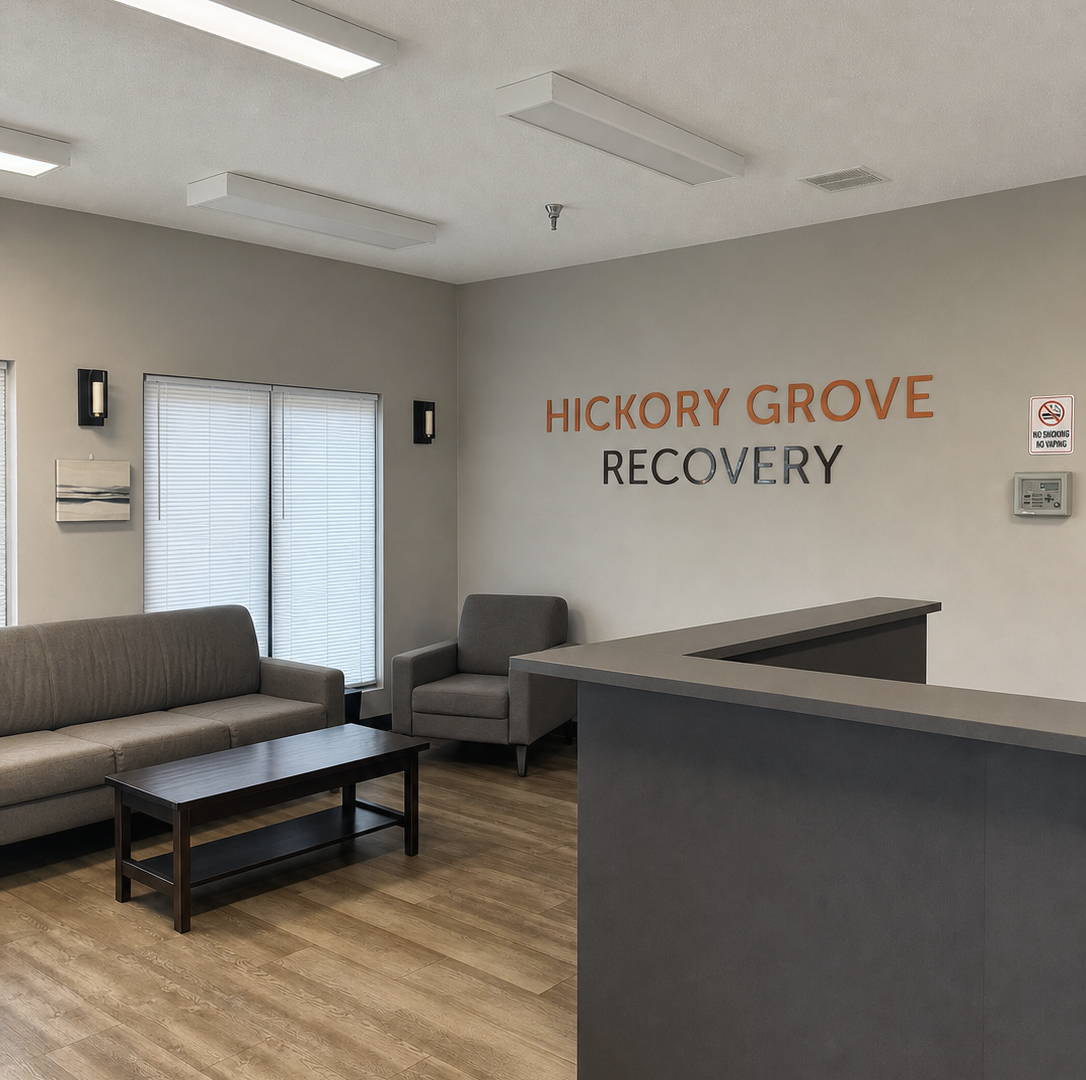
Hickory Grove Recovery identifies its treatment campus in Morrilton, while describing the Little Rock–Conway area as a referral catchment. That geography matters: a reference to serving Little Rock does not place the residential building in Little Rock. Its listed services include medical detox, residential treatment, medication-assisted treatment, and discharge planning for adults with substance-use and co-occurring mental health needs.
The current site names commercial arrangements with Ambetter and Arkansas Blue Cross Blue Shield, including ARHOME plans through those carriers. This is more specific than a blanket promise to accept every Arkansas public-benefit arrangement. Give admissions the actual plan name and confirm the expected patient cost. The provider describes coordination with hospitals, courts, probation services, and primary care. Where a referral has legal conditions, clarify reporting consent and attendance requirements with the relevant professionals; acceptance into treatment does not establish any particular legal outcome.
Making the admissions conversation useful
The ALSOS contact page identifies a central admissions route available around the clock. When contacting a network, begin with the desired location and the main reason care is being sought. Explain current medication, recent withdrawal concerns, significant medical conditions, and any existing clinician or discharge planner who should be involved. Ask who will confirm the receiving center and how that confirmation will be communicated.
Before arranging arrival, establish the assessment time, the destination address, any required documents, the plan for essential prescriptions, and the person to contact if circumstances change. Request a campus-specific estimate and clarify what happens if the recommended level of care differs from the original inquiry. An admissions conversation can explain a planned next step; it is not a substitute for emergency assessment when someone is acutely unsafe or medically unstable.
Provider sources reviewed October 19, 2026. Services, eligibility, availability, and individual costs require confirmation with the selected center.
Explore related guides to alcohol treatment, co-occurring conditions, and Ohio treatment options.
Official sources checked October 5, 2026: Network overview, insurance and current center count; Ownership, states and accreditation; Locations and campus-specific services; Network contact details.