Luxury rehab in Italy: establish the type of care first
Searching for luxury rehab in Italy can bring together clinical addiction treatment, psychiatric care, therapeutic communities, and well-being retreats. These services should be compared according to what they actually provide. The first question is whether the person needs medical assessment, withdrawal management, psychological treatment, a structured residential program, or simply a restorative break. A peaceful location can be attractive, but it does not establish that a provider can manage a diagnosed condition.
The provider currently listed here is Mandali Retreat Center. Its published offering is a retreat program. This page therefore explains its role and the separate Italian pathways for addiction and mental health care. The listing is not evidence that Mandali provides medical detox or inpatient psychiatric treatment, and it should not be treated as a substitute for finding an appropriate clinical service when that is what an assessment recommends.
What Mandali offers in northern Italy
Mandali's retreat information describes its ongoing Mandali Experience as a three- to seven-day restorative program involving movement and meditative practices. It also offers themed retreats led by different teachers and special editions with additional activities. The exact schedule, facilitator, language, and dates depend on the retreat. A place on one event does not imply access to every activity or teacher shown across the website.
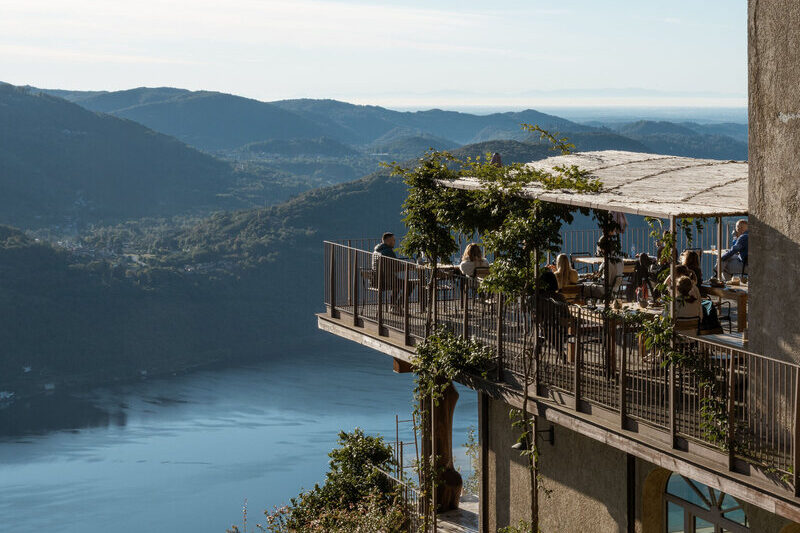
The center description places Mandali in Quarna Sopra, overlooking Lake Orta, with accommodation ranging from shared rooms to premium single rooms. It describes vegetarian meals, practice spaces, gardens, and facilities such as a pool and sauna. These details help someone compare comfort and the retreat environment. They do not establish a medical staffing level, an addiction-treatment protocol, or the availability of a psychiatrist.
Its FAQ identifies Mandali as a dedicated retreat center and says no doctor is available in the village, with the nearest hospital in Omegna. A person requiring ongoing medical observation or help with withdrawal should resolve that need through an appropriate clinical service before considering a retreat. Confirming proximity to a hospital is a practical travel question; it is not equivalent to having hospital care within the retreat.
The distinction also matters when reading words such as healing, transformation, or detox in an event title. Ask the organizer what those words mean in the particular program. Meditation, silence, movement, or a digital break should not be interpreted as medically supervised substance withdrawal. A description of emotional well-being is not evidence that a program provides treatment for severe depression, an eating disorder, or another psychiatric condition.
Where to start for addiction treatment in Italy
Italy's Department for Policies Against Drugs and Other Addictions describes SerD services as public addiction services within the national health system. They provide assessment, treatment planning, rehabilitation, and support, and may work with accredited therapeutic communities. This is a useful route for someone who needs help identifying a clinically appropriate service instead of starting with accommodation advertisements.
The department also notes that organization and access arrangements differ between regions. Establish which local health authority, often called an ASL, covers the person's residence or intended treatment area, and ask how its addiction pathway works. A contact number for one province should not be treated as a countrywide admissions service. International visitors should clarify eligibility, payment, language, and documentation before assuming that local arrangements will apply to them.
A relevant local example near the listed retreat is ASL Verbano Cusio Ossola's SerD. Its current service page describes support for substance-related and gambling problems, medical assessment, psychological and family support, and program monitoring. It identifies services in Omegna, Verbania, and Domodossola, and says a referral prescription is not required, while recommending a telephone appointment for the first contact. This is a clinical public-service pathway, separate from Mandali's retreat booking process.
For national orientation, the Istituto Superiore di Sanità launched the single addictions helpline, 800 940 789, in June 2026. The service provides information and direction to support for substance and behavioral addictions. Check its current operating details and language availability before relying on it from abroad. Information and referral can help identify a next step, but do not themselves confirm a residential place.
Mental health care follows a separate clinical assessment
The Italian Ministry of Health describes the Centro di Salute Mentale, or CSM, as a local reference point for mental health care, coordinating assessment, treatment, and rehabilitation through a multidisciplinary team. Someone seeking care primarily for depression or another psychiatric condition can ask a local clinician about the appropriate service and level of care. Addiction and mental health pathways may need coordination when both are present.
Before selecting a residential option, ask which condition drives the admission and which additional conditions the service can support. Establish how prescribing, physical health, and psychological treatment are coordinated. A retreat teacher, a psychologist, and a psychiatrist have different roles. The proposed plan should identify who makes clinical decisions, who delivers each intervention, and who responds if symptoms worsen.
For a person already receiving treatment, discuss any proposed stay with the current clinician. Share the actual retreat or treatment schedule, travel plans, and expected level of support. Do not replace an existing prescription or follow-up plan with a general promise of renewal. If a restorative break is suitable, it can be planned around ongoing care instead of being expected to provide services it has not advertised.
Compare residential treatment and therapeutic communities accurately
A therapeutic community may emphasize daily structure, rehabilitation, relationships, and the return to ordinary life. A medical unit may focus on assessment, stabilization, or withdrawal management. A private psychiatric service may provide another combination of interventions. Ask the referring service to explain the proposed setting, expected supervision, clinical contact, and intended next step. Staying overnight somewhere does not by itself define the intensity of treatment.
Request a weekly schedule and ask which elements are individual, group-based, educational, occupational, or recreational. Check how appointments are adapted to the person's needs and whether outside medical care is required. A family comparing options should record the actual service rather than count the number of therapies listed. The most useful proposal links each part of the program to an assessed goal.
Verify the people and the service being offered
For physicians, the FNOMCeO national register provides a professional verification route. For psychologists, the National Council of the Order of Psychologists provides access to its register. Ask for the practitioner's full name and role, then check the relevant professional listing. A biography describing international experience should be considered separately from current authority to practice.
Facility questions are different from individual registration. Ask the organization which authorization applies to the named treatment service, who holds clinical responsibility, and how to verify those details with the relevant authority. A retreat's hospitality standards do not answer those clinical questions. Likewise, a clinician appearing on a large organization's website does not establish that they will assess or supervise a particular admission.
Discuss consent, records, and communication with relatives before arrival. Ask how concerns can be raised and who handles complaints independently of the person delivering the service. These questions are especially useful where the person paying is different from the person attending. Payment should not be treated as an automatic right to receive all confidential clinical information.
Language, food, and access can determine practical fit
Mandali's FAQ says retreats are generally in English unless another language is specified and that interpretation is not provided. It also says the kitchen cannot accommodate severe allergies or guarantee freedom from cross-contamination. Confirm these points against the particular event and the person's needs. An enjoyable retreat depends on being able to participate and eat safely, not only on choosing a preferred room.
For clinical care elsewhere in Italy, ask about the working language of assessment, individual therapy, groups, and written discharge documents. A receptionist's ability to answer an English inquiry does not establish that the full clinical program is delivered in English. If interpretation is required, agree who provides it and whether it is included. Clinical records may also need translation before admission or for the receiving professional at home.
Request details about access between accommodation, dining, and activity spaces, particularly for a hilltop or multi-building property. Ask about stairs, walking distances, and alternatives to physically demanding sessions. Share mobility or sensory requirements early enough for the organizer to confirm what is possible. Photographs can illustrate the setting, but a direct explanation is needed to establish whether the actual booked accommodation works.
Separate a retreat price from a treatment budget
Mandali's terms describe standard retreat bookings as including the specified overnight stays, full board, and teaching fees, with details depending on the event. Review the particular offer for room type, optional services, transfers, and the applicable organizer's conditions. That price is a retreat budget. It should not be used as a price estimate for medical detoxification or psychiatric treatment in Italy.
For a clinical program, obtain an itemized quote identifying the level of care, duration, professional fees, accommodation, medication, tests, and any outside appointments. Ask how costs change if a hospital admission or a different treatment setting becomes necessary. Compare the full planned pathway, including follow-up, rather than dividing two unlike packages into an apparently comparable daily rate.
Insurance and public funding need separate confirmation. Tell the payer the exact provider, service, reason for treatment, and expected dates, and ask what authorization or referral is required. A policy that covers certain medical expenses should not be assumed to cover a well-being retreat or elective private accommodation. Obtain written answers before paying and keep the cancellation and refund terms with the quote.
Plan the stay and the return home together
Agree on the travel destination and arrival arrangements after the actual service has accepted the booking or admission. If clinical support is needed during travel, ask who provides it and what it includes. A transfer driver is not necessarily a medical escort. Keep medication documentation and relevant clinical contacts available, and establish how an unexpected delay would affect the plan.
For treatment, the discharge plan should identify the next clinician, appointments, medication arrangements, and any community support. For a retreat, consider how the practices or rest gained will fit into an existing routine without expecting the event to provide clinical aftercare. These are different kinds of continuation, and both work better when their scope is clear.
Someone comparing Italy with nearby destinations can also review the Switzerland and Germany guides. Keep the comparison centered on verified clinical capability, language, access, complete costs, and follow-up. The right choice is a service that matches the person's assessed needs; the destination and level of comfort come after that fit has been established.
Back to guide contents↑