Choosing between Connecticut treatment models
Connecticut's listings span psychiatric hospitals, residential addiction programs, outpatient clinics, and privately arranged wellness retreats. Someone searching for the best luxury rehab in Connecticut should first identify which of these settings can meet the person's needs. Accommodation, privacy, and convenience are useful comparisons after the clinical level is clear. A shared location label does not make the services interchangeable.
The distinction is especially important when the main concern is depression, trauma-related symptoms, substance use, or a combination. Ask whether a program treats a primary mental health condition without addiction, or addresses mental health concerns within addiction care. The answer should come from assessment and the actual program scope, not a list of conditions in a website menu.
Silver Hill separates inpatient, residential, and outpatient care
Silver Hill Hospital identifies its campus at 208 Valley Road in New Canaan. Its current program overview distinguishes inpatient, residential, and outpatient care, with adult and adolescent services. It also describes treatment for substance use and co-occurring disorders alongside a broader psychiatric scope. These are separate programs and admission decisions within the same organization.
A person who needs intensive psychiatric management may be considering a different service from someone ready for extended residential therapy. Ask which level the clinical team recommends, how it will reassess the person, and whether movement between levels requires a new authorization. The word hospital in the organization's name does not mean every program involves the same daily supervision or medical intensity.
The hospital's financial arrangements also vary by program. Its fees and insurance page describes inpatient network participation, out-of-network arrangements for adult residential care, and specific Optum-related in-network arrangements for the adolescent residential program. Outpatient coverage is assessed separately. Obtain a program-specific answer from the insurer rather than applying one coverage statement to every Silver Hill service.
Mountainside's Canaan campus offers several stages of addiction care
Mountainside describes multiple addiction-treatment levels at its Canaan campus. Its residential program uses a published 35-night framework, combining clinical work, recovery education, medical and psychiatric services, and wellness activities. Ask which elements belong to the proposed Canaan admission and which are offered elsewhere in the wider Mountainside network.
The Mountainside PHP page specifies 25 hours of weekly programming over at least four weeks, including twice-weekly individual therapy, groups, psychiatric services, and case management. Canaan is an in-person location. The page also discusses housing, which should be evaluated separately from the daytime clinical timetable, including its address, overnight staffing, transport, and cost.
A person completing residential care in Connecticut may want to continue online after returning home. Mountainside's virtual outpatient information identifies Connecticut, New York, New Jersey, and Massachusetts and describes location requirements for participation. Confirm the person's actual physical location during sessions and the relevant clinician's availability before building remote care into the discharge plan.
High Watch has a defined recovery framework and step-down criteria
High Watch Recovery in Kent describes a residential addiction program with a strong twelve-step foundation, individual counseling, groups, addiction medicine, and recovery coaching. Its program overview identifies different roles for the therapist, medical team, and step coach. Ask how the approach fits the person's preferences and what alternatives or adaptations are feasible within the actual schedule.
The Hilltop PHP is more specific than a general promise of follow-up for every resident. It is described for adult men who have completed at least 28 days of residential treatment, with on-campus accommodation and daytime clinical work. Confirm individual eligibility and the next-step options for people who do not meet those criteria. Recovery housing, PHP, and the main residential program should be compared as distinct arrangements.
High Watch also describes an Extended Guest Program through which existing guests may apply for additional care. This is a discretionary program with eligibility and review requirements. It should not be included in a prospective patient's budget as guaranteed free treatment. Ask what has actually been approved, what costs remain, and what alternative plan would apply if an extension is unavailable.
Paramount's Haddam setting is a residential addiction option
Paramount Wellness Retreat identifies its address as 7 Island Dock Road, Haddam. Its admissions description includes clinical assessment followed by an appropriate medical detox or inpatient treatment start. The provider reports nursing and medical care within its program. Ask which professionals are physically present at different times and what situations require transfer elsewhere.
The provider overview gives typical detox and treatment periods, but an individual stay depends on the assessment and response to care. Request the expected duration and review process for the proposed admission. A provider using the word retreat can still describe clinical addiction services; the useful distinction is the documented care and authorization at the address, rather than the branding alone.
Privé-Swiss is a different Connecticut offering
Privé-Swiss describes programs around Essex and Ivoryton on the Connecticut shoreline. Its current service and contact information explicitly says it is not a psychiatric inpatient program or an alcohol and drug detox/rehab facility. Clinical appointments are described as being provided by licensed professionals practicing in the surrounding community, with private accommodation and wellness services forming another part of the arrangement.
This model requires a clear understanding of coordination and limits. Ask who holds the clinical plan, where appointments happen, how transport works, and what support is available between visits. A privately arranged residence is different from an inpatient medical setting. Someone who needs acute psychiatric care or medical withdrawal management should have that need assessed separately.
The published terms describe private payment in advance, no direct insurance acceptance, and nonrefundable payment, with possible documentation for a reimbursement claim. Obtain the complete agreement and identify independently billed professional or wellness services. A document suitable for submission to an insurer does not establish that reimbursement will be available.
Age-specific programs need age-specific decisions
Turnbridge distinguishes several age groups on its current program site: adult programs for young men and women aged 18 and older, adolescent residential care for ages 14–17, and adolescent extended care for ages 15–18. The programs also differ in their settings and stages. Families should identify the exact pathway being discussed rather than assume all services have the same eligibility.
For a teenager, confirm schooling, credit transfer, family participation, consent, safeguarding arrangements, and planning for the return home. For a young adult, discuss education, work, independent living, and how family involvement will operate with consent. A broad claim about life skills is less useful than an agreed plan with named staff and realistic next steps.
Programs for different ages may share a brand without sharing every residence, therapist, or financial arrangement. Request the location and program name on the written offer. When a young person is approaching an age boundary during treatment, ask how continuity will be handled and whether another service or authorization will be needed.
Outpatient care may be the appropriate local option
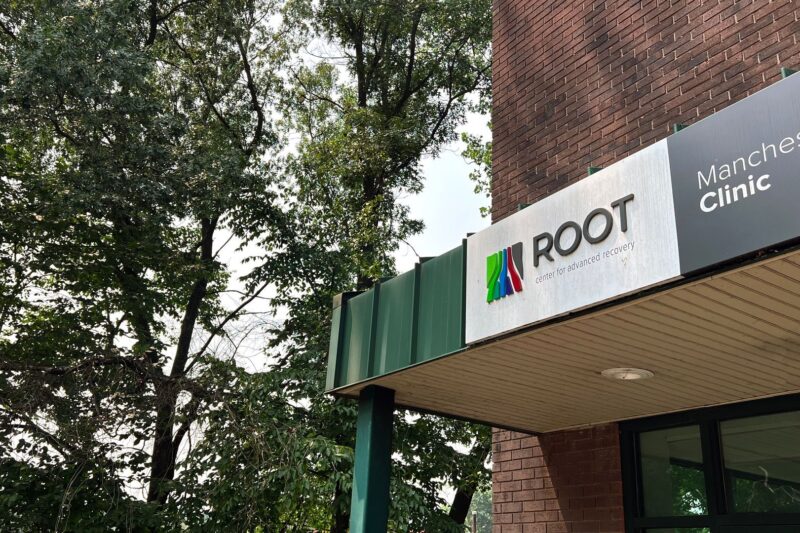
The Root Center for Advanced Recovery provides another model. Its Manchester clinic page identifies 335 Broad Street and describes individual and group therapy, IOP, medication management, family therapy, and medications for addiction treatment. The page distinguishes clinic hours from dosing hours. A person relying on regular medication visits needs the relevant timetable, not only general office availability.
Outpatient suitability depends on the person's needs and living circumstances. Discuss transport, work hours, care responsibilities, and any support required outside appointments. People moving between a residential program and an outpatient medication service should arrange a direct handover so that prescribing, records, and follow-up responsibilities are clear.
Use Connecticut's public access and verification resources
Connecticut DMHAS provides mental health and addiction bed-availability resources for its system, alongside a 24-hour substance use Access Line at 1-800-563-4086 for Connecticut residents. The resources cover different levels, including withdrawal management, residential treatment, housing, and outpatient services. Availability information is a starting point; the receiving program still needs to assess eligibility and accept the person.
The state access route can help people understand options beyond a private shortlist or coordinate a return to local care. Ask about financial eligibility, assessment, transportation conditions, and current openings. Do not assume that a state-funded place is available to everyone traveling to Connecticut or that a displayed vacancy is a confirmed reservation.
The Department of Public Health directs people to Connecticut's eLicense portal for provider and facility verification. Match the legal name, physical site, and service to the proposed admission. For a model involving community practitioners, check the relevant professionals as well as the accommodation or coordinating organization.
Compare costs, privacy, and continuing care together
Relatives can also investigate support independently of a residential admission. Mountainside's family services include therapy, coaching, and education, with some offerings available when the person experiencing substance use problems is not a Mountainside client. Confirm which format is proposed, who provides it, and its cost. Support for relatives should have its own purpose rather than depend entirely on another person's decision to enter treatment.
A useful financial comparison names the program, expected dates, clinical sessions, room arrangement, medication, testing, transport, and care after discharge. It separates confirmed insurance authorization from estimated reimbursement and identifies services charged by another provider. Ask how the estimate changes if the clinical plan changes or a different setting becomes necessary.
Privacy also needs a practical description. Compare private bedrooms with exclusive residences, group participation with individual appointments, and visiting policies with work-contact arrangements. Greater privacy can be meaningful, but it should not obscure the amount of clinical contact or the support available between appointments. Make those details part of the written plan.
Before selecting a Connecticut stay, identify where the person will live afterward and who will continue the care. A clinician, first appointment, medication plan, and agreed transfer of records make the transition concrete. Compare nearby New York and Massachusetts options when geography affects continuity, while keeping each provider's actual location and program limits clear.
Back to guide contents↑