Finding a New York program that fits the reason for treatment
A search for the best luxury rehab in New York can return a city detox unit, a residential program elsewhere in the state, a specialist eating disorder service, and an outpatient practice. These are different choices even when they appear beside one another in a directory. Start with the condition, the medical assessment, and the required level of supervision. Then compare the setting, accommodation, personal attention, and access for family members. An attractive building is useful only when the service inside can meet the person's needs.
New York State also needs to be distinguished from New York City. A program in Westchester, Long Island, or Tully has a different journey and support network from a city service. Someone who plans to commute several times a week needs a realistic door-to-door schedule. Someone entering residential care needs to know where they will sleep and receive treatment, which airport or station is practical, and who will handle the return journey. A provider's central telephone number does not establish its treatment address.
Urban Recovery describes detoxification and short-term residential care in its official program overview. These offerings make medical admission criteria and the transition between services important comparison points. Establish whether the proposed admission is for withdrawal management, rehabilitation, or a sequence of both. Request the expected clinical review process and what happens when the person is ready for a less intensive setting; a detox admission alone does not describe the whole continuing-care plan.
Surfpoint Recovery lists detox, treatment for co-occurring conditions, and a 28-day inpatient program on its treatment page. It also describes medication-assisted treatment. Ask which services are appropriate to the individual and available during the intended admission. The advertised duration is a program description, not a guarantee that every person needs the same stay. Clarify how existing prescriptions are reviewed, who manages them, and which provider will continue any agreed medication after discharge.
Tully Hill, in Tully, offers medically supervised detoxification and medically monitored intensive inpatient rehabilitation. Its program information describes a 12-step-based approach and says length of stay depends on assessment and progress. A significant boundary is that it treats co-occurring disorders within its inpatient services, while its intensive outpatient and outpatient programs do not provide that same co-occurring-disorder service. A person comparing different levels within this provider should therefore confirm where both substance use and mental health needs will be addressed.
Mountainside Chappaqua is an outpatient option in Westchester County. Its location page describes intensive outpatient care, outpatient care, recovery coaching, and morning and evening appointments. It serves adults, adolescents, and families through different services. This can be relevant to someone who can safely live at home and attend appointments, but the Chappaqua listing should not be read as an offer of overnight residential accommodation. Ask for the specific age group, timetable, and clinical service being proposed.
These examples show why a provider shortlist needs a service column alongside its name. Two addiction programs may differ in medical capability, overnight staffing, philosophy, or the level offered at one address. An outpatient service may be an appropriate first treatment or a later step, depending on assessment. A higher price, a longer stay, or a residential setting does not automatically make an option more suitable.
Eating disorders and mental health require a separate comparison
Monte Nido Glen Cove describes residential eating disorder treatment for adults of all genders at its Glen Cove, Long Island, location. Its official location page identifies this as an eating disorder program, rather than a general addiction retreat. Its wider network includes other treatment formats, but those should not be assumed to operate at this same address. Establish whether the person's current medical and psychiatric needs are appropriate for this particular residential service before discussing a room or admission date.
Someone seeking care primarily for depression, trauma, or an eating disorder should not have to infer clinical fit from a long menu of conditions. Ask which diagnosis usually drives admission, how a second condition changes the plan, and which problems lead to referral elsewhere. For example, occasional counseling about low mood within addiction care is a different proposition from a program organized around a primary mood disorder. Request the name and role of the clinician who will make that distinction.
For eating disorder care, useful practical questions include meal support, medical monitoring, dietetic input, accommodation, and the transition back to ordinary meals at home. For depression or trauma, ask about the actual psychotherapy schedule, prescribing arrangements, and response to a deterioration in symptoms. These questions establish the work being offered; they do not require the family to choose a clinical treatment without professional assessment.
Keep New York locations separate from interstate options
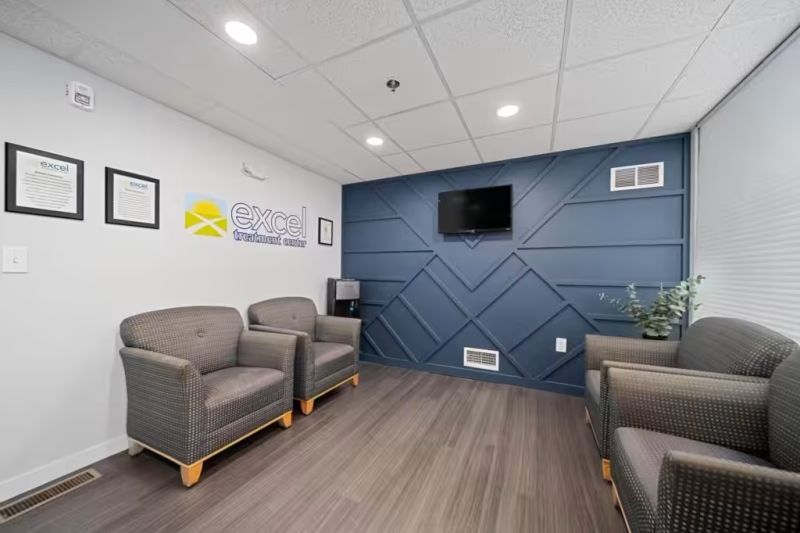
A program can serve New York residents while operating in another state. Excel Treatment Center, for example, lists its address as 58 North Sussex Street, Dover, New Jersey, on its contact page. Treat that as a New Jersey option when planning travel, accommodation, insurance, and follow-up. Its appearance in a New York comparison does not turn that address into a New York campus.
For an interstate program, request the treatment address before paying a deposit. Then consider whether family participation requires additional travel and whether the proposed outpatient follow-up can actually be delivered where the person will live. The New Jersey guide provides a separate starting point for comparing that state. A nearby border does not remove the need to confirm the particular professional, program, and payment arrangements involved.
Use New York's treatment and professional checks
The New York State Office of Addiction Services and Supports provides treatment information and a program search. This is a useful route for checking certified addiction services and identifying options beyond the providers shown here. Match the program type and address to the service you are considering. A listing does not establish a current bed vacancy, an insurance authorization, or suitability for a specific person; admissions still needs to assess those points.
For individual professionals, the New York State Education Department provides license and registration verification. Use the clinician's full name and profession rather than a marketing title. If a website names a senior physician, ask whether that professional will personally be involved, supervise the relevant team, or work elsewhere in the organization. An impressive organization biography is not the same as knowing who will conduct the initial assessment and subsequent reviews.
Where a program describes accreditation, ask which service and location the statement covers. Keep that question separate from licensing and professional registration. Families can record these checks in a short comparison sheet alongside admission criteria, treatment hours, and payment terms. This creates a more useful basis for choosing than counting amenities or treating every directory badge as equivalent evidence.
Build an accurate cost and insurance comparison
Request an itemized estimate for the recommended level of care. Separate clinical treatment from accommodation, private-room supplements, transport, laboratory work, medication, and optional activities. A quoted residential package and an outpatient fee cannot be compared simply by their headline totals. Ask what the estimate assumes about duration and what happens financially if clinical assessment changes the plan.
Insurance acceptance also needs to be checked at the program and level-of-care level. Give the insurer the actual facility details and proposed service, and ask about network status, prior authorization, remaining deductible, and the amount the patient may owe. Keep a written record of the answer and any authorization reference. A provider's willingness to submit a claim does not itself establish the insurer's final payment decision.
New York's OASAS support information points people toward CHAMP for help with insurance obstacles involving mental health and addiction treatment. Its paying-for-treatment guidance also explains routes for people concerned about affordability. These resources can help broaden the search or address a coverage problem. They should not be interpreted as a promise that an optional private residential package will be funded.
Evaluate privacy and comfort in operational terms
For a New York resident with a public-facing role, privacy can involve more than having a private bedroom. Clarify visitor arrangements, shared transportation, participation in outside groups, use of photographs, and communication with employers or relatives. Ask how consent for information sharing is recorded and how to change it. Staff should be able to explain the ordinary process without promising that treatment leaves no records.
Accommodation deserves the same specificity. Establish whether the room and bathroom are private, which meals and activities are shared, and whether the building shown in photographs is the one offered for admission. Someone with mobility needs should request details about stairs, accessible bathrooms, and transport between buildings. These practical features affect daily participation and should be resolved before arrival, not inferred from the word luxury.
Plan the return to everyday life before admission
A useful discharge plan identifies the next clinician, appointment date, medication arrangements, and support for the home environment. For a person returning to New York City after treatment elsewhere in the state, the practical challenge may be coordinating follow-up near home rather than continuing to travel to the residential campus. For a commuter attending outpatient care, it may be making the schedule sustainable alongside work, school, and family responsibilities.
Ask what family involvement actually includes: education, clinical family sessions, a separate workshop, or informal updates. Establish who can attend, whether participation is remote, and whether an additional charge applies. Families may also need their own support irrespective of the patient's program. Do not assume an alumni mailing list provides the same assistance as scheduled continuing treatment.
Before choosing, compare two or three clinically appropriate options using the same information: address, accepted condition, treatment format, named clinical roles, weekly schedule, accommodation, complete cost, and follow-up. Record any unanswered point and ask admissions to resolve it in writing. The best New York choice is the one whose verified service can meet the individual's needs and remain workable after the initial treatment period.
Back to guide contents↑