Silver Hill Hospital


Silver Hill Hospital 3 photos


Comparison facts and sources
A psychiatric hospital offering inpatient, on-campus residential/transitional and outpatient care for adults and adolescents with mental-health, substance-use and co-occurring conditions. · 208 Valley Road, New Canaan, Connecticut 06840, United States.
- Published fee information
- Quote required
- Before admission
- Do not equate inpatient detox, extended residential treatment and IOP. Durations and payer arrangements vary materially by diagnosis, age, program and medical necessity.
- Continuing care
- Safe-discharge and aftercare planning are part of treatment, and Silver Hill offers outpatient/IOP and care-navigation options after inpatient or residential care. The exact step-down plan and duration are individualized.
Source record · October 15, 2026
Official exact-campus level-of-care, duration, aftercare and payer information checked October 15, 2026. Confirm current program fit, clinical level, duration, authorization, out-of-network reimbursement and personal responsibility directly with admissions.
Luxury rehab comparison · Fees and inclusions · Selection methodology
Comparisons featuring this provider: Best Luxury Depression Treatment Centers · Best Luxury Trauma & PTSD Treatment Centers.
Silver Hill Hospital in New Canaan, Connecticut provides inpatient, residential and intensive outpatient care for psychiatric conditions, substance-use disorders and co-occurring conditions. It serves adults and adolescents, with eligibility depending on age, diagnosis and clinical need.
Levels of care and payment
- Inpatient psychiatric care
- Extended residential treatment
- Intensive outpatient programs
- Substance-use and co-occurring-disorder treatment
Silver Hill states that inpatient treatment is generally covered by participating plans. Its adolescent residential program is in network with Optum for eligible plans, while adult residential programs are generally reimbursed through out-of-network benefits. Intensive outpatient coverage depends on participating-plan benefits and authorization. Need-based financial assistance may be available for eligible inpatient and residential patients. Confirm program suitability, current charges, coverage and authorization with admissions on 1-866-542-4455.
Inpatient care for stabilization and assessment
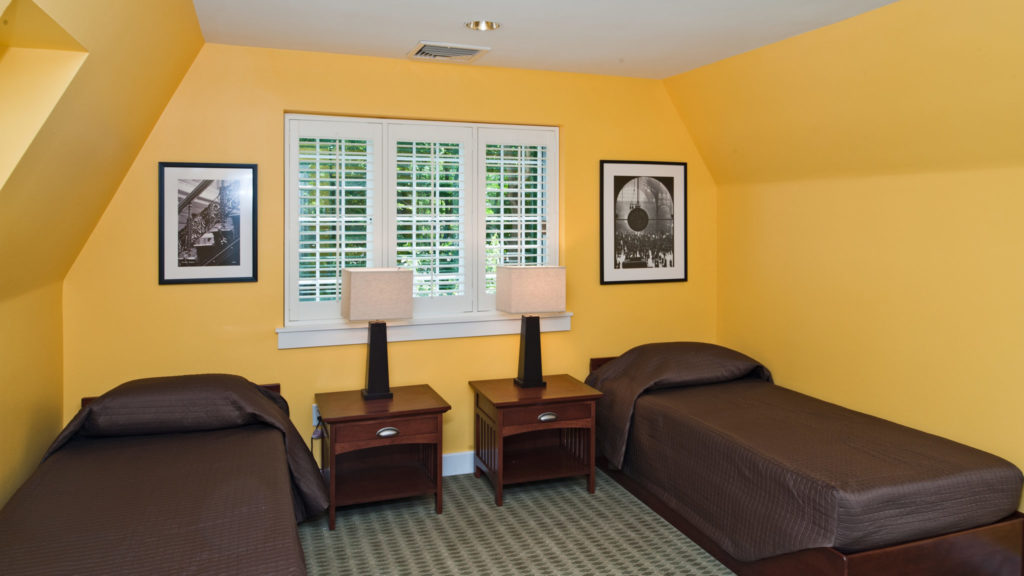
Silver Hill’s inpatient program provides psychiatric assessment, stabilization, medication management, and detoxification when clinically indicated. The provider describes daily physician meetings, continuous nursing care, therapeutic groups, and coordination among psychiatrists, psychologists, social workers, nurses, and other staff. Inpatient services operate in separate adult and adolescent units with single- and double-occupancy rooms.
The published typical stay is seven to ten days, with individual variation. The purpose is to address the immediate clinical need and plan the appropriate next step. A patient may continue into a Silver Hill residential or outpatient service, or receive a referral elsewhere. That decision depends on the assessment and progress rather than an automatic package. Prospective patients and referring clinicians should discuss current symptoms, withdrawal needs, and any recent hospital treatment so that admissions can determine the right starting level.
Residential treatment after acute needs are addressed
The residential program overview describes extended care for patients whose symptoms are sufficiently stable for a less intensive setting than the inpatient units. Programs take place in houses on the hospital campus and combine psychiatric evaluation, an individualized plan, medication when indicated, and psychological treatment. The house and clinical program are selected according to therapeutic needs.
For most adult residential conditions, the provider describes a minimum stay of thirty days. The adolescent residential minimum is generally five weeks, with extensions considered together with the treatment team. These are program starting points, not an estimate for every referral. Someone comparing residential options should establish the exact house, clinical focus, room arrangement, and planned review points. The availability of several programs on one campus can support transitions, but it does not remove the need for a fresh decision about suitability at each level.
DBT for substance use at Scavetta House
The DBT-S program at Scavetta House serves adults with a substance use disorder and co-occurring mental illness. Its central approach adapts dialectical behavior therapy to substance use, supported by psychiatric care, individual psychotherapy, peer recovery mentorship, group work, and recovery meetings. The provider describes at least four individual sessions each week across the different clinical and recovery roles.
Scavetta House accommodates sixteen patients in single and double bedrooms, with a minimum thirty-day stay. Some patients arrive after inpatient stabilization or detoxification. The program also identifies additional services that may carry separate fees, such as cognitive processing therapy, neuropsychological testing, and family or couples assessment. These distinctions help a prospective patient understand both the clinical model and the financial proposal. The team should explain which elements are core to the recommended plan and which additional services are being considered.
Adolescent care with academic and family support
The adolescent programs serve teenagers through inpatient, residential, and intensive outpatient levels. Residential care at Klingenstein House centers on DBT, individual work, experiential therapies, and coaching by residential staff. The provider lists a maximum of ten residential patients and a minimum five-week stay, with academic instruction and support included in the program structure.
Family involvement includes regular communication, planning for the return home, and skills education. Residential families can participate in weekly meetings and caregiver support, with family therapy when appropriate. The usual adolescent age range is thirteen through seventeen; the provider separately notes that inpatient and IOP services may accept eighteen-year-olds still attending high school. Families should confirm eligibility for the exact level, school arrangements, and participation requirements before admission. The three levels have different supervision, schedules, and technology rules, so they should not be treated as interchangeable.
Steward services for executives and professionals
The Steward Program is intended for executives, professionals, and leaders dealing with mental health or substance use concerns. Silver Hill presents two distinct offerings: Steward Residential and Steward Outpatient. The shared occupational focus does not make their intensity, accommodation, schedule, or financial arrangements the same.
For a prospective patient, the first question is which level of care is appropriate now. Someone who needs substantial structure and time away from ordinary responsibilities may have different requirements from a person able to attend treatment while living in the community. Ask the Steward team how professional pressures, confidentiality, family involvement, and planning for return to work will be addressed in the proposed program. The existence of an executive-focused service should not be interpreted as permission to maintain an unrestricted work schedule during residential care.
Outpatient options extend beyond one standard IOP
The outpatient directory distinguishes specialty private-pay services from intensive outpatient programs. Specialty offerings operate through The Practice at Silver Hill, PC. Examples include Steward Outpatient for professionals, the Young Minds group for adults aged eighteen to thirty, support for parents managing difficult family dynamics, and maintenance DBT groups for people who have completed more comprehensive DBT treatment.
The hospital also lists IOPs for adolescents, young adults, mood disorders, women, DBT, and DBT for substance use. The appropriate choice depends on clinical needs, schedule, and payment arrangements. A referral to outpatient care should therefore name the actual program rather than simply say to continue at Silver Hill. Confirm whether participation is in person, virtual, or combined; which individual services are included; and whether the arrangement is private pay or subject to insurance authorization.
The community Assessment Program has a narrower purpose
The Assessment Program offers an in-person meeting with a psychiatrist and social worker to clarify concerns and recommend next steps. It serves children, adolescents, and adults by appointment during regular business hours. Through local partnerships, it is available without out-of-pocket cost to residents of New Canaan, Westport, and Weston; residents of other towns should discuss applicable fees and benefits.
The provider aims to arrange appointments promptly, but this is not an emergency service or a residential diagnostic admission. It can be useful when a family needs direction about what kind of care to pursue. The assessment leads to recommendations and referral information rather than automatic entry into a hospital program. People already working with a clinician are encouraged to discuss assessment needs with that professional first, while urgent or immediate safety needs require an appropriate immediate-care service.
Campus houses correspond to different clinical programs
The campus guide connects residential houses with their treatment focus. River House serves adults in programs for mood, anxiety, and personality-related conditions. The Lodge is associated with psychotic disorders, while Barrett House houses the trauma and dissociative-disorders program. Scavetta House is associated with substance use and co-occurring conditions, K House with adolescents, and Steward House with executives and professionals.
This layout is more than a choice of accommodation style. Placement is intended to match clinical needs and the relevant treatment community. A person with several diagnoses should ask which program will take primary responsibility and how additional concerns will be addressed. The campus guide can also support practical questions about mobility, distances between sessions, and the location of meals or shared activities. Specific room availability and accessibility should be confirmed rather than inferred from photographs of a particular house.
Admission combines medical, psychiatric, and financial review
The admission process begins with contact through the Evaluation Center. A nurse or social worker gathers initial information, explains the process, and arranges an appointment. On arrival, a patient liaison helps with orientation and belongings, followed by medical triage and a psychiatric evaluation. These assessments inform the initial level of care and treatment plan.
A financial coordinator then helps clarify insurance and payment arrangements, while families receive relevant visiting and contact information. The sequence shows why an online inquiry or available room does not by itself confirm the final clinical placement. Providing recent records and an accurate medication and treatment history helps the team assess fit. Before traveling, establish what has been agreed, which documents are needed, and what arrangements apply if the evaluation indicates a different service from the one initially discussed.
Insurance arrangements differ across the continuum
The fees and insurance page lists participating plans for inpatient care and distinguishes them from residential funding. The adolescent residential program has an Optum network arrangement for eligible plans. Other adolescent plans and adult residential care may rely on out-of-network benefits. Intensive outpatient coverage depends on participating benefits and authorization for the particular program.
These distinctions can have a substantial effect on the patient’s responsibility. Ask for the recommended service, expected duration, network status, authorization, deductible or coinsurance, and separately billed treatment in writing. Out-of-network reimbursement is not guaranteed and can vary between policies from the same insurer. A person moving from inpatient to residential care should review the financial implications of that transition instead of assuming that the original hospital authorization continues unchanged. The admission estimate should reflect the complete proposed sequence as clearly as possible.
Clinical leadership and the assigned treatment team
The staff directory lists Andrew J. Gerber, MD, PhD, as president and medical director, Mark Russ, MD, as chief medical officer, and Immacula Cann, DNP, RN, as chief nursing officer. It also separates clinical teams by program, including inpatient services, adolescent care, DBT-S, neuropsychiatric care, Steward, and the trauma-focused Triumph program.
The directory helps identify professional roles, but the assigned team depends on the actual placement. During admission, establish who will oversee psychiatric treatment, who will provide primary therapy, and who will coordinate family communication and discharge. If a named clinician or specialized approach influences the decision, confirm its availability for the proposed stay. The roles reported here come from the hospital’s current directory; they do not imply that every senior leader provides direct sessions to each patient or that a particular appointment is guaranteed.
Travel, visits, and program-specific communication
The location and visiting guide places admissions on the West Campus in New Canaan. It describes access through regional airports and rail travel via Stamford and the New Canaan line, with a further local transfer to the hospital. Families traveling from outside Connecticut should coordinate arrival and any transport requirements with the admission appointment.
Visiting arrangements differ between inpatient units and residential houses. The provider publishes specified inpatient visiting windows and directs residential families to their program’s rules. These details should be checked before booking travel, particularly when visits need to fit around therapy or family sessions. The same guide also mentions Silver Hill New York, a separate outpatient service in Manhattan. A New York outpatient appointment and a New Canaan hospital or residential admission involve different locations and should be confirmed as such.
Source check: October 18, 2026, for the additional provider details above.
Official sources
Checked October 15, 2026: levels of care and financial assistance; fees and insurance; financial forms and disclosures.