Compare Utah rehabilitation programs by what they actually provide
Utah's private treatment listings include residential addiction programs, primary mental health care, outpatient services, and different recovery philosophies. Mountain scenery and comfortable accommodation can influence a stay, but they do not determine the appropriate level of care. Begin with the person's substance use, mental health, physical health, and daily support needs, then identify a program that can explain how it would address them.
Location also matters within the state. A residence near Sundance, a program in Murray, and a ranch in Bluffdale involve different surroundings and travel arrangements. Confirm the exact treatment site before comparing airport transfers, family participation, or outpatient follow-up. A provider's use of “Salt Lake City” or “Utah” in its marketing does not mean all its services occur at one address.
Four useful distinctions among the listed providers
Cirque Lodge combines addiction treatment with a 12-step foundation
Cirque Lodge describes residential addiction care across the Lodge and Studio facilities. Its drug rehabilitation page identifies a 12-step foundation alongside behavioral, group, and experiential therapies. This is a specific treatment philosophy to discuss, rather than an assumption about every private program in Utah.
The provider's alcohol program description says assessment informs the plan and detox is arranged when clinically appropriate. It describes a medical provider on site daily with around-the-clock on-call coverage. Daily attendance and continuous on-site medical presence are different arrangements. Ask how those arrangements apply at the proposed residence and what nursing or other support is available overnight.
Recovery Ways separates primary mental health and addiction settings
Recovery Ways describes distinct facilities and programs in the Salt Lake City area. Its facility information identifies Brunswick Place as a substance use treatment setting and Copper Hills as a primary mental health program. This distinction matters when a person seeks treatment for depression, anxiety, or another mental health condition without addiction as the main concern.
The organization's mental health information includes residential and outpatient care. Ask which campus, team, and clinical pathway are proposed. A network-wide reference to occupational therapy or sensory work should be translated into the individual's treatment plan, including who provides it and why it is being recommended.
Renaissance Ranch has a defined adult men's model
Renaissance Ranch describes its residential program as treatment for adult men, grounded in the 12 steps and faith, with a Bluffdale location. Its wider network has additional sites and a separate women's program. Confirm the exact service instead of assuming one residence serves every population.
The provider's frequently asked questions say membership in a particular religious denomination is not required. A prospective client should still understand how prayer, spiritual discussion, or other faith-related activities appear in daily treatment. Discuss personal beliefs and preferences directly so that the program's philosophy is an informed choice.
Weber describes social detox and other treatment stages
Weber Recovery Center lists social detoxification, residential treatment, and intensive outpatient care on its official website. Its services page describes group and individual therapy, case management, and medical assessment. Ask what social detox means operationally at the facility and whether it is suitable for the person's assessed withdrawal risk. It should not be assumed equivalent to a hospital's medical withdrawal unit.
Check the exact Utah license and its scope
The Utah Department of Health and Human Services provides a Find a Facility resource through its Division of Licensing and Background Checks. The linked public system can be used to investigate regulated programs and their compliance history. Search the legal operator and location supplied by the admissions team, especially when a brand uses more than one site.
The division's human services rules distinguish residential treatment, outpatient care, day treatment, social detoxification, and recovery residences, among other categories. Those distinctions are important because different settings have different responsibilities. Ask the provider to explain the category covering the proposed care and any separate housing arrangement.
Check individual professional credentials separately. Obtain the names and roles of the clinicians expected to assess, prescribe, and provide therapy. A broad statement that a center has an expert team does not tell you who will see the client, how often they are present, or whether every person shown on a website works at that campus. Clarify on-site, visiting, remote, and on-call roles.
Use assessment to decide between residential and outpatient care
An admission discussion should cover recent alcohol or drug use, medication, physical health, psychiatric symptoms, previous treatment, and living circumstances. Describe any past withdrawal problems and recent hospital care. The assessment should lead to a clear explanation of the recommended setting and why the program believes it can meet those needs.
Residential care provides an overnight treatment environment. Outpatient care requires a plan for the hours between appointments, including housing, transport, medication, and support. Neither description alone establishes that a service is appropriate. A person with stable housing and adequate support may have different options from someone whose current environment cannot safely support treatment.
Withdrawal care is a separate clinical question. It is not necessary for every person entering therapy, and no program can guarantee that withdrawal will be comfortable or free of complications. Ask where assessment and monitoring occur, which professionals are responsible, and what would trigger transfer to a higher level of care. Obtain individual clinical advice before abruptly changing alcohol use or prescribed medication.
Clarify the approach to co-occurring conditions
If depression, trauma-related difficulties, pain, or another concern accompanies substance use, establish which team will address it. Some programs provide primary mental health care; others treat mental health concerns only alongside addiction. A dual-diagnosis label should result in a coordinated plan with clearly assigned clinical responsibility.
Ask how therapists and prescribers communicate and how changes in symptoms are reviewed. The plan should account for medication already prescribed by another clinician and identify who will manage it during and after treatment. A person should not have to infer medication policy from a program's spiritual philosophy or a general statement about abstinence.
For a proposed trauma therapy, discuss timing and readiness as well as availability. Ask which practitioner provides it, what preparation is involved, and how the team supports the client afterward. The presence of a therapy name on a website does not establish that it is indicated for every resident or delivered at the same frequency.
Connect therapeutic activities to everyday functioning
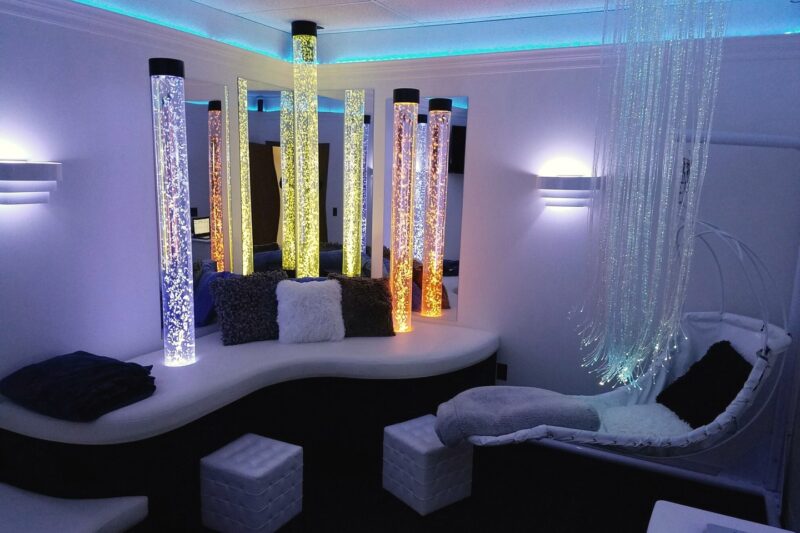
Recovery Ways describes occupational therapy and sensory integration as part of its services. When considering that work, ask how it relates to the person's actual difficulties with daily routines, work, self-care, or participation in treatment. A sensory room is a setting for an intervention; its presence alone does not show what an individual will receive or how progress is measured.
Request examples of the practical goals agreed with the occupational therapist and how those skills can be used outside the facility. If an activity feels uncomfortable or inaccessible, discuss adaptations. The useful measure is whether the intervention helps address identified needs, rather than whether it is described as innovative or appears more elaborate than ordinary therapy.
Assess outdoor activities and daily living realistically
Some Utah programs feature mountain settings, horses, or outdoor recreation. Those activities may be a welcome part of the experience, but they need to fit the person's physical health, mobility, and treatment goals. Ask what is optional, what alternatives exist, and whether the schedule changes with weather or clinical needs. A person should be able to participate meaningfully without matching an idealized outdoor lifestyle.
Review the actual accommodation arrangements: room sharing, bathroom access, stairs, quiet space, laundry, meals, and support with daily tasks. Explain dietary, sensory, or accessibility needs before paying a deposit. A photograph cannot show whether the particular room assigned will meet those needs.
Request the program's packing and communication policies directly. Phone access, work time, visitors, and permitted personal items can vary by clinical stage. Ask how restrictions are explained and reviewed. The aim is to understand the treatment environment in advance rather than assume that every Utah residence follows the same rules.
Consider county services and the cost of private care
Utah's Office of Substance Use and Mental Health directs residents to county treatment authorities. That is a useful route for investigating community services alongside private options. The office explains that it works through local authorities and other providers; a luxury residential listing is not the only possible entry into care.
For insured treatment, confirm the exact program, campus, and clinician network status with the plan. Establish authorization, covered dates, cost sharing, and what happens if a different level of care is recommended. A provider's general acceptance of insurance is not an individualized coverage decision.
For self-payment, obtain a written estimate covering assessment, treatment, accommodation, medication, tests, transport, and continuing care. Identify services charged separately and the consequences of an extension, early departure, or hospital transfer. Compare proposals using the same care period and clinical inclusions so that the room price does not obscure the treatment commitment.
Build the transition home before discharge
Ask what progress would support a move to the next level of care and how that decision will be reviewed. There is no universal residential duration that guarantees recovery. A planned stay should remain connected to clinical needs, participation, and the support available afterward, rather than a promise attached to a fixed number of days.
Before leaving, confirm the next appointments, medication supply and prescribing arrangements, and a contact for reassessment. If the client lives outside Utah, identify professionals able to provide care where they will return. Check the practical and professional limits of remote follow-up before relying on it.
Family work can help translate treatment goals into everyday expectations about communication, housing, money, and work. Agree on the client's consent and the role of each participant. The most useful Utah treatment choice is one with a clear clinical purpose and a credible path from the residential or outpatient program into the person's actual life.
Back to guide contents↑