Choosing the right Charleston treatment setting
Charleston offers different ways to receive addiction treatment, and the setting matters when comparing luxury rehab options. The provider listed here, Lantana Recovery, describes an outpatient clinical program on the peninsula, with optional supportive housing. That arrangement needs to be compared as treatment plus accommodation, rather than assumed to be a hospital or a single residential medical campus.
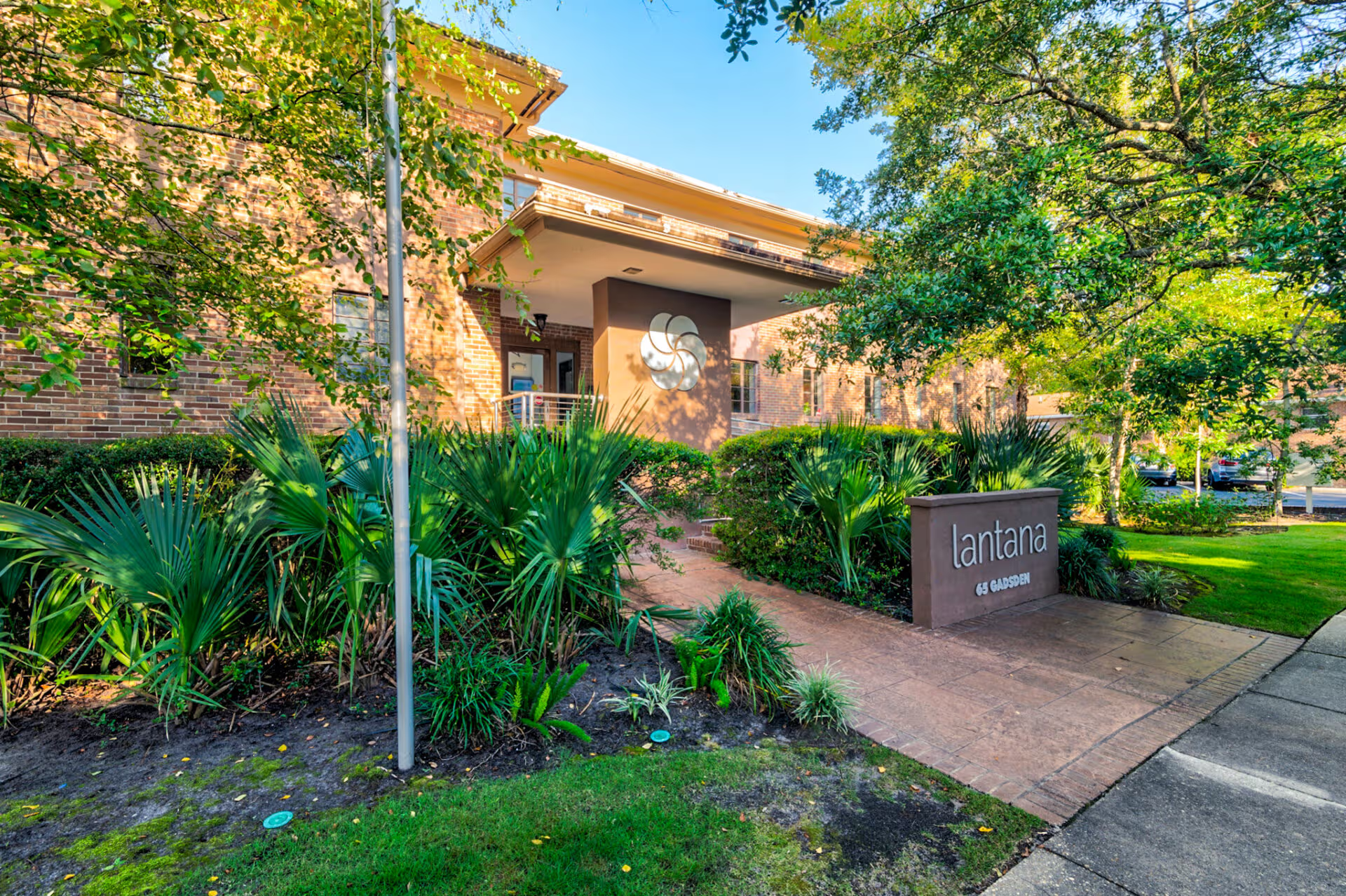
Lantana's Charleston location page gives its treatment address as 65 Gadsden Street, Charleston, South Carolina 29401. It describes care for adults aged 18 and older, including substance use and co-occurring mental health concerns. Confirm this address for clinical appointments and obtain a separate address for any proposed residence. An outpatient service area does not identify where someone will sleep.
How partial hospitalization works at Lantana
The provider's partial hospitalization program description presents PHP as its most structured outpatient option. It combines clinical days with a medical provider, primary therapist, and recovery manager. The Charleston page publishes Monday through Saturday, 9 a.m. to 4 p.m., while the general PHP page describes at least 20 hours of weekly programming. Ask for the actual individual schedule, including breaks, appointments, and any optional activities.
The published pathway commonly involves about four to six weeks of PHP before a possible transition to intensive outpatient treatment. That is a description of a typical pattern, not a fixed prescription. The assessment should establish the starting level and the team should explain how it decides when less intensive care is appropriate. Someone who needs hospital stabilization may require a different starting point.
Full clinical days also have practical consequences for work and caregiving. A person attending six days a week needs dependable transport and a realistic plan for responsibilities outside treatment. Discuss those arrangements with the recovery manager before admission. Being able to remain in the community does not mean the program can fit around an unchanged working week.
Lantana's intensive outpatient page describes group work, individual sessions, medical involvement, and a transition toward standard outpatient care. It gives roughly three group sessions per week. The Charleston location page instead describes two group sessions a day, so the public descriptions do not establish one consistent frequency. Request a current weekly timetable for the particular group and level being offered.
The Charleston service also describes a hybrid option, combining attendance at Gadsden Street with virtual participation across South Carolina where appropriate. Confirm the clinical and practical requirements for remote attendance. A person planning to travel out of state should ask whether the same clinician can continue treating them from that location, rather than assuming a video link removes geographic restrictions.
For online sessions, consider privacy, a reliable connection, and a place where the person can participate without being interrupted. Agree how urgent concerns are handled when someone is away from the treatment address. The convenience of remote care should be considered alongside whether the individual needs more direct supervision or support.
Outpatient detox is offered only after risk assessment
The dedicated Charleston outpatient detox page describes medical check-ins and psychiatric nurse practitioner oversight. It explicitly says screening determines whether withdrawal can be managed outside a residential or inpatient setting. People whose risk requires more care are referred to an appropriate higher level. The provider therefore describes an assessed ambulatory service, rather than a hospital detox unit at Gadsden Street.
Tell the assessing clinician about all substances, prescribed medicines, previous withdrawal complications, and relevant physical or psychiatric conditions. Ask how often reviews occur, who is available outside clinical hours, and what would trigger transfer. Do not independently change medication or attempt withdrawal in order to arrive ready for the program. The starting plan should come from the responsible clinical team.
If inpatient detox is needed elsewhere first, obtain the receiving provider's details and the arrangements for transition back to Charleston. Confirm who shares records, who authorizes the next stage, and whether accommodation is held during the transfer. A coordinated referral still involves distinct services with their own acceptance criteria and financial terms.
Understand Lantana Living separately from clinical care
The Charleston sober-living description identifies CARR-certified housing paired with clinical programming. It gives an example of people spending roughly three months in housing while attending IOP three times weekly. This illustrates one transition pattern; it should not be treated as the required length of every stay or as a promise that housing is medically staffed like an inpatient facility.
Request the specific residence name, address, operator, and current certification information. Ask about bedroom occupancy, overnight staff, meals, transport, accessibility, medication arrangements, and house rules. Establish whether the clinical and housing agreements are separate, and what happens to accommodation if treatment intensity changes or the person leaves the program.
A private bedroom may be valuable for rest, but it does not establish an exclusively individual treatment model. Consider the shared living environment, group timetable, and expected community participation. The most useful accommodation comparison describes how privacy works in daily life, alongside how the person will receive the support they need.
Family support has more than one role
If treatment is sought for addiction alongside depression, anxiety, or trauma-related difficulties, ask how those needs affect the program. Identify who evaluates the mental health condition, which sessions address it, and what signs would lead to a change in care. A general dual-diagnosis label is less informative than an integrated plan that the patient understands. If the mental health condition is the primary reason for seeking help and there is no substance use disorder, confirm that the service accepts that presentation before choosing it.
Lantana's family information describes a weekly support group for relatives and friends and monthly sessions with a client's primary therapist when the client chooses family involvement. Ask which parts are available to the people supporting this admission, how participation works, and whether the current schedule is remote or in person. Family education and joint clinical sessions are different services.
Agree who can receive updates and how consent is recorded. A relative may need support for their own stress, practical guidance about the return home, or help understanding a treatment plan. Those needs should be discussed without assuming that relatives are entitled to every detail of the patient's clinical work. Clear communication boundaries can make participation more useful.
Other Charleston-area services have different functions
Charleston Center, the county's alcohol and drug service, publishes treatment, intervention, and prevention programs. Its listed services include a residential Transitional Care Unit and an opioid treatment program using medication with counseling. It is a separate organization from Lantana. Contact the county service about assessment, eligibility, current availability, and which location handles the required care.
Waypoint's North Charleston outpatient office provides another example of a distinct local format: IOP at 5401 Netherby Lane, Suite 402, North Charleston. Its residential program is in Cameron, South Carolina. Someone comparing Charleston options should not assume a provider's residential photographs depict the building where local outpatient appointments take place.
For a broader search, South Carolina's Office of Substance Use Services describes assessment through county alcohol and drug authorities and a network of outpatient and more specialized services. The appropriate setting may be available locally, regionally, or elsewhere in the state. Use the South Carolina guide to compare those geographic and service distinctions.
Check authorization at the proposed address
The South Carolina Department of Public Health's Find a Facility resource allows searches for licensed healthcare services and facilities. It can show the physical address, license number, expiration, and applicable category. Match the legal operator and address to the proposed program, and investigate housing certification separately where relevant.
A facility record does not answer every question about the treatment plan. Ask who is responsible for medical care, who delivers psychotherapy, how often the patient meets each professional, and how concerns are escalated. Professional biographies, facility authorization, and the availability of a specific intervention provide different kinds of evidence.
Build the cost estimate around the complete plan
Lantana's Charleston information says it has contracts with major commercial insurers and offers self-pay arrangements, but the reviewed pages do not publish a fixed total tariff for every program. Obtain a quote for the exact clinical level, dates, and housing arrangement. Separate therapy, medical appointments, medication, testing, meals, transport, and accommodation so that exclusions are clear.
Verify the specific plan and service directly with the insurer. Network participation, authorization, deductibles, and the amount ultimately payable are separate questions. Ask whether housing is covered and what happens if authorization ends before the team recommends stepping down. A benefits check is useful preparation, but it should be followed by an explanation of the patient's financial responsibility.
A person moving temporarily to Charleston should budget for the transition period as well as the first clinical phase. A person living locally should consider travel, time away from work, and childcare. Compare complete arrangements rather than a single weekly rate, particularly when one proposal includes housing and another assumes the person returns home each evening.
Prepare for continuity after the structured program
Before reducing attendance, agree the next clinical appointments, medication arrangements, and recovery supports. For someone returning outside South Carolina, identify a receiving professional and confirm that records can be shared with consent. For a local resident, test whether the planned schedule is workable around ordinary responsibilities, rather than leaving practical problems until after discharge.
Ask what alumni contact actually includes and distinguish it from continuing therapy or prescribing. The choice of Charleston should make sense across the whole period of care: an assessed starting level, a clearly described daily program, suitable living arrangements, transparent costs, and a realistic plan for continuing treatment where the person will live next.
Back to guide contents↑