Lantana Recovery
Comparison facts and sources
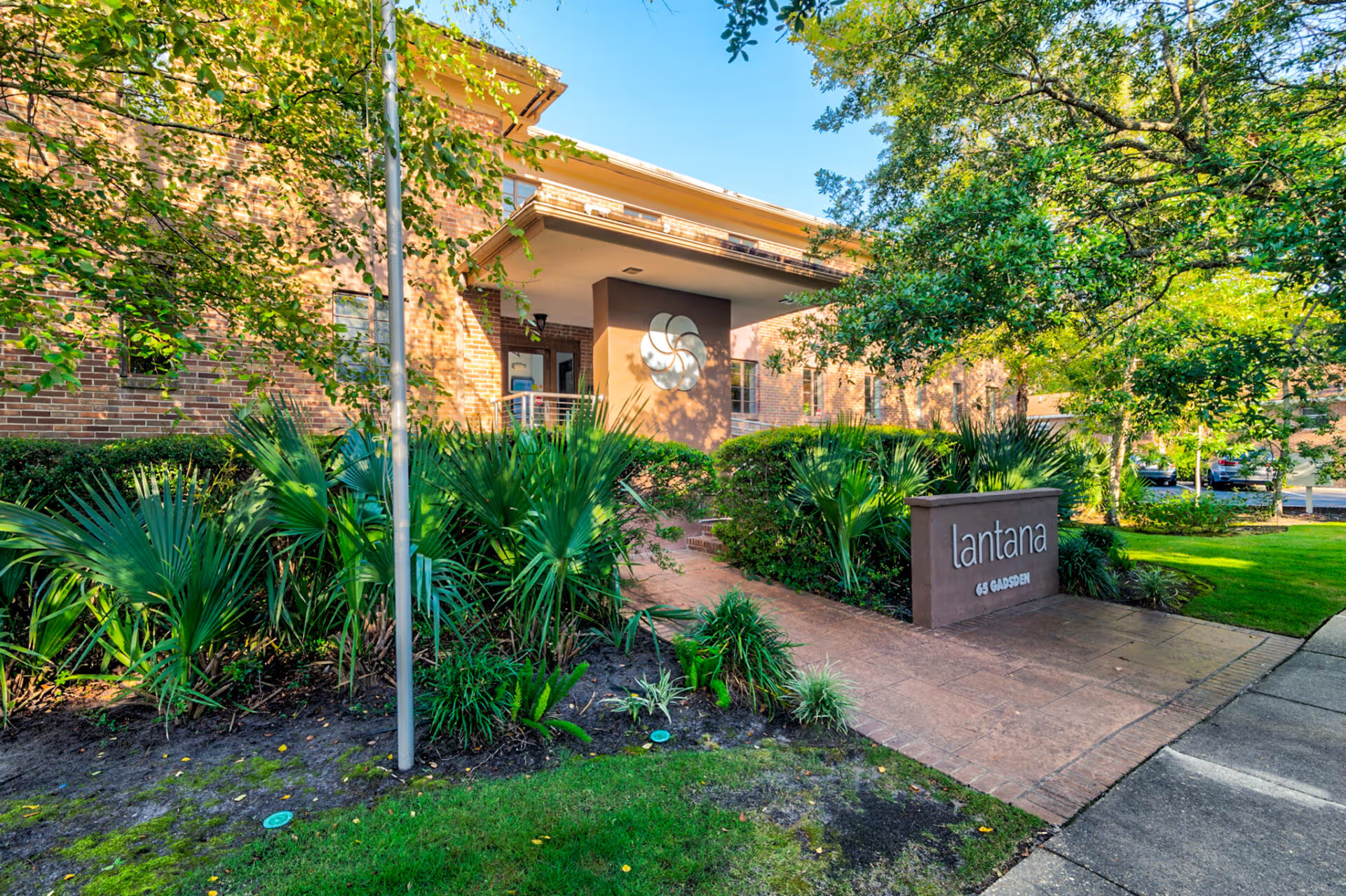
Adult outpatient substance-use and dual-diagnosis care. It is not locked residential or inpatient detox; Lantana’s residential-style model combines six-day PHP clinical programming with separately staffed sober living. · Founding Charleston outpatient clinic at 65 Gadsden Street, Charleston, South Carolina.
- Published fee information
- Quote required
- Before admission
- This review does not establish admission, clinical eligibility, insurance authorization, financial-assistance eligibility or final cost.
- Continuing care
- Recovery management begins at admission and can continue through outpatient step-down, staffed sober living, alumni contact and coordinated transitions to other care levels.
Source record · October 17, 2026
Current official Charleston program, level-of-care, duration, insurance and admissions evidence checked October 17, 2026.
Luxury rehab comparison · Fees and inclusions · Selection methodology
Lantana Recovery’s founding Charleston program at 65 Gadsden Street provides outpatient substance-use and dual-diagnosis care for adults aged 18 and older. Current services include partial hospitalization, hybrid intensive outpatient care, standard outpatient treatment, clinically appropriate outpatient detoxification, medication-assisted treatment, psychiatric medication management and supportive sober living.
This is not a locked residential or inpatient detox facility. Lantana describes a “residential-style” model that combines six-day PHP clinical programming with separately staffed sober living; when licensed inpatient detox or residential care is the safer starting point, the admissions team coordinates placement with a partner before clients return to outpatient treatment.
Most clients complete about four to six weeks of PHP followed, when appropriate, by roughly six to ten weeks of IOP, although timing depends on clinical progress. Lantana says it is in network with major commercial insurance and verifies benefits, deductibles and out-of-pocket responsibility. Financial assistance may be available for qualifying uninsured clients; exact housing, transport and treatment costs require confirmation.
The Charleston program is based on the peninsula
Lantana’s Charleston location page identifies 65 Gadsden Street as its founding treatment location. The program combines outpatient clinical services with practical recovery support. Its published care model assigns a medical provider, a primary therapist, and a recovery manager with different responsibilities. The therapist leads individual clinical work, while the recovery manager helps coordinate practical concerns and the next stage of care.
The location describes weekly individual therapy of approximately 45–60 minutes, medication evaluation, and group-based work. Those details help define the treatment experience more precisely than the neighborhood or accommodation alone. A person arranging care should establish their own schedule, assigned clinicians, and the role of any chosen family members. The admissions telephone service is advertised around the clock; that should not be confused with 24-hour inpatient medical treatment at the Gadsden Street building. Clinical hours and housing support need to be understood separately.
PHP provides the most intensive outpatient schedule
The Charleston PHP page describes in-person programming Monday through Saturday, from 9 a.m. to 4 p.m., and uses approximately 20-plus weekly programming hours as its level-of-care description. Those figures describe different aspects of scheduling; the actual attendance and clinical hours should be set out in the individual plan rather than calculated from opening hours alone.
PHP placement follows an ASAM-based assessment. The published first week includes individual therapy, group sessions, and medication evaluation by a psychiatric mental-health nurse practitioner. A recovery manager is assigned at the start, and Lantana says the therapist and recovery manager remain involved when a client steps down to IOP. The purpose is continuity between stages, not an automatic progression on a predetermined date. Ask how the team reviews readiness for a lower level, how transportation works, and what arrangements apply outside clinical hours.
IOP can follow PHP or begin after assessment
The local intensive outpatient page describes attendance typically three times weekly, with individual and group therapy. It says many clients enter IOP after PHP, while a direct IOP start is possible when the assessment supports it. This distinction matters for someone who already has a stable home environment and an existing treatment team: PHP is a common pathway, not a universal prerequisite.
Lantana lists in-person care at Charleston and virtual options across South Carolina. It describes scheduling around work, school, or family commitments, but the actual session times must be confirmed. The published Monday–Saturday clinical window is not a promise that every IOP participant attends six days. The assessment also considers support outside treatment, including housing and safety. Discuss the proposed attendance pattern, which sessions may be remote, and whether physical location affects eligibility before relying on the program to fit an existing job or school timetable.
Standard outpatient care has no fixed weekly template
The standard outpatient program is described as the lightest level in Lantana’s Charleston continuum. It includes individual therapy and check-ins, commonly after IOP. The provider explicitly says frequency is shaped with the clinical team rather than imposed as one fixed weekly schedule. It also describes receiving people who are transferring in, subject to assessment.
The published model carries the therapist and recovery manager forward from earlier Lantana care. A transfer from another provider needs its own handoff and cannot be assumed to have that pre-existing relationship. Clarify the appointment frequency, medication-management arrangements, and which outside professionals will remain involved. Continuing outpatient appointments are distinct from participation in an alumni community. A plan should explain what support is available between scheduled visits and when the team would reconsider a more intensive level, rather than treating standard outpatient care as an automatic endpoint for everyone.
Outpatient detox requires an appropriate risk assessment
The Charleston detox page describes ambulatory withdrawal management with regular medical check-ins, psychiatric nurse-practitioner oversight, and a recovery manager coordinating care. It expressly limits this option to people whose withdrawal risk can be managed outside an inpatient or residential setting. The provider says the clinical team screens for that distinction and helps arrange a higher level when needed.
This is therefore an assessed outpatient service, not a substitute for every form of medically managed detox. The page describes beginning therapy and treatment routines during outpatient withdrawal management, rather than always requiring a separate detox stay first. Before a planned admission, the team needs an accurate history and information about current medical needs. Confirm the location and timing of medical reviews, support outside treatment, and the plan if needs change. The general description does not provide an individual withdrawal timetable, medication choice, or guarantee that outpatient care will be suitable.
Medication support is coordinated with the clinical program
Lantana’s Charleston MAT page describes medication management alongside therapy and case management, from PHP through standard outpatient care. A psychiatric mental-health nurse practitioner reviews history and current needs before medication decisions. Follow-up appointments are part of the published model, allowing the treating professional to review the plan as care progresses.
The service description should not be interpreted as a guarantee of a particular prescription or as evidence that every medication can be supplied at every setting. A prospective patient can discuss existing prescriptions, the clinician who currently manages them, and how information will be transferred with consent. It is also useful to establish who will manage medication after a change in level of care or a return home. Lantana presents this as a coordinated clinical pathway rather than an isolated prescription service; the individual assessment determines the actual medication and follow-up arrangements.
Sober housing is paired with outpatient treatment
The Charleston sober-living page describes recovery housing with clinical and peer support. Lantana identifies the housing as CARR-certified and describes a common step-down pattern of roughly three months while attending IOP three times weekly. These are provider-published descriptions of certification and a typical pathway, not independent confirmation of every residence or a required three-month stay.
The clinical program and place to sleep remain distinct parts of the arrangement. Confirm the actual residence, room occupancy, staffing, house rules, transportation to groups, and what happens when the clinical schedule changes. The page says insurance benefits are checked for the clinical programming paired with housing; that does not establish that insurance pays the accommodation charge. Someone comparing total costs should request separate treatment and housing details. A peer-supported residence can provide structure outside appointments, but its description does not make it an inpatient medical or psychiatric facility.
Residential placement may be arranged with another provider
The Charleston residential-placement page explicitly states that Lantana’s local program is outpatient. When residential care is indicated, admissions helps coordinate a placement with another program. Some clients arrive after a residential stay elsewhere and then use Lantana PHP or IOP as the next stage. Others need that outside placement before they can begin the Charleston outpatient plan.
This distinction also explains the provider’s use of “residential-style” language elsewhere for outpatient treatment combined with staffed housing. A supported living arrangement and a licensed residential treatment admission are not interchangeable. Ask for the name of any proposed receiving provider, its actual clinical service, the financial arrangement, and how records and appointments will be coordinated. Lantana says its team stays involved through transitions, but a planned handoff does not establish that another provider has accepted a patient or has an available bed.
Family education can extend beyond the treatment stay
The Charleston family program describes a six-month education workshop with involvement beginning early in treatment. The published focus includes how family relationships and responsibilities may need to change when the person returns home. The level of involvement is shaped to what is realistic for the family, rather than presented as one identical arrangement for every participant.
The workshop’s six-month description is separate from the duration of PHP, IOP, or residence in recovery housing. It does not imply six months of residential treatment or unlimited individual family therapy. Clarify who can participate, how sessions are delivered, the schedule, and whether any specific parts are included in the proposed treatment cost. Family participation should also be discussed with the patient and treating team, including consent and information-sharing boundaries. The useful question is how the workshop connects with the individual’s actual home situation and discharge plan.
Program lengths are typical ranges, not a prepaid itinerary
The general PHP guide describes a common sequence of about four to six weeks in PHP, followed by roughly six to ten weeks in IOP as stability improves. It says the team reviews the plan and adjusts the level according to clinical progress. These ranges remain useful planning information, but they do not establish a required sequence or exact completion date for every Charleston client.
Several timelines may run alongside one another: clinical attendance, housing, work or school leave, and family education. They should be agreed separately. When discussing a proposed stay, ask when the first review occurs, what would support stepping down, and how financial authorization will be handled if the plan changes. The provider’s general guide covers its broader service model, so the receiving Charleston team should confirm how the published ranges apply to the recommended local program. A testimonial describing one person’s stay is not a standard duration.
Prescreening is followed by a clinical assessment
The general admissions page describes a brief telephone prescreen, review and approval, and then an in-person clinical assessment. The clinician uses that assessment to review history and develop treatment goals around the person’s strengths, needs, and preferences. This is more specific than treating an initial inquiry as acceptance into a predetermined program.
The same page explains that insurance information can be reviewed during the prescreen, including deductibles and out-of-pocket responsibility. It also says financial assistance may be available for people without insurance or behavioral-health coverage who qualify. Eligibility for assistance requires confirmation; it is not a blanket promise of free treatment. Before committing to travel or housing, establish the recommended level, any medical requirements, the confirmed start, and the written financial arrangements. If a telephone discussion identifies a need for a different setting, that placement needs its own clinical and financial confirmation.
Verify the benefit for the actual Charleston service
The Charleston insurance page says Lantana is in network with major commercial insurance for PHP, IOP, and outpatient detox. It offers a free benefits check without an obligation to enroll. That describes the verification service and general network participation; it does not establish every plan’s benefits, the length of authorization, or the final amount a patient will owe.
A useful estimate names the treatment level and receiving location, the expected clinical charges, and any separate housing or transportation arrangements. Ask how medication appointments and changes in attendance affect the estimate, and who will explain any revised authorization. General references to in-network care should not be interpreted as a zero deductible or full payment for all related services. The reviewed local page does not publish a universal self-pay price. Confirm the proposed costs in writing for the individual’s plan and accommodation choices.
Official provider information reviewed October 19, 2026. The profile distinguishes Charleston outpatient care, separate recovery housing, and placement with outside residential providers.
Sources
- Official Charleston program, address and services
- Official partial hospitalization information
- Official intensive outpatient information
- Official residential-style care distinction
- Official admissions, insurance and financial-assistance information
Sources checked October 17, 2026.