Scottsdale Recovery Center


Scottsdale Recovery Center 3 photos
Comparison facts and sources
Network profile anchored to the adult outpatient clinic and admissions office at 8149 North 87th Place; detox and residential services are delivered at other Scottsdale Recovery Center properties. · 8149 North 87th Place, Scottsdale, Arizona 85258, United States.
- Published fee information
- Quote required
- Before admission
- The listed address is the outpatient clinic, not the network's detox or residential campus. Benefits, authorization, site, schedule and exact program duration require individual confirmation.
- Continuing care
- IOP case management includes external referrals, community and recovery connections, and discharge/aftercare planning. The provider does not publish a fixed aftercare duration.
Source record · October 16, 2026
Provider-published information checked October 16, 2026. The provider displays The Joint Commission Gold Seal. Confirm Arizona licensing, exact property, program eligibility, benefits and personal costs directly.
Luxury rehab comparison · Fees and inclusions · Selection methodology
Provider overview
Scottsdale Recovery Center operates addiction-treatment services across multiple Arizona properties. The listed address, 8149 North 87th Place in Scottsdale, is its outpatient treatment facility and admissions office; it should not be presented as the network’s detox or residential property.
Treatment and services
The Scottsdale outpatient site provides partial hospitalization, daytime intensive outpatient and evening intensive outpatient care for adults age 18 and older. The current IOP page describes one three-hour treatment group per day, three to five days per week as clinically indicated. Current evening-IOP guidance describes a three-hour session, typically three to four weekday evenings per week. Medical detox, residential care and sober-living residences are offered elsewhere in the wider network and require confirmation at the appropriate property.
Admissions, duration and costs
The provider says treatment duration is individualized rather than fixed and lists 602-346-9142 for 24-hour information and intake. Scottsdale Recovery Center accepts most private PPO plans and offers benefit verification; specific coverage, authorization and out-of-pocket costs depend on the policy. No standard weekly self-pay price or tax-inclusive package was verified.
The outpatient address and other treatment properties
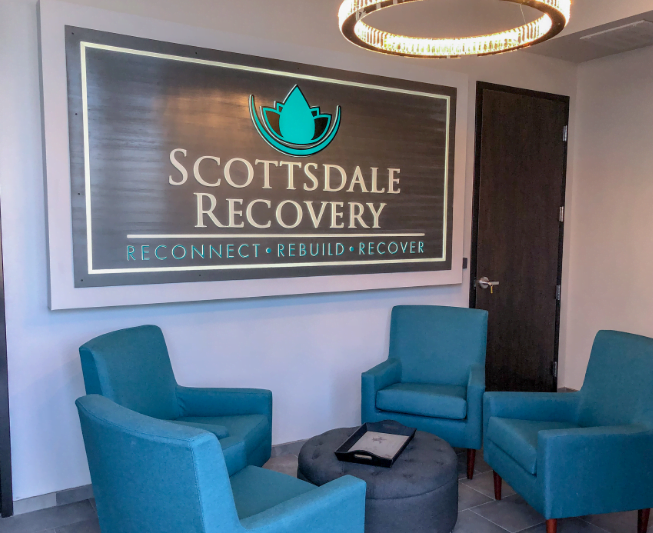
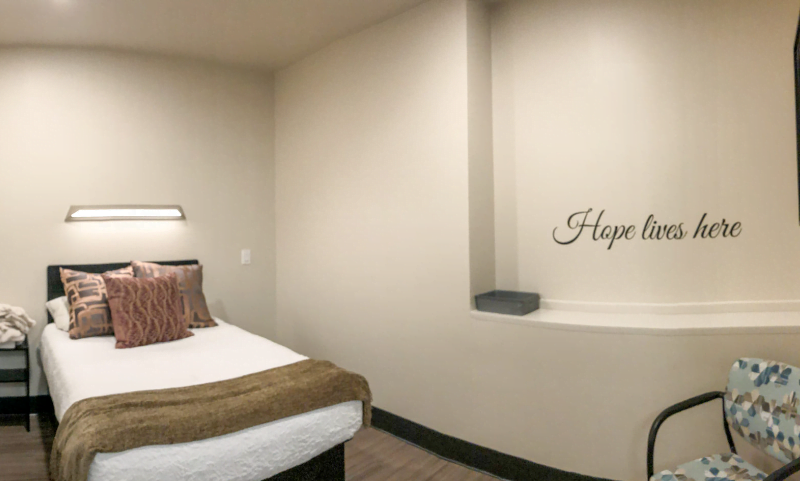
The outpatient clinic description identifies group rooms, private therapy offices, a client lounge, and space for yoga and art at the North 87th Place address. It describes daytime partial hospitalization and intensive outpatient care, together with an evening option. Those details support interpreting this location as a place people attend for scheduled treatment, rather than assuming it is where they sleep or receive medically monitored withdrawal care.
Anyone considering a combined treatment-and-housing arrangement should obtain both addresses and identify who operates each service. Ask how transportation works, what happens outside clinic hours, and whether housing is optional or required. The provider discusses programs ranging from shorter episodes to continuing involvement over a year, but that is not a prescribed stay for every client. The appropriate plan should explain the person’s needs, the proposed attendance schedule, and the next review point.
Partial hospitalization: compare the clinical timetable
Scottsdale Recovery Center’s partial hospitalization page describes programming Monday through Saturday, with longer weekday sessions and a shorter Saturday. It also lists weekly practitioner contact, individual therapy, case management, and family programming when appropriate. A prospective client should request the current timetable because a brief clinic overview and a detailed program page may summarize the hours differently.
Ask which sessions are mandatory, how attendance is recorded, and what support is available between treatment days. The name of this level of care should not be taken to mean an overnight hospital admission. If sober housing accompanies the program, clarify supervision, medication arrangements, and how staff communicate with the clinical team. A clear plan also states the criteria for moving to fewer treatment hours and what happens if the person’s needs increase. These details are more informative than a general description of intensive care.
Daytime intensive outpatient care
The intensive outpatient program describes three-hour groups on three to five days per week, depending on clinical need. Its published components include individual therapy, psychiatric or medical support, and case management. This makes it a substantial weekly commitment even though clients are not admitted to an overnight treatment bed at the outpatient clinic.
Before fitting the program around work, ask whether the recommended number of days can actually be accommodated and how individual appointments are scheduled. Discuss transportation and the home environment rather than considering group hours alone. The provider describes testing and work on cravings, communication, decision-making, and relationships. Ask how results and progress inform the plan, including when additional care would be recommended. If a client is stepping down from another provider, confirm who transfers records and prescriptions and whether there is a gap between discharge and the first outpatient appointment.
Evening treatment and an important scheduling question
The evening intensive outpatient page describes three-hour groups, generally three to four sessions weekly. That format may suit people maintaining employment, but it still requires reliable attendance and time outside work. The page gives inconsistent descriptions of individual therapy, referring to monthly contact in one section and weekly contact elsewhere. Obtain the proposed individual-session frequency in writing instead of assuming either statement applies to every client.
Also ask about the current start time, required days, holiday arrangements, and make-up sessions. Evening group access does not necessarily mean medical or administrative appointments occur after working hours. Discuss how the team handles a missed session, a concerning symptom, or a need to increase treatment intensity. The right comparison is the complete weekly care plan, including individual and medical contact, rather than the convenience of the group timetable alone.
Detox is a separate stage of care
The organization’s medical detox description refers to a separate medically supervised service, with assessment, continuous monitoring, medication management, and case management. Its stated typical duration is an estimate rather than a safe deadline for every substance or person. A clinical assessment should determine whether this service is appropriate before someone plans to attend outpatient treatment.
Ask where withdrawal care occurs, which clinicians are available, and how the team manages medical needs outside its scope. Give the team a complete account of prescribed medicines and recent substance use. The provider itself describes detox as an initial step and recommends continuing treatment or a referral afterward. Accordingly, compare the withdrawal plan and the longer recovery plan separately. Finishing detox does not establish that an outpatient schedule is appropriate immediately, and a comfortable setting does not remove the need for individualized medical assessment and follow-up.
Residential care has a different staffing and daily structure
Scottsdale’s residential program page describes daily group treatment, individual or family sessions, and nursing and behavioral health staff present around the clock. It refers to multiple treatment homes, with amenities varying between properties. These features should not be transferred automatically to the outpatient address or treated as an assurance that every accommodation has the same room configuration.
Ask for the exact residential property, room-sharing arrangement, current clinical schedule, and nighttime staffing model. Clarify whether a nurse is physically present and how a physician is contacted when needed. The program describes both 12-step and other approaches, so discuss personal preferences and required participation before admission. If residential treatment is followed by daytime care and separate housing, obtain a staged plan showing when the location, clinical intensity, fees, and supervision change. That prevents several distinct services from being mistaken for one unchanged residential package.
Medication treatment and continuity after discharge
The medication treatment page states that services are offered when medically and clinically appropriate, with coordination between medical, psychiatric, and clinical teams. It also describes a continuity care clinic intended to help clients continue medication services after treatment. This is relevant for someone already receiving a prescribed medication who needs to avoid an unplanned interruption.
Before admission, ask whether the specific medication can be continued, who will prescribe it, and which outside records are needed. The presence of a medication program does not mean every medication is available for every diagnosis or at every property. Discuss pharmacy access, follow-up appointments, and insurance coverage after leaving the structured program. Medication decisions should be made with the prescribing clinician using the individual’s history and response. Alumni accounts or general program descriptions do not determine which medication or duration is appropriate for a particular person.
Practical barriers and the C.A.R.E. Academy initiative
The C.A.R.E. Academy page explains an organizational focus on housing, transportation, access to health care, education, and other social needs. This adds an important dimension to a treatment comparison: a workable recovery plan also needs practical arrangements that enable someone to attend care and manage daily life. The page describes an initiative, not a guarantee that every applicant receives every resource.
Ask what help is actually available for the individual’s situation and who is responsible for providing it. A referral to an outside agency differs from a service delivered by the treatment team. Clarify eligibility, waiting lists, costs, and the limits of assistance with housing or employment. If discharge depends on securing accommodation or transportation, the plan should identify alternatives if the first option falls through. Concrete arrangements are more useful than assuming that a broad commitment to whole-person care resolves every practical barrier.
Recovery Continued and community support
The provider describes Scottsdale Recovery Continued as a nonprofit organization focused on housing and health-related social needs. Its page discusses assistance such as food, hygiene products, transportation, and community activities, alongside alumni meetings. This should be understood separately from the clinical admission agreement and the services billed by the treatment center.
A person seeking assistance should ask who is eligible, how an application is reviewed, and whether support is currently funded. Do not assume that paying for treatment includes a housing placement or financial assistance afterward. For alumni activities, ask about attendance rules, frequency, and how someone reconnects when additional clinical care is needed. Community connection can be part of a continuing plan, but a social event or peer meeting is not the same as an individual clinical appointment. The discharge plan should identify both kinds of support clearly.
Cultural fit and tribal programming
The tribal programming page describes services intended for American Indian and Alaska Native clients, including attention to cultural practices and practical case-management needs. Prospective clients should be able to discuss the practices and relationships that matter to them without being treated as if all tribal communities share one experience. A general cultural commitment needs to translate into a personally appropriate plan.
Ask which cultural activities are available, who leads them, and whether participation is optional. Where care involves a tribal health service or another referring organization, confirm consent, payment arrangements, and the process for returning home. Transportation, medication continuity, and local follow-up deserve explicit planning. The provider’s descriptions should not be interpreted as proof of a formal relationship with every tribe or as evidence of superior outcomes. Evaluate the specific service offered to the individual and the qualifications and responsibilities of the people delivering it.
Insurance and the complete cost of care
The insurance page emphasizes private PPO benefit verification for several levels of treatment. Acceptance of a policy and payment of every proposed service are different questions. Ask the admissions team to identify the billing entity, network status, authorization requirements, deductible, and estimated personal responsibility for the specific program.
A written estimate should distinguish outpatient treatment from residential accommodation, detox, transportation, testing, and services supplied by outside clinicians. If the recommended plan changes during treatment, ask when a revised estimate will be provided and who obtains any new authorization. Confirm the terms for cancellation, early departure, denied claims, and continued care after the initial episode. A nationwide insurance statement is not a fixed price or a guarantee of reimbursement. Keep the clinical recommendation, benefit verification, and financial agreement together so the proposed care and its expected costs can be reviewed consistently.
Provider information reviewed October 18, 2026. Confirm the current program, location, timetable, clinical eligibility, and financial terms directly with Scottsdale Recovery Center.
Sources and verification
Official provider overview; official outpatient property page; official IOP page; official insurance page. Checked October 16, 2026. Provider-published information; not an independent clinical assessment.