The Residence at Homewood
Comparison facts and sources
Private inpatient mental health, trauma, addiction and concurrent-condition treatment · Guelph, Ontario, Canada
- Published fee information
- Quote required
- Before admission
- Duration is individualized; no universal current stay length was verified.
- Continuing care
- Homewood Recovery Management may include individual sessions, groups, and telephone contact. Confirm eligibility, duration, and the package attached to this admission.
Source record · 2026-10-20
Official provider information checked October 20, 2026.
Luxury rehab comparison · Fees and inclusions · Selection methodology
The Residence at Homewood is a private inpatient program for mental health, trauma, addiction, and concurrent conditions in Guelph, Ontario. It combines an individually tailored treatment model with private accommodation on the Homewood campus. The setting may appeal to people seeking concentrated clinical support alongside a high degree of personal space. The provider describes an interdisciplinary service that brings together medical, psychological, and other treatment perspectives. The Residence at Homewood
This is a distinct program within the wider Homewood organization. It should not be confused with Homewood Ravensview on Vancouver Island or with the full Homewood Health Centre hospital in Guelph. Sharing a campus and organization can be relevant to access and coordination, but a prospective resident should ask about the services, staffing, room, and treatment agreement attached specifically to The Residence. That is the clearest way to compare it with another private inpatient option.
A private program on the Guelph campus
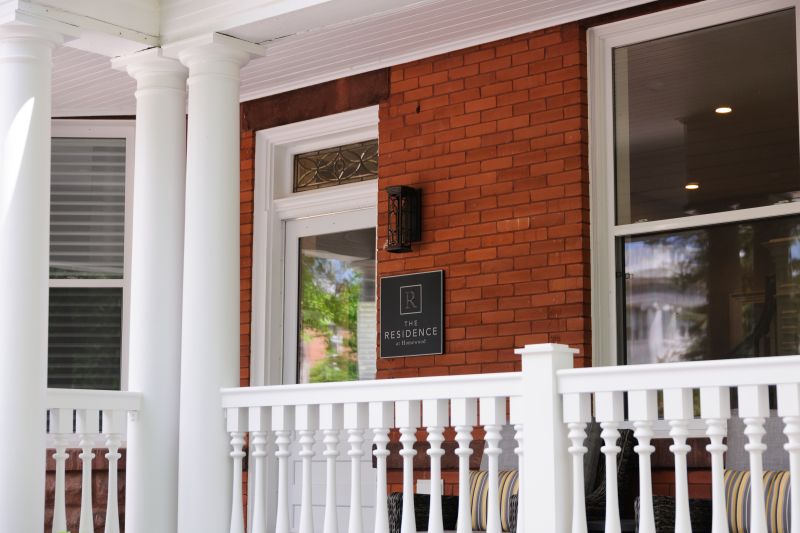
The Residence occupies a restored house on the same 50-acre grounds as Homewood Health Centre. Its description emphasizes a more personal residential environment while retaining connections to the organization’s broader treatment resources. The surrounding campus offers space away from the immediate pressures of home and work. The scale of the neighboring hospital should not be used as the capacity of The Residence itself; they are different parts of the campus. About The Residence
For someone comparing a remote retreat with a clinically integrated setting, this arrangement raises useful questions. Which assessments take place inside The Residence? Which appointments involve another part of the campus? Who remains responsible for coordinating the plan when more than one service is involved? Ask admissions to describe that experience in practical terms, including how privacy is maintained during transfers or outside appointments.
Rooms and everyday surroundings
The accommodation page describes private bedrooms with ensuite bathrooms, workspaces, individual climate controls, and comfortable bedding. Shared areas include lounges and spaces such as a conservatory, porch, patio, and gazebo. Private airport transportation is described as available. These are provider-published features of the setting; the specific room and any transportation charge should be confirmed with the booking. Residence accommodation
Privacy can help someone maintain boundaries during a demanding period of treatment. It also permits quiet time between appointments without necessarily removing the possibility of company. Ask how residents use shared spaces, whether meals are communal, and how much unstructured time is typical. A private bedroom does not by itself explain whether the overall program is mostly individual, group-based, or a combination of both.
The practical details can affect comfort over a longer stay. Discuss mobility requirements, sleep-related needs, dietary restrictions, access to laundry, and the rules for personal belongings. If work contact is necessary, ask what device use is permitted and whether it can be scheduled around treatment. A workspace in a bedroom should not be taken as a commitment that unrestricted working hours are compatible with the program.
Assessment and an individualized treatment plan
The provider describes a comprehensive initial assessment that helps shape the treatment plan. Its approach considers the person’s mental health, substance use where relevant, history, and wider circumstances. Family information can be incorporated with appropriate consent. The purpose of asking about assessment is to understand how a broad program becomes a specific plan for one person, rather than assuming that everyone receives the same combination of services. The Residence treatment approach
Before admission, ask which records the team needs and whether existing clinicians can contribute. Relevant questions include how diagnoses are reviewed, who explains the proposed plan, and when the resident can discuss preferences or concerns. A plan should identify priorities and the professionals responsible for them. It should also explain how progress will be reviewed and what would lead the team to recommend a different level of care.
Concurrent conditions can make program comparisons difficult. A service may advertise both addiction and mental health treatment, but the balance between them can differ substantially. Someone whose main difficulty is trauma, depression, or another mental health concern should ask how that issue will shape the schedule. Someone entering because of substance use should ask how medical stabilization, relapse-related planning, and mental health treatment fit together in the proposed stay.
Clinical staffing and therapeutic contact
The Residence describes 24-hour on-site clinical and medical staff and an interdisciplinary team that includes psychiatric, medical, psychological, and wellness roles. Its homepage reports an average of eight to twelve individual sessions a week with members of that broader team. That is a provider description of typical contact, not a guaranteed number of psychotherapy appointments for every resident. Ask which disciplines would deliver the sessions in the individual offer. The Residence clinical team The Residence at Homewood
The distinction between professional roles matters. A session with a psychiatrist, psychotherapist, exercise professional, or nutrition specialist may each support a different goal. A useful sample timetable identifies those roles and the length of the appointments. It should also make clear how the team shares information, who leads clinical decisions, and whom the resident approaches when the plan needs adjustment.
Homewood describes access to additional hospital-based psychiatric services when clinically appropriate. Availability on the campus does not mean every service is indicated, included, or automatically available to every resident. If a referring clinician has suggested a particular intervention, discuss that recommendation before admission. The important questions concern assessment, consent, eligibility, cost, and coordination with the rest of the residential plan. The Residence at Homewood
Family involvement and personal boundaries
The provider’s approach explains that residents can determine who is involved in their care and how information is shared through consent arrangements. It describes opportunities for family input and meetings, while recognizing the resident’s choices about participation. For families hoping to contribute, the first conversation should establish the appropriate contact route and what information staff can discuss. The Residence treatment approach
Family involvement is most useful when its purpose is clear. It may help the team understand the circumstances before admission, prepare for a return home, or support a more workable communication pattern. Ask whether any family sessions are included and whether remote participation is possible. Where relationships are strained, discuss boundaries early so that treatment does not become dominated by competing expectations about what the stay should accomplish.
A resident may also want a trusted person involved in practical decisions without sharing every clinical detail. The admissions team should explain whether financial, emergency-contact, and clinical-consent arrangements can be distinguished. This can be especially relevant when another person funds the stay or when an employer is involved in leave arrangements.
Costs, duration, and the admission decision
No current numerical program fee was verified on the official pages reviewed. A prospective resident should request a written quote based on the assessed treatment needs, proposed duration, and accommodation. Do not substitute a price for another Homewood service or a third-party estimate for the specific Residence offer. The homepage indicates that both self-referrals and medical referrals are accepted, making it possible to begin the discussion through either route. The Residence at Homewood
The written offer should explain what the residential fee includes, how outside or additional services are charged, and what happens if the recommended stay changes. Ask about deposits, cancellation, early discharge, and the process for approving extensions. If an insurer, employer, or another payer may contribute, obtain confirmation from that payer and clarify any documentation requirements. A provider’s ability to issue paperwork does not establish reimbursement.
Duration is best discussed in relation to goals. Ask what can reasonably be assessed and addressed during the initial period, when the team reviews the plan, and how discharge readiness is considered. This is more useful than choosing a stay length solely because it fits a calendar or a budget. Practical constraints still matter, and they should be part of the conversation from the beginning.
Recovery Management after inpatient treatment
The Residence describes a Recovery Management service that can include telephone check-ins, group contact, and individual sessions. Its information discusses matching a resident with a therapist who may become involved before discharge. Eligibility and the particular package should be discussed with admissions; the page also describes opportunities to purchase additional services. Aftercare therefore needs its own clear scope in the treatment agreement. Recovery Management at Homewood
The transition plan should connect the inpatient work to ordinary life. Ask which appointments will already be booked before departure, how the team communicates with existing clinicians, and whether remote support is available where the resident lives. It is useful to identify the first few weeks in detail, including work, household routines, family contact, and any continuing medical appointments.
Questions about The Residence at Homewood
Is this the same facility as Homewood Ravensview?
No. The Residence is in Guelph, Ontario. Homewood Ravensview is a separate facility on Vancouver Island, British Columbia. The shared organization does not make their accommodation, clinical schedules, or fees interchangeable. Ask for information bearing the name of the program being considered. About The Residence Homewood Ravensview on Vancouver Island
Does private accommodation mean treatment is entirely individual?
The Residence emphasizes individualized care and describes substantial individual contact, but the room arrangement alone does not define the whole schedule. Ask for the balance of individual appointments, group work, wellness activities, and independent time in the proposed program. This is particularly important if a specific format is central to the resident’s preferences. The Residence at Homewood
What should be confirmed before paying for admission?
Confirm clinical acceptance, the proposed dates and duration, the room, the responsible team, and a complete written fee agreement. Include the scope of Recovery Management and any services that require separate payment. These details provide a practical basis for deciding whether the program matches the person’s needs and circumstances. Recovery Management at Homewood
Explore related treatment options
For further comparison, explore treatment centers in Ontario and mental health treatment providers. Review each provider’s clinical setting, accommodation, admissions requirements, and continuing-care arrangements.
Sources
- The Residence at Homewood
- About The Residence
- Residence accommodation
- The Residence treatment approach
- Recovery Management at Homewood
- The Residence clinical team
- Homewood Ravensview on Vancouver Island
Provider information reviewed October 20, 2026. Confirm current services, availability, and the written treatment agreement directly with the provider.