Sunshine Coast Health Center


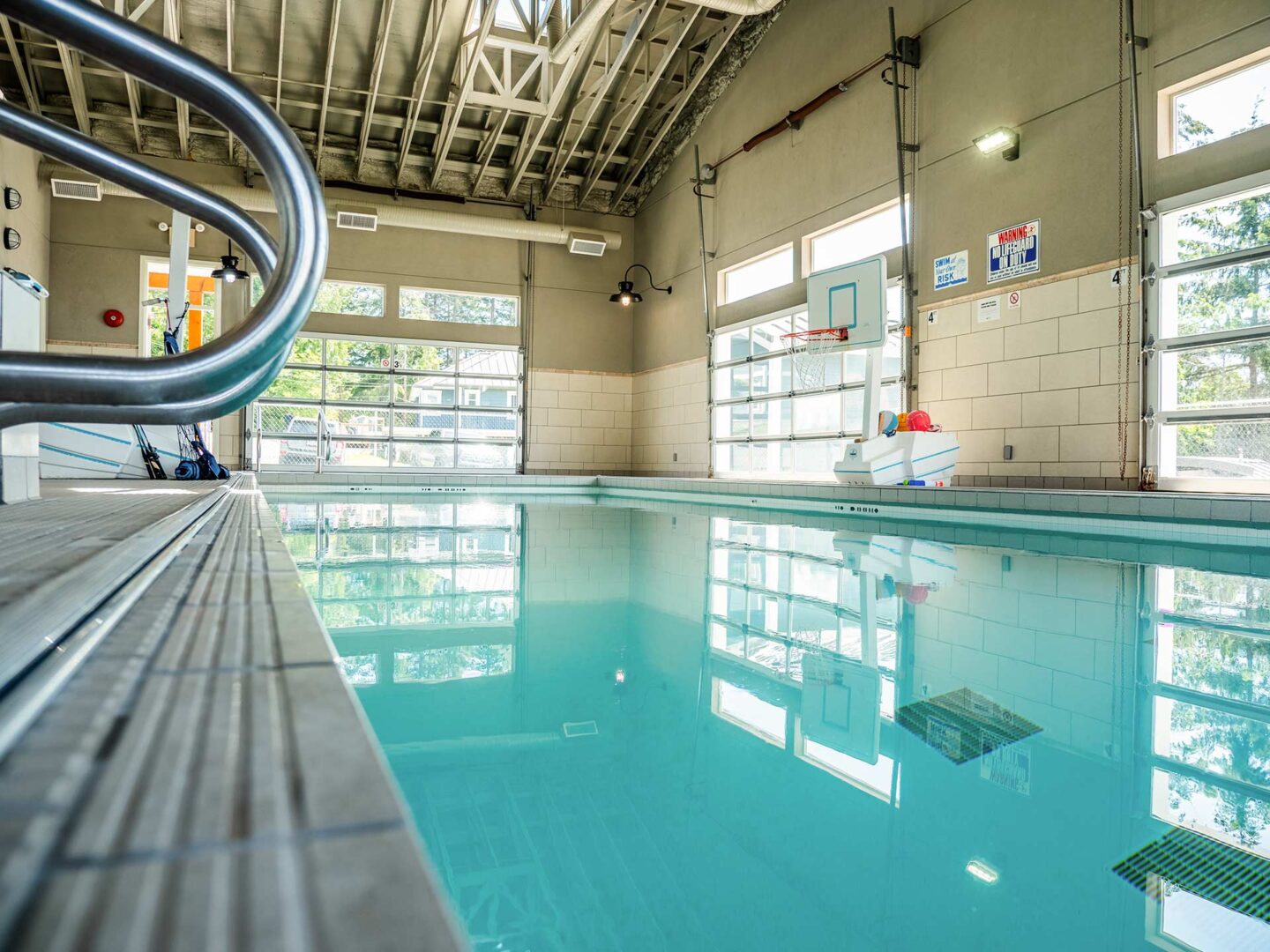
Sunshine Coast Health Center 3 photos

Comparison facts and sources
Private men-only residential treatment for mental health, addiction and occupational trauma using non-12-step, meaning-centered and evidence-based care. · 2174 Fleury Road, Powell River, British Columbia V8A 0H8, Canada. This is the men-only Sunshine Coast Health Center campus.
- Published fee information
- Quote required
- Before admission
- Confirm clinical suitability, withdrawal needs, program length, availability, fee inclusions, exclusions, extended-health reimbursement and any direct-billing arrangement with admissions.
- Continuing care
- Long-term virtual aftercare and coaching, professionally led support groups, telephone or text support and alumni services are available after residential treatment. The provider says continuing support is included and remains available while needed.
Source record · October 16, 2026
Provider-published information checked October 16, 2026. Current provider pages support the campus identity and care model. This review does not independently verify every license, accreditation, insurance decision or clinical outcome.
Luxury rehab comparison · Fees and inclusions · Selection methodology
Provider overview
Sunshine Coast Health Center is a private residential mental-health, addiction and occupational-trauma provider for men at 2174 Fleury Road in Powell River, British Columbia. The provider states that it accepts up to 30 clients at a time and uses non-12-step, evidence-based programming.
Treatment and services
Current services include 24-hour medical care and nursing, on-site withdrawal management, psychiatry, psychology, meaning-centered psychotherapy, family counseling, nutrition and fitness support, recreation and post-treatment coaching. Clients do not need to arrive abstinent when withdrawal management is clinically appropriate. Admission and treatment planning remain assessment-based.
Admissions, duration and costs
A doctor’s referral is not required. After any necessary withdrawal management and medical clearance, the center asks clients to complete at least 30 days of programming; longer stays are flexible. Its continuing-care services include coaching, professionally led weekly support groups, 24-hour phone or text support and alumni events, and the provider says these are included in the treatment fee and remain available indefinitely.
Fees are supplied by admissions at 1-866-487-9010. The center says it works with most extended-health providers and referring organizations, can discuss split payments and medical financing, and may provide documentation for reimbursement or direct billing where available. Coverage, total cost, currency and individual tax treatment require written confirmation.
A meaning-centered approach without compulsory spiritual participation
Sunshine Coast Health Center’s treatment approach combines physical, psychological, social, and personal-meaning work. It describes medical and psychiatric assessment, medication management, counseling, nutrition and fitness input, recreation, and community activities. Counselors draw on different methods according to the person, including cognitive behavioral, dialectical behavior, and narrative approaches. Spiritual activities are explicitly described as voluntary.
This distinction can matter to someone seeking a non-12-step program or concerned about compulsory religious involvement. Ask how the meaning-centered framework appears in daily treatment and how goals are developed with the resident. Personal meaning can be explored through relationships, work, values, or other priorities without assuming that everyone shares a belief system. Discuss any previous experiences with treatment that felt unhelpful or unsuitable. The relevant comparison is whether the service can explain its methods, respect the person’s preferences, and provide a coherent plan for the problems identified in assessment.
Medical withdrawal is a separate stage before regular programming
The medical program page says new residents see a doctor within twenty-four hours and remain in a medical unit until considered ready for the main program. It gives an approximate one-to-five-day period, while emphasizing that withdrawal differs between people. Nursing monitoring is described as continuous, with protocols matched to the substances used. The page expressly includes opioid agonist treatment, giving Suboxone as an example.
Ask the receiving medical team how current prescriptions and substance use affect admission, monitoring, and the expected sequence of care. A published average is not a personal detox schedule. Clarify which medication options are available, whether additional hospital care could be necessary, and how its costs would be handled. Do not change prescribed medication or attempt withdrawal solely to fit a booking date. The treatment plan should connect the medical stage with ongoing psychological care and the medication arrangements needed after discharge.
The occupational-trauma program addresses more than substance use
The occupational trauma and PTSD program is described for first responders, military personnel, and veterans. It includes dedicated trauma groups, individual therapy, psychiatric care, EMDR, and other listed interventions. The provider emphasizes integrating trauma and addiction treatment where both are present, with attention to identity, relationships, values, and the effects of work-related experiences.
A prospective resident should ask how the trauma track changes the ordinary schedule, who provides specialist treatment, and what assessment determines readiness for particular interventions. Clarify how pain, sleep, medication, occupational requirements, and any referring organization’s involvement will be considered. Returning to work may require a different plan from simply returning home. Ask which information can be shared with an employer or funder, who authorizes that disclosure, and how confidentiality is protected. A dedicated program name is most useful when it translates into clearly defined services and a practical continuation plan.
Family support is educational and has its own participation rules
The family-services page makes an important distinction: its complimentary support is primarily educational, rather than an attempt to resolve complex family problems in a brief intervention. With the resident’s consent, the team contacts nominated loved ones. A weekly virtual family session is available during or after treatment, without a stated expiry date, and is limited to two family members per resident or alumnus.
The family session is for relatives, not the resident or alumni themselves. Ask how to register, which topics it covers, and how it relates to any individual family counseling needed locally. Relatives may want help understanding boundaries, communication, and practical support after discharge while also attending to their own well-being. A short educational service should not be expected to settle every relationship issue. The provider says it can help families connect with local therapists for deeper work, so clarify that referral process when more sustained support is needed.
Alumni support includes several distinct forms of contact
The alumni-services page describes recovery coaching, facilitated support meetings, contact with alumni coordinators, refresher weekends, and community events. Most listed meetings are online, with certain in-person options in Canadian cities. It also describes twenty-four-hour phone or text availability from alumni coordinators and opportunities to reconnect with the residential community.
Clarify which services apply immediately after discharge, how appointments are booked, and whether a refresher stay requires a new assessment or advance availability. An alumni coordinator’s availability should not be confused with an emergency department or continuous psychiatric treatment. The transition plan should identify the professionals responsible for ongoing clinical care, including medication where relevant. If symptoms return or substance use resumes, ask how reassessment and readmission are handled and what additional costs could arise. The value lies in knowing how to use each support option, rather than treating aftercare as one undefined service.
Fees, benefits, and financing require separate confirmation
The fees and financing page directs prospective residents to admissions for a current schedule. It describes working with extended-health providers and referring organizations, preparing documentation, and arranging reimbursement or direct billing where available. It also discusses split payments and third-party medical financing. Those options describe possible payment routes rather than a universal coverage commitment.
Request the total price in a stated currency, the number of treatment days, and an explanation of how the medical stage, extensions, and included aftercare are billed. Confirm benefits directly with the insurer or funding organization, including authorization, limits, exclusions, and any amount payable personally. If financing is considered, review the lender’s total repayment cost and terms separately from the clinical recommendation. The website also discusses potential tax treatment; individual tax eligibility should be checked with a qualified adviser rather than deducted from the expected price as if it were guaranteed.
The minimum program period begins after medical clearance
The provider’s FAQ says a doctor’s referral is not required, intake can occur when a bed is available, and up to thirty men are admitted at a time. It asks residents to complete at least thirty days of programming after any required withdrawal management and medical clearance. It also permits phone and laptop use outside programming hours, subject to the treatment environment.
When planning time away, ask whether the proposed arrival-to-departure period includes the medical stage and what happens if that stage takes longer than expected. Work flexibility should be agreed in advance rather than assumed to override scheduled care. The FAQ gives specific arrangements for prescriptions and for service or support animals; discuss these directly before packing or traveling. For a shorter admission, the provider recommends having outpatient support ready at home. Book those follow-up services early enough that discharge does not create an avoidable gap in care.
Private bedrooms do not mean private bathrooms
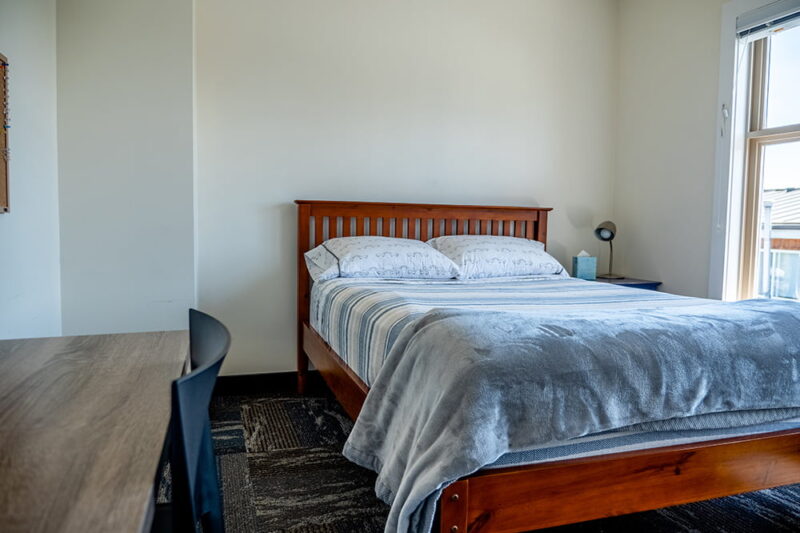
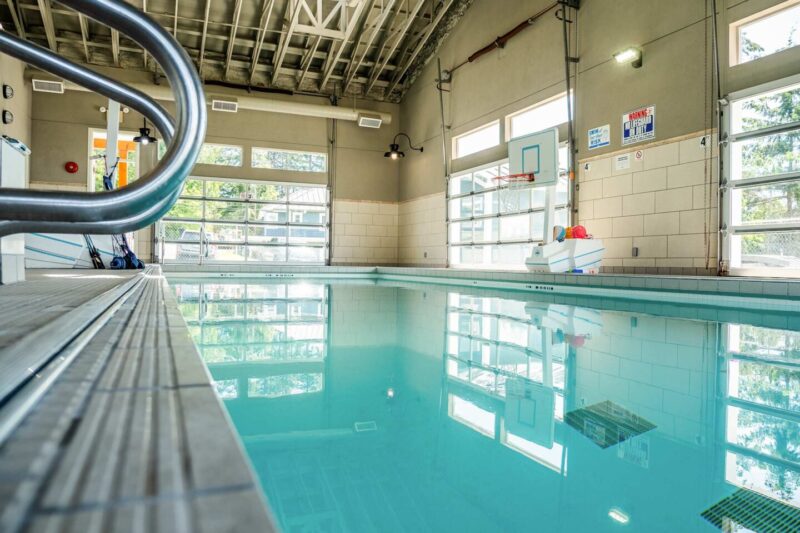
The facility page describes private bedrooms with shared bathrooms, an important detail for anyone comparing accommodation. The site includes residential buildings, clinical spaces, medical services, a fitness center, and outdoor areas overlooking the Georgia Strait. It also lists internet access, business facilities, communal rooms, laundry, and recreation amenities. Medical care and ordinary residential accommodation are described as different parts of the campus.
Ask which building and room would be used at each stage of the stay, how many people share a bathroom, and what accessibility support is available. Someone who requires step-free routes, a particular bathroom arrangement, or assistance overnight should confirm those needs before admission. Shared leisure facilities can support a communal experience, but they do not describe the level of private clinical contact. Request a realistic account of the daily environment and available assistance, alongside photographs, so the accommodation decision is based on practical needs as well as setting.
Licensing, accreditation, and business certification answer different questions
The licensing and accreditation page states that the center is licensed by Vancouver Coastal Health Authority and discusses Accreditation Canada standing. It separately describes B Corporation certification and the organization’s approach to business responsibility. These statements should remain distinct: a business certification is not the same document as a clinical facility license or healthcare accreditation.
Ask for the current certificate or register entry, the legal entity and site covered, the scope of services, and any relevant validity dates. This is particularly useful when a provider operates more than one service or discusses a future survey. The published page’s language about extending accreditation should not be interpreted as confirmation of a future outcome. Formal records can help establish oversight and scope, while an individualized assessment remains necessary to determine whether the service is appropriate. Neither a badge nor a positive business rating predicts a resident’s clinical result.
Travel planning should follow clinical acceptance
The admission and travel page outlines an initial form, fuller registration, and travel to Powell River. The provider describes assistance with flights, transfers, and connections, including support for people arriving from outside Canada. Its location requires a realistic plan for the final stage of the journey rather than assuming it is in central Vancouver.
Confirm clinical acceptance, the receiving contact, and the agreed transport arrangements before purchasing inflexible tickets. Ask what happens if a connection is delayed or the person’s condition changes during travel. International travelers should check current government requirements for entry, return travel, and prescribed medication, especially when there is a previous immigration or legal concern. Assistance from admissions is useful logistical support, but should not replace authoritative confirmation of those requirements. Include a return plan and the first local follow-up appointment in the arrangements so that the journey home connects with continuing care.
Additional provider information checked October 18, 2026. Service descriptions are attributed to the linked official sources. Confirm clinical acceptance, accommodation, funding, and the current written terms.
Sources and verification
Official provider overview; official FAQ; official fees and financing page. Checked October 11, 2026. Provider-published information; not an independent clinical assessment or guarantee of admission, coverage or outcomes.