Recovia is an Arizona outpatient network for chronic pain, mental-health concerns and substance-use disorders. Its integrated biopsychosocial model combines behavioral counseling, physical therapy and medical support. Services and appointment availability vary among its Arizona clinics and virtual-care option; this profile does not represent a single residential campus.
Care begins with a three-hour multidisciplinary evaluation. Active outpatient care is typically two to five days per week for six weeks, with three to four hours of integrated treatment per day. Optional supportive care is typically 12 tapered sessions over six months. Recovia also publishes chronic-pain, mental-health and substance-use programs; outpatient medication support is not the same as residential or medically managed inpatient detoxification.
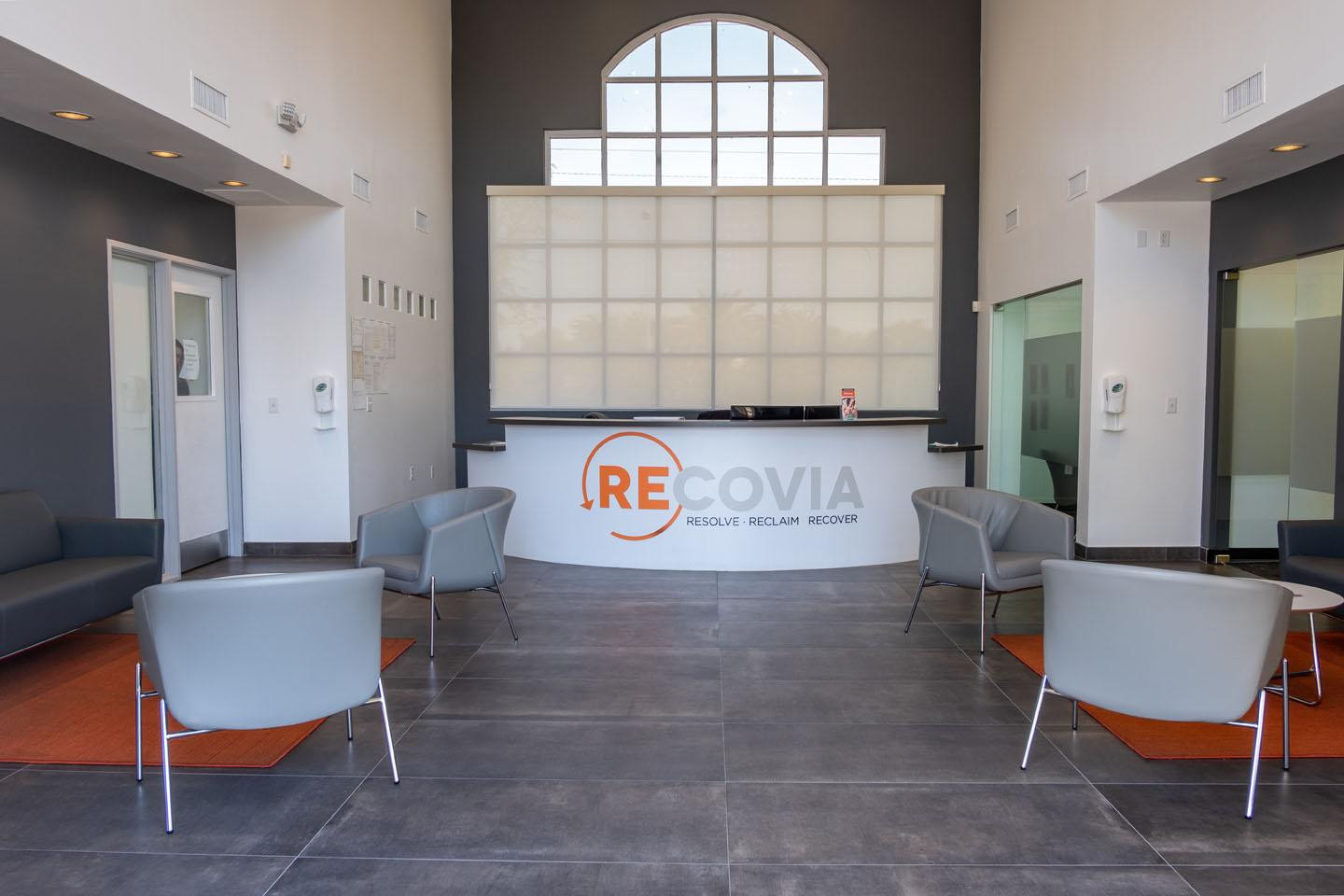
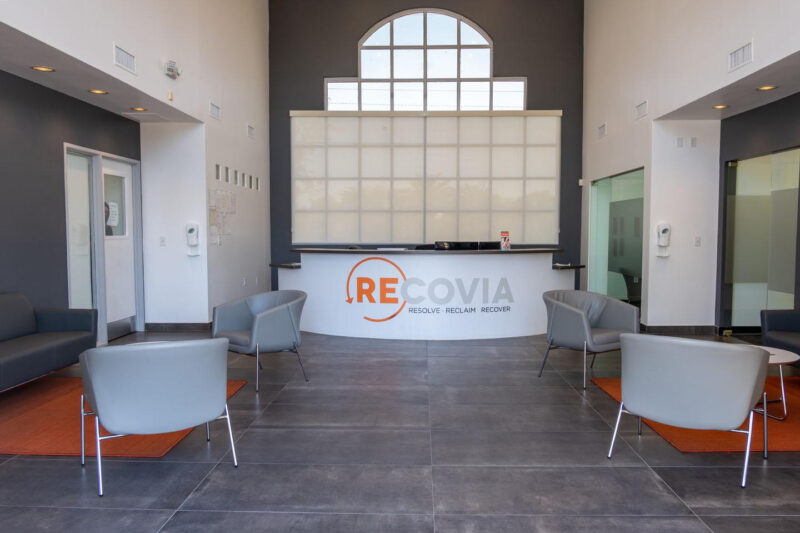
Recovia lists clinics in Phoenix, Mesa, Tempe, Tucson and Gilbert. It says it is in-network with many Arizona commercial plans, AHCCCS, Medicare and workers’ compensation, and offers flexible cash-pay options. Authorization, covered services and personal costs depend on the plan. The profile gallery depicts the verified Tempe clinic at 1910 East Southern Avenue, one location within the wider network.
How Recovia organizes its interdisciplinary care
Recovia’s description of its approach identifies a functional restoration model that brings behavioral treatment, physical therapy, and medical support into one outpatient program. The practical emphasis is on how a person functions physically, emotionally, and socially. Its published examples include individual and group behavioral work, cognitive behavioral therapy, EMDR, movement activities, and life skills. These are possible components of its approach, rather than a promise that every participant receives every listed intervention.
For someone already seeing several professionals, the useful admission question is how the proposed team would coordinate with those existing clinicians. Establish which practitioner will lead the plan, which appointments remain with outside providers, and how records or recommendations will be shared with permission. Goals can be concrete: managing a workday, returning to ordinary movement, improving a daily routine, or addressing substance use alongside other difficulties. The evaluation should connect the proposed services to those goals instead of relying on broad descriptions of an integrated program.
Understanding the evaluation and active-care schedule
The program overview describes an initial assessment lasting about three hours with behavioral, physical therapy, and medical teams. Those professionals then develop a treatment recommendation together. Active care commonly involves two to five days a week for six weeks, with three to four hours on each treatment day. The provider explicitly says the length and number of days can vary after evaluation. A published schedule therefore provides a planning example, not an individual prescription.
The size of that commitment matters for transportation, employment, caregiving, and other appointments. Obtain the actual days and hours before arranging recurring leave or a lengthy commute. After active care, Recovia describes optional supportive visits on a tapered schedule, typically twelve sessions across six months, incorporating behavioral health and physical therapy with medical support when needed. Clarify the criteria for moving into that phase and how its visits are booked and funded. Completion of the initial calendar period should lead to a reviewed next step, with clear responsibilities for ongoing care.
Preparing for the first appointments
Recovia’s patient FAQ describes the first active-care day as an introduction to the team, facilities, and process. It advises comfortable clothing and athletic shoes because light physical activity is involved. Patients are asked to bring their medications to the first appointment, along with their own snacks and a water bottle. Small lockers and a refrigerator are described for use during clinic visits. These details help distinguish a treatment day from a residential arrival with accommodation and meal arrangements.
Tell the team about mobility restrictions, fatigue, dietary needs, or difficulty sitting through several appointments so the proposed day can be discussed in advance. The FAQ also explains that payment plans require an agreement with Patient Relations and can divide costs into multiple payments according to financial circumstances. Request that agreement before assuming an installment arrangement is available. For referrals, the provider accepts contact online, by telephone, or through its referral form with medical records; the resulting multidisciplinary evaluation remains the step that establishes the recommended program.
Chronic pain services and functional goals
The chronic pain program describes a noninterventional approach combining behavioral work, physical therapy, and medical oversight. Published options include pain education, cognitive behavioral strategies, breathing exercises, functional exercise, nutrition counseling, and selected physical therapy techniques such as dry needling. Its medical section lists health education, wellness checks, and possible nonnarcotic, anti-inflammatory, or topical pain medicines. The page presents these as components that may be used, so a specific technique or medication should be confirmed in the individual plan.
A useful assessment should identify the person’s existing diagnosis, current investigations, physical limitations, and other treatment already underway. Someone with pain should not have to assume that every symptom is explained by stress or that participation replaces all specialist follow-up. Discuss how exercise will be adapted, how changes in symptoms will be evaluated, and which clinician remains responsible for unresolved medical questions. Comparing programs through achievable functional goals makes more sense than expecting the same activity schedule or degree of pain relief for every participant.
The published limits of mental health care
Recovia’s mental health page describes outpatient support for concerns including anxiety, depression, trauma, PTSD, and difficult life events. Behavioral counseling and physical therapy form part of that program, alongside medical support. Its listed medical options include selected antidepressants and other medications. The same page explicitly states that Recovia does not offer psychiatry or prescribe mood-stabilizing psychiatric medications, and that it can help identify resources when those services are needed before participation.
This limitation is particularly relevant to a person who already receives specialist psychiatric care. Ask how existing prescribing and follow-up will continue, who will communicate with the outside clinician, and whether the proposed program can safely meet the person’s current needs. Do not interpret a multidisciplinary medical team as proof that every psychiatric service is provided within the clinic. The admission decision should address the required level of support, including what happens if symptoms worsen between appointments. Existing treatment should be reviewed with the responsible prescriber rather than changed simply to fit a program description.
Outpatient withdrawal and medication arrangements
The substance-use program describes behavioral treatment, physical therapy, and medical support, including outpatient detoxification and taper services. Its opioid section discusses buprenorphine treatment, including induction and maintenance, while other sections describe medication options for alcohol-related care and other substance-related needs. These are provider-published service descriptions. They do not establish that a particular medication, taper, or outpatient setting is appropriate for every person or that all withdrawal can be managed through routine clinic appointments.
Before entering care, provide an accurate account of substances, prescribed medicines, previous withdrawal experiences, and medical or psychiatric conditions. The receiving clinician should explain the proposed monitoring, prescribing responsibilities, contact arrangements between visits, and circumstances requiring a different level of care. Confirm whether treatment is available as part of the full integrated program or through another arrangement. A description of medication support should not be read as continuous on-site observation. Planning for safe care outside appointment hours is an essential part of evaluating this outpatient option, particularly when several clinicians already prescribe medication.
Virtual care and its Arizona service boundary
Recovia’s virtual-care page describes video-based services for people living anywhere in Arizona. It links to its chronic pain, mental health, and substance-use programs and says the platform works on smartphones, tablets, laptops, and desktop computers. The stated geographic scope is Arizona. The availability of a website or a video platform should not be treated as confirmation that the same clinical service can be delivered to someone located in another state.
For remote participation, establish which parts of the plan can be delivered by video and which may require an in-person visit, examination, testing, or local support. A physical therapy component needs a suitable space and an agreed approach to safe participation at home. Also discuss privacy, reliable internet access, and a backup contact method if a session disconnects. People who travel or divide their time between states should explain that situation before enrollment. Confirm clinical suitability and payer authorization for the actual virtual program rather than assuming that every clinic-based procedure has a remote equivalent.
Choosing a clinic within the Arizona network
The current location directory lists nine physical clinics: Mesa Baywood; Deer Valley, Estrella, I-17 and Northern, and Midtown in Phoenix; Tempe; Grant Road and the Northwest Hospital area in Tucson; and Gilbert Mercy. Virtual care appears separately as a statewide option. These are distinct appointment locations within the network, so an inquiry about a convenient city should lead to confirmation of a particular address and available clinical schedule.
Several weeks of repeated outpatient attendance can make travel time a meaningful part of program fit. Consider parking, accessibility, public transportation, the effect of traffic, and the ability to attend consistently around other responsibilities. Ask whether the evaluation and later sessions take place at the same clinic and whether any service requires travel elsewhere. A familiar network name does not establish that every professional or appointment time is available at every site. Obtain written location details for the first visit, especially when choosing between multiple clinics in Phoenix or Tucson.
What the Tempe location and photographs represent
The Tempe clinic page identifies the facility at 1910 East Southern Avenue. It describes behavioral health specialists, physical therapists, and medical practitioners such as nurse practitioners or physician assistants working within its integrated visits. The arrival instructions place parking and entry at the back of the building. This is useful practical information for an initial appointment and should be checked against the booking confirmation if arrangements change.
The Tempe photographs used in this network profile illustrate that particular clinic. They do not show a separate residential property or establish the rooms, equipment, or layout of every Recovia location. A person considering another branch can request information or a scheduled tour of the actual facility they would attend. Confirm any accessibility needs, how much movement is involved between appointments, and what support is available during breaks. Understanding the real treatment environment is more useful than assuming that an image selected for the wider network represents all of its sites.
Reading the insurance list carefully
The insurance page lists commercial coverage, AHCCCS plans, Medicare, and workers’ compensation, while also offering cash-pay options. It says the provider obtains authorizations and warns that insurance participation changes. Individual entries matter: the BCBS listing expressly excludes Medicare Advantage, even though the page separately lists Medicare and other named plans. A broad statement about accepting insurance therefore cannot establish coverage under a particular member’s product, network, or treatment authorization.
Ask the provider and insurer to verify the exact plan, clinic, services, and proposed number of visits. The estimate should identify the deductible, copayment or coinsurance, any authorization limits, and responsibility for services the plan does not cover. If medical, behavioral, and physical therapy components have different benefits, clarify how the program will be billed. Workers’ compensation also requires the appropriate claim arrangements. Keep the coverage response and the provider’s payment terms together, and request an updated estimate if the schedule changes or supportive care continues after the initial course.
Program scope, outpatient and psychiatry limits, locations, virtual availability, and payer wording were reviewed against the linked official pages on October 19, 2026. Individual admission, availability, coverage, and charges require direct confirmation.
Explore related guidance: Arizona treatment options, mental health care, and co-occurring conditions.