Pinelands Recovery Center of Medford
Comparison facts and sources
Medford residential addiction treatment for men and women age 18 and older, with medical detoxification, residential programming and aftercare support. · 287 Old Marlton Pike, Medford, New Jersey 08055
- Published fee information
- Quote required
- Before admission
- The campus serves adults 18 and older. Confirm clinical placement, program availability and payer authorization directly before admission.
- Continuing care
- The provider describes aftercare planning to support long-term sobriety after detoxification and residential treatment.
Source record · October 14, 2026
Provider-published information checked October 14, 2026. Confirm admission criteria, clinical placement, commercial-insurance authorization and personal cost directly with Pinelands.
Luxury rehab comparison · Fees and inclusions · Selection methodology
Pinelands Recovery Center of Medford is a substance-use treatment facility at 287 Old Marlton Pike in Medford, New Jersey. Its current official site describes medically supported detoxification and residential treatment at this campus; it does not present a general outpatient program as a service of the Medford residence.
Pinelands publishes individualized treatment planning, evidence-based therapy and continuing recovery support for adults and young adults. Exact detox and residential duration depends on clinical needs and progress; the provider does not publish one universal stay or self-pay price.
Residential treatment follows a structured daily routine
The residential program describes a live-in setting with continuous medical and nursing oversight. Residents have an individualized treatment plan and a daily schedule combining clinical work, education, meals, and time for recreation or reflection. The provider identifies residential treatment as its highest level of care at Pinelands.
A typical day includes community meetings, individual and group therapy, recovery education, and on-site 12-step meetings. The page also describes weekly activities such as yoga and spirituality groups. Treatment length is based on clinical needs rather than a universal package. That structure is relevant when comparing the Medford campus with an outpatient service: the resident lives in the treatment environment and participates in the broader community routine. Before admission, the clinical team should explain the proposed course, how progress will be reviewed, and what level of support may follow. The initial plan should also account for other health conditions that affect participation in the daily schedule.
Adult and young-adult tracks occupy separate buildings
The adult and young-adult program page describes two tracks in separate buildings on the same campus. The adult track considers responsibilities such as relationships, parenting, caregiving, and finances. The young-adult track places more emphasis on developing independence and finding a workable direction in life.
The provider also describes different daily rhythms, with the young-adult schedule starting later and sessions arranged in smaller blocks. Both tracks include therapy, detoxification when needed, medication support when appropriate, family programming, and access to campus facilities. The current overview does not give one simple age cutoff for every placement, so admissions should confirm the relevant criteria. A person’s life stage and clinical needs are more useful starting points than assuming that every resident follows the same timetable. The proposed track should identify the treatment community, room arrangement, and actual services selected, including how any later change in placement would be discussed.
Detoxification is assessed and monitored medically
The medical detoxification page describes a quiet treatment environment, individual medical assessment, medication when indicated, and continuous monitoring. It publishes an average range of five to fourteen days, with duration depending on the substance involved, severity, and the person’s health.
That range should not be read as an individual prediction or a residential treatment length. The medical team determines the withdrawal-management plan and reviews readiness for the next stage. The provider describes moving on to an appropriate treatment level after stabilization, which may involve residential care or another arranged service. Before arrival, the team needs a clear account of recent substance use, prescribed medications, previous withdrawal, and other medical concerns. The written admission plan should identify where the person starts and how any transition will take place. Medication names listed on the website are examples of services the medical team may consider, not a recommendation that a particular medicine is suitable for every patient.
Therapy selection reflects the individual treatment plan
The therapy guide lists individual and group approaches including cognitive behavioral therapy, motivational interviewing, acceptance and commitment therapy, DBT, psychodrama, experiential work, family therapy, and 12-step facilitation. Pinelands describes selecting approaches according to the person’s needs rather than assigning everyone an identical course.
These methods serve different purposes within treatment. The relevant question is how the selected work connects with the individual’s goals, history, and current difficulties. A therapy name in a service list does not establish the frequency or duration of a particular person’s sessions. The team should explain the planned balance of individual appointments, small groups, and other activities, and how that balance may change during the stay. Someone who has found a previous approach helpful or difficult can discuss that experience during assessment. This helps the treatment plan build on existing knowledge while identifying the areas that need a different or more focused response.
The treatment model combines clinical care with practical recovery support
The Pinelands philosophy emphasizes the working relationship between the resident and the treatment team. The published multidisciplinary model includes therapists, nutrition professionals, case managers, and recovery coaches. It also incorporates a 12-step recovery framework.
Those roles provide different forms of support. A therapist may focus on psychological and behavioral concerns, a case manager on practical arrangements and continuity, and a recovery coach on day-to-day goals and accountability. Understanding that division helps a resident know whom to approach with a question and how the parts of the plan connect. The provider’s positive descriptions of its environment and therapeutic relationships should not be treated as an individual outcome prediction. A more useful basis for comparison is the actual contact with the team, the goals agreed, and the way progress and concerns are reviewed. The initial plan should make those responsibilities understandable to the resident and any authorized supporters.
The campus offers shared accommodation and outdoor space
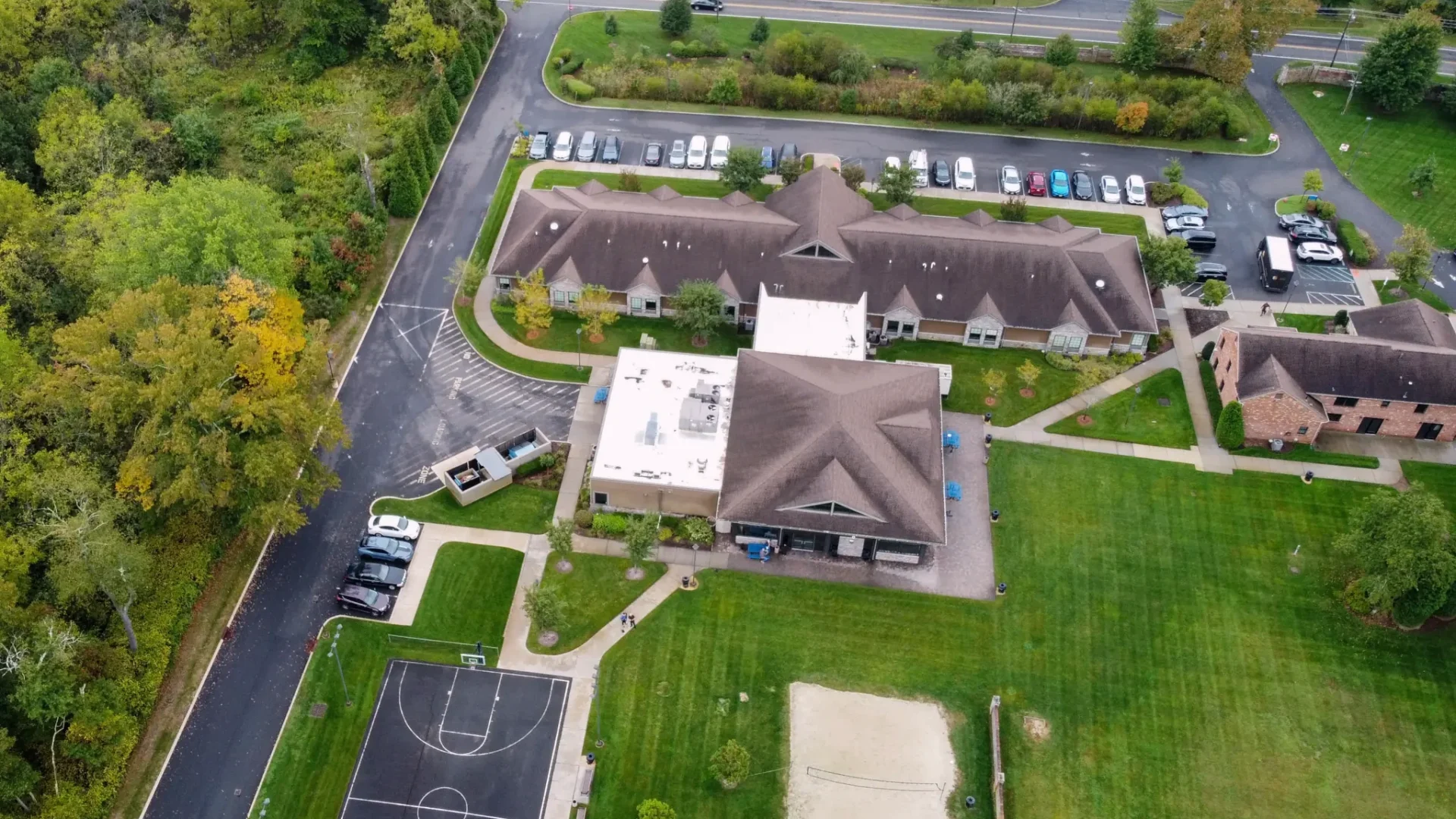
The campus experience guide describes two lodge-style residential buildings on wooded grounds. Accommodation is shared, with en-suite bathrooms, desks, and storage. Communal spaces include lounges, quiet areas, and a dining hall used for meals and other activities.
The published recreation options include courts, a gym, yoga, and outdoor gathering spaces. The dining team serves three meals a day and makes snacks and drinks available between meals. The provider also says its chef discusses food preferences and dietary requirements with each resident at admission. These details help describe ordinary life on the campus, including the balance between shared community space and opportunities for reflection. Room arrangements and accessibility should be confirmed for the actual admission. Someone with dietary restrictions, mobility concerns, or a need for a particular sleeping arrangement should raise those issues early so the team can explain what can be accommodated within the available residential setting.
Family support includes an assigned counselor
The family program describes counselor-supervised calls, several online education or support meetings during the week, and a family counselor who provides a point of contact. Family work considers communication, boundaries, and the impact of substance use on relationships.
The service also recognizes that relatives may need their own support, separately from the resident’s treatment. The proposed family plan should identify who is participating, the appropriate information-sharing permissions, and the sessions relevant to their situation. An educational meeting, a family therapy session, and a visit have different purposes and may have different arrangements. Relatives living outside New Jersey can discuss remote participation before planning travel. The provider describes a support plan for the period after discharge, so family involvement can also prepare for the resident’s return home. That discussion should clarify realistic responsibilities and continuing sources of help, rather than assume that relatives will take over the role of the clinical team.
Recovery coaching begins during the residential stay
The recovery coaching program pairs each patient with a recovery coach as well as a primary therapist. The provider describes its coaches as people with treatment experience and peer-support training. Coaching begins with a discussion of the person’s current needs and recovery experience.
The coach and resident then develop a weekly plan and schedule around practical goals. This can help connect the clinical work with routines, accountability, and participation in the recovery community. The coach’s role is distinct from medical prescribing or psychotherapy, even when those services are coordinated. A resident can ask how often they will meet, which goals will be addressed, and how the relationship continues after discharge. The provider publishes favorable claims about readmission and coaching, but those claims are not used here as a prediction of an individual’s outcome. The concrete offering is the planned peer support and its connection with the wider treatment and discharge process.
Discharge planning includes appointments and peer connections
The alumni service describes a plan for the first days after leaving treatment, including recovery meetings and an appointment with an outpatient team. It also offers alumni events, online community access, and connections with peers who have completed the program.
The practical detail matters: meeting dates and locations, the receiving clinician, and a plan for returning to work, school, or family responsibilities. The provider describes both regular contact and social activities, with current schedules available through the alumni team. These opportunities can complement clinical aftercare but should not be assumed to replace it. Before discharge, distinguish the services that are already arranged from options that still require registration, payment, or another assessment. Someone returning outside the Medford area may need local treatment alongside remote alumni contact. A clear plan makes the transition more useful than simply receiving a list of potential services.
Discovery for Life includes a defined first-year check-in program
The Discovery for Life service describes free continuing support after treatment. It begins with Discovery365, a sixteen-point interactive assessment and check-in program during the first year after discharge. Longer-term alumni offerings include support groups, events, and educational material through an app.
The provider states that the check-in platform uses technology developed with Videra Health. A participant should understand what information is collected, how the program responds to it, and who to contact directly when support is needed. A digital assessment is one component of the continuing-care arrangement; the individual should still have clear contacts for clinical questions and appointments. The program’s availability can be useful for maintaining a connection after leaving campus, but it should not be interpreted as continuous clinical observation or a guarantee that every change in need will be detected automatically. Confirm enrollment, access, and the role of the service within the discharge plan.
The Stars and Stripes program addresses veterans’ recovery needs
The Stars and Stripes program is designed for veterans with substance-use disorders. It combines individual and small-group treatment with attention to trauma, anxiety, depression, and practical reintegration. Published support includes help with everyday skills such as financial organization and preparing for employment.
The provider also describes care coordination and transportation to and from VA services, and says it accepts referrals through the Community Care Network. Those arrangements need to be confirmed for the individual admission, including any required referral or authorization. Veteran status alone does not determine funding or the appropriate clinical plan. A prospective resident can discuss previous treatment, service-related concerns, current medications, and the support needed after discharge. The veteran-focused program can be compared with the broader adult and young-adult tracks by looking at the actual treatment community and services offered, rather than assuming every campus activity or appointment is exclusive to veterans.
Insurance review should identify both initial and continuing costs
The insurance page describes benefits verification and names several commercial insurers, including a contracted relationship with Horizon Blue Cross Blue Shield of New Jersey. The provider says its team documents clinical needs when continued treatment requires further review by an insurer.
The coverage decision remains specific to the policy and service. A written estimate should identify the proposed level, authorized period, personal contribution, and any separately charged services. If a longer stay is recommended, ask how authorization and costs will be reviewed before the initial period ends. General examples of insurer benefits on a website should not be applied automatically to another person’s plan. The existing profile also records that Pinelands does not accept Medicare or Medicaid. For private payment, request a current proposal rather than infer a rate from another facility or an older directory listing. Financial arrangements should be aligned with the actual care plan and any anticipated transition after residential treatment.
Everyday policies help define the residential experience
The FAQ states that residents share rooms and have access to on-site laundry. It recommends comfortable clothing for roughly two to three weeks, reading material, and other non-electronic activities. Smoking is allowed only at designated times and places.
The same guide describes regular individual contact with a primary therapist and daily group interaction with the treatment team. Family visits are arranged case by case as part of the therapeutic process. The provider also says transportation can often be organized for people within driving distance, subject to the actual arrangement. These policies make the practical commitment clearer: shared accommodation, a planned schedule, and agreed contact and travel arrangements. Before arrival, confirm the current packing list, rules about devices, accessibility, and any personal needs that could affect daily participation. Preparing for those details can reduce uncertainty while preserving the focus of the admission on clinical assessment and treatment.
Source check: October 18, 2026, for the additional provider details above.
Campus identity, address, admissions phone and payment guidance were checked on October 10, 2026. Call 609-308-3114. Pinelands says it accepts most commercial insurance but is not a New Jersey FamilyCare, Medicaid or Medicare provider; benefits and personal costs require individual verification.