Mayo Clinic Addiction Services
Comparison facts and sources
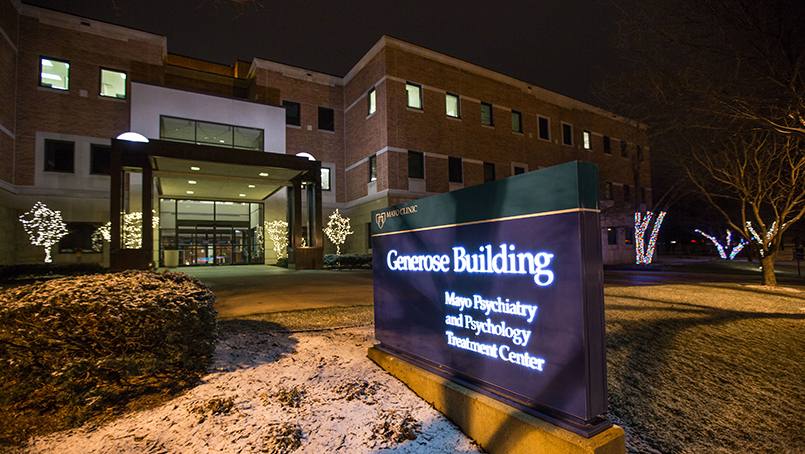
Adult 18+ continuum with individual assessment, a 30-day residential Intensive Addiction Program, four-week half-day outpatient treatment, medication-assisted treatment and continuing-care groups. · Generose Building on Mayo Clinic’s Rochester, Minnesota campus.
- Treatment locations
- Generose Building on Mayo Clinic’s Rochester, Minnesota campus.
- Before admission
- This review does not establish admission, clinical eligibility, insurance authorization, included services, taxes, travel costs or final client responsibility.
- Continuing care
- Mayo coordinates care at Mayo or closer to home. Intensive-program follow-up may include contact every three months for one year, with structured continuing-care groups according to need.
Source record · October 17, 2026
Current official Rochester campus, residential, outpatient, continuing-care and appointment evidence checked October 17, 2026.
Luxury rehab comparison · Fees and inclusions · Selection methodology
Mayo Clinic Addiction Services is based in the Generose Building on Mayo Clinic’s Rochester, Minnesota campus. This profile concerns that specialized adult addiction program, not every Mayo Clinic hospital or international office.
The continuum is for adults aged 18 and older with alcohol, prescription-medication or other drug problems, including co-occurring mental-health and medical needs. It includes assessment, a 30-day residential Intensive Addiction Program with 24/7 support and on-site residence, a four-week half-day outpatient program, medication-assisted treatment and continuing-care groups.
Mayo says it works with hundreds of insurance companies, although coverage, authorization, client responsibility, travel and other nonclinical costs depend on the person and plan. Intensive-program follow-up may include contact every three months for one year; other continuing-care programs range from six weeks to six months or longer according to need.
An addiction team within the Rochester medical campus
The Addiction Services overview places this service in the Generose Building in Rochester. It describes a coordinated assessment of substance use, mental health and medical needs, followed by a personalized treatment plan. An addiction psychiatrist leads care with counselors and nursing staff; additional medical or psychiatric services can be involved when needed. This setting may be relevant when a person needs several concerns considered together, but the assessment still determines the appropriate program.
Mayo publishes a ratio of one counselor or therapist for every four to five patients. That figure does not describe the number or duration of an individual’s appointments, so ask how much individual contact the proposed plan includes. Also ask who coordinates other specialist consultations and communicates their recommendations to the addiction team. A campus with extensive medical services does not mean every test, specialist visit or treatment is automatically part of an addiction admission.
The initial consultation determines the proposed route
The individual consultation page describes two ways to begin: request an assessment directly or receive a referral from a local healthcare professional. The initial team includes an addiction psychiatrist, a counselor or clinical social worker, and a nurse. Its recommendations can involve counseling, medication, a program referral, goals, continuing care and psychiatric or psychological follow-up. Patient input is part of developing that plan.
For someone seeking direct admission to the 30-day residential program, Mayo describes an initial telephone intake that includes an insurance review and precertification when possible. A full clinical evaluation follows admission. Clarify what the telephone review can establish, what remains provisional and which records are needed before travel. Describe previous treatment, current medications, medical conditions and the support available at home. The practical decision is whether the recommended structure fits those needs; a request for a particular program does not replace its clinical assessment.
Residential treatment includes structure and defined family involvement
The Intensive Addiction Program is a 30-day residential substance use program for adults 18 and older that also addresses coexisting conditions. Mayo describes private bedrooms with individual bathrooms and permits computers and phones in private rooms. Treatment occupies a structured day and includes evening activities, with counseling, groups, relapse-prevention work and medication options selected by the team.
Its Family Day is a full-day session every other week, except holidays, intended for significant people who are at least 18. A separate family session involving younger children may be arranged with the primary counselor. Confirm dates before relatives book travel, and discuss participation and consent with the team. After residential treatment, Mayo offers mail or telephone contact every three months for one year and helps arrange continuing care at Mayo or nearer home. That periodic follow-up should be distinguished from scheduled ongoing treatment; ask which appointments will actually be in the discharge plan.
Outpatient treatment and medication appointments have distinct purposes
The Outpatient Addiction Program serves adults 18 and older through four weeks of half-day sessions, Monday through Friday. The published program includes process and educational groups, individual counseling, nursing assessments, testing and medication management. Family Day takes place every other Friday. This weekday commitment should be considered when planning employment, caregiving and transportation.
The same page describes a Medication-Assisted Treatment clinic that evaluates cravings and can prescribe medications for substance use disorders. It gives buprenorphine for opioid use disorder and acamprosate for alcohol use disorder as examples; suitability and prescribing remain clinical decisions. Ask whether a medication appointment is part of the proposed outpatient program or a separate service, who will prescribe after discharge and how existing prescriptions will be coordinated. Also confirm where you will stay outside treatment hours and what support is available between visits. A half-day treatment schedule should not be read as including residential accommodation.
Continuing care offers several different levels of contact
Mayo’s continuing care programs are not one uniform aftercare package. The Extended Outpatient Program provides ongoing support after primary treatment, including groups, individual counseling, nursing assessments and family participation. The Early Recovery Program meets twice weekly for six weeks. Recovery Maintenance offers weekly meetings for up to six months, according to the individual plan. These published formats provide a starting point for discussing how treatment intensity may change.
A separate health professionals group serves healthcare workers with alcohol or drug addictions. Its weekly participation can continue for years, depending on the treatment plan and relevant board requirements. That arrangement should not be transferred to every patient’s follow-up schedule. Before leaving primary treatment, ask which program is recommended, when it starts, how its costs are handled and whether a clinician nearer home will take over. The useful comparison is the actual frequency and responsibility for ongoing care, rather than the presence of the word aftercare in a description.
Confirm the specific service when requesting an appointment
The appointment page lists 507-266-5100 for discussing addiction treatment needs and options. Published telephone hours are 7 a.m. to 6 p.m., Monday through Friday. It lists 507-255-4151 for non-urgent calls after hours. The latter is explicitly described as a non-urgent contact, so it should not be presented as an emergency response service.
The page also points to Fountain Center services in Rochester and elsewhere in south-central and southeastern Minnesota. When arranging an appointment, identify whether the referral concerns Generose-based Addiction Services or a Fountain Center location. Confirm the program, building and arrival instructions in the appointment documentation. Similar health-system branding does not establish identical treatment schedules or accommodation. If several options are being discussed, ask the intake team to explain which service is evaluating the referral and which team will provide care. That clarification helps prevent travel or funding arrangements being made for the wrong location.
Use the care team’s instructions for medical records
Mayo’s medical records guidance distinguishes obtaining existing Mayo records from sending outside information for an appointment. The Patient Portal provides access to items such as notes, results, medication information and appointment schedules, and it can be used to share documents with the care team. For outside records, Mayo advises following the receiving team’s instructions instead of sending them to its Release of Information office.
Ask which previous assessments, discharge summaries and medication records the addiction team needs, then confirm that the team received them. Sending documents is not the same as confirming they reached the right service. Where a relative or referring clinician needs information, discuss the appropriate authorization rather than assuming family involvement gives unrestricted access. The records page describes designated access and release forms. Clarifying those arrangements early can make coordination more practical while preserving the patient’s choices about who is involved and what information is shared.
Insurance approval should match the location and planned service
The insurance approval guidance explains that some plans require precertification or prior authorization before care. Coverage requirements can vary by service and by Mayo location, and investigating them can take time. Mayo advises patients to contact their insurer about benefits, network status and authorization requirements. The page warns that missing required authorization can leave a patient responsible for more of the bill, and a deposit may be requested for an unauthorized visit.
For an addiction referral, ask which service is being submitted for approval: the initial assessment, residential treatment, outpatient sessions or another appointment. Clarify who submits the information, whether a decision has been received and what remains subject to review. Keep the insurer’s response with the proposed treatment details. Clinical acceptance and an insurance authorization answer different questions; neither should be treated as a universal statement about every later charge or service. Request clarification before committing to travel or a stay.
Request an estimate for the actual treatment plan
The price estimates page provides a cost-estimator tool and contacts for formal estimates. It asks for the intended services, or relevant procedure information from the treating or referring professional, and insurance details. This is more useful than applying a general hospital price or a rate from another Mayo location to the Rochester addiction program.
Mayo explains that an estimate can change when services, clinical needs, treatment duration or insurance circumstances change. It is not a guaranteed final charge. Ask the estimating team to identify which services are included and whether additional consultations, testing or medication-related appointments need separate estimates. For an insured patient, distinguish the provider’s charges from the expected personal responsibility. For a self-paying patient, request the applicable terms rather than assuming an insured estimate applies. Keep the proposed dates, program and estimate together so that any later change can be discussed against the same starting information.
Plan Rochester travel around the confirmed program
The Rochester visitor guide brings together campus maps, parking, travel assistance, lodging, accessibility and interpreter resources. Those resources can help patients and accompanying relatives plan a visit, but the needs of a residential admission differ from those of daily outpatient attendance. Start with the location and schedule supplied by the addiction team, then use the visitor information to work through the practical arrangements.
Ask how a mobility, hearing or communication need should be recorded before arrival. If someone will accompany you, confirm their accommodation and access arrangements rather than assuming a patient’s placement includes a companion’s stay. For outpatient treatment, consider the daily journey between lodging and the appointment site. Relatives attending a family session may need a separate itinerary. The visitor guide is a planning resource; decisions about treatment placement, participation and the support required outside appointments should remain with the treating service.
Sources
- Official Addiction Services overview and Rochester location
- Official 30-day residential program
- Official four-week outpatient program
- Official continuing-care programs
- Official appointment information
Sources checked October 17, 2026.