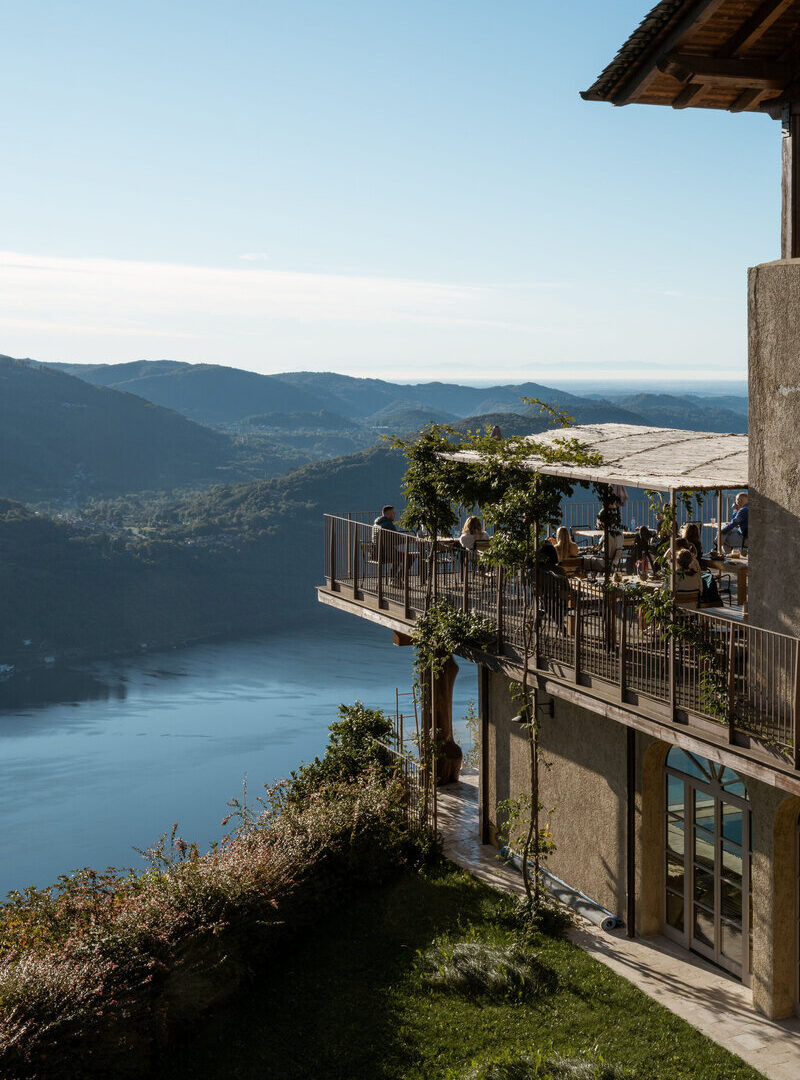
Mandali is a not-for-profit retreat center in Quarna Sopra, Italy, overlooking Lake Orta. It is a contemplative wellness venue rather than an addiction-detox facility, psychiatric hospital or clinical rehabilitation program.
The center hosts yoga, meditation and themed retreats. Its current in-house Mandali Experience runs for three to seven days; visiting-teacher retreats publish their own dates, program and price. Accommodation ranges from shared dormitory-style rooms to private single rooms and larger hermitages.
The official address is Via Belvedere 2, 28898 Quarna Sopra (VB), Italy. Mandali publishes +39 0323 826439, +39 3881 972310 and info@mandali.org. Retreat pricing is shown on individual booking pages. The standard Mandali Experience includes accommodation, vegetarian meals and scheduled classes; some visiting-teacher programs price tuition and lodging separately. Transport and optional treatments can cost extra.
A contemplative retreat with a specific purpose
The Mandali foundation overview describes a not-for-profit retreat center established in 2017, with programs exploring meditation, movement, and different wisdom traditions. Its founders explain the project through their own experience of silence and contemplation. That account sets the context for the venue: it is a place for personal and spiritual exploration, rather than a clinical assessment or treatment service.
Someone considering Mandali should therefore begin with the kind of experience they want and whether they can participate safely in a retreat environment. The language of renewal or healing on a retreat website does not establish treatment for addiction, an eating disorder, or a psychiatric condition. If ongoing medical or mental health care is needed, arrangements for that care remain separate. Ask the organizers about the demands of the selected program and discuss relevant concerns with the person’s own clinician. A peaceful setting and skilled retreat teachers do not, by themselves, provide clinical supervision.
Choose the retreat type before choosing the room
The retreat calendar distinguishes three broad types of program. The regular Mandali Experience is described as a three-to-seven-day retreat with movement and meditative practices at a flexible pace. Special editions add a creative or seasonal workshop. Themed retreats focus more closely on a particular teaching or approach and are led by the relevant visiting teachers.
Those categories can involve different expectations about silence, participation, experience, and daily structure. A calendar entry is a starting point for comparison, not confirmation that every retreat is equally suitable for a beginner. Read the full program description, teaching language, dates, and booking arrangements before comparing accommodation prices. Count both the teaching days and the required overnight stay, since they may differ. Some calendar entries also describe retreats away from Mandali’s Italian center, so confirm the actual venue. Availability, the final timetable, and any prerequisites should be checked for the chosen event rather than inferred from the general Mandali Experience description.
How a standard Mandali Experience can work
A published three-day Mandali Experience illustrates the in-house format. It describes guided meditation and movement sessions, periods of silence, nature walks, and an additional themed session. Participants are encouraged to choose how much of the program to join. The description specifically qualifies qigong as available only when it appears on the schedule provided at arrival.
This flexibility may suit someone looking for a retreat with structured opportunities and time alone, rather than a compulsory clinical timetable. The example includes two nights of accommodation and lists use of the Body Care facilities, meals, and scheduled classes. Its sample timetable should be treated as illustrative: confirm the actual check-in, first gathering, and departure arrangements for the booked dates. The published description identifies English as the teaching language for that event. Do not assume a different calendar entry has the same language, class mix, room package, or arrival schedule simply because it also uses the Mandali Experience name.
Special editions add a particular workshop
The October 2026 special edition provides an example of how an in-house retreat can change around a guest contribution. Alongside yoga, meditation, and quiet time, it advertises a workshop with Elena Teixidor using movement, voice, sound, breath, and sensory practices. The description retains the option to participate at one’s own pace.
The useful distinction is the added activity and its format. Promotional statements about restoring harmony or transformation should not be interpreted as evidence of medical benefit or a treatment promise. Before choosing a special edition, establish what the workshop actually involves, how intensive it is, and whether there are alternatives for someone who does not wish to take part. The example includes five nights for a six-day event, with optional body treatments and travel charged separately. Future special editions may use different teachers, themes, and practices, so the relevant booking page should guide the decision rather than this example’s workshop description.
Some silent retreats require previous experience
The published Yin, Insight Yoga, and Inquiry retreat with Sarah and Ty Powers has an explicit entry requirement: previous silent-retreat experience or consistent prior practice with the teachers. Its program describes meditation, yoga, inquiry, and individual or small-group sessions. This is a more specific commitment than a general invitation to try a first retreat.
A prospective participant should establish whether their background meets the prerequisite and ask about the practical meaning of silence during the event. Previous yoga attendance alone should not be assumed to satisfy the stated requirement. The page lists six nights of accommodation, meals, and scheduled teaching, with travel and optional body treatments outside the package. Confirm what contact with the teaching team is available if the experience becomes difficult and how leaving a session would be handled. The event’s focus on contemplative practice does not establish psychiatric monitoring, even when the program includes personal conversations with a teacher.
Path of Love uses different pricing and integration arrangements
The November 2026 Path of Love listing describes a separate personal-development and meditation process. It includes a conversation with a facilitator before the retreat and advertises integration activities afterward, including video sessions and an online program. These are supports for that retreat experience; they should not be described as clinical aftercare or addiction treatment.
The listing separates retreat tuition from accommodation and describes an eight-night lodging package around a seven-day process. This is an important exception to assuming that one advertised tuition figure covers the entire stay. Ask for the combined cost, selected room, applicable booking terms, and the exact integration activities included. An advertised early-booking deadline may already have passed, and possible scholarships depend on the organizer’s decision. The page’s language about trauma and personal transformation is promotional, not a verified clinical outcome. Someone considering an emotionally intensive process should discuss suitability and the available support before making a commitment.
Accommodation ranges from shared rooms to private rooms
The accommodation guide describes several distinct room types. Standard single rooms have a queen-sized bed and an en-suite bathroom, while twin rooms provide two single beds. Premium options vary: some advertise a bathtub or a particular view, but the premium twin description explicitly says it does not have a bathtub. The room name alone is therefore not enough to establish the facilities included.
Shared rooms can accommodate up to four guests, and the hermitages are split-level shared studios with a kitchenette and lounge area. Someone seeking privacy should not assume that a larger hermitage is a private apartment. Confirm sole occupancy, roommate arrangements, bed configuration, stairs, and bathroom access for the exact booking. Views and balconies also differ by room. If mobility or sensory needs affect the choice, request specific information about the route between the room and teaching spaces. A room photograph cannot establish that the entire venue or a particular accommodation is accessible.
The setting includes communal spaces and a vegetarian routine
The center description presents a hilltop property overlooking Lake Orta, with buildings connected by cobblestone paths. Practice spaces include a temple, dome, other teaching rooms, and an outdoor terrace. The grounds provide places for sitting quietly as well as a garden and walking areas. These details help explain the environment, but they also make questions about gradients, steps, and distances worthwhile for anyone with limited mobility.
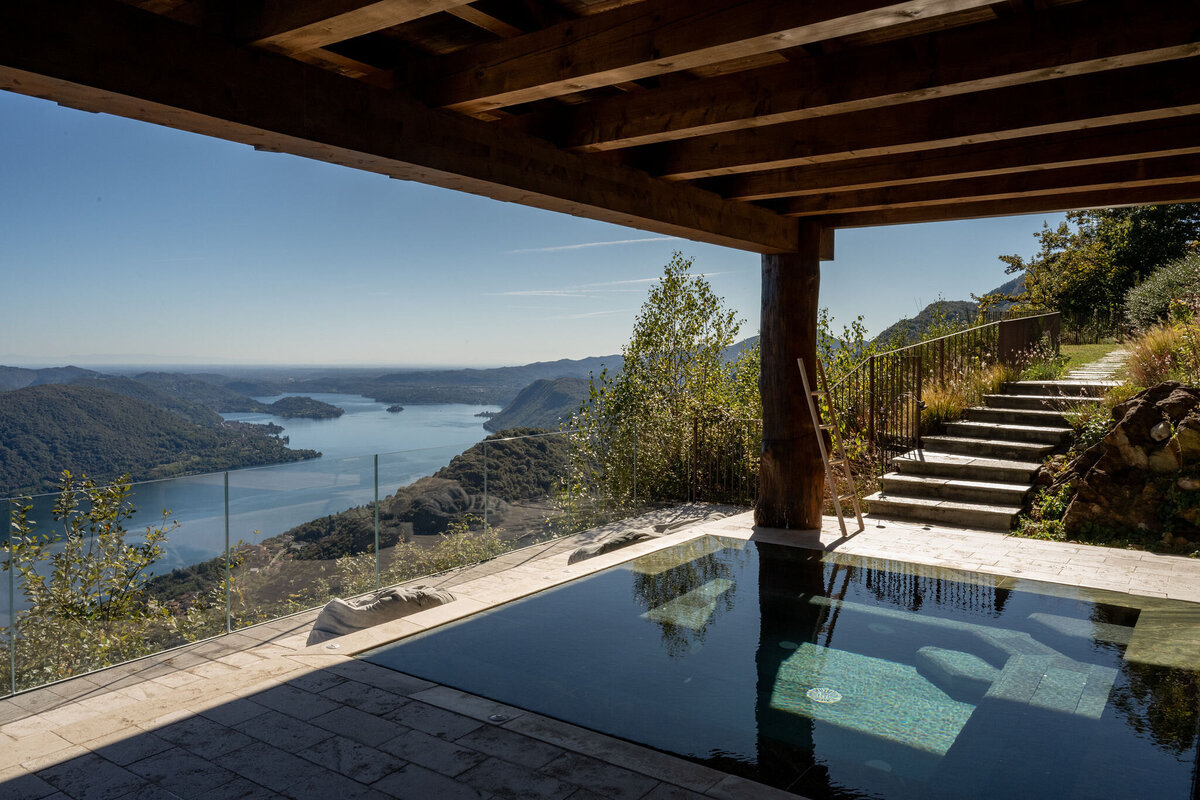
Meals are vegetarian, with breakfast observed in social silence. The center describes three meals daily and refreshments between them. Its Body Care area includes a pool, sauna, steam room, and jacuzzi, while massages and bodywork are separately bookable. These are leisure and retreat facilities; the name does not imply a medical department. Ask what is operating during the stay and what is included in the selected retreat. The communal routine, quiet periods, and shared facilities are as relevant to fit as the scenery or room standard.
Health needs and severe allergies require particular care
Mandali’s practical questions and answers state that it cannot accommodate severe food allergies or guarantee freedom from cross-contamination, even though vegetarian meals include options for some dietary needs. A general request for gluten-free or lactose-free food should not be treated as assurance that a serious allergy can be managed safely. Clarify the kitchen’s limitations before booking.
The guidance also tells guests to bring their own medication and notes that there is no doctor in the village, with the nearest hospital in Omegna. This reinforces the distinction between a retreat and a supervised clinical setting. Someone who needs ongoing monitoring or support with medication should settle those arrangements with their own healthcare team before deciding whether to attend. The FAQ says only retreat participants can stay at Mandali; it is not offered as accommodation without a program. Discuss any essential assistance needs directly instead of assuming that the presence of staff, teachers, or wellness facilities covers them.
Confirm the booking terms for the selected organizer
The published booking terms explain that both the foundation’s terms and those of a retreat’s teacher or organizer can be relevant. They describe the standard retreat components, how booking confirmation works, and the information needed about additional services or essential requirements. Requests for arrangements based on medical needs require explicit written approval from the foundation.
The terms also describe bookings as nonrefundable when canceled by the guest after payment, subject to the detailed provisions and the relevant organizer’s arrangements. Read the exact terms presented for the event and ask for clarification before paying; do not assume that a change of dates, a replacement participant, or a health-related cancellation will automatically be accepted. Keep a written record of any agreed accommodation or exceptional arrangement. A retreat-specific interview deposit or integration package may operate differently from a standard booking. The practical goal is to understand the total commitment and the stated options if circumstances change, without treating a general website summary as the complete agreement.
Plan the journey and arrival separately from the retreat
The travel and contact information describes access from Milan Malpensa by private transfer or by public transport with a further taxi journey. The center can assist with transfer arrangements, but identifies the transfer as an external service. Costs arising from changed flights or travel plans therefore need to be discussed with the relevant transport provider as well as with Mandali.
Ask for a current quote that covers the number of passengers, luggage, arrival time, and the final destination. Published journey times and example fares are planning information, not a guaranteed transfer price. If using public transport, establish the final connection to Quarna Sopra and how late arrivals are handled. Confirm check-in and the first session against the selected retreat’s instructions before booking flights. The property also describes parking for guests who drive. A clear arrival plan is particularly useful at a hilltop retreat where the last part of the journey may require a separately arranged vehicle.
Retreat scope, examples, and practical booking information were reviewed against official Mandali pages on October 19, 2026. Event descriptions are examples, not assurances of availability or clinical benefit; confirm the selected dates, eligibility, total price, and terms.
For services that provide clinical care, compare the distinct options in our Italy treatment guide.