Freeman Recovery Center — Dickson
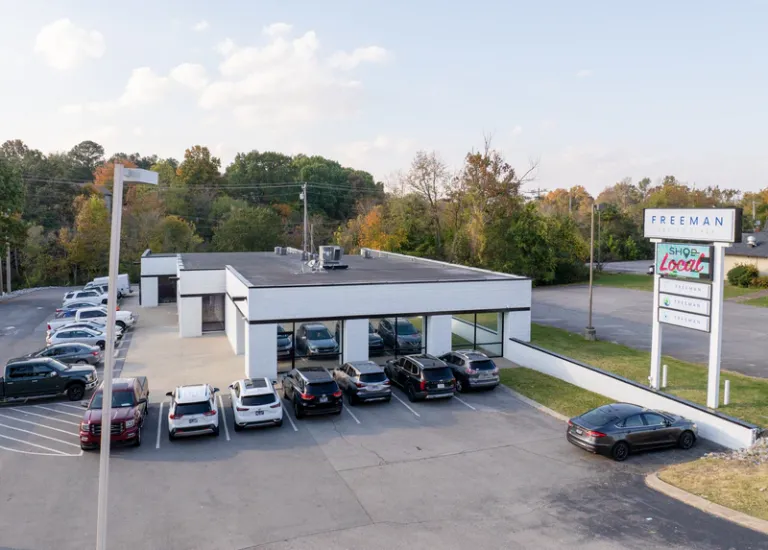


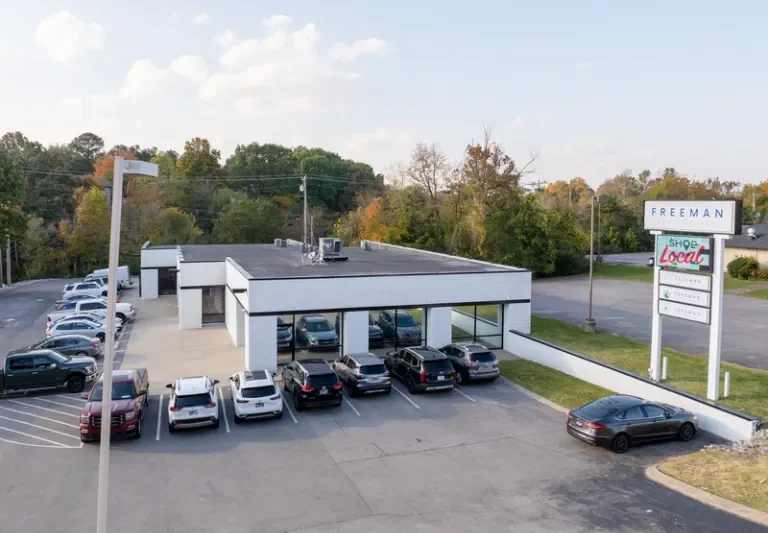
Freeman Recovery Center — Dickson 3 photos
Comparison facts and sources
Adult outpatient campus in Dickson providing PHP, IOP and standard outpatient care. Medical detox and residential treatment are provided at Freeman’s separate Burns campus, not at this Dickson profile. · 250 State Street, Dickson, Tennessee 37055
- Published fee information
- Quote required
- Before admission
- This profile is for the Dickson outpatient campus. Do not assign Burns-campus detox, residential accommodation or sober-living imagery and amenities to Dickson.
- Continuing care
- Dickson provides step-down PHP, IOP and standard outpatient care once overnight treatment is no longer clinically necessary. Continued individual or group therapy and the next level of care are based on clinical progress and need.
Source record · October 15, 2026
Provider-published information checked October 15, 2026. Confirm program schedule, medical necessity, benefits, authorization, duration and personal responsibility directly with Freeman Recovery Center.
Luxury rehab comparison · Fees and inclusions · Selection methodology
Freeman Recovery Center’s Dickson campus at 250 State Street provides daytime and outpatient addiction and co-occurring mental-health treatment. It is distinct from the nearby Burns campus, where medically monitored detoxification and residential treatment take place.
Dickson programs
Dickson offers partial hospitalization or day treatment, intensive outpatient treatment, standard outpatient care and telehealth. Clients sleep at home or in recovery housing rather than at the clinic. Current outpatient hours are Monday through Friday from 8:00 a.m. to 9:00 p.m., including evening options; program intensity and duration depend on assessment and progress.
Freeman advertises free assessment, same-day admissions and insurance verification and says it works with most major insurance providers. Coverage and personal costs depend on the plan and proposed service; no universal cash price or tax treatment is published.
Dickson is the outpatient treatment destination
The Dickson facility page identifies 250 State Street as Freeman’s location for PHP, IOP, and standard outpatient care. The published setting includes group rooms, private clinical offices, and quieter spaces for treatment activities. These describe a place to attend appointments and programming. They should not be read as a description of private residential bedrooms or an overnight admission at this address.
Freeman lists Monday through Friday, 8 a.m. to 9 p.m., as the facility’s opening window. That is not the attendance requirement for every patient. The page gives several program descriptions and schedule examples, so obtain the timetable for the actual level recommended. People living nearby may attend from home; others need to arrange recovery housing and transportation. The relevant comparison is the combination of treatment intensity and support outside scheduled hours. Confirm which services take place at Dickson and which would require another location before making accommodation or travel plans.
Burns provides the separate overnight and detox setting
Freeman’s Burns campus information places medical detox and residential treatment at 1615 Highway 96. It describes around-the-clock care and medication-supported treatment when clinically appropriate. This is a different receiving location from the outpatient clinic in Dickson, although both belong to the same provider. The distinction matters when an initial inquiry concerns withdrawal, medical monitoring, or a need for overnight support.
The Burns page says an initial conversation and assessment help determine whether the center can meet the person’s clinical needs, followed by a fuller evaluation to guide the plan. An inquiry about Dickson therefore does not automatically mean treatment should begin there. Ask the team to explain the recommended starting point, any transfer between campuses, and the information shared during that transition. A common provider name can help with coordination, but it does not make every service available at both addresses or establish that every person needs to pass through residential care first.
PHP combines daytime intensity with living elsewhere
The partial hospitalization description identifies the Dickson address for structured day treatment. Freeman describes PHP for people leaving detox or residential care and for people who need substantial daily support without continuous monitoring. Its published program combines individual therapy, groups, psychiatric services, and work addressing substance use alongside mental-health concerns.
Participants return home or to an agreed living arrangement after programming. That makes the environment outside treatment relevant to the admission decision. Discuss the person’s current stability, daily responsibilities, access to support, and ability to attend consistently. Ask for the exact number of treatment days, clinical hours, and review points, since general descriptions elsewhere on the website do not establish a single schedule for everyone. A recommendation for PHP should explain why this level supplies appropriate support and how the team would respond if needs increased. Housing, meals outside the program, and travel should be clarified separately rather than assumed to be included in day-treatment charges.
IOP publishes a minimum weekly treatment commitment
Freeman’s IOP page locates the service in Dickson and describes a typical minimum of nine hours of structured treatment per week across several days. The provider says the actual schedule is tailored to clinical need and may change with progress. Sessions can include group work, individual counseling, recovery skills, and support for co-occurring mental-health concerns.
IOP is one possible transition after a more intensive program, with further outpatient or remote care available when appropriate. The decision should reflect the person’s support needs, not only the convenience of fewer hours. Discuss which sessions are required, what happens between appointments, and how attendance fits transportation, employment, or caregiving. Someone who has completed treatment elsewhere can ask how that history will be assessed and what information is needed for a handover. The published minimum describes intensity; it does not establish the total number of weeks, automatic admission, or a point at which recovery is guaranteed to be complete.
Evening IOP is specifically linked to Dickson
The evening-program page describes outpatient attendance at the Dickson clinic for people with daytime commitments. It includes individual and group treatment, recovery education, and medication-related support when indicated. The same page separately identifies Burns for detox and residential care, so the evening outpatient description should remain tied to the appropriate receiving location.
An evening option can make treatment easier to combine with work or family life, but flexibility still needs a concrete timetable. Confirm the days, start and finish times, frequency of individual appointments, and the process for reviewing attendance. The page also discusses broader evening PHP and crisis-service examples; those descriptions are not a substitute for confirmation of the precise Dickson service being offered. Explain shift work, transport limits, or caregiving needs early in the assessment. Obtain the actual appointment plan before assuming that every daytime obligation can continue unchanged, or that a late inquiry will lead to an immediate treatment session.
Standard outpatient care involves less frequent contact
The outpatient program is based at Dickson and allows clients to continue living elsewhere. Freeman describes general outpatient care as typically involving fewer than nine hours of structured treatment weekly, with IOP providing more frequent contact. Its focus includes ongoing clinical support, coping skills, and maintaining progress after more intensive treatment when that sequence is appropriate.
This distinction is useful when comparing a provider’s list of programs. “Outpatient” can refer broadly to several levels, while standard outpatient appointments represent a particular amount of support. Ask whether the recommendation is for individual sessions, groups, psychiatric follow-up, or a combination. The plan should connect appointment frequency to current needs and explain what would prompt more intensive care. If another professional is involved, clarify how responsibilities will be shared. Living at home does not remove the need for assessment, and a lower number of weekly hours should not be treated as evidence that every person is ready for that level.
Freeman Recovery Online is a separate appointment format
The online-program description presents Freeman Recovery Online as the provider’s route to virtual addiction and mental-health care in Tennessee. It describes live video sessions with professionals, individual and group work, and structured treatment such as IOP. The stated purpose includes helping people who face travel barriers or need care that can be attended from an appropriate home setting.
Discuss whether the particular service and level of support are suitable for remote delivery. A useful plan identifies the required appointments, technology, privacy arrangements, and any need for in-person assessment or follow-up. Confirm location eligibility before arranging a visit from outside Tennessee or while traveling. Online participation also requires reliable attendance and a workable environment; it does not create continuous monitoring simply because a clinician is available by video at scheduled times. Ask how the team handles connection problems, missed groups, changing clinical needs, and coordination with existing care so that the remote format supports an understandable treatment plan.
Co-occurring concerns are assessed together with substance use
The dual-diagnosis service describes assessing substance-use history, mental-health symptoms, safety needs, and trauma-related concerns together. Freeman then recommends a level of care, which may involve overnight treatment or a structured outpatient plan. The page specifically identifies Dickson for PHP, IOP, and outpatient work addressing addiction alongside other mental-health needs.
The phrase “dual diagnosis” covers a broad group of presentations. Ask how the proposed team will clarify existing diagnoses, distinguish current symptoms from past history, and coordinate therapy with psychiatric care when needed. Someone with an established community psychiatrist should discuss record sharing and responsibility for prescriptions. A listed condition does not establish that every degree of severity can be managed in day treatment. The recommendation should explain the setting and support required for that individual. Review points are especially useful when symptoms or substance use change, because the appropriate intensity may need to change as well.
Case management addresses barriers beyond the therapy session
Freeman’s case-management description includes coordinating appointments, housing resources, employment support, and communication with outside agencies. It discusses practical issues such as court dates, probation, and unstable accommodation that can complicate participation in treatment. The provider presents this work as available across different levels of care, from intake through planning for continued support.
The value of case management depends on a clear list of tasks. Identify urgent deadlines, existing professionals or agencies, and the information needed to coordinate them. Ask which parts the case manager can help organize and which require the patient, a lawyer, an employer, or another service to act. Help with documentation or communication does not guarantee a legal outcome, housing placement, or a job. Agree on consent before personal information is shared. A practical plan can then connect the clinical schedule with real responsibilities, including arrangements that will remain necessary after attendance at Dickson becomes less frequent.
Recovery housing is distinct from the outpatient clinic
The housing page describes Freeman recovery homes in White Bluff, Burns, and Dickson. Published features include shared kitchens and living areas, semi-private rooms, house meetings, chores, curfews, and substance testing. The provider also describes house-manager support and practical work on budgeting, meals, and employment readiness. These are features of the recovery residences, not a description of bedrooms within the outpatient clinic.
Someone considering housing alongside treatment should obtain a separate explanation of the receiving home, eligibility, supervision, and rules. Ask how transport to appointments works, how medications are managed, and what support is available outside clinical hours. The provider’s general discussion of housing costs does not establish a fixed price for a particular residence. Confirm the agreement, included utilities or services, payment arrangements, and what happens if the treatment plan changes. Admission to an outpatient program alone should not be assumed to reserve a room or establish insurer payment for accommodation.
Assessment, authorization, and costs are separate steps
The admissions page describes an initial discussion, review of substance-use and health history, assessment of treatment fit, and insurance or payment arrangements. Freeman advertises a complimentary assessment and assistance with coverage verification. It names commercial insurers such as Aetna and Cigna and invites people without insurance to discuss available payment resources.
A free assessment does not mean the recommended treatment is free or that an insurer has authorized it. Request a written estimate connected to the actual program, anticipated duration, and any separate housing or other services. Confirm deductibles, copayments, authorization requirements, and how costs change if another level is recommended. The admissions page includes broad industry price ranges, which should not be treated as a personal Dickson quote. Ask for the confirmed receiving address and next appointment before traveling. The team’s goal of a prompt start remains dependent on completing the necessary assessment and arranging appropriate care.
Continuing support includes several kinds of follow-up
Freeman’s current program FAQ describes alumni nights, community events, and an alumni app. It also identifies recovery coaching, peer mentoring, employment counseling, housing connections, and follow-up after discharge. These are different forms of continuing support. An alumni event, a housing referral, and an appointment with a treating clinician should have separate roles in the discharge plan.
Before reducing attendance or leaving a program, identify the next clinical appointments, responsibility for medication, and the community activities the person wants to use. Ask how to join the alumni network, which services require new arrangements, and whether there are associated charges. Freeman says former clients can contact the team again if they need further help; this is an invitation to seek reassessment, not a guaranteed immediate bed or unlimited treatment entitlement. The ongoing plan should make clear how to maintain ordinary care and how to request additional support if circumstances change.
Official provider pages reviewed October 19, 2026. Confirm the receiving facility, current program schedule, individual suitability, availability, and costs directly with Freeman Recovery Center.
Official information: Dickson facility, Burns and Dickson comparison, contact and admissions, and insurance and cost guidance. The admissions line is 615-645-3677. Sources checked on October 10, 2026.