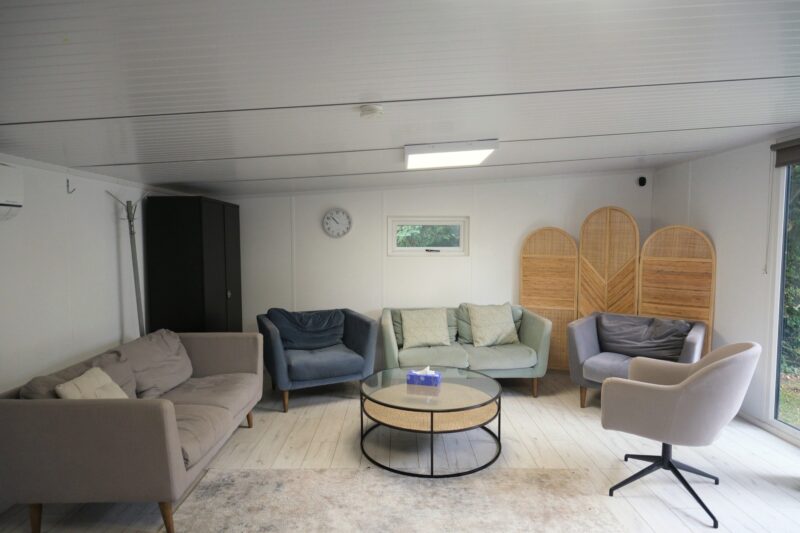
Choosing rehab in Bedfordshire starts with identifying the service needed and the area responsible for community support. A private residential program in Luton, an NHS drug and alcohol service in Bedford or Dunstable, and a local recovery service are different routes. Compare clinical assessment, staffing, treatment arrangements, accommodation, cost, and follow-up. A county name or a luxury description cannot establish whether a particular service is appropriate.
The current directory lists Liberty House Clinic in Luton. This guide also explains public access routes for Bedford Borough, Central Bedfordshire, and Luton so that residents can ask the right organization for help. Listing a private provider does not establish availability or guarantee admission. Ask for a current assessment and a written description of the individual offer before making financial or travel commitments.
Liberty House: a residential option in Luton
UKAT's current Liberty House page describes a 20-bed drug and alcohol detoxification and rehabilitation service in Luton, with medically monitored detox, individualized care planning, individual sessions, and family support. These are provider-published descriptions of a residential service. The number of beds is not a statement about vacancies, and the word monitored should prompt specific questions about the clinicians present and the arrangements for escalation.
Ask the admissions team which program is being recommended, who approves the clinical assessment, and whether the proposed care is delivered entirely at Liberty House. Discuss current prescriptions, medical conditions, mental health needs, and any support required with daily activities. If the team recommends another UKAT location or a different service, request a fresh written explanation of that site's care, address, costs, and practical arrangements before agreeing.
Read the current CQC record, including individual domains
The Care Quality Commission record for Liberty House Clinic identifies the location at 220 Old Bedford Road, Luton, LU2 7HP. Its report published November 17, 2025 rates the service Good overall, with Safe rated Requires improvement and the other four domains rated Good. Those details provide a more accurate picture than repeating an older rating or presenting the overall result without its component findings.
Read the regulator's report and ask the provider how relevant findings have been addressed. Check that the record refers to the actual location and operating service being offered. A published inspection describes the regulator's findings at a particular time; it does not confirm today's staffing roster, bed availability, or suitability for an individual. Keep the report date alongside the rating when comparing several services.
Bedford Borough and Central Bedfordshire: Path to Recovery
Path to Recovery, also called P2R, is an NHS service for people over 18 living in Bedford Borough or Central Bedfordshire whose lives are affected by alcohol or drug use. East London NHS Foundation Trust describes it as free and confidential, with main sites in Bedford and Dunstable. People may refer themselves or ask a doctor or another professional to make a referral.
The published P2R pathway begins with an assessment and a discussion of goals. Depending on circumstances, available support may include individual appointments, groups, family appointments, a nurse's physical health review, prescribing for opioid use, medically assisted alcohol detoxification, and referrals to other services. Those options are considered individually. The description should not be read as an automatic entitlement to residential admission or a particular private clinic.
The Central Bedfordshire page gives the Dunstable location as Grove View Integrated Health and Care Hub, Court Drive, LU5 4JD, and lists 0333 332 4019 as its contact number. Confirm the appointment location and attendance instructions when booking. If you live near an administrative boundary, explain your home address and GP registration so that the team can clarify the appropriate access route.
Luton has a separate local recovery route
The current Luton Recovery Alliance brings together Change Grow Live and Community Led Initiatives. Its website offers help with drug use, alcohol, and recovery. This is a separate local route from the Bedford and Dunstable P2R service. Use the current service name and contact page when seeking an appointment, since older directories may still describe earlier arrangements.
The alliance's get-support page provides an initial referral questionnaire and a separate professional referral route. It directs people under 25 to the Children and Young People Luton Service. Check the age-specific pathway rather than assuming that every adult or youth service uses the same cutoff. An initial referral is the start of arranging an assessment, not confirmation that a particular treatment has been approved.
Choose the setting through assessment
Ask a qualified clinician to explain why residential treatment, community appointments, or another setting is being considered. The decision should address the person's current needs, available support, and the service's capabilities. Someone researching accommodation should also ask how physical health, psychiatric needs, and current medications will be reviewed. A residential room and a well-presented website provide little information about those clinical responsibilities on their own.
If withdrawal management is required, obtain clear advice from the responsible clinical team about assessment, monitoring, and the appropriate location. Ask what happens if the person's needs exceed what the proposed setting can provide. Neither this guide nor a standard package description can determine the medication, duration, or level of supervision needed. Avoid making travel or admission plans around a fixed detox timeline before the clinical assessment is complete.
Understand the actual treatment schedule
Request a sample week and a proposed individual plan, then compare the two. Identify which appointments involve a qualified therapist, which involve medical review, and which are peer support, education, or recreation. Ask how often the plan is reviewed and how the person can discuss concerns. A broad list of therapies on a provider's website does not establish that every method will be delivered to every resident.
Discuss the person's preferences and previous treatment experiences, including approaches that felt helpful or unsuitable. If a provider proposes a specialized test, technology, or branded intervention, ask why it is relevant, who delivers it, and what evidence supports its use. The sources reviewed for this guide do not establish that Bedfordshire programs routinely provide genetic testing, virtual reality treatment, neurofeedback, or wearable monitoring.
Accommodation and accessibility at Liberty House
Liberty House's facilities page describes shared and private rooms, communal living and dining areas, an in-house chef, garden therapy pods, a vegetable garden, and lift access. These are useful practical details, but the actual room and assistance available should be confirmed for the proposed admission. A room described as private does not necessarily include every feature shown in photographs.
Explain mobility, sensory, dietary, and personal-care requirements before paying a deposit. Ask about the route between the bedroom, bathroom, dining room, and therapy spaces, and whether staff can provide the assistance required. Lift access alone does not answer every accessibility question. Confirm how dietary needs are recorded, whether equipment can be brought, and who will review any change in support needs during the stay.
Travel and daily commitments need a realistic plan
For a Luton residential admission, use the confirmed receiving address and agreed arrival time rather than relying on a general Bedfordshire search. Ask whether transport is available, who arranges it, and what happens if arrival is delayed. A family member traveling with the person should clarify whether they can attend the initial meeting, how long it may take, and where they can stay separately if needed.
For community appointments in Bedford, Dunstable, or Luton, consider the repeated journey rather than only the first visit. Discuss work hours, childcare, caring responsibilities, mobility, and access to a private space if remote contact is proposed. Ask the service what flexibility it offers without assuming that evening appointments or online treatment are available. A workable attendance plan is part of deciding whether the proposed arrangement can be sustained.
Compare private fees and public access separately
Request a dated written quote from a private provider that identifies the program, room type, intended duration, and services included. Clarify charges for medical consultations, medication, tests, transport, extended stays, and follow-up. Ask about deposits, cancellation, early departure, and a transfer to another service. This guide does not give a countywide price range because the reviewed sources do not establish a consistent offer across Bedfordshire.
P2R's free NHS support should not be confused with automatic public payment for a chosen private residential stay. If publicly funded residential treatment is being considered, ask the responsible local service to explain assessment, eligibility, commissioning, and the next steps. If insurance is involved, obtain confirmation for the exact provider, location, and program from the insurer as well as the clinic. Record any authorization requirements before admission.
Family involvement and communication
Agree on how relatives or other supporters can participate, with the person's consent and appropriate clinical guidance. Ask whether family support means education, joint appointments, separate support for relatives, or scheduled updates. These activities serve different purposes. Clarify visiting arrangements, telephone access, and how concerns can be raised without assuming that family involvement permits unrestricted access to clinical records or every treatment discussion.
People balancing employment or other responsibilities should discuss device use and communication arrangements before admission. Ask whether there are limits during appointments or group work and how essential practical matters can be handled. Privacy also involves the handling of personal information, visitors, and records. Request the provider's current privacy information and a clear contact for questions about information sharing rather than relying on an absolute promise of confidentiality.
UKAT's Liberty House page advertises 12 months of free aftercare following completion of treatment. Ask what completion means, what the aftercare includes, how often contact occurs, and whether participation is local, remote, or at another site. Clarify eligibility, any additional costs, and the response if the person needs a different level of care. An advertised duration alone does not describe the complete follow-up service.
Before leaving residential care, agree who will take responsibility for ongoing appointments, medication, and communication with existing clinicians. If returning to Bedford Borough, Central Bedfordshire, or Luton, identify the relevant local route and arrange referrals with consent. Ask for a written transition plan with named contacts and practical appointment details. Continuing care should connect the residential stay with everyday life, including work, relationships, housing, and support near home.
Sources and review date
Official provider, Care Quality Commission, East London NHS Foundation Trust, and Change Grow Live pages reviewed October 22, 2026. Provider descriptions are attributed; the CQC findings retain their publication date and individual-domain qualifications. Confirm current availability, assessment, costs, access criteria, and arrangements directly with the relevant service.
Back to guide contents↑