Ohio Hospital for Psychiatry

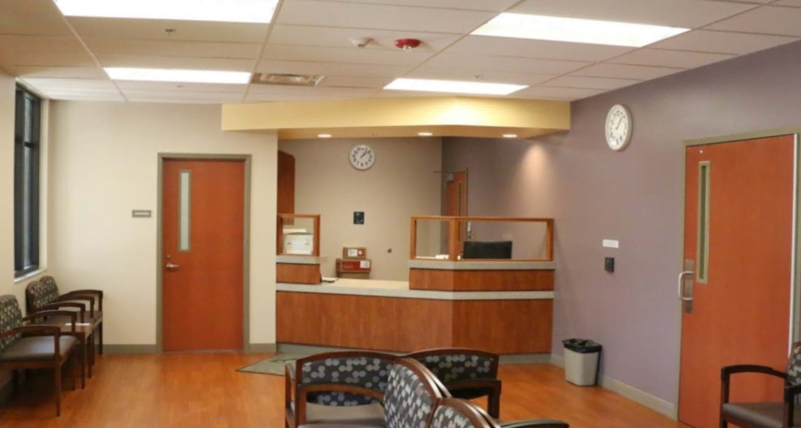

Ohio Hospital for Psychiatry 3 photos


Comparison facts and sources
Acute inpatient and outpatient psychiatric hospital with age-specific programs for adolescents ages 15–17, adults and older adults. Admission and the receiving program depend on clinical assessment. · 880 Greenlawn Avenue, Columbus, Ohio. Current provider pages list inpatient and outpatient care at this address.
- Published fee information
- Quote required
- Before admission
- Confirm the age-specific unit, current admission criteria, availability, expected duration, clinical monitoring and insurer authorization. Outpatient attendance requires separate overnight support. The dedicated dual-diagnosis page does not establish medical detox; the IOP day schedule requires direct clarification.
- Continuing care
- Discharge planning identifies the next appropriate level of care, which may include IOP, traditional outpatient treatment, support groups and community referrals. No universal continuing-care duration is published.
Source record · October 19, 2026
Reviewed October 19, 2026: the announced adolescent inpatient service, age-specific duration descriptions, conflicting IOP day schedules and the dual-diagnosis no-detox boundary. Confirm individual suitability, current availability, the actual timetable, coverage and complete personal costs.. Current provider pages identify an acute inpatient and outpatient psychiatric hospital. This review does not independently verify every license or accreditation.
Luxury rehab comparison · Fees and inclusions · Selection methodology
Provider overview
Ohio Hospital for Psychiatry is an acute inpatient and outpatient psychiatric hospital for adolescents, adults and seniors at 880 Greenlawn Avenue, Columbus. It treats mental health conditions, addiction and co-occurring needs; it is not a single fixed-length residential addiction program.
Treatment and admissions
Current official pages describe assessment-led adult and older-adult care and a separate adolescent inpatient program, including age-specific senior programming for dementia-related and other mental-health concerns. Call 855-612-3430 for a free confidential screening and current program availability. Most duration is individualized rather than universal; the senior Generations inpatient program publishes a typical seven-to-14-day stay. The dual-diagnosis unit treats a primary mental-health condition with secondary substance use, and the provider explicitly states that it is not a detoxification program.
Insurance and costs
The provider lists managed-care insurance, Medicare and Medicaid, with benefits and financial obligations checked before admission. Its price-transparency page offers individualized estimates after insurance, along with information about self-pay discounts, charity care and payment-plan options. A posted charge list is not an exact estimate of out-of-pocket cost.
Acute inpatient care has a specific purpose
The hospital’s inpatient overview describes short-term psychiatric care for people who need a structured setting and continuous support. Treatment involves a multidisciplinary team that can include psychiatrists, nurses, social workers, therapists, and dietary staff. Daily contact with staff should not be interpreted as a promise of daily individual psychotherapy or a private consultation with every professional.
The receiving team assesses what is driving the admission, what needs immediate attention, and what support will be needed afterward. Ask which unit is proposed, which clinicians will be responsible, and how existing medical or psychiatric treatment will be coordinated. A hospital stay should have understandable goals and regular discussion of progress.
The page describes therapeutic groups and activities as part of the routine. These sit alongside the individual clinical plan, rather than establishing one identical schedule for every patient. Explain communication, sensory, mobility, and dietary needs during assessment. Also clarify how the patient and appropriate support people participate in discharge planning, including what must be arranged before the next stage begins.
The adolescent unit serves a defined age group
The dedicated adolescent inpatient page announces an expansion beginning August 24, 2026, for young people ages 15–17. It describes acute psychiatric stabilization, with an average stay of six to ten days. That estimate concerns this unit and does not determine an individual discharge date or the duration of adult treatment.
Published components include several therapeutic groups each day, family work, medication management when indicated, and creative or recreational activities. The program describes direct admission as possible without a previous treatment episode. Assessment still determines suitability and the receiving arrangements.
Parents or guardians should ask how consent, communication, school responsibilities, and the return home will be handled. Explain existing prescriptions and any current community clinicians. Activities such as music, art, or a therapy-dog visit are examples of the setting, not guarantees for every admission. Before discharge, establish the next appointment, medication follow-up, and the support required at home or school.
Generations addresses older adults’ needs
The Generations senior program describes care for older adults with psychiatric concerns, including dementia-related difficulties and mental health conditions accompanied by secondary substance use. Its usual seven-to-fourteen-day description is qualified by the person’s needs. It should not be used to promise a fixed recovery period or arrange a discharge without clinical agreement.
The program discusses medication review, groups, reminiscence, music, art, and activities adapted to cognitive needs. It also describes basic medical support and referral when a medical condition exceeds the unit’s capabilities. A psychiatric senior unit does not automatically replace the services of a medical hospital or long-term nursing placement.
Share information about memory, communication, falls, mobility, personal care, and existing medication with the assessment team. Ask how relatives or authorized decision-makers will contribute useful history. The discharge discussion should identify the appropriate living arrangement, the support needed there, and who will provide follow-up. Confirm those arrangements individually rather than assume that returning to the previous address is always suitable.
Dual diagnosis does not mean this is a detox unit
The dual-diagnosis program explicitly treats a primary mental health condition with a secondary substance-use concern and states that it is not a detoxification program. This boundary matters when comparing the hospital with a dedicated withdrawal-management service or an addiction residence.
The described treatment combines psychiatric assessment, medication-related care, therapeutic groups, and planning for continuing support. A substance-use history is therefore relevant, but it does not establish that the unit can manage every form or severity of withdrawal. Tell admissions about recent use, previous withdrawal complications, prescribed medication, and other medical conditions so that the correct service can assess the situation.
If medical withdrawal care is needed, ask the referring clinician where it should occur and whether a later psychiatric admission is appropriate. Do not change medication or attempt withdrawal to satisfy an assumed admission requirement. A coordinated plan should identify the responsible professionals, transfer of records, and any receiving appointment. Treatment for two interacting concerns still requires clarity about what this particular unit provides directly.
Confirm the current IOP days before arranging attendance
The intensive outpatient page presents group-based psychiatric care while the person lives outside the hospital. It contains two different schedules: one passage says Monday through Friday, while another specifies Monday, Wednesday, and Friday. Both give a 9:30 a.m. to 12:30 p.m. time window. Ask the outpatient team for the actual current timetable rather than choosing one description as definitive.
The page distinguishes IOP groups from other outpatient appointments, including medication-related services. Confirm who will prescribe and review medication, whether that appointment is included, and how concerns between sessions will be assessed. Enrollment in a daytime program does not provide overnight hospital monitoring.
The provider also advertises transportation within a twenty-five-mile area. Check the route, eligibility, pickup arrangement, and availability before relying on it. Consider work, caregiving, and safe support at home against the confirmed attendance requirement. If the program follows an inpatient stay, establish the first session and clinical handoff before discharge.
An admissions assessment determines the next step
The admissions information offers a free assessment with licensed clinical staff and describes access to assessment around the clock. The conversation is intended to establish the person’s needs and a suitable level of care. An inquiry is not the same as a confirmed admission, a reserved bed, or approval of a particular treatment program.
Be ready to explain current symptoms, recent treatment, medication, medical conditions, and any substance use. If a hospital, physician, or other service is making the referral, ask how relevant records and direct clinical communication will be arranged. Family information can be helpful when shared appropriately, particularly when the person has difficulty describing recent events.
The hospital also describes financial counseling as part of admission planning. Keep the clinical decision and payment arrangements clear: an insurance check does not itself establish that a unit is appropriate. Confirm the receiving program, location, arrival instructions, and remaining assessment requirements. A person needing immediate emergency care should use the appropriate emergency service rather than wait for an ordinary placement decision.
What the first clinical assessments cover
The hospital’s guide to what to expect describes nursing, psychiatric, psychosocial, and nutrition assessments. These help the team understand immediate concerns and build the treatment plan. Different professionals contribute different information; a nutrition review, for example, does not replace a psychiatric evaluation.
Ask how the findings will be explained and who can answer questions about the plan. Share current clinicians’ details, relevant medical history, and practical needs that may affect participation. The patient should understand the purpose of recommended groups, medication reviews, and other appointments, along with how progress will be discussed.
The guide also describes social-work involvement in discharge and connection with community support. It is useful to begin that conversation early, especially if housing, transport, caregiving, or a prescriber must be arranged. A referral list is different from an accepted appointment. Before leaving, confirm the next service, the date and location, what information has been sent, and which professional is responsible for continuing medication or therapy. Ask whom to contact if the proposed arrangement becomes unavailable.
Packing rules should be checked with the receiving unit
The packing guide recommends practical clothing and identifies restrictions on cords, laces, certain personal items, and electronic devices. Cell phones and computers are among the listed prohibited items. These rules can affect work, communication, and everyday routines, so discuss them before an elective admission rather than assume ordinary device access.
Ask which belongings are stored, what the unit supplies, and how someone can contact family or another essential support person. Explain any disability-related equipment, hearing or vision needs, or other item necessary for participation. Approval of an item should come from the receiving team.
The guide also restricts items such as electronic cigarettes and outside medication. Its packing rules are not instructions to stop prescribed treatment. Ask how to provide an accurate medication list, whether any labeled containers should accompany the person for reconciliation, and what staff need from the usual pharmacy or prescriber. Confirm the current list after the unit is identified, since practical arrangements may differ between adolescent, adult, and senior services.
Insurance verification is specific to the proposed care
The insurance and payment page lists managed-care arrangements, TRICARE, Medicare, and Medicaid among the funding routes the hospital discusses. A payer’s name on that list does not establish that every policy covers every unit, treatment level, or length of stay.
Ask the hospital and insurer to confirm the exact plan, network status, authorization requirements, and patient responsibility. If the proposed care includes an inpatient stay followed by outpatient treatment, check both stages. Authorization for one service does not settle coverage for the next appointment, transport, or an outside clinician.
Request an explanation of deductibles, copayments, coinsurance, and any charges that may be separate. Identify who will discuss changes if the clinical plan or approved length of care changes. The financial team can help organize these questions, but an understandable written estimate remains useful. Clinical suitability and benefits approval should both be clear before a planned arrival, with any unresolved questions identified rather than treated as settled by a general insurance logo or phone inquiry.
A charge list is different from a personal estimate
The price-transparency page explains that posted hospital charges do not equal the amount an insurer negotiates or the patient’s eventual out-of-pocket responsibility. It also warns that some professional, laboratory, pharmacy, or other services may not be included in the hospital figure.
Ask for an estimate tied to the actual proposed service, with an explanation of what it includes. If another clinician or company bills separately, request that information before assuming the hospital estimate covers the complete episode. A daily charge should not be multiplied into a guaranteed package when the medically necessary duration remains uncertain.
The hospital describes self-pay discounts, charity-care assessment, and payment-plan possibilities. These require individual review and are not automatic entitlements. Ask what information the financial team needs, when a decision will be made, and how an agreed arrangement is documented. If the person transitions to outpatient care, establish the new billing terms separately. Clear financial questions can be addressed alongside clinical planning without using the price list as a substitute for either process.
Official hospital program and admissions pages reviewed October 19, 2026. The adolescent page announces an August 24 expansion; individual availability remains subject to assessment. The IOP page contains conflicting day schedules, which require confirmation. Published duration and financial descriptions are program-specific, not individual guarantees.
Related guides: depression treatment and care for co-occurring conditions.
Sources checked
Checked October 16, 2026: the official Ohio Hospital for Psychiatry website, program directory, dual-diagnosis page, senior inpatient page, insurance page, and price-transparency page.