Victory Addiction Recovery Center
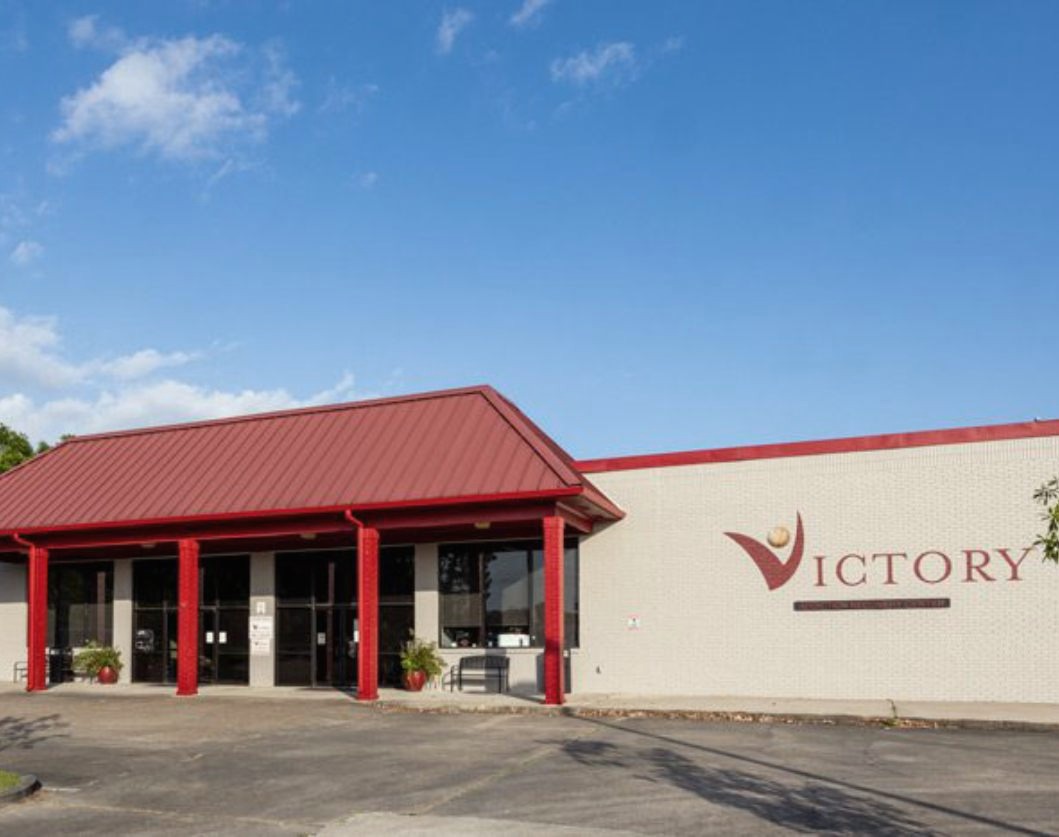


Victory Addiction Recovery Center 3 photos


Comparison facts and sources
The listed Lafayette campus provides medical detox, residential and outpatient treatment. Victory identifies 516 Veterans Memorial Boulevard in Metairie as a separate outpatient office. · 111 Liberty Avenue, Lafayette, Louisiana 70508, United States.
- Published fee information
- Quote required
- Before admission
- The profile is anchored to Lafayette. Metairie is a separate outpatient office; applicants should confirm campus, level of care, eligibility, benefits and personal costs directly.
- Continuing care
- Continuing care includes a free weekly group. Alumni meetings are separate. The drug-treatment overview offers weekly IOP attendance for up to one year; the residential page offers Trac9 for 12 months after discharge. Confirm eligibility, schedules and any charges for each service.
Source record · October 19, 2026
Official-source review on October 19, 2026 distinguishes continuing-care groups, alumni activities, weekly IOP follow-up and Trac9 access. Confirm the current service arrangements individually; fee information retains its separately stated review date.. Confirm current Louisiana licensing, accreditation, exact campus, program eligibility, benefits and personal costs directly with the provider.
- Current Lafayette campus identity, address and full continuum
- Current Metairie outpatient-only identity and services
- Current residential and IOP duration guidance
- Current insurance-verification guidance
- Official weekly aftercare guidance
- Current continuing-care services and weekly free group
- Current alumni services and meeting schedule
- Residential program and12-monthTrac9 access
Luxury rehab comparison · Fees and inclusions · Selection methodology
Provider overview
Victory Addiction Recovery Center treats adults with substance-use disorders in Louisiana. Its Lafayette campus at 111 Liberty Avenue provides residential and outpatient care, while the provider identifies 516 Veterans Memorial Boulevard in Metairie as a separate outpatient office.
Treatment and services
Current provider materials describe medically supervised detoxification, residential treatment, intensive outpatient care, dual-diagnosis services, family therapy, medication-assisted treatment, veterans and professionals programs, alumni services and continuing care. The Lafayette campus is presented as the full-service location with 24-hour nursing support; residential care should not be assigned to the Metairie outpatient office without program-specific confirmation.
Admissions, duration and costs
The provider describes individualized residential stays ranging from two weeks to 90 days, IOP classes three nights per week for 12 weeks, and up to one year of weekly IOP attendance in its drug-treatment overview; separate continuing-care and alumni arrangements require confirmation. Victory states that it accepts most major insurance plans and offers benefit verification. Confirm the exact plan, clinical eligibility, authorization and out-of-pocket costs directly. No universal self-pay price or tax treatment was published.
Lafayette is the full-service treatment campus
Victory’s Lafayette location page describes medical detoxification, residential treatment, and intensive outpatient care at the same campus. It identifies adult substance-use treatment, support for co-occurring conditions, trauma-informed care, and family services. This location-specific description is the appropriate starting point when asking where an overnight stay or withdrawal-management admission would occur.
The page describes semi-private rooms and spaces for therapy. Room arrangements should be confirmed for the actual admission rather than assuming that a private or homelike setting means a single-occupancy bedroom. The campus also lists group and individual treatment, medical detox supervision, and educational resources for families. A prospective resident should establish the recommended clinical level, available accommodation, and any needs the campus cannot support. Its mix of services can support transitions within the provider’s continuum, but does not mean every person will use every listed program.
Metairie provides a distinct outpatient service
The Metairie location page describes a community-based outpatient program serving the New Orleans area. It lists evening IOP for adults, continuing-care groups, family support, individual and group therapy, and coordination with primary care or inpatient providers. These services may suit someone moving on from more intensive treatment or beginning an assessed outpatient plan.
The practical distinction is that this page does not describe overnight residential accommodation at the Metairie office. Some general Victory program descriptions mention both cities, so the receiving location needs to be confirmed explicitly when discussing residential care or detox. For Metairie outpatient treatment, ask about the actual evening schedule, transportation, available mental-health support, and how care will connect with any outside prescriber. The ability to remain at home or continue working depends on the clinical recommendation and the person’s circumstances, rather than the outpatient label alone.
Residential treatment and the Trac9 tool
The residential program description emphasizes daily individual and group work, a structured environment, family involvement, coping skills, and discharge planning. Victory also describes introducing clients to Trac9 during treatment and making that online tool available for 12 months after discharge. It collects responses about areas such as stress, anxiety, cravings, and quality of life.
The tool should be understood as one component of the published support plan. Its availability does not mean a clinician continuously monitors an app, nor does a questionnaire determine whether an individual will relapse. Establish how results are reviewed, who follows up, and what contact arrangements apply after leaving residential care. Victory’s separate continuing-care and alumni services have their own activities and access arrangements. Their scope should not be reduced to the tool’s 12-month access period.
Detoxification starts with a medical assessment
Victory’s detox program page describes medical supervision, medications when appropriate, emotional support, and planning for further treatment. The published model involves round-the-clock support during withdrawal management. Clinical staff need to review substance-use history, current health, and any co-occurring medical needs before confirming the appropriate setting.
The page also describes movement into residential or outpatient care after detox. That is a planning process rather than a requirement to follow one identical sequence. Ask which campus will deliver withdrawal management, what medical information is needed, and whether any additional hospital assessment is required. Detox should not be arranged on the assumption that an outpatient office offers the same overnight service as Lafayette. The provider’s general description is not a personal withdrawal timetable, and it does not establish which medications will be prescribed for a particular patient.
IOP supports an assessed outpatient schedule
The IOP page describes group and individual counseling, relapse-prevention work, practical life skills, and family support. It presents IOP as an option after residential treatment or when someone needs more structure than occasional therapy without an overnight stay. Both Lafayette and Metairie are identified as outpatient locations.
The current program page mentions day and evening options, while other Victory descriptions emphasize evening attendance. A person comparing programs should obtain the schedule for the receiving location rather than assuming every session format is offered at both. The recommendation also needs to account for support outside treatment, work or school commitments, and any separate medical appointments. Victory describes individualized plans and help transitioning from other levels of care. A flexible schedule is not an assurance that treatment can be reduced to fit any existing commitment without reassessment.
Published durations refer to different services
The drug-treatment overview describes residential stays ranging from two weeks to 90 days, according to individual need. It gives an IOP example of three evenings weekly for 12 weeks. Its aftercare section separately describes up to one year of attendance at IOP one night per week. These are provider-published descriptions, not a single fixed package covering every stage.
A proposed plan should identify which of these arrangements is being offered, the expected start and review dates, and what is included financially. The weekly IOP aftercare description should not be confused with an alumni gathering or the separately described Trac9 tool. Because Victory also publishes continuing-care groups without the same stated endpoint, ask which ongoing services remain available and under what conditions.
Co-occurring mental-health care stays connected with addiction treatment
Victory’s dual-diagnosis description addresses substance-use disorders occurring alongside concerns such as depression, anxiety, bipolar disorder, or PTSD. Published elements include assessment, integrated counseling, medication management, individual and group sessions, and family education. The intention is to consider the addiction and mental-health needs within a coordinated plan.
This description does not establish that the program accepts every primary psychiatric condition or provides an acute psychiatric hospital service. When mental-health symptoms are a major concern, the receiving team should review current diagnoses, previous treatment, medications, and the level of supervision required. Clarify which professionals will provide psychiatric assessment, how appointments fit into the addiction program, and how information will be shared with existing clinicians. A list of conditions is useful for starting that discussion, but cannot establish suitability without an individual clinical review.
The professionals program has its own assessment pathway
The professionals program identifies healthcare workers, licensed professionals, executives, and business owners among its intended participants. It describes a three-day inpatient evaluation, individualized residential treatment commonly framed as 30–90 days, and outpatient or partial-hospitalization options. The page also lists supportive sober living for male clients, which should not be generalized to every participant or location.
Published therapeutic approaches include CBT, DBT, EMDR, motivational interviewing, and other methods selected within an individual plan. Professional responsibilities may be part of treatment planning, but the provider’s program description does not establish approval by a particular employer, licensing board, or monitoring program. Anyone with reporting or return-to-work requirements should verify those arrangements directly with the relevant parties. Confirm the evaluation location, who receives a report with appropriate consent, and whether the recommended follow-up can meet the person’s actual professional obligations.
Tactical Recovery addresses military-related treatment needs
Victory’s Tactical Recovery page describes addiction care for veterans and active military personnel, with first responders also identified among those who may benefit. It discusses co-occurring trauma, PTSD, depression, and military sexual trauma. The program lists residential, outpatient, and partial-hospitalization options, with veteran-specific therapy and coordination with an existing care team.
The provider states that it participates in the VA Community Care Network and describes a Bridge Care arrangement when immediate VA facility care is unavailable. These statements do not establish individual VA authorization, a particular benefit, or an immediately available placement. Veterans should confirm the referral and payment route before admission. The page’s sober-living option is specifically described for men, while its residential description includes male and female veterans. Receiving location, eligibility, medical needs, and the agreed handoff back to the veteran’s care team all require individual confirmation.
Continuing care includes both clinical and community options
The continuing-care page says planning begins at admission. It lists a free Tuesday evening aftercare group at 5:30 p.m., connections with local recovery meetings, and more structured IOP when indicated. It also describes helping people identify services in their home community when they cannot remain near Lafayette or Metairie.
These are different forms of support. A free group does not establish that ongoing individual therapy, medication appointments, or IOP are included without charge. Likewise, assistance locating a provider is distinct from a confirmed appointment or insurance authorization. Before discharge, clarify the actual next service, the responsible contact, and any interval between programs. Victory says continuing care can also support people treated elsewhere, so ask about eligibility rather than assuming every offering is restricted to its own residential graduates. Current group schedules and the location or format of attendance should be verified.
Alumni activities provide several ways to stay connected
The alumni program describes a private app powered by CaredFor, newsletters, monthly social events, and recovery meetings. It distinguishes Tuesday aftercare meetings, published as 5:30–6:30 p.m., from Sunday alumni recovery meetings at Victory, published as 4–5 p.m. The page also invites graduates to return as guest speakers six months after completing treatment.
These opportunities focus on connection and peer participation. They do not establish ongoing medical supervision, emergency response through an app, or unlimited individual clinical sessions. A graduate can ask which events are available locally, how to access the app, and whether family members can attend a particular gathering. For someone moving away from Louisiana, digital contact may complement a local treatment plan, but should not be assumed to replace it. Verify current event dates and participation requirements before traveling back to the center.
Family education has a separate timetable
Victory’s family therapy page describes a free Family Care Group in Lafayette on Thursdays from 6–8 p.m. It is open to adult family members in the community, including people supporting someone who is not currently in Victory treatment. Topics include boundaries, self-care, addiction education, and understanding recovery support.
The same page describes Family Week as a two-day program at Lafayette, generally during the third or fourth treatment week. Its activities include education, communication work, and recommendations for ongoing support. The name therefore should not be interpreted as seven full days of attendance. Victory also discusses phone sessions or resources nearer home for distant families. Confirm the invitation, exact dates, intended participants, and any travel needs with the clinical team. The open community group and patient-specific family work are related offerings with different access arrangements.
Daily routines and visits require advance planning
The program FAQ describes a structured day that can include therapy, meditation, exercise, assignments, and recreation. It says a physician reviews treatment needs and medications, and further psychiatric evaluation is considered when indicated. Prescribed medications must be reviewed by the medical team rather than automatically continued unchanged.
For residential stays, the FAQ lists three catered meals daily, snacks at designated times, and dietary accommodations determined by a dietitian. Outside food and drinks are not permitted. It describes Saturday visitation from 9 a.m. to noon, an educational session for families, and visitor eligibility after completion of the detox protocol. Calls occur outside structured activities, and a patient identification number is required for contacts or deliveries. These practical rules affect family arrangements; confirm the current schedule and approved items before arrival, especially when planning a visit during the first treatment days.
Admission approval and costs are individual
The admissions page describes contact with a coordinator, a needs assessment and insurance review, followed by scheduling once approved. Victory says no physician referral is required to begin an inquiry. Its advertised 24–48-hour start is a typical estimate, not a confirmed admission window for every clinical situation or room type.
Benefits verification is described as free and without a commitment to enroll. That applies to the review, not to all treatment. Ask for an estimate covering the specific level of care, authorization, deductible, patient responsibility, and any separate accommodation or continuing-care charges. The reviewed page does not provide a universal self-pay tariff. Confirm how costs and authorization will be reviewed if a stay changes length or the clinical team recommends moving between detox, residential treatment, and outpatient care. A general statement that major insurance is accepted does not establish coverage under an individual plan.
Official provider information reviewed October 19, 2026. Location-specific services, room arrangements, schedules, eligibility, availability, and payment require confirmation.
Sources and verification
Official provider overview; official Lafayette location page; official contact and location page; official program-duration page. Checked October 16, 2026. Provider-published information; not an independent clinical assessment.