UKAT rehab
UKAT rehab 3 photos
Comparison facts and sources
UK-wide network of ten CQC-regulated residential addiction-treatment centers with more than 300 beds. This profile represents the network, not one campus; accommodation, medical capability, specialist services and admission suitability vary by center. · United Kingdom network; no single-campus address assigned
- Published fee information
- Quote required
- Before admission
- Network-level claims must not be applied automatically to every campus. Exact detox capability, rooms, specialist programs, clinical eligibility, availability, fees and insurance participation require center-specific confirmation.
- Continuing care
- Residents receive one year of free aftercare after completing treatment, including weekly group therapy, alumni connections and family support. Additional continuing-care referrals depend on individual need.
Source record · October 19, 2026
Network and admission information reviewed October 19, 2026. Pricing information was reviewed October 15, 2026; confirm the selected center, individual suitability and financial terms.. UKAT publishes individual CQC report links. Verify the receiving center’s current record and statement of purpose.
Luxury rehab comparison · Fees and inclusions · Selection methodology
UK Addiction Treatment Centres (UKAT) is a network of ten CQC-regulated residential addiction-treatment centers across the United Kingdom, with more than 300 beds. This profile describes the network rather than one campus; accommodation, specialist services, medical capabilities, availability and fees vary by location.
Network services
- Medically supported detoxification and residential rehabilitation
- One-to-one, group and complementary therapies
- Co-occurring mental-health support and selected specialist programs
- Secondary care and sober-living support through the broader recovery pathway
- One year of free aftercare after completed treatment
UKAT publishes 7-day, 14-day, 28-day and bespoke programs. It says most clients complete an intensive 28-day program, with extensions up to 90 days when clinically appropriate. Fees depend on center, program and length of stay. UKAT describes private-pay treatment, some charitable or statutory funding routes, and partnerships with Bupa, AXA, Cigna and WPA; eligibility, coverage and personal cost remain placement- and policy-specific.
Choose a named UKAT center before comparing a stay
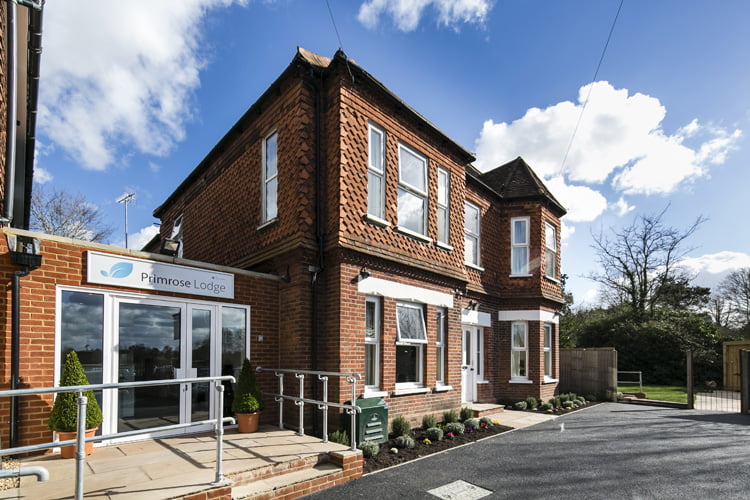
The UKAT directory describes ten centers with different settings and program roles. Examples include Sanctuary Lodge in Halstead, Primrose Lodge in Guildford, Liberty House in Luton, and Providence Projects in Bournemouth. Bayberry is presented as a residential service for addiction, mental health, and emotional well-being. A network-wide inquiry needs to become a proposal for a particular center before its rooms, clinical resources, or price can be compared meaningfully.
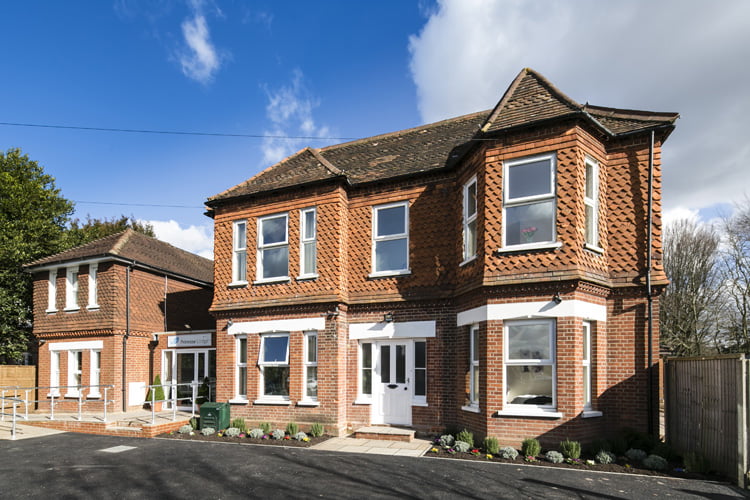
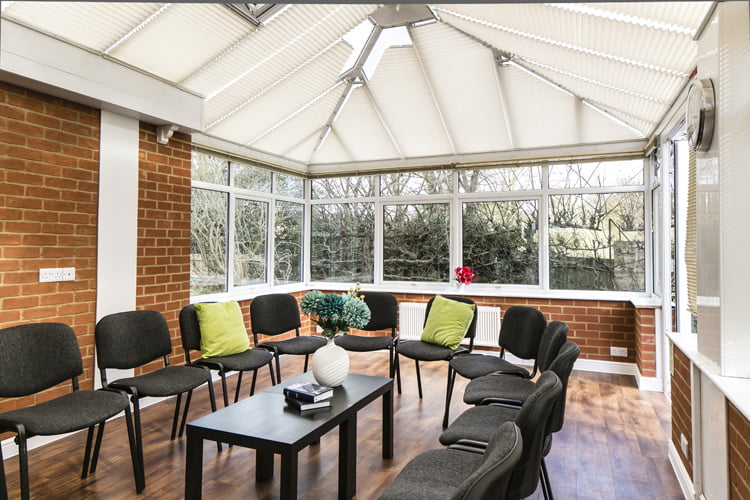
Ask admissions to identify the receiving location and explain why it fits the person’s needs. The directory’s bedroom and amenity descriptions belong to the named facilities. An ensuite room described at one center is not a reservation elsewhere. This also helps separate the UKAT organization from the campus photographs used to illustrate a network profile.
The admissions process leads to a written proposal
UKAT’s admissions page describes an assessment questionnaire covering health history and the person’s circumstances. The team discusses a suitable program, explains the fees and terms, and arranges the admission. Its process includes a deposit, with the remaining balance due for admission, and discussion of travel arrangements.
Before accepting a place, confirm the center, arrival date, program length, and any information the clinical team still needs. A family member can help organize logistics, but the person receiving care should understand the proposed treatment and expectations. If the plan changes after further assessment, ask for the revised arrangements in writing. Statements about rapid admission remain subject to suitability and availability; they do not replace medical review or establish that a particular room is being held.
Primary care is the first structured residential stage
Within UKAT’s treatment pathway, primary care refers to the initial intensive residential stage. The provider describes a structured environment combining medical oversight, detox when indicated, therapy, recovery education, and continuous support. It explicitly notes that programs vary between clinics. The purpose is to establish a treatment plan and daily structure appropriate to the person entering care.
Ask what an ordinary week at the proposed center includes: individual sessions, group work, medication review, recovery meetings, and time for rest. A broad list of therapeutic approaches does not show how often each one will appear in a personal schedule. If particular accessibility, communication, or psychiatric needs are important, have the receiving clinical team address them during assessment rather than relying on general network information.
Medical support varies with the service model
UKAT’s linked February 2026 terms distinguish medically monitored services, medically managed services, and a social-model rehabilitation arrangement. They state that medical provision depends on the location and the model specified in the treatment order. The document also describes referral to emergency services when acute needs exceed the center’s scope.
For a prospective client, the useful next step is to request the receiving center’s statement of purpose and a plain-language explanation of its staffing and withdrawal-management arrangements. Clarify which medicines are included in the quote and which existing or post-discharge prescriptions remain separately payable. These are questions about the actual proposed care. The published contract is not an independent clinical assessment or a determination of anyone’s legal rights, and its current applicable version should be supplied before payment.
Published program lengths are options to discuss
The network overview describes an intensive 28-day primary program as a common starting point, with extensions up to 90 days when appropriate. UKAT also advertises shorter and bespoke packages. These published options do not establish the right treatment length for an individual or mean that a shorter detox-focused stay offers the same work as a longer rehabilitation program.
Discuss what can realistically be completed during the proposed period and what the next stage would involve. Ask how progress will be reviewed, who recommends an extension, and when additional costs become payable. Practical commitments such as childcare, employment, and travel should be considered alongside clinical needs. A clear plan should connect the booked days with the work to be undertaken and the support available afterward, rather than treating a package duration as an outcome promise.
Secondary residential care is based at Providence Projects
The secondary-care page specifically places this program at Providence Projects in Bournemouth. It describes a stage after initial rehabilitation with continued individual and group therapy, relapse-prevention work, and more responsibility for everyday living. Clients manage their own cooking and budgeting while taking part in structured therapeutic activities.
Published topics include relationships, self-esteem, stress, and practical planning for setbacks. The page also describes testing, workshops, and activities such as coastal walks and yoga. This is a distinct placement to discuss with admissions, particularly when primary treatment takes place elsewhere in the network. Confirm the move, accommodation, expected timetable, fees, and readiness criteria. The broader UKAT pathway should not be read as proof that every center runs its own secondary program or that every primary-care client must transfer to Bournemouth.
Family groups have center-specific arrangements
The family support program offers weekly groups for relatives and people closely connected to someone in UKAT treatment. Its educational focus includes understanding addiction, setting boundaries, looking after oneself, and preparing for the person’s return home. The page makes clear that relatives are not responsible for another person’s recovery.
Published meeting arrangements differ by center, including Sunday groups at several locations and a Thursday evening group at Liberty House. Contact the proposed center before traveling to confirm the current time and attendance process. A family support meeting also has a different purpose from an individual clinical update or a visiting period. Ask the team how those activities are organized and which people the client wants involved. Support can be useful without requiring every relative to take the same role.
The free aftercare year is weekly group support
UKAT’s aftercare guidance says residents receive one year of free aftercare after completing treatment, regardless of the length of the residential stay. It describes weekly group therapy as part of that support. This gives a more specific meaning to the aftercare offer than a general statement that help continues after discharge.
Before leaving, establish when the year begins, where or how the group meets, and what to do if attendance becomes difficult. Ask which separate appointments may still be needed for medication, individual therapy, or other health concerns. Weekly aftercare should be understood in the context of the whole discharge plan, including support near home. The offer does not by itself establish that additional residential treatment, an extended stay, or unlimited private appointments are included without further charge.
Alumni membership is a separate long-term connection
The UKAT alumni program, launched in 2017, is described as a lifelong recovery community. It includes events, peer connections, and a private online group. Its role continues beyond the more clearly time-limited aftercare year and can help former clients maintain contact with others who have shared treatment experiences.
Ask how to join, which activities are currently running, and what participation looks like for someone living far from the original center. Alumni contact is community support rather than a promise of lifelong individual clinical treatment. If circumstances change or more intensive care is needed, a new clinical discussion may be necessary. The distinction helps a person plan for both social connection and any ongoing professional appointments instead of assuming one service replaces the other.
A sample timetable illustrates structure, not a fixed booking
UKAT’s linked sample weekly timetable includes morning medication and breakfast, meditation, process groups, further groups or DBT, meals, workshops, walks, and evening activities. Some evenings are allocated to fellowship meetings or assignments. It also shows scheduled phone time and family visits rather than unrestricted use throughout the day.
The document expressly says the program is subject to change, and shopping arrangements are organized by each center. Use it to understand the general level of structure, then request the actual timetable for the receiving location. Someone needing calls with family abroad, work-related communication, mobility accommodations, or religious observance should discuss those needs before arrival. The sample gives a useful starting point for questions without confirming that every listed activity, time, or visiting arrangement applies across the network.
Co-occurring support needs a location-specific assessment
UKAT’s dual-diagnosis information describes addiction treatment alongside support for co-occurring mental-health conditions. It lists individual and group work, CBT, DBT, trauma-focused work, and continuing group support. The page distinguishes the network’s addiction services from specifically designated routes for standalone mental-health treatment.
Explain the person’s psychiatric history, current medication, recent crises, and existing clinicians when requesting a placement. Ask whether the proposed center accepts that combination of needs and what psychiatric support is available there. A network article discussing a diagnosis does not establish unlimited medical or psychiatric capacity at every residence. If addiction is not the main presenting concern, the admissions recommendation should state clearly which program is intended and why it can provide the required care.
Insurance approval needs to be arranged before admission
The insurance page lists relationships with Bupa, AXA, Cigna, and WPA. For the Bupa and AXA pathway it describes an assessment by an approved psychiatrist before the insurer decides whether to fund the proposed treatment. UKAT gives approximately seven days as an indicative process, not a guaranteed approval time.
The same guidance says insurance funding must be agreed before admission and cannot simply be requested retrospectively after a self-funded stay. Obtain confirmation of the authorized center, level, dates, and personal contribution before committing. A recognized provider relationship does not establish coverage under every policy. If timing is urgent, discuss the available clinical and payment options with the appropriate teams rather than assuming that a future insurance decision will reimburse an admission already arranged.
Statutory placements use a professional referral route
UKAT’s statutory-services information describes work with local authorities, NHS commissioners, community treatment services, and other referring organizations. It identifies seven facilities within this referral network, a subset of the wider group. Its examples distinguish complex detox at Oasis Bradford, provision for ages 16–18 at Banbury Lodge, and longer rehabilitation options at other named centers.
This is a commissioning and assessment pathway rather than a promise of a free place on request. People exploring public funding should work with the relevant referring service and establish eligibility, the proposed facility, and what the funder has agreed. UKAT describes clinical screening, progress reporting, and discharge coordination with referring professionals. Ask who will remain involved after discharge and how the placement connects with local community care. Specialist provisions must stay attached to the centers that actually offer them.
Costs depend on the center and proposed treatment
The cost guidance, updated in May 2026, explains that price varies with the facility, duration, and medical requirements. It does not publish one universal network tariff. The page discusses accommodation, treatment, and support within a rehabilitation package, but descriptions of amenities or included services still need to be confirmed for the selected center.
Request a written quote identifying the booked period, room, detox arrangements if needed, therapy, and qualifying aftercare. Ask about additional medication, transport, specialist consultations, an extension, or a change of care level. Separate an insurer’s contribution from the total charge and the amount the client must pay. These details make two proposals comparable and help avoid interpreting a general funding explanation or a photograph of an amenity as a promise within an individual booking.
Check the receiving center’s current CQC record
UKAT provides a page linking to CQC reports, whose introductory text refers to nine centers. The useful check is the record for the named receiving service. A group-level statement should not replace reading the relevant registered location, inspection findings, and report date.
Ask admissions to provide that record together with the center’s statement of purpose. Confirm that the address and service being proposed match the documents. This profile does not establish a new independent inspection result or infer that a particular center is unregulated from a difference in website wording. Regulatory information is one part of assessing a placement, alongside the actual clinical recommendation, current staffing arrangements, room availability, and financial terms.
Current official UKAT pages and the linked timetable and terms were reviewed October 19, 2026. Network services, clinical eligibility, costs, and arrangements remain center-specific; published regulatory claims are not a new independent inspection finding.
Official sources
Checked October 15, 2026: UKAT network, treatment-center directory, cost and funding guidance, insurance, aftercare and recovery pathway.