Tully Hill Treatment & Recovery




Tully Hill Treatment & Recovery 6 photos




Tully Hill Treatment & Recovery provides substance-use treatment at 5821 Route 80, Tully, New York. The provider states that it evaluates, admits and treats people age 16 and older.
Current services include medically supervised detoxification, medically monitored intensive inpatient rehabilitation and outpatient treatment. Inpatient care combines medical, nursing and clinical support, while outpatient care uses individual and group sessions; family education is available separately.
Tully Hill verifies benefits, publishes a current participating-plan list and offers a self-pay option. Its insurance page excludes Medicaid and most Medicare arrangements for inpatient substance-use treatment, while describing limited exceptions; exact eligibility and cost sharing require direct verification. Length of stay is based on assessed level of care and progress. Request a written self-pay estimate specifying the treatment period and any additional charges.
Eligibility and the treatment environment
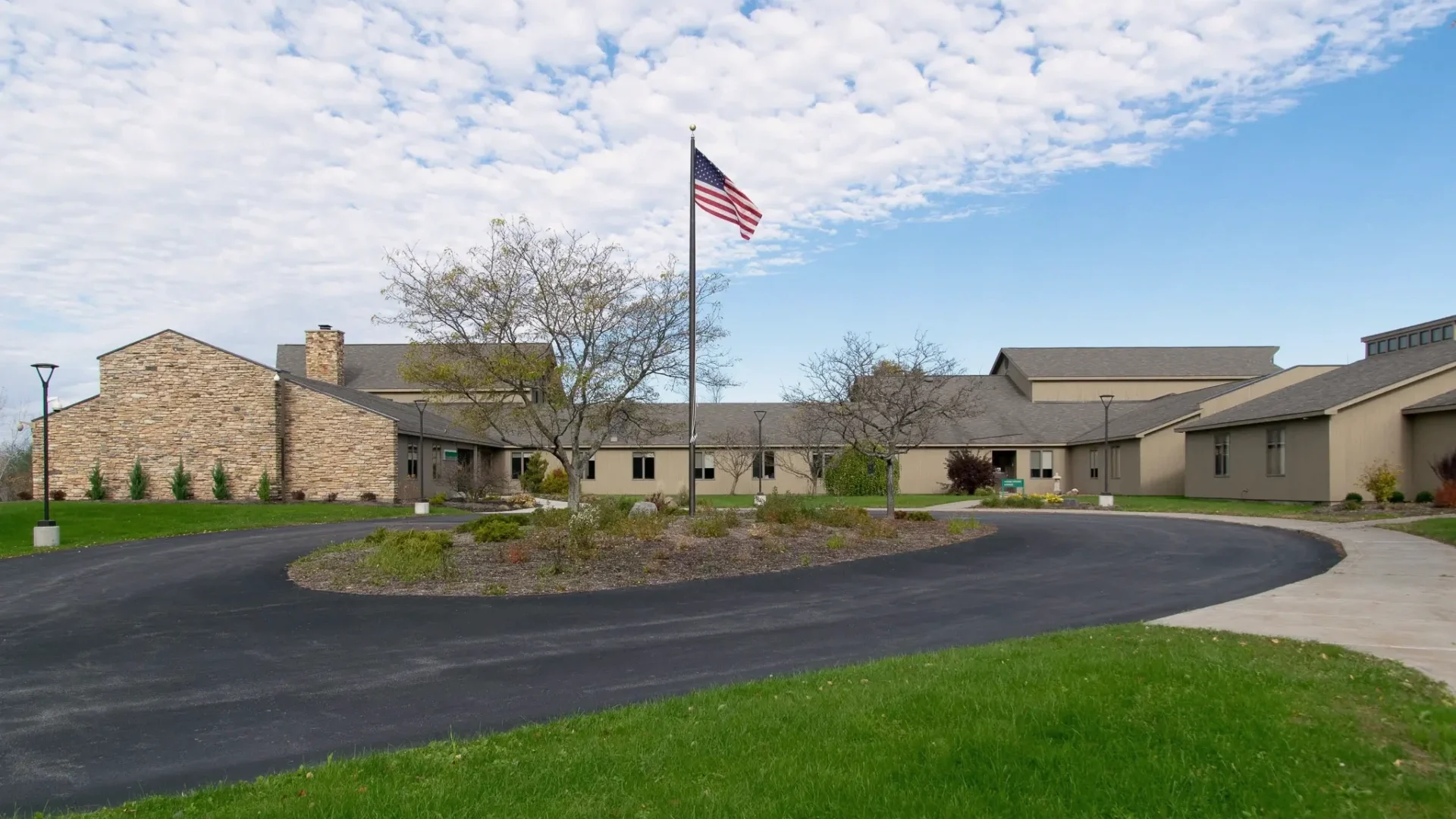
Tully Hill’s provider overview describes a substance use treatment service for people age 16 and older in the Tully Valley. It dates its work to 1990 and describes a 33-acre rural setting. The age threshold includes some adolescents, so a family seeking care for a 16- or 17-year-old should discuss the actual treatment group, supervision, education needs, and family participation during screening.
The provider emphasizes education, coping skills, and support for patients and families. A secluded setting can affect travel and daily routine, but it does not establish a private room, one-client treatment, or unrestricted work access. Compare the proposed clinical program and accommodation directly. Ask how an individual’s communication, mobility, cultural, or other access needs will be addressed. The most useful admission discussion connects those needs to the available care rather than relying on the appearance of the campus.
Screening is available beyond the weekday intake schedule
The pre-admission screening page says that screening services are available around the clock. It also explains how that coverage works: weekday intake specialists conduct screenings, while an off-hours service handles calls after 4:15 p.m. and sends the information to the weekday team for follow-up on the next business day.
Prepare current medical and treatment information, including medications, recent substance use, relevant hospital care, and the referring clinician’s details. Tully Hill says its clinical and medical team reviews the information to decide whether an on-site evaluation is appropriate. A completed screening is therefore one step in the process; confirm the evaluation appointment and arrival arrangements before traveling. The page asks people coming for evaluation to be accompanied by a family member or someone who knows them well. Discuss an alternative arrangement with intake if that is not possible or would create a safety or privacy concern.
The evaluation determines the recommended level of care
Tully Hill’s evaluation guidance describes appointments usually scheduled Monday through Friday between 8:30 a.m. and 2 p.m. The stated average duration is one to two hours. The process includes medical history, examination, substance use screening, assessment of severity, and discussion of a suitable treatment plan.
The provider says family counselors may speak with the accompanying person while the patient is evaluated. Ask what information will be requested, how consent and confidentiality work, and which parts of the discussion can take place privately. The patient’s own values, preferences, strengths, and goals are supposed to inform the plan. Intake also discusses potential financial obligations and asks people to arrive prepared for a possible stay. Clarify the arrival, evaluation, admission, and discharge procedures in advance, including what happens if the recommended service differs from the one initially discussed or is unavailable.
Detoxification and inpatient rehabilitation have different purposes
The inpatient care description separates medically supervised detoxification from medically monitored intensive inpatient rehabilitation. During detox, the provider describes assessment, medical stabilization, and round-the-clock care directed by medical and nursing staff. Medication, education, and other therapeutic activities may form part of that care.
Rehabilitation can follow detox at Tully Hill, or a patient may enter rehabilitation directly when acute withdrawal symptoms are absent and the team considers that level appropriate. This distinction matters when arranging a transfer from another service: ask what medical information and stabilization are needed before arrival. The rehabilitation program uses a structured daily schedule of educational, group, and individual work. The care plan is adjusted as the patient progresses. Neither the name of a program nor a preferred booking length determines which service is clinically suitable; the admission team should explain the proposed starting point and how later transitions will be decided.
Co-occurring care is specifically limited to inpatient services
The treatment program overview explicitly states that Tully Hill evaluates and treats co-occurring disorders in its inpatient services and programs. It says this service is not provided in its intensive outpatient or outpatient programs. This is an important limitation when planning treatment for someone with both a substance use disorder and a mental health condition.
Ask how psychiatric assessment, medication review, and any ongoing mental health treatment will be coordinated during admission and after discharge. An outpatient referral may require a separate mental health clinician. The same overview describes a biopsychosocial model based on a 12-step philosophy, with individual counseling and group treatment within the inpatient program. Discuss how that approach fits the person’s preferences and prior treatment experience. The provider bases length of stay on the assessed care level and progress toward individual goals, so a fixed duration should be treated as a proposal to review with the team.
Individual counseling and group work serve complementary roles
The clinical services page describes individual counseling alongside group therapy. Published group topics include relapse warning signs, cognitive distortions, self-esteem, recovery skills, and returning to work or social situations. Individual work addresses substance use, skill development, the recovery plan, and what is happening in group treatment.
These descriptions help identify the content of the program, but they do not specify a guaranteed number of private appointments for each patient. Request a representative timetable and clarify the expected individual contact, who provides it, and how additional needs are raised. The page also discusses exploring connections between past emotional trauma and addictive behavior, with further aftercare when indicated. Ask how readiness and consent shape that work and whether additional specialist treatment would require a referral. A useful plan connects the person’s actual difficulties to specific sessions and follow-up, rather than treating every listed topic as an identical course for everyone.
Outpatient treatment requires a practical attendance plan
Tully Hill’s outpatient page describes a combination of individual appointments, group sessions, relapse prevention, and support for returning to daily responsibilities. Its published group timetable lists Monday, Wednesday, and Thursday from 5 to 6 p.m., and Saturday from 8 to 9 a.m. Confirm the current timetable and which sessions are actually prescribed for the individual.
A list of available groups does not itself establish how many hours a person will attend or whether a particular intensive outpatient arrangement is available. Ask about individual appointments, program length, transportation, and how attendance fits work or family commitments. The page also describes attendance, monitoring, and screening reports for relevant professional monitoring agencies when required. Clarify the recipients, consent, and purpose of any report. Before leaving inpatient care, identify the receiving outpatient clinician and first appointment, together with any separate psychiatric or medical follow-up needed outside this program.
Professional treatment includes specialty and general groups
The professionals program identifies groups such as healthcare professionals, attorneys, executives, teachers, physicians, dentists, pharmacists, and pilots. It describes individual sessions with staff experienced in treating professionals, peer groups with other professionals, and participation in general treatment groups.
This structure means a professional track does not imply an entirely separate residence or a private treatment schedule. Ask how specialty sessions are integrated with the recommended clinical level and whether the relevant professional group is currently available. The page also lists licensure advocacy and monitoring, continuing support, and workplace reintegration or return-to-work conferences when needed. These services should be distinguished from decisions made by employers, regulators, or licensing bodies. Discuss any reporting obligations and consent before records are shared, and identify who will coordinate with an existing monitoring program. A treatment stay cannot by itself guarantee reinstatement, clearance, or a particular employment outcome.
The uniformed-professionals track addresses occupational concerns
The uniformed-professionals program names law enforcement, corrections personnel, firefighters, emergency medical services, and other first responders. It combines individual sessions, peer groups for uniformed professionals, and general treatment groups. Published topics include trauma-related concerns, trust, crisis management, family involvement, and continuing care.
Ask how the clinical team assesses the relationship between substance use, occupational experiences, and current mental health symptoms. A named specialty track does not establish that every trauma treatment or medical service is available at every care level. Clarify the specific interventions, psychiatric support, and outside referrals that may be needed. The page also describes return-to-work conferences when appropriate. Discuss the boundaries between clinical treatment, employer communication, fitness-for-duty assessment, and any professional monitoring requirement. The person should understand what information may be shared and who makes each decision. Peer support can be part of treatment without requiring a patient to disclose every experience to a group.
Family education is available through an online center
Tully Hill’s family services page describes an online Family Education Center, accessed by contacting the provider. Topics include understanding addiction, communication, the effects of substance use on relationships, recognition of relapse concerns, and participation in a continuing care plan. The page also identifies a family counselor and family conferences at evaluation and during treatment.
Clarify how relatives or other chosen supporters receive access, whether sessions are scheduled or self-directed, and which parts are included in the treatment arrangement. Educational material is different from a course of individual or couples therapy. Ask whether additional support is appropriate when a family member has their own mental health needs. Participation should account for consent, privacy, relationship safety, and the patient’s preferences. Recovery planning can include supportive relationships while also maintaining boundaries; the program’s goals should not be presented as a guarantee that every relationship will be repaired.
Insurance exceptions need plan-specific confirmation
The insurance page lists participating commercial arrangements and a self-pay option, with several insurer-specific qualifications. It also lists Medicaid and Medicare exclusions for substance use treatment and describes limited exceptions involving original Medicare with certain secondary commercial coverage. These details require a check against the exact policy and proposed service.
Provide the plan name, member information, and intended level of care so intake can explain benefits, authorization requirements, and expected cost sharing. A company name appearing in the list does not establish that every product from that insurer is accepted. Ask for a written estimate that distinguishes the treatment charge, deductible, coinsurance, and any separate services. The page says self-pay length of stay depends on clinical assessment and progress. Discuss how the estimate changes if the recommended stay changes. No universal weekly amount should be inferred from another provider’s price, a directory label, or a broad description of private treatment.
Prepare for the residential medication and electronics policies
The packing guidance describes limited luggage, approximately five to seven days of clothing, and access to laundry equipment. It restricts personal electronics and tobacco products and asks for relevant identification, insurance information, and contact details. Those rules can materially affect work, communication, and arrangements at home, so review the current instructions before arrival.
The medication section requires particular care. It distinguishes ordinary prescribed or over-the-counter medicines from controlled substances and says continued use of a prescribed controlled medicine is determined by the medical director in consultation with the prescribing practitioner. Discuss the full medication list with the clinical team before traveling, including how necessary treatment and supply will continue. Do not interpret a packing restriction as an instruction to stop medication independently. Ask about communication access, any medically necessary exceptions, and how the accompanying person should handle belongings that cannot remain at the facility.
Use the provider’s direct contact for the final arrangements
The official contact page lists 315-696-6114 and the Tully address at 5821 Route 80, with a separate admissions email. The provider homepage also offers referral routes for individuals, family members, and hospital teams. Choose the route that fits the situation and confirm that the clinical handoff has reached the receiving staff.
Before departure, obtain the appointment time, arrival instructions, the name of the receiving service, and any outstanding clinical or financial requirements. If another clinician is arranging a transfer, confirm how records and medication information will be sent securely. A useful final plan also explains who will accompany the patient and what happens after the evaluation, especially when admission or the level of care remains conditional.
Official sources
Eligibility and provider overview; Treatment programs; Inpatient detox and rehabilitation; Outpatient care; Insurance and self-pay; Family services. Checked October 13, 2026.