Triangle Springs

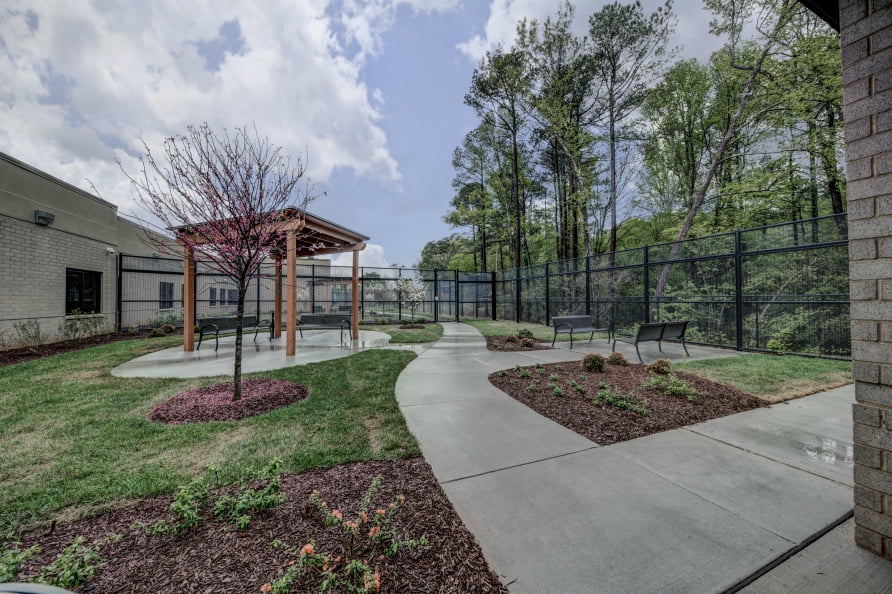

Triangle Springs 3 photos


Comparison facts and sources
Adult inpatient and outpatient mental-health and substance-use treatment at the main hospital, including medically supervised detox, with distinct outpatient services for adults and adolescents. · 10901 World Trade Boulevard, Raleigh, North Carolina; the main behavioral-health hospital is distinct from the Changes outpatient clinic at 1350 Sunday Drive.
- Published fee information
- Quote required
- Before admission
- Confirm main-hospital versus Changes-clinic location, adult versus youth program, inpatient or outpatient level, expected duration, network status, practitioner charges and total patient responsibility.
- Continuing care
- Discharge planning may include PHP or IOP step-down. The provider publishes alumni support groups and connections to community resources including AA, NA and other ongoing-care options.
Source record · October 15, 2026
Provider-published information checked October 15, 2026. Confirm current program fit, admission criteria, duration, payer arrangements and itemized patient cost directly with admissions.
Luxury rehab comparison · Fees and inclusions · Selection methodology
Triangle Springs is a behavioral-health hospital at 10901 World Trade Boulevard in Raleigh, North Carolina. The main hospital provides adult inpatient and outpatient mental-health and substance-use care, including medically supervised detox. A separate Triangle Springs Changes outpatient clinic operates at 1350 Sunday Drive.
Programs and ages
Adult services at the main hospital are for people aged 18 and older and include inpatient mental-health treatment, inpatient addiction treatment and detox, PHP and IOP. Child and adolescent services for ages 11–18 are outpatient; the youth program should not be presented as proof of an adolescent inpatient unit. The Help for Heroes program supports military personnel, veterans, first responders and other high-risk professionals.
Assessment and payment
Admission begins with a no-obligation assessment, after which clinicians determine whether inpatient or outpatient care is appropriate. Triangle Springs says it is in network with most major insurers and may work with other plans out of network. Published prices are estimates for specified services, not all-inclusive treatment quotes; insurance benefits, practitioner charges and patient responsibility require individual confirmation.
Distinguish the main hospital from the outpatient clinic
The main location page identifies Triangle Springs at 10901 World Trade Boulevard in Raleigh. Its adult services are for people 18 and older and include inpatient mental health and addiction treatment, detox and outpatient pathways. The hospital accepts walk-ins around the clock.
Ask which program and building the recommendation concerns before planning a visit. A hospital assessment, an inpatient admission and a recurring outpatient appointment have different practical requirements. Confirm the receiving team, age group and clinical level rather than relying on the Triangle Springs name alone. The main campus also lists specialized programs, but those listings do not mean every service is delivered on an inpatient ward. Explain medical needs, recent treatment and accessibility requirements during the initial conversation. If care involves another location or a later outpatient phase, obtain the address and transition arrangements in writing.
Changes is a separate daytime service
Triangle Springs Changes is listed at 1350 Sunday Drive, Suite 109. The location page describes outpatient mental health and addiction services for adults and adolescents, with weekday office hours of 8 a.m. to 5 p.m. Its program list includes PHP, IOP and outpatient adolescent care.
Office hours are not necessarily the full timetable of every treatment group. Ask which sessions are available for the person’s age and needs, the number of attendance days and whether any appointments can take place remotely. Confirm transportation and the support available at home between sessions. This location should not be assumed to provide overnight hospital accommodation or the same walk-in arrangements as the main campus. If the plan changes from inpatient to outpatient care, clarify when the first appointment will occur and which clinician is responsible for medication or other ongoing treatment during the transition.
Youth treatment is described as outpatient care
The child and adolescent page identifies services for ages 11–18. It describes PHP and IOP, with individual, group and family work, activity-based therapies and medication management where appropriate. It also describes educational support and coordination with schools.
The page’s DBT-informed work includes individual support, a teen skills group and family involvement. That should not be assumed to mean every young person receives an identical course or every component of a comprehensive DBT program. Ask how treatment will fit school attendance, what information can be shared with teachers and how parents or guardians participate. Clarify consent and confidentiality arrangements as well as the actual weekly schedule. An outpatient youth program is not evidence of an adolescent inpatient unit. The assessment should identify whether the young person’s needs fit the offered service and what happens if a higher level of support is necessary.
Emergency assessment includes attention to medical stability
The emergency service page describes care for adults 18 and older experiencing a mental health or substance-use crisis. Initial steps include identification, basic information and vital-sign assessment before a fuller mental health evaluation. A medical condition needing other treatment may require transfer to a local emergency department.
The page directs people experiencing a medical emergency, including an overdose, to call 911. A behavioral health assessment should not delay emergency medical care. When discussing admission, provide accurate information about current symptoms, medications, substance use and recent hospital treatment. A family member or supporter may assist with the history when appropriate. The clinical team then recommends a suitable care plan, which may involve inpatient or outpatient treatment. Round-the-clock access to assessment is not a guarantee that a particular bed, program or level of care will be the appropriate destination.
Inpatient mental health treatment uses a group-based structure
The inpatient mental health page describes psychiatric and physical evaluation, a personalized plan, group therapy, regular psychiatrist meetings and other approaches selected around clinical needs. It lists semi-private rooms, shared activity areas and meals prepared on site.
Ask about the actual room arrangement, any dietary or accessibility needs and the anticipated balance of groups, individual work and medical review. A list of therapies does not mean that all will be suitable or included for every person. If substance use is also a concern, discuss whether monitored detox belongs in the plan. The page says discharge planning begins from the first day and may lead to PHP or IOP afterward. Before leaving, clarify the next appointment, medication arrangements and support at home. Check the separate current visiting rules rather than assuming a general statement about family involvement guarantees unrestricted access.
Detox duration depends on the person
The detox description says patients are admitted to inpatient care and medically monitored during withdrawal. Medication may be used when appropriate, and therapy is introduced as the person becomes stable enough to participate. The page explicitly says there is no typical detox period.
Its example of up to ten days for some alcohol or benzodiazepine cases should not be treated as a universal maximum or a prediction for an individual. Discuss substance-use history, previous withdrawal complications, prescriptions and current physical or mental health concerns during assessment. Ask which needs can be managed at Triangle Springs and which would require another medical setting. The plan should also address what follows withdrawal management, including ongoing treatment, medication review and outpatient support where appropriate. Completing a detox stage does not by itself establish that every other clinical or practical need has been resolved.
Inpatient addiction care continues beyond withdrawal management
The inpatient substance-use page describes assessment, detox and therapy, with continued treatment after the acute withdrawal phase. It includes support groups, family meetings, activities and education, and discusses co-occurring mental health care when relevant.
Ask the team to explain the goals of each stage and how progress will be reviewed. The page does not publish one fixed stay for every person; clinical needs and the recommended level of care shape the plan. Clarify how existing prescriptions, psychiatric symptoms and information from previous providers will be coordinated. The discharge discussion may include outpatient treatment and community support. Distinguish a recommendation from a confirmed appointment or placement, particularly when another organization will provide ongoing care. A useful transition plan identifies the next service, the responsible prescriber and practical barriers such as transportation or the ability to attend regularly.
Adult outpatient mental health programs have different intensities
The outpatient mental health page describes PHP as typically lasting two to four weeks, meeting five to six days weekly. Its IOP description gives three to five days and at least nine hours weekly. Both are shaped by assessment and individual needs.
Ask which program is being recommended and obtain the actual timetable for the receiving location. Outpatient care can be a starting point or follow inpatient treatment; the appropriate route depends on more than a preference for a shorter stay. Discuss work, caregiving and transport alongside clinical needs. The page describes talk therapy, other therapeutic activities, peer support and medication management as possible parts of the plan. Clarify which components are included and how appointments with existing clinicians will be coordinated. Before finishing the program, confirm any continuing therapy or prescribing arrangements rather than assuming that discharge ends the need for support.
Outpatient substance-use care requires a workable home plan
The outpatient substance-use page describes treatment for people who do not require continuous medical care or crisis stabilization. It gives a general program range of one to three months, with PHP sessions up to six hours on five days weekly and IOP commonly meeting three to five days for approximately three hours.
These are program descriptions, not a single schedule that applies to every outpatient patient. Ask about the recommended course and whether the home environment supports participation and recovery. The assessment may consider physical health, detox needs, previous care and available support. Discuss how medication, family meetings and other services fit the plan, and who to contact between attendance days. If the person’s circumstances or symptoms change, the level of care may need review. Confirm the discharge and community-support arrangements before the final session, including any ongoing provider appointments and financial responsibilities.
Help for Heroes serves specified professional groups
The Help for Heroes page describes mental health, trauma-related and substance-use support for active-duty and retired military personnel, veterans, first responders and other high-risk frontline professionals. It outlines inpatient and outpatient routes following assessment, rather than one uniform program for every participant.
Ask which local service is available, whether a dedicated group is offered and how treatment addresses occupational experiences. A military or first-responder background does not determine the clinical level of care by itself. Clarify referral, authorization and coverage requirements with the relevant payer and treating team. The page also distinguishes alternative programs for dependents; family members should not assume they enter the same pathway automatically. Discuss any coordination needed with an existing military, VA or civilian clinician and how privacy is handled. The proposed plan should make clear who provides care, how the next stage is arranged and what support remains available after discharge.
Prepare medication and belongings before admission
The preparation guide asks patients to bring current medications, including over-the-counter medicines and inhalers, along with about five sets of suitable clothing. It describes laundry facilities and notes that some electrical or personal items are stored and issued only under supervision.
Ask the receiving team how prescriptions should be packaged and whether any essential item needs advance approval. Clothing and toiletries have safety restrictions, so use the current list rather than a generic travel checklist. The guide also explains the different roles of medical staff, nurses, patient care assistants, therapists and activity staff. Clarify whom to approach for medication questions, daily needs and care-plan concerns. Before leaving, patients meet with a therapist to review the discharge plan. Use that conversation to check follow-up appointments and prescriptions, and raise practical difficulties that could prevent the plan from working.
Visiting is subject to specific current rules
The visiting page describes virtual visitation seven days a week and a separate in-person timetable by unit. It currently limits a stay to the same two designated visitors and excludes visitors under 13. It also directs in-person visitors to the side entrance for the cafeteria.
Confirm the patient’s unit and current visiting time before traveling. The published instructions ask visitors to arrive early and restrict personal items; belongings or medication must not be passed directly to the patient. Family participation also depends on the patient’s wishes and the care team’s approval. Ask about alternatives when travel, work or family circumstances prevent a visit. Do not assume that a general statement about family support means access is unrestricted. Patient information and phone communication have their own privacy and scheduling arrangements, which should be clarified with the team.
Use published prices as estimates for specified services
The insurance page says Triangle Springs is in network with most major insurers and may work with others out of network. It describes access to a financial counselor and publishes a price list intended to inform uninsured patients.
The page explicitly says those prices are estimates for specified services and do not include every complicating factor or independent practitioner’s charge. An insured patient’s responsibility depends on the policy, so the list should not be treated as an all-inclusive quote. Ask for benefits verification and an estimate for the recommended admission, including medical services, therapy, medications and any subsequent outpatient course. Clarify deductible, copayment and authorization requirements and what happens if the recommended duration changes. Keep the financial discussion tied to the actual plan of care, and identify whom to contact about separate bills or an unexpected change in the estimate.
Alumni support is one part of continuing care
The alumni page describes a support group for people who have completed treatment and currently lists Tuesday meetings from 5:30 to 6:30 p.m. The group offers an opportunity to share experiences and connect with others after the structured program.
Confirm the current meeting format, location and eligibility before attending. Peer support should be distinguished from a psychiatric appointment, medication review or a further course of clinical treatment. Ask the discharge team which ongoing services are recommended for the individual and whether those appointments have been arranged. If travel or the published time makes participation difficult, discuss alternatives. A continuing-care plan should remain usable in everyday life, with clear contacts and practical arrangements rather than a list of resources alone.
Provider-specific information reviewed October 19, 2026 against the linked official pages. Confirm the main hospital or Changes clinic, adult or youth program, current schedules, admission suitability and itemized patient costs directly.
Contact
Telephone: 919-746-8900. Email: 1500trianglespringsinfo@lifepointhealth.net. The main hospital accepts walk-ins 24 hours a day.
Sources checked October 10, 2026: official location and program list, official substance-use services, official youth program, and official payment guidance.