The Good Life Treatment Center
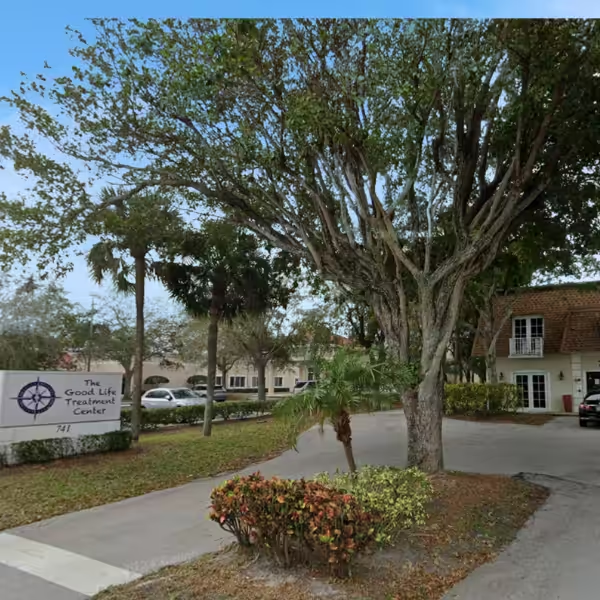
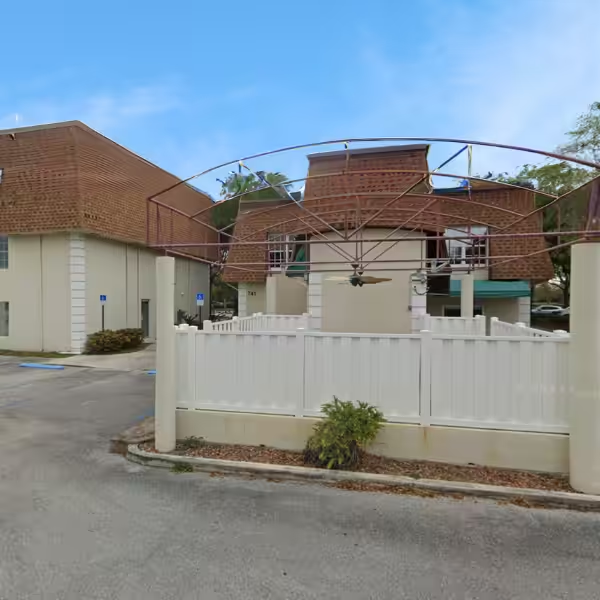

The Good Life Treatment Center 3 photos

The Good Life Treatment Center is an outpatient addiction-treatment provider at 741 US Highway 1 in North Palm Beach, Florida. Its current core program pages describe partial day care, intensive outpatient treatment and standard outpatient care rather than an on-site medical-detox unit.
The provider also describes detox placement options, individualized treatment, dual-diagnosis support, young-adult programming, medication-assisted treatment, 12-step involvement, sober-living options and an alumni program. Aftercare can include continued outpatient support, alumni connection and structured sober housing.
The day and night treatment model
The Good Life’s day and night program is built around individual therapy, groups, workshops, family involvement, and practical support. The provider describes attention to housing, employment, education, legal concerns, and medical needs alongside addiction treatment. Its clinical topics include relapse prevention, co-occurring conditions, trauma, CBT, and 12-step recovery.
This is useful for someone whose treatment needs extend beyond stopping substance use to rebuilding a workable daily routine. However, the program name should not be taken to establish hospital-level nursing or an on-site detox unit. If accommodation is part of the proposed arrangement, the offer should identify the clinical service and the living setting separately. It should also explain the daily attendance requirement, transport between locations, and support available outside scheduled treatment. Those details make it possible to compare the program with other outpatient services or a residential admission on a consistent basis.
The published intensive outpatient schedule
The dedicated intensive outpatient program page lists therapeutic groups three times each week, individual therapy at least once weekly, psychiatric care, and a primary therapist. It also describes day and evening scheduling, family involvement, and case management for issues such as housing, work, education, legal matters, and medical care. These are concrete features to discuss when assessing whether the program fits an existing work or study schedule.
Good Life presents IOP both as a step down from more intensive care and as a possible initial service for an appropriately assessed person. The route into it should therefore be based on the individual’s needs, rather than an assumption that everyone must complete the same sequence. Ask for the actual group times and appointment plan offered to you, particularly if commuting or combining treatment with employment. Three weekly groups do not necessarily mean three identical days or a fixed overall length of treatment.
How standard outpatient care differs
Good Life’s standard outpatient program describes a lighter schedule than IOP: therapeutic groups once a week, individual therapy once a week, psychiatric care, workshops, and case-management support. The provider says that, in many cases, a client can continue with the same primary therapist from IOP. Day and evening scheduling remains part of the published model.
The emphasis shifts toward applying skills while living in the community, with topics including returning to work or school, rebuilding relationships, managing stress, and responding to cravings. Continuing with a familiar therapist can be a useful question when planning the transition, but it is not guaranteed by the phrase “in many cases.” Establish who will coordinate the step down, which appointments remain scheduled, and what happens if more support becomes necessary. A less intensive program should still have an agreed plan, rather than simply an open invitation to call when difficulties arise.
Sober living and transportation
The sober-living page describes furnished community housing, peer support, drug and alcohol testing, life-skills activities, and access to outpatient treatment. It also discusses transportation to treatment and selected other destinations. These arrangements can be relevant to people coming from outside North Palm Beach or those who need a more structured living environment while attending outpatient care.
Housing and clinical treatment answer different needs, so the admission proposal should explain both. Confirm the residence, occupancy, supervision, house rules, and transport arrangements, as well as the clinical program and its attendance requirements. Ask which costs belong to housing and which belong to treatment, and whether staying in a particular residence is required for the chosen service. The provider’s descriptions of community living and recreational activities do not make every residence a medically staffed inpatient unit. A clear written distinction helps families understand what support is available between clinical appointments.
Medication services within the treatment plan
Good Life’s medication-assisted-treatment page names Suboxone, naltrexone, and Vivitrol among its options. The provider describes medication as a potential component of a broader plan involving assessment, therapy, and attention to the person’s medical needs. The page does not establish that any particular medication will be appropriate, available immediately, or prescribed to every client.
If medication is already part of treatment, discuss continuity before arrival. The admitting team should know the current prescription, the outside prescriber, and any practical issues obtaining it. Useful questions include who will make prescribing decisions, where appointments take place, and how prescriptions are managed when care becomes less intensive. It is also important to distinguish ongoing medication treatment from medical withdrawal management. Good Life’s publication of a medication service does not by itself answer where someone requiring detox should be assessed or monitored before beginning its outpatient programs.
Family therapy can include important people beyond relatives
The family-therapy program describes meetings with a trained therapist who helps participants discuss their experiences and reopen communication. Good Life explicitly includes important friends or coworkers as possible participants, rather than limiting the idea of family to relatives. That can matter when the person providing day-to-day support is a partner, close friend, or another trusted adult.
The practical question is which relationships the client wants to involve and what the sessions should address. Before arranging attendance, clarify consent, confidentiality, scheduling, and whether remote participation is available for people outside Florida. Discussion might focus on communication, expectations at home, or boundaries during the transition out of treatment. Participation should be planned around the client’s circumstances and therapeutic goals; it is not a requirement to bring every family member into the same conversation. The provider’s program description does not specify one universal number of family sessions.
Adventure activities and clinical work
The adventure-therapy page gives unusually specific examples of the activities that may form part of Good Life’s program. They include snorkeling, kayaking, paddleboarding, fishing, archery, hiking, equine activities, and ropes courses, alongside cultural outings and volunteering. The provider describes recreation professionals facilitating activities and opportunities such as food-bank work, community gardening, animal rescue, and beach cleanup.
These examples help convey the program’s active, community-oriented style. They should be read as possible activities, not as a guaranteed itinerary or a substitute for individual clinical care. A prospective client can discuss comfort in water, fitness, mobility, personal preferences, and any clinical restrictions before participation is planned. It is also reasonable to ask how an activity relates to the person’s treatment goals and what alternative is offered when it is unsuitable. No outcome percentage from the provider’s promotional material is treated here as an independently established result.
What happens from the first call to orientation
The published admissions process starts with a conversation about history, needs, and insurance. Good Life describes travel coordination, a discreet airport pickup for arriving clients, paperwork and consent forms, orientation, and an initial psychiatric assessment. A primary therapist is then assigned, and a biopsychosocial assessment during the early part of treatment helps inform the care plan.
For an out-of-state arrival, confirm acceptance, timing, pickup arrangements, and the first destination before booking travel. The clinical office and a residence may serve different purposes, so the itinerary should identify where assessment and accommodation occur. The provider also describes introductions to the community and sometimes pairing a new client with a more experienced peer. That can help explain the social aspect of arrival, while the clinical team remains responsible for assessment and treatment. Ask what must be completed before the first day of groups and who can address questions during orientation.
Electronics, packing, and work commitments
Good Life’s packing guidance distinguishes its day and night program from lower levels of care. It states that phones, tablets, and other electronics are held during the day and night program, while clients may use them at lower levels. This is a material consideration for someone expecting to continue handling work, coursework, or routine family administration while in treatment.
The list also includes identification, medical records, insurance cards, a medication list, suitable clothing, and sun protection. It asks clients to avoid expensive possessions and to hand prescription medicines to clinical staff. These rules should be checked against the specific program and current handbook before departure. Someone who needs a device for accessibility, essential communication, or another practical reason can discuss arrangements in advance. Preparing around the actual rules is more useful than assuming that all outpatient programs allow unrestricted access to work and personal devices throughout the day.
Privacy and communication with loved ones
The client-family confidentiality page describes an orientation handbook, patient rights, and releases of information. It emphasizes that staff communication about a client must respect the applicable permissions and privacy requirements. For families, this means the clinical team’s ability to give updates should be discussed explicitly during admission rather than assumed because a relative arranged or paid for treatment.
Identify the people the client wishes to involve, the information they may receive, and the purpose of the communication. A nominated contact for scheduling may not need access to the same information as an outside treating clinician. Ask how consent can be updated and how the team handles practical messages from loved ones. This description summarizes the provider’s published process; it does not offer a legal interpretation or promise absolute secrecy in every circumstance. Clear agreements can make family involvement more useful while respecting the client’s role in treatment decisions.
Costs, coverage, and the meaning of a published ballpark
Good Life’s FAQ discusses a general treatment-cost ballpark of $5,000 to $20,000 for a month, while saying that costs vary by program, level of care, and additional services. That broad discussion is not a named tariff for Good Life’s IOP, standard outpatient service, or housing. It should not be presented as the price of a particular admission.
The same FAQ makes clear that insurance may cover some, all, or none of the relevant costs, depending on the policy and services. The useful figure is therefore a personalized estimate after benefits and the proposed care plan have been reviewed. Request the expected clinical charges, any housing charge, authorization assumptions, and the client’s financial responsibility. If the plan may change from day and night care to IOP or outpatient care, ask how the estimate changes at each stage. Published payment options also require individual confirmation.
The place of 12-step involvement
The 12-step program description explains that counselors guide clients through the approach and its emphasis on reflection, support, and personal responsibility. It acknowledges the spiritual language involved while describing room for a nonreligious understanding. This gives prospective clients a clearer indication of the program’s culture than a treatment list that omits its approach to peer recovery.
A person who has used 12-step groups before can discuss what was helpful and what created difficulty. Someone unfamiliar with the model can ask how participation fits alongside therapy, medication services, and other recovery activities. The relevant question is how the individual’s preferences will be addressed in the actual schedule. The published description should not be read as proof that all clients share a religion or have the same relationship with spiritual ideas. It also does not make mutual-support participation equivalent to an appointment with a licensed clinician.
Continuing connection for clients and families
The alumni program describes recurring meetings and social activities for former clients, with examples such as bowling, snorkeling, and other outings. It also includes a family alumni component for relatives, partners, and close friends. The focus is continued contact, shared experiences, and a community that remains available after the main treatment episode.
The public page describes meetings as regular without giving a single fixed calendar. A person planning to remain in Palm Beach County can request the current schedule; someone moving away can ask which opportunities are accessible remotely. Alumni involvement should be considered alongside the agreed clinical follow-up, rather than used as a replacement for it. Before discharge, establish both who will provide ongoing professional care and how the client or family can stay connected to the alumni community. Neither an event calendar nor participation in a peer network can guarantee a particular recovery outcome.
Expanded from the linked Good Life program, admissions, privacy, FAQ, and alumni pages, checked October 18, 2026. Program descriptions are provider-published; care level, availability, medication suitability, housing, and financial responsibility require individual confirmation.
The center lists 561-250-8552. It says it works with most major insurers, but benefits, patient responsibility, self-pay cost, program duration and tax treatment require individual confirmation. Sources: provider overview, programs, alumni support and contact and insurance, checked 2026-10-13.