Spanish Clinic
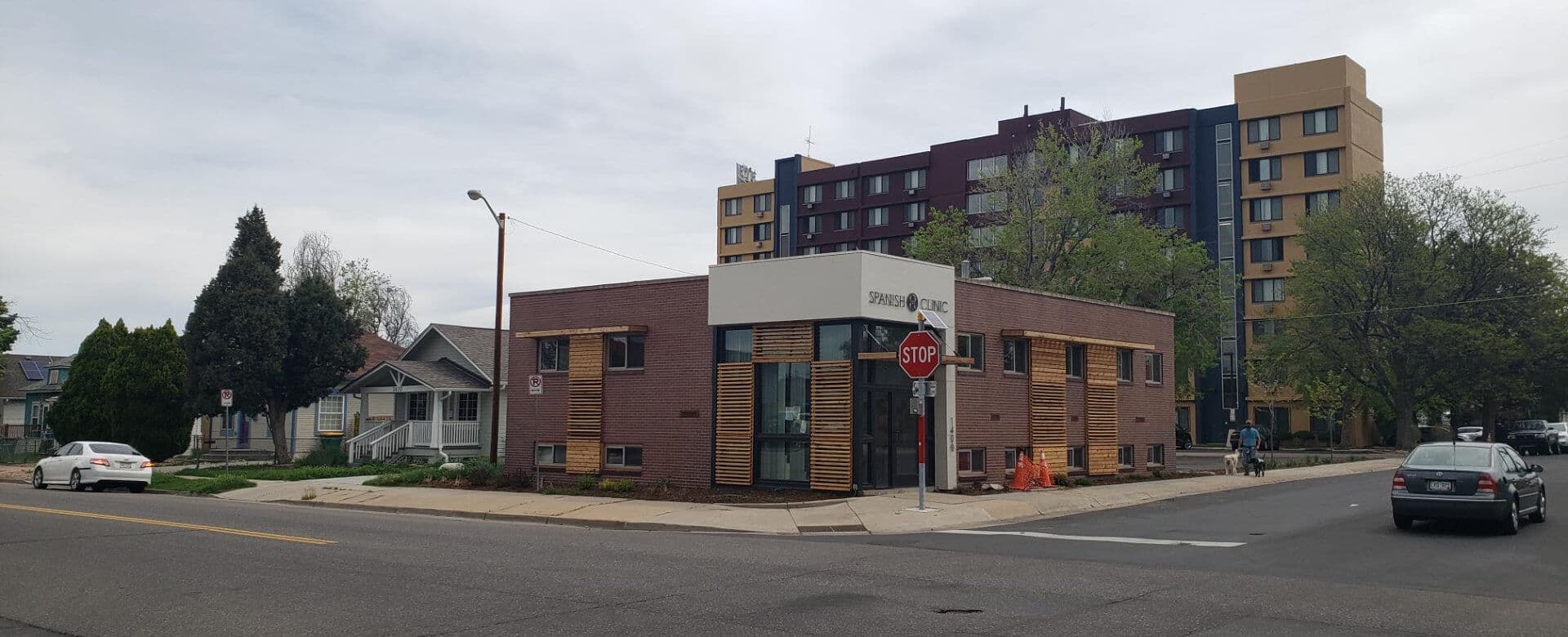
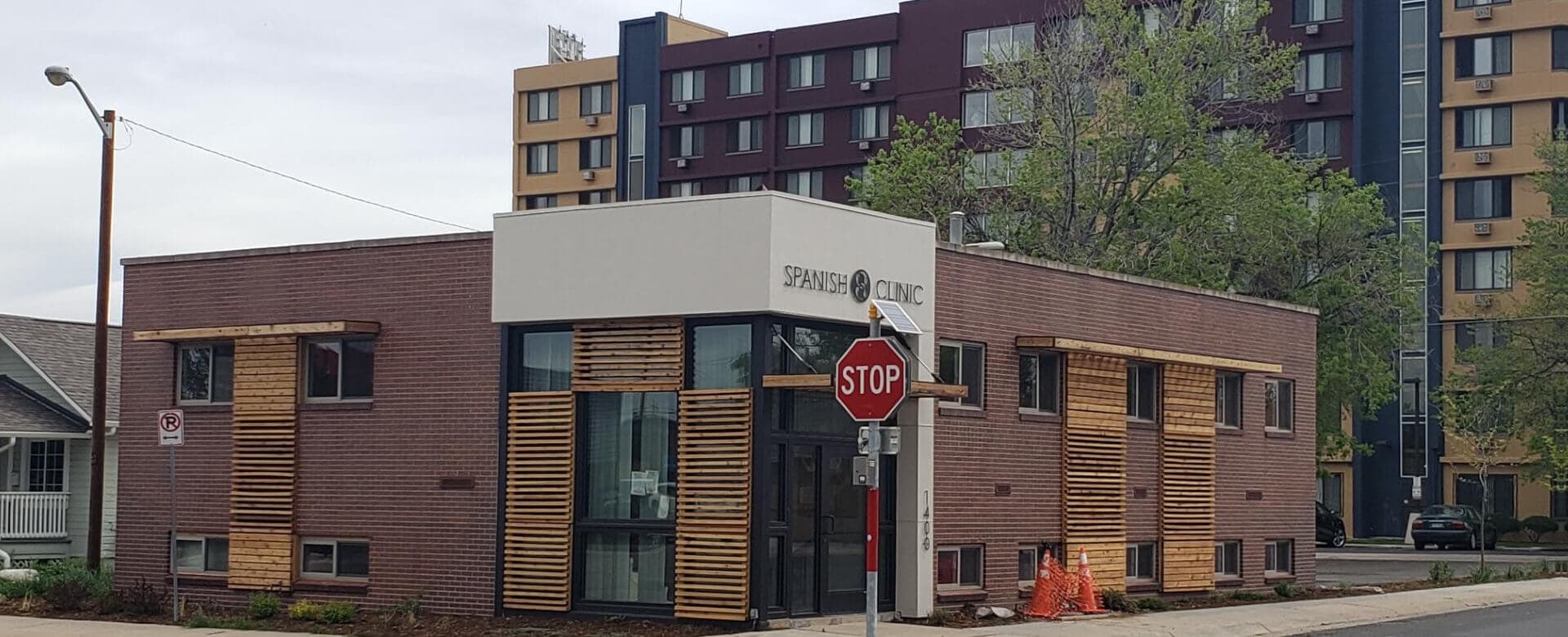
Spanish Clinic 2 photos
Comparison facts and sources
Bilingual English- and Spanish-language outpatient behavioral-health provider serving Denver, Adams and Arapahoe counties. It offers mental-health, substance-use, DUI, domestic-violence and related counseling rather than residential care. · Morrison office: 4200 Morrison Road, Suite 8, Denver; separate Dayton office in Aurora
- Published fee information
- USD 40 / Published group-session fee; other named service fees differ.
- Before admission
- The Morrison contact address and Dayton/Aurora office are separate. Some services are office-specific; play therapy is identified at Dayton. Published prices are per named service, not weekly residential fees. The adult anger-management program is Spanish-only.
- Continuing care
- Spanish Clinic offers outpatient recovery planning and relapse-prevention services. Continued individual, family or group counseling can be arranged, but no separate universal post-program duration is published.
Source record · October 19, 2026
Adult anger-management language reviewed October 19, 2026. Confirm service, language, eligibility, availability, and fees.. Confirm office, schedule, program eligibility, Medicaid authorization, exact service fee and any additional charges directly with Spanish Clinic.
Luxury rehab comparison · Fees and inclusions · Selection methodology
Provider overview
Spanish Clinic LLC is a bilingual English-and-Spanish outpatient provider of substance-use and mental-health services in the Denver metropolitan area. It operates a Morrison Road office in Denver and a Dayton Street office in Aurora; this profile’s contact address is the Morrison office, while the gallery depicts the verified Dayton office.
Services
The provider lists adult substance-use treatment and relapse-prevention planning, ASAM Level 1 and 2.1 outpatient services, DUI/DWAI education, youth DUI services, mental-health assessment, domestic-violence intervention, anger management and MRT. It is a Colorado Medicaid provider. These are outpatient services, not residential detoxification or inpatient care.
Fees and hours
The current published fee schedule lists $40 group sessions, $75 individual sessions, an $18 eight-panel urinalysis, a $50 substance-use group intake, a $200 substance-use evaluation and a $300 mental-health assessment. Both offices list weekday hours with a 1–2 p.m. lunch closure; some Saturdays open only for classes. Confirm the correct service, Medicaid eligibility and any additional charge directly.
A community outpatient provider with several referral routes
Spanish Clinic’s organization overview describes work in the Denver area since 2008, including substance-use recovery, mental health services, interventions for men who have used domestic violence, in-home services, and supervised parenting time. It identifies referrals from schools, social services, probation departments, and individuals seeking help themselves. The common setting is community care, rather than an inpatient unit or residential accommodation.
Start by explaining the reason for the referral and the outcome you need from the service. A person seeking voluntary counseling may need a different assessment from someone completing a specified court, probation, or child-welfare requirement. Bring the relevant referral documents rather than relying on a program name alone. The clinic’s description of culturally responsive work can also inform the conversation: explain your preferred language, family context, and communication needs. Confirm who will provide the service and whether any report or attendance confirmation is required by another organization.
Choose the office and service together
The services page describes substance-use and mental health care in English and Spanish, with Medicaid participation in Denver, Adams, and Arapahoe counties. It specifically identifies play therapy at the Dayton office, while individual, family, and group counseling are described across the offices. It also lists assessments and on-site eight-panel urinalysis including ETG. These details show why a general appointment request should be followed by service-specific confirmation.
Tell the team whether you need an assessment, a recurring class, individual treatment, family work, or testing. Ask which office delivers that service, how long appointments take, and whether the appointment language matches your needs. The broad bilingual description does not override a program page that specifies only one language. If transport or childcare affects attendance, discuss that before committing to a schedule. Medicaid participation also needs to be checked for the exact service and personal eligibility, rather than assumed from the clinic’s general provider status.
Adult substance-use treatment includes a defined recovery-planning program
The adult substance-use page describes an 18-week program combining individual and group counseling in English or Spanish. Its stated approach uses cognitive-behavioral work and a personalized relapse-prevention plan, with connections to community resources. The page also lists outpatient service categories at ASAM Levels 1 and 2.1. Those categories should not be read as a promise that every group or appointment provides the same intensity of care.
During assessment, discuss current use, previous treatment, practical barriers, and any medical or mental health concerns that affect participation. Ask how the individual and group components fit together, how progress is reviewed, and what happens if the suggested level is not enough. A listed 18-week program does not mean every concern has the same timeline or that medical withdrawal is managed on site. Clarify testing, attendance, and reporting expectations early, particularly when a referring agency needs documentation alongside the clinical treatment plan.
DUI education and therapy must match the assigned requirement
The DUI and DWAI page describes both online and in-person classes. It distinguishes shorter education from longer therapy tracks, listing Level I as 12 hours over at least two days and therapy tracks spanning 21–43 weeks. These are the clinic’s published program descriptions, not a determination of which requirement applies to a particular person’s case.
Provide the assessment, referral, or official instruction identifying the required level and track before enrolling. Confirm that the class, delivery format, language, and documentation will meet the referring authority’s requirements. Ask about start dates, missed sessions, transfers from another program, and whether a separate intake or evaluation is needed. A course’s total hours are different from the calendar time needed to complete it. The most useful estimate combines the assigned track with the actual available schedule and attendance rules, rather than treating a general webpage as a personal completion date or legal decision.
MRT focuses on decision-making within a structured program
The Moral Reconation Therapy page describes a cognitive-behavioral program concerned with decision-making and behavior among people involved with the criminal justice system. Spanish Clinic states that MRT is offered in English and Spanish and gives an average of 18 weeks, depending on individual progress. That duration is an estimate for this program, rather than a fixed endpoint for all of the clinic’s services.
Ask how progress is demonstrated, whether work must be completed between meetings, and how the facilitator decides when the program is finished. If MRT is part of a referral requirement, clarify which organization receives progress or completion information and what consent is needed. Also distinguish participation in MRT from treatment for substance use, trauma, or another mental health concern: one class may not address every reason a person has been referred. Understanding those separate goals can help avoid enrolling in a program that does not meet the actual need.
The adult anger-management page specifies Spanish-only delivery
Spanish Clinic’s adult anger-management program is described as 18 weeks and conducted solely in Spanish. Its stated focus is recognizing signs of anger and learning more productive responses. This is a meaningful exception to the clinic’s broader bilingual description. An English-speaking applicant should ask about an appropriate alternative instead of assuming the same class is available in English.
Discuss the situations you want to change, the effect on other people, and any requirement attached to the referral. Learning to manage anger is not interchangeable with every domestic-violence intervention or psychiatric treatment. If a particular service has been required, confirm its suitability with the referrer before starting. The program’s weekly schedule and completion rules should also be established separately from the published total number of weeks.
Caring Dads has a specific parenting-intervention purpose
The Caring Dads page describes an intervention for fathers who have neglected or abused their children or exposed them to domestic violence. Spanish Clinic lists an 18-week program in English and Spanish, focused on improving behavior and relationships. It should therefore be understood as a defined intervention, rather than a general parenting class that automatically suits every family concern.
A referral conversation should establish what behavior needs to change, which professionals are already involved, and how the father’s participation relates to the child’s safety and support. Ask what information is reported, how progress is assessed, and which responsibilities remain with the referring agency or other clinicians. Completing a course does not itself establish that contact arrangements should change or that harm has been resolved. The practical aim is to understand the intervention’s role within the wider plan, with appropriate boundaries around family communication and any separately required assessment.
Clarify the purpose of any domestic-violence referral
The domestic-violence page discusses the emotional and mental health effects of abuse and the availability of professional support. Its broad wording does not specify every referral pathway, participant group, or completion requirement. Before booking, explain whether you are seeking support after experiencing abuse, an intervention related to your own behavior, or a service requested by another professional. These needs should not be treated as interchangeable.
Ask who is qualified to provide the requested service, what the assessment includes, and what information will be shared with permission or under applicable requirements. Someone concerned about safety may need individual support and a different contact arrangement from a person attending a mandated group. A webpage cannot settle those distinctions. Make the purpose of the appointment explicit and check whether a specialist referral is needed. Do not assume that ordinary couples or family counseling is the appropriate response to every situation involving abuse.
Online intake involves more than submitting a form
The intake instructions describe choosing an in-person or online appointment. For online intake, they list payment of the intake fee, a biographical profile, electronically signed documents, and a virtual assessment meeting. The meeting is described as averaging about an hour but potentially taking longer. For in-person intake, the steps are completed during the first appointment. The page describes a response within 48 hours; confirm the actual appointment rather than assuming immediate enrollment.
Before starting, check that you have the required documents, a suitable device if meeting online, and a private place to speak. Ask which fee applies to your requested service and whether Medicaid or another arrangement affects payment. An intake meeting is different from the ongoing class or counseling schedule. Use it to confirm the correct program, office or online format, language, attendance expectations, and next appointment, especially when the original referral contains a deadline.
Read the fee schedule by service and effective date
The published fee schedule lists group sessions at $40, with the group rows specifically referring to July 20, 2026. Other named charges include $75 for an individual session, $18 for an eight-panel urine test, $50 for substance-use group intake, $200 for a substance-use evaluation, and $300 for a mental health assessment. The page also lists separate domestic-violence and Level II Four Plus DUI intake charges. Its older general heading should not obscure the later date on the group-price rows.
Request a cost outline for the actual combination of services you need. An intake, evaluation, recurring group, and drug test are different items; a per-session price is not the total cost of a course. Ask about Medicaid authorization, additional reporting or assessment requirements, missed appointments, and any charge not shown in the schedule. Confirm the current rate and payment arrangements before starting, particularly if another agency is involved in funding or referral.
Explore Colorado treatment options and alcohol treatment considerations.
Official provider pages reviewed October 19, 2026. Confirm the required service, language, office, referral requirements, and individual fees.
Sources and verification
Spanish Clinic official program, fee and office information, Medicaid and service guidance and licensed substance-use services, checked October 10, 2026. This profile summarizes provider-published information and is not an independent clinical assessment.