Ridgeview Behavioral Hospital

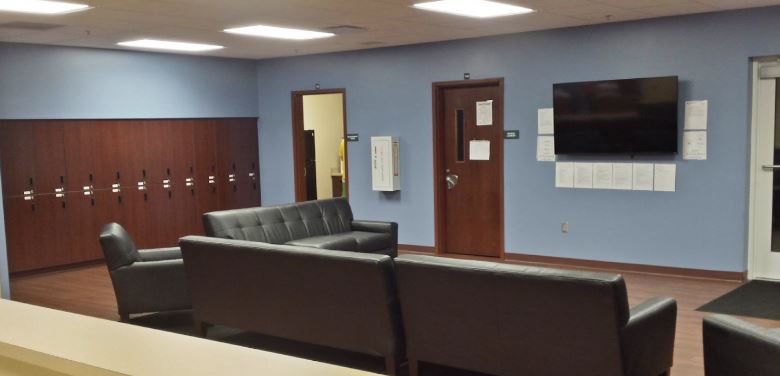

Ridgeview Behavioral Hospital 3 photos
Comparison facts and sources
An 84-bed adult inpatient psychiatric hospital in Middle Point, Ohio. Its about page describes adults primarily ages 18–75, while its adult program states 18 and over; eligibility follows assessment. Current core pages describe adult psychiatric and co-occurring inpatient programs, with separate provider information on medically supervised detox. · 17872 Lincoln Highway, Middle Point, Ohio 45863. This profile concerns the Ohio hospital serving the wider Lima and Fort Wayne region.
- Published fee information
- Quote required
- Before admission
- Current core service pages establish inpatient psychiatric and co-occurring programs. Generic discussion of outpatient, partial-hospitalization and intensive-outpatient settings does not confirm an active hospital-operated program at this address; obtain the name and acceptance of any proposed follow-up service. Individual age, medical suitability, payer authorization and cost require review.
- Continuing care
- Discharge planning begins during admission and may include relapse-prevention planning, outpatient or community referrals and continued professional support according to assessed needs.
Source record · 2026-10-19
Reviewed October 19, 2026: inpatient programs, adult eligibility and the distinction between hospital treatment and proposed outpatient follow-up. Confirm the accepting service, individual placement, availability, insurance coverage and personal costs.. The provider displays Joint Commission accreditation information; independent regulatory verification was not performed in this field review.
- Official Ridgeview Behavioral Hospital overview
- Official hospital and adult-service scope
- Official length-of-stay FAQ
- Official insurance networks and FAQs
- Official billing and payment guidance
- Official detox and discharge-planning guidance
- Current core hospital programs
- Current adult-program eligibility and setting
Luxury rehab comparison · Fees and inclusions · Selection methodology
Ridgeview Behavioral Hospital is an 84-bed adult inpatient psychiatric hospital at 17872 Lincoln Highway in Middle Point, Ohio. Its core program pages describe adult psychiatric and co-occurring inpatient care, and the provider also describes medically supervised detox. Any proposed outpatient, partial-hospitalization or intensive-outpatient follow-up should be confirmed with the actual receiving service rather than assumed to be an on-site hospital program.
Length of stay is individualized; Ridgeview’s current FAQ says the average stay is approximately 21–30 days. Discharge planning begins during treatment and may include relapse-prevention work, outpatient follow-up and community referrals.
Ridgeview lists Medicare and multiple commercial insurance networks and also addresses self-pay, payment plans and financial-assistance review. Coverage, authorization and patient responsibility are plan-specific, and no universal cash package is published.
An Ohio psychiatric hospital with defined inpatient services
Ridgeview’s hospital description identifies an 84-bed inpatient setting in Middle Point, Ohio. It describes an adult population primarily between 18 and 75 and a multidisciplinary team that includes medical, psychiatric and therapeutic professionals. Its adult-program page uses the broader threshold of 18 and over, so the published age range should be discussed with admissions rather than treated as an absolute upper-age exclusion.
The setting is relevant for someone being assessed for a hospital level of psychiatric care. The appropriate comparison is with programs able to address the person’s current symptoms and medical needs, rather than with a private vacation-style residence. Ask how the hospital reviews mobility, physical illness, medication complexity and other support needs before admission. The website’s statements about accreditation and licensing are provider representations; they do not replace an individualized assessment of what the hospital can safely offer a particular patient.
Adult psychiatric treatment follows an assessment
The adult psychiatric program describes care for adults experiencing concerns that can include depression, anxiety, bipolar disorder and suicidal thoughts. It emphasizes an individual plan, therapeutic support and discharge preparation. A diagnosis appearing on the website does not mean every person with that diagnosis needs inpatient care or will be accepted without review.
When discussing a referral, explain the recent change that has made additional support necessary: difficulty functioning, a change in sleep or behavior, a recent emergency assessment, or problems following the current treatment plan. Existing clinicians can help communicate relevant history and the reason for recommending hospitalization. Ask what information Ridgeview needs to determine suitability and whether any medical evaluation must occur first. The admission conversation should establish the goals of the stay and how progress will be reviewed, including what would make a different level of care more appropriate.
Co-occurring treatment addresses substance use and mental health together
Ridgeview’s co-occurring-disorder program describes integrated support for mental-health and substance-use concerns. Published components include individual psychotherapy, groups, activity-based work and attention to nutrition. The relevant question is how the two sets of concerns influence the assessment and daily treatment plan, rather than whether both appear on a list of services.
A referral should include recent substance use, previous withdrawal experiences, prescribed medications and the history of psychiatric symptoms. Ask how the team coordinates medication decisions with addiction treatment and how it communicates with existing providers. Someone whose main need is withdrawal management may follow a different starting plan from someone admitted primarily for psychiatric stabilization. The hospital should explain that distinction, the staff responsible for each part of care and the criteria for changing the plan. Family participation, when appropriate and authorized, can help clarify history without taking over the patient’s clinical decisions.
The daily program includes several types of group work
The programs and services overview describes daily process groups led by credentialed therapists, psychoeducation led by case managers and patient-led twelve-step meetings. These are different forms of participation. A professional therapy group, an educational session and a peer meeting should not be assumed to offer the same clinical service or degree of individual attention.
Ask for a representative timetable and how it changes across units or according to a patient’s needs. The provider also discusses relaxation and activity-based elements, which should be understood as parts of the wider plan. Someone who finds groups difficult can ask how staff support participation and when individual sessions occur. The overview mentions support for several concerns, but a group topic alone does not establish a dedicated specialist program for every condition. For a complex diagnosis, request an explanation of the relevant staff experience, clinical monitoring and any outside consultation that may be needed.
Detox claims need to be tied to the proposed admission
Ridgeview’s detox information explicitly describes medically supervised detox within its inpatient approach and links it with co-occurring care and discharge planning. The page also discusses different treatment settings generally. That general discussion does not confirm that the hospital itself currently operates every outpatient, partial-hospitalization or intensive-outpatient pathway mentioned in broader educational text.
Before arriving, ask whether the proposed admission includes withdrawal management, what medical information is required and whether another facility must complete an initial assessment. Do not choose a withdrawal plan from a website or stop prescribed medication based on a packing instruction. Existing prescribers and the admitting team should agree how medications are handled. If an outpatient step is recommended after discharge, obtain the receiving service’s name and confirmation that it can accept the referral. This keeps the actual inpatient offer separate from possible later arrangements.
Shared rooms and belongings affect the hospital experience
The patient FAQ describes shared bedrooms with one or two roommates and same-gender room arrangements. It also sets limits on belongings and electronics. These practical details matter when comparing the hospital with programs advertising private accommodation or unrestricted device access. Ask about the current room assignment process and any disability-related accommodation before admission.
The published packing guidance calls for identification, insurance information, a medication list and a limited amount of clothing. Medication handling needs a direct conversation with the hospital: clarify which prescriptions or supplies to bring, how they are verified and how uninterrupted treatment will be arranged. Do not interpret a restricted-items list as advice to discontinue a medicine. Families can also ask how patients communicate with approved contacts, where belongings are stored and what happens if an essential item is unavailable. Knowing these rules in advance can make the transition into a hospital routine more predictable.
An average stay is a planning reference, not a promise
The hospital’s length-of-stay answer gives an average of approximately 21 to 30 days while making duration dependent on individual need. An average describes the provider’s general experience; it does not establish the required stay for every diagnosis, the number of days an insurer will authorize or a guaranteed discharge date.
Ask when the team first reviews the treatment plan and how changes in symptoms, functioning or medical needs affect the expected timetable. Families arranging work leave or travel should keep plans flexible until the clinical and financial arrangements are clear. Discharge readiness should also include practical matters such as the next appointment, medication access and the intended living situation. If an estimate changes, request an explanation of the clinical reason and any revised financial responsibility. This gives a more useful basis for planning than buying travel around the midpoint of a published range.
Insurance listings still require an individual benefit check
The hospital’s current overview lists Medicare and multiple commercial insurance relationships. A payer name on a website is not confirmation that a particular plan, admission or service is covered. Network arrangements, authorization and the patient’s remaining benefits need to be checked against the specific proposed hospital stay.
Ask the admissions or financial team to distinguish the hospital’s network status from the status of any separately billing clinician. Request the insurer’s requirements for initial approval and continued-stay review, plus the expected deductible, copayment or coinsurance. Someone moving between inpatient and outpatient services should have each stage checked separately. If a referring professional recommends urgent care, do not delay emergency assessment to finish routine benefit questions; the administrative discussion can proceed alongside appropriate clinical evaluation. For planned care, obtaining the details before admission reduces uncertainty about which organization will bill and which charges may remain personally payable.
Hospital estimates may exclude separately billed professionals
Ridgeview’s pricing FAQ explains that an estimate depends on the services actually required. It also distinguishes the hospital bill from charges that may come from physicians, independent laboratories or ambulance services. This is particularly useful when comparing an inpatient estimate with a program that quotes a single bundled charge.
Ask for the estimated hospital responsibility and an explanation of which other bills may follow. The provider discusses uninsured estimates, payment arrangements and financial-assistance screening, but those options require individual review. Clarify how to apply, what documentation is needed and whether an arrangement covers all relevant bills or only the hospital’s portion. Keep copies of the estimate and any revised authorization. A published charge schedule should not be read as the exact amount an insured patient will owe, while a preliminary estimate should not be treated as a fixed price for every possible complication or additional service.
Plan the referral and recognize the limits of an online form
The contact page allows inquiries from patients, families and referring professionals. It also explains that a web inquiry may take time to receive a response. A routine contact form is therefore unsuitable for an immediate emergency; the hospital directs people facing an emergency to call 911.
For a planned admission, ask which records are needed, who makes the acceptance decision and when arrival should occur. A referral from a hospital, therapist or other professional can be easier to coordinate when one person is clearly responsible for passing on clinical information with the appropriate permission. Confirm transportation only after the receiving team has reviewed the case. Families should also understand what information staff can share and how the patient can authorize communication. An inquiry, a completed form and a clinically accepted admission are distinct steps, even when the admissions service is available around the clock.
Peer support and follow-up need a concrete handoff
Ridgeview’s peer-recovery education explains how lived-experience support can complement professional treatment. It discusses practical encouragement, connection and help navigating recovery. This educational description does not establish a guaranteed coaching appointment, a fixed period of free follow-up or replacement of psychiatric and medical care after a hospital stay.
Before discharge, ask which ongoing contacts are actually arranged and which are recommendations to pursue locally. A useful handoff identifies the next treating clinician, any peer or community support, medication responsibilities and the route back to assessment if concerns return. Clarify whether the person will remain in Ohio or travel home, because that affects which services can realistically continue. With permission, involve the people who will provide day-to-day support so they understand the plan. The goal is a manageable next stage with clear responsibilities, rather than a long list of resources without confirmed access.
Explore other Ohio treatment settings and read about care options for depression.
Provider information reviewed October 19, 2026. Individual suitability, program availability, payer authorization and costs require confirmation.
Official sources — checked October 16, 2026: hospital overview, service scope, length-of-stay FAQ, insurance information, and billing guidance.