Renascent

Renascent 3 photos

Provider overview
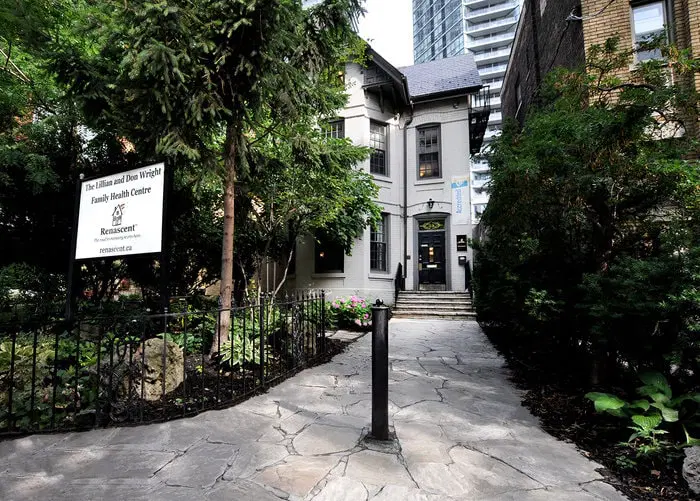
Renascent is a not-for-profit Ontario addiction-treatment network. It operates gender-specific live-in treatment centers in Toronto and Durham Region and also provides intensive virtual and outpatient care, family programs, continuing care and alumni support. This profile covers the organization rather than one residential campus; 38 Isabella Street is the official Toronto contact and family-services address.
Residential treatment and continuing care
The fee-for-service Complete Care program lists 28, 35 or 42 days of live-in treatment plus six months of weekly virtual Continuing Care. The publicly funded pathway is a 28-day live-in program for eligible Ontario residents aged 18 and older and does not include Continuing Care. Renascent describes an abstinence-based model integrating 12-step facilitation with evidence-informed clinical and medical practice.
Funding and fees
The fee-for-service page lists total program costs from $15,995 to $28,100 depending on length and single or double occupancy. The same page lists a no-cost publicly funded option for eligible Ontario residents and notes that many private plans may cover treatment. It displays dollar amounts without an explicit currency or tax statement, so confirm currency, taxes, coverage and total patient cost in writing.
Residential treatment combines counseling with medical support
Renascent’s inpatient treatment page describes live-in addiction care with individual counseling, groups, 12-step facilitation and medical involvement. It also discusses withdrawal management and support for co-occurring concerns. The model is structured around recovery from substance use, rather than a claim that every physical or psychiatric condition can be managed within a residential house. An admission assessment should establish whether the person’s current needs fit the proposed setting.
The page describes programs for people identifying as male or female and support for transgender and nonbinary clients. Ask which house and arrangements are appropriate rather than inferring placement from a generic network description. Relevant questions include how medical needs are reviewed, who coordinates existing prescriptions and what happens if a higher level of care is necessary. The published program lengths are options to discuss with admissions, not evidence that everyone requires the same duration or the same sequence of services.
Public funding and Complete Care include different follow-up
The program-cost page distinguishes a publicly funded 28-day residential pathway from fee-for-service Complete Care options of 28, 35 or 42 days. The paid package includes six months of weekly virtual Continuing Care; the public residential option does not include that component. This difference is important when comparing total support, even where two bookings involve the same number of live-in days.
The page also links price to duration and room occupancy and discusses possible private insurance coverage. Confirm the selected package, room arrangement, currency, taxes and personal responsibility in a written estimate. An advertised financing route is separate from clinical suitability or insurer approval. People pursuing public funding should ask about eligibility and the actual admission process, then make a separate follow-up plan if Continuing Care is not included. Avoid assuming that a no-cost residential episode automatically provides every later service advertised elsewhere on the site.
The network description is not a single-campus booking
The center-tour page presents several named Renascent facilities. Its Graham Munro description identifies a Toronto residential setting for people who identify as female, while the navigation also names other residential and family-service locations. The organization’s general contact address should therefore not be treated as the destination for every admission. The admission letter and direct confirmation from the team should identify where the person will stay or attend.
Ask about room occupancy, accessibility, shared facilities and the particular team’s arrangements at that house. Photos and descriptions of one site may not represent another. If family members plan to visit or deliver belongings, confirm the relevant rules and address rather than traveling to a central office. The tour can help someone understand the residential environment, but it does not establish current bed availability, a guaranteed room type or that all network services are delivered under one roof.
Virtual intensive treatment has its own suitability criteria
The virtual addiction-treatment program is described as a six-week intensive service combining weekday groups, individual counseling and planning for ongoing support. It is intended for people who can participate safely from their existing living situation and maintain the required structure. This is different from having residential staff available throughout the day and night. A stable place to participate and appropriate support outside sessions are relevant to the assessment.
The program can form part of a transition between levels of care, but it is not automatically a substitute for medical withdrawal management or a needed residential admission. Confirm eligibility, funding and where the person may be located during treatment, particularly if they are outside Ontario or expect to travel. Ask how the team responds if attendance becomes difficult or clinical needs increase. The proposed next step after six weeks should also be clear, including whether further Continuing Care is available and how it is arranged.
Continuing Care can follow treatment at another organization
The Continuing Care program is open to adults following an accredited inpatient or outpatient treatment program, including treatment completed with another provider. It describes six months of weekly group contact alongside individual work and assignments. This makes it a separate service to explore when someone already has a completed treatment episode and needs structured follow-up, rather than assuming another residential stay is the only route into Renascent support.
Ask what completion information is required, when the next group begins and how suitability is assessed. The schedule should fit work, family and other clinical appointments so attendance is realistic. Eligibility does not mean the service is included in every previous treatment payment or publicly funded residential place. Confirm fees or funding directly and identify any additional therapy or medical follow-up needed elsewhere. The ongoing group can be one part of a broader plan without being expected to manage every new clinical concern.
Existing opioid medication treatment requires advance coordination
Renascent publishes specific methadone and buprenorphine admission requirements. They involve confirming the current prescription and dispensing history, including seven-day records for methadone or Suboxone and a 30-day record for Sublocade. The page also discusses confirmation of the admission-day dose and arrangements with a local pharmacy during the stay. These are coordination requirements, not instructions to change or discontinue an established medication independently.
Contact the admissions team and existing prescriber early enough to establish who will send the records and manage the transition. Missing information can delay admission. Clarify how prescribing responsibility will be handled during treatment and how dispensing returns to the usual pharmacy afterward. The presence of these requirements also shows why an abstinence-based program description should not automatically be interpreted as excluding all ongoing opioid medication treatment. The actual arrangement must be reviewed clinically for the individual before arrival.
The admission checklist separates preparation tasks by timing
The treatment checklist sets out tasks before a planned admission, including confirmation, review of withdrawal-related prescriptions and preparation of pharmacy information. It uses milestones such as two weeks and the final several days before arrival. These are preparation instructions for an arranged admission, rather than proof of a universal waiting period or permission to follow a withdrawal plan without medical advice.
If the offered admission date is closer than the checklist assumes, ask which steps need to be completed immediately and who will coordinate them. Explain changes in medication, substance use or physical health instead of arriving with an outdated assessment. The goal is for the receiving team to have accurate information and an agreed starting plan. A checklist can organize paperwork and communication, but it cannot establish that a person is medically ready for the residential setting simply because each administrative item has been completed.
Preparation includes medication, transport and house rules
The residential preparation guidance asks clients to follow their admission letter for the correct location, bring medications in the required packaging and report new diagnoses or recent hospital care. It also limits luggage and explains restrictions on some personal items. Review these details with the team before travel, especially if essential equipment or medication storage requires an exception. The instructions apply to a treatment setting rather than ordinary hotel accommodation.
Arrange transport in advance and confirm when an accompanying driver can leave. Renascent advises against bringing a personal vehicle and discusses costs connected with local recovery activities. Ask which expenses the individual should budget for and whether the stated amounts use the same currency as the treatment quote. Family deliveries and visits also need agreement. Practical preparation should support the actual clinical plan, while keeping private prescriptions, records and personal information within the provider’s appropriate admissions process.
Remote participation needs a workable home environment
The virtual-treatment preparation page discusses reliable internet, suitable equipment and a private place to participate. It explains expectations around attendance and engagement, including the use of video. These practical requirements affect whether remote care is realistic for someone sharing a home, working irregular hours or relying on a limited data connection. Discuss barriers before the program starts so they can be assessed rather than mistaken for a lack of commitment later.
The guidance also directs people to seek clinical help when medication or withdrawal concerns affect readiness. It does not ask them to make unsupervised medication changes to qualify for a group. Confirm how the program coordinates with a family doctor or other treating service and what happens if the person cannot safely maintain the planned arrangement at home. A clear backup plan is particularly important because a virtual group provides scheduled contact rather than physical supervision between sessions.
Family services have their own audiences and formats
The family-care programs support people affected by another person’s substance use even when that person has not attended Renascent or entered treatment. The adult introductory program uses four weekly group sessions, with additional individual support available. Separate services address children and teenagers, including age-specific groups and counseling. These are family-support offerings; they should not be confused with admitting a child to the adult residential addiction program.
The page describes donor-supported access rather than treating all family work as government-funded healthcare. Confirm the current format, eligibility and availability for the family member seeking help. Participation can focus on communication, boundaries and the relative’s own well-being without depending on another person’s consent to enter rehab. Where shared sessions are proposed, clarify confidentiality and consent. Family support and the patient’s clinical treatment have related but distinct goals, and neither should be assumed to give unrestricted access to the other’s private information.
Renascent’s official residential, virtual, admission, funding and family-program information reviewed October 19, 2026. Confirm the assigned location, eligibility, current availability, coverage and individual costs directly.
Explore Canadian treatment options and opioid-treatment options.
Sources and verification
Renascent service overview, inpatient treatment, funding and program costs, center tour and contact information, checked October 13, 2026.