The Providence Center


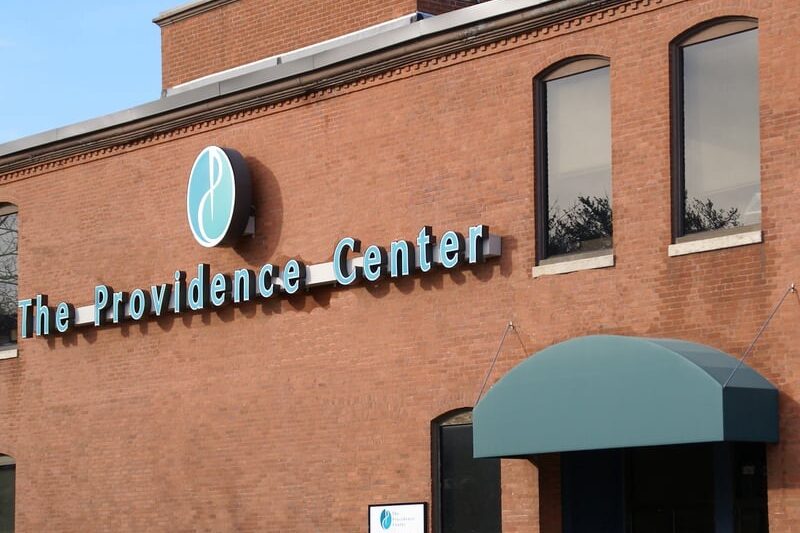
The Providence Center 2 photos
Comparison facts and sources
Community behavioral-health provider serving adults, adolescents and children, with Providence outpatient addiction care and separate residential substance-use programs. · 528 North Main Street, Providence, Rhode Island 02904; residential substance-use programs operate separately within the Rhode Island provider network.
- Published fee information
- Quote required
- Before admission
- The 528 North Main Street profile represents a multi-program provider; residential and recovery-housing services are not all delivered at this address.
- Continuing care
- Residential clients receive individualized treatment and discharge planning; outpatient services connect clients to long-term recovery supports including Anchor Recovery Community Center.
Source record · October 14, 2026
Provider-published information checked October 14, 2026. Confirm program location, age eligibility, residential availability, payer authorization and personal cost directly with The Providence Center.
Luxury rehab comparison · Fees and inclusions · Selection methodology
The Providence Center is a Rhode Island behavioral-health and recovery-services organization within Care New England. It serves more than 8,400 Rhode Islanders through over 60 mental-health, substance-use and community-support programs. The 528 North Main Street contact address represents the wider organization and is not one residential rehabilitation campus.
Addiction care includes outpatient treatment and separate residential Roads to Recovery programs for men in Cranston and women in Wyoming, Rhode Island. The organization also provides child and family, crisis, housing, primary-care and peer-recovery services at other locations.
A community organization with services beyond one building
The Providence Center’s organizational overview describes a Rhode Island community provider whose work extends into homes, schools, neighborhoods, and clinical settings. It became affiliated with Care New England in December 2014. Its stated approach combines mental-health and substance-use care with practical supports such as housing assistance, employment services, primary care, and wellness activities.
This makes the first task identifying the relevant program, rather than choosing a room at one all-inclusive residence. A person may receive outpatient appointments while living at home, be referred to a residential service, or need help coordinating several kinds of support. The published organizational address is a starting point for contact, not proof that all services take place there. Ask which program will assess the person, where appointments occur, and which supports require separate enrollment. A network-wide description can explain available routes, but the individual plan needs to specify the services that the receiving team is actually proposing.
Addiction care ranges from outpatient counseling to residence
The addiction-treatment overview describes different intensities of support, from outpatient counseling to residential treatment. It presents care as centered on the client’s goals and circumstances, with attention to physical, emotional, social, and other support needs. During treatment, clients may also be connected with a peer support specialist and the Anchor Recovery community.
For someone comparing treatment options, the useful distinction is the level of care recommended after assessment. Ask whether the plan consists of scheduled appointments, a residential admission, or a combination over time, and what would lead the team to recommend a change. A broad description of addiction services does not establish one standard program duration or a residential place for every person seeking help. Peer support can be part of the plan, but it should be distinguished from therapy or medical appointments. The intake discussion should identify the receiving service and explain how the next step will be arranged, including any eligibility or availability conditions.
Roads to Recovery has separate men’s and women’s programs
The Roads to Recovery page identifies the men’s residential program at the Mathias Building in Cranston and the women’s program in Wyoming, Rhode Island. These are separate settings within the organization. Both descriptions include individualized treatment and discharge planning, individual and group therapy, case management, access to primary care, peer support, and practical living or housing assistance.
The women’s program describes attention to trauma, domestic violence, relationships, pregnancy health, education, employment, and parenting skills. Those topics do not by themselves establish that children can reside on the premises or that every pregnancy-related medical need can be managed there. Ask the receiving program about current eligibility, accommodation, available clinical support, and any outside appointments required. The men’s page similarly describes addiction and co-occurring mental-health needs without guaranteeing suitability for every presentation. Program-specific admissions contacts and an individual assessment should guide the decision. The organization’s main Providence address should not replace the confirmed residential destination when arranging travel.
Adult care can include coordination across several providers
The adult-care overview includes counseling, psychiatry, addiction services, residential support, and programs for people with severe and persistent mental-health needs. Its Health Home description focuses on coordinating psychiatry, primary care, specialist care, medication, hospital discharge, and wellness needs. The page also identifies Home Base as a partnership addressing chronic homelessness.
These services have different roles. A Health Home is a care-coordination model in this description, not a promise of a residential bedroom. Housing assistance also needs to be distinguished from immediate access to a treatment bed or a particular apartment. Ask which team is responsible for the person’s plan, how information is shared with existing clinicians, and what eligibility applies to the proposed support. Someone managing several appointments may benefit from having clear responsibilities and contact arrangements written down. The broad adult-services menu does not mean every client is automatically enrolled in all programs or that all services are delivered at the same location.
Children and adolescents follow their own service routes
The Center for Child and Adolescent Services describes counseling, family support, early-childhood work, intensive services, school-based support, and programs for adolescents and young adults. The school program is described as a partnership placing Providence Center clinicians in Providence public elementary and middle schools. Healthy Transitions is presented as a route for identifying and supporting young people’s developing needs.
These are separate descriptions from the organization’s adult residential substance-use programs. A family should confirm the child’s eligibility for the particular service, whether a school or other referral is required, and where care will take place. Ask how the team includes parents or guardians, coordinates with the school and existing clinicians, and sets goals that fit the young person’s developmental stage. The presence of several youth services does not establish one universal age range or one admission process for all of them. Clarifying the receiving team helps avoid confusing school support, outpatient therapy, intensive family services, and residential care.
The crisis unit has specific adult admission criteria
The Crisis Stabilization Unit is described as short-term care on Butler Hospital’s campus at 360 Duncan Drive. It may serve as an alternative to hospitalization or a step-down setting, following assessment. Referrals are accepted from emergency departments, inpatient facilities, and behavioral-health providers; the unit lists referral availability around the clock.
The published criteria require adults at least 18 years old who voluntarily agree to admission and can remain in an unlocked facility. It excludes suicidal or homicidal intent, unstable medical conditions, and the possibility of physical violence. These limits are important when interpreting the word “crisis”: the unit is not presented as an appropriate destination for every emergency. Its team assesses whether admission is suitable. The described services include psychiatric assessment, therapy, medication management, case management, peer support, and discharge planning. A referring clinician should clarify the person’s current needs and receiving arrangements rather than assuming that this unit substitutes for any required emergency or inpatient medical care.
Peer services offer several distinct kinds of connection
The peer-support overview lists Anchor Recovery centers, the Jim Gillen Teen Center, mobile outreach, emergency-department connections, and Oasis Wellness & Recovery Center. Anchor provides a substance-free community setting for people in recovery and their families. Oasis is described as a peer-run center for adults living with mental-health challenges, while the teen center has its own youth focus.
The page distinguishes AnchorED, which connects people presenting at emergency departments with peer recovery coaches, from MORE teams that help with access to services, transportation, residential assistance, meetings, and recovery coaching. These are different entry points, not a single residential treatment package. Ask which service fits the person’s age, circumstances, and goals, and how membership or referral works. Peer workers bring a different role from a prescribing clinician or therapist. Their support can help someone navigate care and build community, but the plan should still identify who provides any recommended medical assessment, formal therapy, or continuing clinical follow-up.
Integrated care connects behavioral and physical health services
The integrated-care overview describes partnerships that bring primary care and behavioral-health services closer together. It identifies TPC at Prairie Avenue as a co-located behavioral-health service and Providence Community Health Centers at North Main as a collaboration providing a medical-home model for clients. InShape is listed as a separate wellness component.
For a person already seeing a primary-care clinician, ask whether the proposed arrangement adds support, transfers care, or simply coordinates existing appointments. Co-location can mean services share a setting, but it does not automatically mean one clinician provides every type of care or that every appointment is available on the same day. Clarify which organization manages the medical record, prescriptions, referrals, and insurance billing for each part of the plan. This is particularly useful when a behavioral-health admission also raises ongoing physical-health concerns. The receiving team should explain how those needs will be addressed and which services require a separate assessment or appointment.
InShape focuses on individualized wellness goals
The InShape description presents a wellness program for adults experiencing mental-health and substance-use problems. Participants work with health mentors whom the provider describes as certified personal trainers and experienced case managers. Examples include nutrition counseling, yoga, exercise, and weight training, organized around the participant’s own health and fitness goals.
This is a different service from a residential substance-use program or a course of psychiatric treatment. Ask how to enroll, where activities take place, and how the mentor coordinates with the treatment team. Someone with physical limitations or a current medical condition should discuss what adaptations and clinical input are appropriate before choosing activities. The provider’s description does not establish a fixed workout schedule, guaranteed access to every activity, or a particular health outcome. It is more useful to understand how goals are set, reviewed, and adjusted, and whether the planned support fits the person’s interests, mobility, transportation, and other appointments. Wellness participation can then be considered in its proper place within the wider care plan.
Employment support is reserved for eligible current clients
The Employment & Community Services page says clients are referred by their treatment team and must remain actively engaged with that team. It describes employment planning, applications, résumé preparation, discussion of work and benefits, employer advocacy with the client’s agreement, and support after starting a job. Meetings may take place in the community or at home, with telehealth where appropriate.
The published access rules include enrollment in IHH/ACT services or an eligible outpatient route with Medicaid, along with diagnosis and prior-care requirements. The page states that the center does not charge a fee for these services; that statement applies to this program, not all Providence Center treatment. Ask the team to explain current eligibility and any documentation required. Employment support does not guarantee a job or a particular benefits decision. The useful plan should identify the person’s chosen goals, the assistance they want, and what information may be shared with prospective or current employers.
Initial assessment and financial access have defined procedures
The client-resources page describes admissions specialists available Monday through Friday, 8 a.m. to 4 p.m., followed by an Access Center assessment with a licensed clinician. For people 17 or younger, a parent or legal guardian is asked to arrange the initial Child and Family Services appointment. These are routine intake arrangements, distinct from the organization’s emergency and crisis pathways.
The page lists accepted insurers and says essential-service discounts are based on family size and income, with a policy of serving clients regardless of ability to pay. Ask how that policy applies to the particular program, which documents are needed, and what charges or coverage conditions remain. It also explains client rights and a complaint process, including help contacting a human rights officer or advocate. Someone who needs assistance understanding consent, services, or a concern about care can ask for that information before starting. The general website contact form does not provide clinical advice or book appointments directly.
The on-site pharmacy is an optional, separately identified service
The Genoa Pharmacy page identifies a Genoa Healthcare-operated pharmacy at 530 North Main Street, available to Providence Center clients. Its described services include medication packaging organized by day or color, daily dispensing when needed, pharmacist questions, insurance-billing assistance, and help exploring lower-cost medication or manufacturer assistance for uninsured clients.
The page also describes arrangements in which Providence Center case managers or nurses can collect a client’s medication. A person considering this option should ask how prescriptions are transferred, who can pick them up with authorization, and what packaging or delivery arrangements are available for their circumstances. Pharmacy support does not mean medication is automatically free or included in another program’s charge. The named pharmacy address also differs from the organization’s general contact address, so confirm the correct destination and opening arrangements before visiting. If care moves between residential, outpatient, and outside clinicians, establish who remains responsible for prescribing and how the pharmacy receives updated instructions.
Official provider information reviewed October 19, 2026. The Providence Center is described as a community behavioral-health network with distinct program locations and eligibility rules. Confirm the receiving service, availability, individual suitability, financial access, and care-coordination arrangements directly.
The Providence Center lists intake at (401) 276-4020. Accepted plans include Blue Cross Blue Shield of Rhode Island, UnitedHealthcare, Neighborhood Health Plan of Rhode Island, Tufts, Cigna, Aetna, Medicare, Medicaid, TriCare and others. Essential services are available regardless of ability to pay, with sliding-fee discounts based on family size and income; no single program price is published. Sources: official provider overview, residential program details, insurance and sliding-fee guidance, and official contacts. Checked October 10, 2026.