Priory Hospital North London


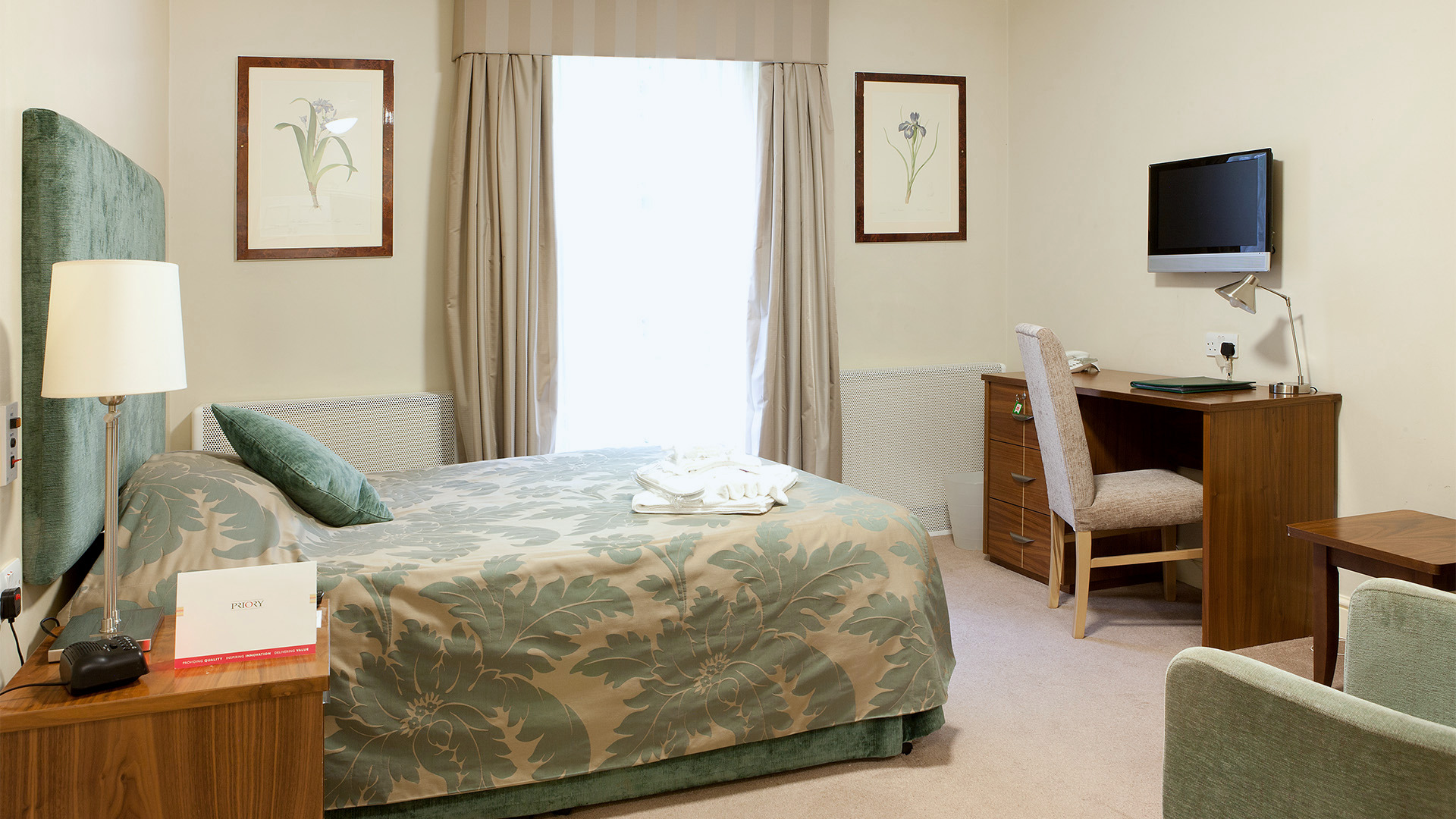
Priory Hospital North London 3 photos

Comparison facts and sources
Private mental-health and addiction hospital offering inpatient, day-care and outpatient treatment, with placement determined through clinical assessment. · Grovelands House, The Bourne, Southgate, London N14 6RA is the exact provider-published address. This profile represents Priory Hospital North London, not Priory's wider UK hospital, clinic or residential-home network.
- Published fee information
- Quote required
- Before admission
- Confirm the exact North London pathway, age eligibility, clinician and current availability. Anchor starting prices differ between current official pages: £124 on the program page and £155 in the comparison table. Assessment fees and temporary online-program offers are separate from a hospital admission quote.
- Continuing care
- Transform includes 12 months of free aftercare for the patient and family. Priory describes weekly group aftercare for many addiction packages.
Source record · October 19, 2026
Official North London programs, assessment scope and selected price descriptions reviewed October 19, 2026. Published Anchor figures differ; confirm a current written quote and individual clinical suitability..
- https://www.priorygroup.com/locations/individuals/priory-hospital-north-london
- https://www.priorygroup.com/addiction-treatment/how-much-does-rehab-cost
- https://www.priorygroup.com/addiction-treatment/services/transform
- https://www.priorygroup.com/about-us/payment-and-funding-options
- https://www.priorygroup.com/addiction-treatment/services/anchor
- https://www.priorygroup.com/private-mental-health-assessment
Luxury rehab comparison · Fees and inclusions · Selection methodology
Priory Hospital North London is a private mental-health and addiction hospital at Grovelands House in Southgate. The official location page lists treatment for addictions, depression, anxiety, stress and obsessive-compulsive disorder, along with adult autism assessments.
Treatment and services
Campus-specific addiction care includes Transform 28, a 28-day inpatient program; Reset 7/10, a seven-to-ten-day medically assisted detox; and Anchor one-to-one outpatient therapy. The hospital also provides mental-health treatment, with placement based on assessment.
Admissions, duration and payment
The local hospital number is 020 8882 8191 and the central treatment-inquiry line is 0330 056 6041. Self-pay and eligible private medical insurance are accepted; the location page does not publish one universal weekly fee.
North London’s specialist setting and OCD pathway
The North London hospital description identifies a hospital in Grovelands House, Southgate, with inpatient, day-patient and outpatient services. Its specialist OCD and body dysmorphic disorder pathway is particularly relevant when comparing this location with a general addiction program. Priory describes cognitive behavioral therapy centered on exposure and response prevention, alongside compassion-focused work, with up to two individual appointments weekly with a BABCP-accredited therapist.
That is a provider description of a particular pathway, not a promise that every admission receives the same therapy schedule. Ask whether the specialist team would oversee the proposed treatment, how exercises are agreed with the patient, and what support is available between appointments. The hospital also describes a consultant psychiatrist, therapy keyworker and key nurse within its inpatient model. Clarify the responsible clinician and frequency of review for the intended ward. A private bedroom or parkland setting may affect comfort, but the assigned clinical pathway should drive the decision.
Comparing depression care without assuming an overnight stay
The hospital’s depression information describes assessment followed by an appropriate combination of therapy, medication where indicated and support for daily functioning. The available settings include inpatient, day and outpatient care. A diagnosis alone does not determine which setting a person needs.
For someone hoping to remain at home, useful questions concern appointment frequency, the clinician reviewing medication, and how the team responds if symptoms worsen between visits. For an inpatient admission, ask how sleep, eating, activity, relationships and practical responsibilities will be included in the plan. The page describes private bedrooms with en-suite facilities, but room arrangements and availability should be confirmed for the actual admission. Treatment goals should be specific enough to review together: for example, managing everyday tasks or returning gradually to work. No published program description can establish an individual recovery timetable before assessment.
Anxiety treatment and everyday responsibilities
Priory’s North London anxiety page also describes care matched to symptoms and severity, using psychological treatment and medication when appropriate. This makes the practical demands of the proposed pathway worth discussing before choosing a hospital stay. Someone considering day treatment needs a workable journey to Southgate and a plan for the hours spent at home.
Bring examples of the situations that anxiety is preventing you from managing, previous treatment, current prescriptions and any difficulty attending appointments. Ask which therapy is proposed, why it fits the presenting problem, and how progress will be assessed. The hospital’s information describes different visiting arrangements for mental health and addiction patients; a family should check the rules for the relevant ward rather than apply one timetable across the hospital. The aim is to understand the actual care arrangement, including support and contact outside scheduled therapy, before making travel or work commitments.
Adult autism assessment is a separate service
The London autism assessment page outlines screening, developmental history, structured assessment, multidisciplinary review and feedback. The main North London hospital page identifies adult autism assessment. Broader references to children in London do not establish that this particular hospital accepts every age group.
The assessment page advertises a therapist or psychologist route from £2,222 and a psychiatrist route around £2,500, with different components and possible consultant variation. It says the initial mental health assessment is additional. These figures should be checked against a written quote for the intended clinician and location.
Ask which developmental records would help, whether a relative or another informant can participate, and what happens if childhood records are unavailable. Request the expected report, feedback arrangements and any recommendations for accommodations or further support. Autism assessment is not an addiction rehabilitation course or a treatment intended to remove an autistic identity. Neither a screening questionnaire nor the published assessment sequence establishes a diagnosis on its own.
What Transform 28 includes
Transform 28 is Priory’s named 28-day inpatient addiction program, advertised from £21,813. Its description combines individual and group work, recovery activities and a 12-step approach. Medically assisted detox can be included when clinically needed; the program describes up to ten days of detox within the pathway, rather than an extra universal ten-day stay for every patient.
Before booking North London, establish how the initial assessment changes the daily plan, what individual appointments are included, and how physical or mental health needs will be coordinated. Ask how the team approaches someone who has previously tried a 12-step program or prefers to discuss additional recovery supports.
Transform also describes twelve months of free aftercare for the patient and family. That is a continuing-support benefit with its own arrangements, not twelve additional months of residential treatment. Obtain the local aftercare timetable and clarify which appointments, medication reviews or other services would require separate payment.
Reset 7/10 and planning beyond withdrawal
The Reset 7/10 program is a shorter medically assisted inpatient detox pathway. Priory advertises starting prices of £6,540 for seven days and £8,722 for ten days. The appropriate duration and suitability still require clinical assessment; a package name cannot predict an individual withdrawal course.
The published model includes round-the-clock monitoring during the stay. Discuss the substances involved, previous withdrawal complications, existing prescriptions and relevant medical history with the admitting team. Do not change medication or attempt to fit withdrawal into a travel timetable before obtaining clinical advice.
Reset should be compared with Transform by purpose as well as price. A short stabilization stay does not provide the same amount of longer-term therapy as a 28-day program. Ask what follows discharge, who will provide ongoing treatment, and whether those appointments have been arranged. A clear next step matters even when the person does not require a longer inpatient stay.
Anchor outpatient therapy and the published price difference
The dedicated Anchor 1:1 page describes flexible individual addiction therapy, generally weekly, online or in person. It specifies 50-minute sessions and advertises a starting price of £124. Priory’s separate addiction price comparison lists Anchor from £155 per session. Those current descriptions differ; neither amount should be treated as a confirmed North London quote without checking.
Ask for the session length, clinician, location, price and cancellation terms in writing. Clarify whether the proposed appointments are online or at Southgate, and whether assessment or psychiatric review is charged separately. Anchor may suit an assessed outpatient plan, but a weekly therapy appointment is not medically supervised detox.
It is also useful to agree how the therapist will review progress and what would prompt a different level of care. Flexible scheduling should still produce a clear treatment plan rather than an open-ended series of appointments without shared goals.
Elevate 12 is an online program
Elevate 12 is a twelve-week online addiction program listed by North London. Priory describes evening groups on Tuesdays and Thursdays from 6:30 to 9:00 p.m., plus a weekly individual appointment and subsequent aftercare. It does not include an overnight stay at Grovelands House.
The current page advertises a standard price of £4,128 and a £3,302 promotional price for qualifying new self-paying patients starting in November. The offer requires commitment to the full program and payment in advance, has restrictions on combining offers, and can be withdrawn. It is not a permanent reduced tariff or a price for inpatient care.
Before enrolling, check the applicable start date and terms, the time zone, attendance expectations, privacy at home and arrangements for missed sessions. The clinical assessment should also establish whether remote evening treatment provides enough support. Online convenience does not make this pathway suitable for every withdrawal risk or urgent mental health need.
Understanding the £49 and £99 assessment options
Priory’s private mental health assessment service separates a £49 digital questionnaire review from a £99 virtual therapist appointment. These are self-funded routes intended to guide people toward suitable support. They are not the same as an autism diagnostic assessment or a consultant psychiatric evaluation.
The digital route requires English reading and writing, typically takes 45–60 minutes to complete, and does not include a written report. The virtual route is approximately 45 minutes and includes a summary with recommendations. Priory states that these routes are not for people in crisis; the virtual option also excludes medication reviews, complex needs and those seeking a psychiatric diagnosis.
That distinction prevents an inexpensive assessment headline from becoming a misleading estimate of the cost of treatment. Someone using private medical insurance is directed to discuss a separate access route. Ask which assessment is needed for the particular North London service before paying for an appointment that may not answer the clinical question.
Recovery 360 monitoring and privacy choices
Recovery 360 combines a Bluetooth breathalyzer and app with clinician review. Priory describes weekday monitoring of results and activity, messaging, and contact when support is needed. An independent three-month pathway is advertised at £1,012, while qualifying completed treatment programs can include access. Confirm eligibility and the included period for the actual program.
The distinction between real-time device information and staff availability is important: weekday clinical review should not be interpreted as continuous emergency observation. Agree what happens after a missed reading, concerning result or message outside monitored hours, and what other clinical care remains necessary.
The companion app allows a patient to choose a supporter and control the information shared; private clinician messages remain separate. Families should discuss those choices openly. Monitoring should support an agreed recovery plan rather than become an assumption that relatives receive every clinical detail or can replace professional follow-up.
Making aftercare workable after Southgate
Priory’s aftercare guidance describes preparing for life after treatment, recognizing personal triggers, maintaining routines and drawing on family or peer support. For a patient traveling to North London, the practical question is how that support continues after returning home.
Before discharge, ask for the next clinical appointment, the provider responsible for any prescriptions, and a plan for responding to renewed substance use or worsening mental health. If aftercare groups are included in the selected package, establish whether attendance is online or in person, how to join, and what happens if the original time is unsuitable.
Family support can be helpful without making relatives responsible for treatment outcomes. Agree what information the patient wishes to share and what help loved ones can realistically provide. A list of recovery resources is more useful when linked to a specific timetable, contact and follow-up plan than when left as general advice for the end of a stay.
Sources and verification
Official sources checked September 13, 2026. Services, eligibility, availability, fees and coverage can change; confirm current details directly with the provider.