Pacific Shores Recovery


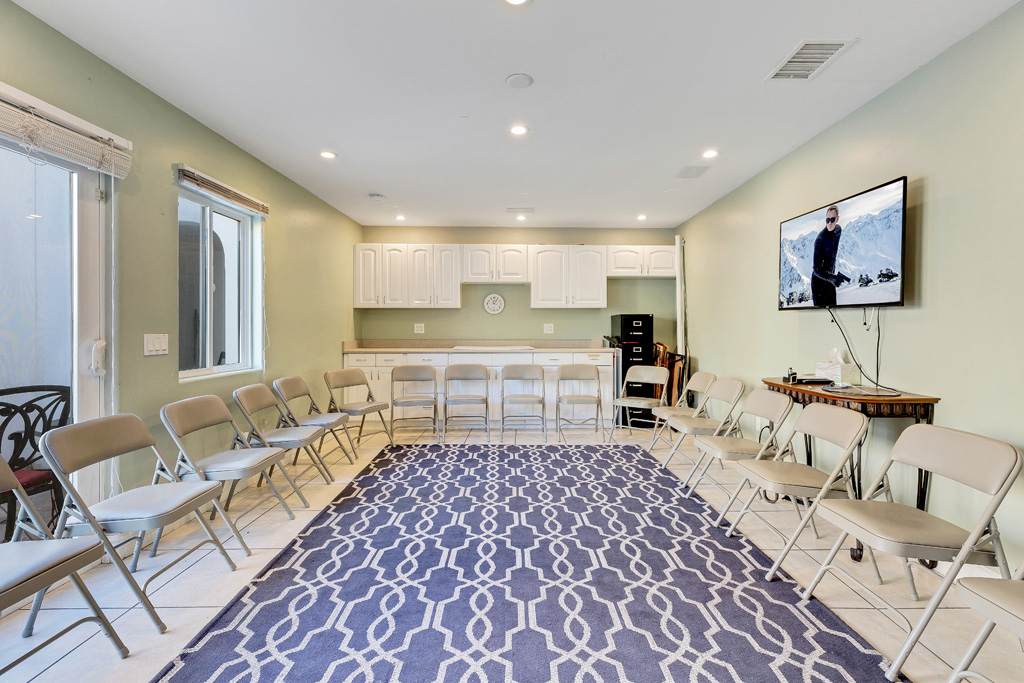
Pacific Shores Recovery 3 photos


Comparison facts and sources
Newport Beach addiction provider with separate inpatient and outpatient sites, plus virtual care. Nearby-city service pages are not evidence of separate campuses. · Newport Beach: inpatient at 3309 Clay Street; outpatient at 434 Old Newport Boulevard. Direct 949-390-6176; admissions 866-210-6430.
- Published fee information
- Quote required
- Before admission
- Duration guidance was available through current official search retrieval, while one direct article fetch failed; this is not a closure signal. Individual benefits, costs, taxes, campus-specific service eligibility and continued-care arrangements require confirmation.
- Continuing care
- Discharge work includes a pre-discharge triggers assignment, relapse-prevention planning, insurance/aftercare coordination, meetings and alumni connections; outpatient or sober-living arrangements are individual.
Source record · October 17, 2026
Scoped official-source review on October 17, 2026; fields outside this review and individual eligibility/costs remain unverified.
Luxury rehab comparison · Fees and inclusions · Selection methodology
Pacific Shores Recovery is an addiction-treatment provider serving Orange County, California. Its current official site describes its facility as being in Newport Beach, near Costa Mesa, so it should not be represented as a confirmed Costa Mesa street-address campus.
The provider lists detoxification, residential treatment, intensive outpatient care, virtual treatment and transitional living. It says program length can vary with clinical needs; general references to 30 to 90 days are not a guaranteed stay.
Pacific Shores publishes 949-390-6176 as a direct number and 866-210-6430 for admissions. Its current official homepage lists separate inpatient and outpatient locations at 3309 Clay Street and 434 Old Newport Boulevard in Newport Beach. It works with TRICARE, TriWest VA, Aetna, Cigna, Anthem, Blue Cross Blue Shield and other plans, subject to benefit verification; no standard bundled fee or tax schedule was found.
Choose the correct Newport Beach program
Pacific Shores publishes separate Newport Beach locations for inpatient services and outpatient treatment. That distinction matters when arranging an assessment, accommodation, or transport: the main admission address should not automatically be used for every appointment. Confirm the accepting program and the address attached to the written treatment plan before traveling.
The official provider homepage also identifies insurer relationships, including in-network wording for TRICARE, TriWest VA, and Aetna. Other listed plans still require individual verification. Ask the provider and insurer to confirm the relevant location, service, authorization, and patient contribution. For a plan involving both treatment and accommodation, request separate charges and coverage decisions. Acceptance of an insurance brand does not establish that every program, housing arrangement, or length of stay is covered. These practical details are especially important when moving between the residential and outpatient portions of the service.
Medical detox starts with an individual evaluation
The detox page describes a medical evaluation on arrival, medication when appropriate, and monitoring during withdrawal. It says clinicians and detox staff are available around the clock. An applicant should still establish which medical needs the program can accept and which would require hospital-level assessment or another service.
Use the medical detox description to ask who performs the evaluation, which professionals are physically present overnight, and how additional medical support is arranged. Share previous withdrawal complications, current medication, and other health conditions during screening. The clinical team should explain the proposed monitoring and transfer arrangements rather than rely on assurances about comfort. Also confirm what happens after withdrawal support: continuing residential treatment, another level of care, and ongoing prescriptions are separate planning decisions. Detoxification should not be treated as a complete recovery program or a fixed timetable that every person will follow.
Residential care, accommodation, and duration
Pacific Shores describes a residential routine combining individual and group therapy, 12-step principles, and complementary activities. Its accommodation information includes private and shared options. Ask which room is actually available, whether the price differs, and how the schedule is adjusted when someone needs additional medical review or time away from group activities.
The residential program page lists several stay options, including longer programs. These are available formats rather than proof that one duration is clinically necessary for every resident. Request the reasons for the recommended starting length and the points at which progress, risks, and community support will be reviewed. A useful plan explains how treatment intensity changes and what would justify an extension. It should also address practical constraints such as work, caregiving, and funding without allowing those concerns to substitute for an assessment of the care the person requires.
Individual clinical work within the wider program
The clinical-care page describes individual meetings with a therapist and case manager, alongside groups and coordinated treatment planning. This provides a basis for asking how the person’s goals will be tracked across the different parts of care. Case management, psychotherapy, and medical prescribing are distinct responsibilities even when professionals work together.
Ask who will coordinate the plan, how often individual appointments are scheduled, and how the team responds when a goal or level of support needs to change. The clinical-care overview also uses broad wording about services in one location, while the current homepage lists two addresses. Confirm where each appointment will happen rather than assuming all care takes place inside the residence. For someone entering with an existing therapist or prescriber, agree how relevant information will be shared with consent and which professional remains responsible during the transition.
Understanding the published team roles
The staff information identifies Dr. Mike Kelly, DNP, as psychiatric director and Brad Kingma, LMFT, as clinical director. The DNP credential should not be relabeled as an MD psychiatrist qualification. Job titles and professional credentials help clarify responsibilities, but they do not establish how often a particular professional will see an individual client.
Use the published team information to ask which clinician will assess mental health concerns, who can prescribe medication, and who provides ongoing therapy. If a specific form of treatment is recommended, ask about the assigned practitioner’s training and supervision rather than assuming every staff member offers it. Confirm how coverage works during evenings, weekends, and leave. Families can also ask which contact is appropriate for logistical questions and which professional should receive a clinical concern, while respecting the client’s consent and privacy choices.
Outpatient treatment and its practical demands
Pacific Shores describes intensive outpatient and standard outpatient programs for people who live outside the clinical treatment setting. The outpatient page publishes a weekday IOP model and a lighter program on three days per week. It also describes individual and group counseling, life-skills work, recovery meetings, and case management.
These schedules need confirmation for the particular admission. Ask how many hours are required, which sessions are essential, and how appointments fit with travel, work, or caregiving. The outpatient program description mentions accommodation and optional access to residential amenities. Those arrangements should be priced and explained separately; attending treatment does not automatically provide a residential level of supervision. Screening should consider what happens between appointments, including access to support and the ability to follow the plan at home. Moving to outpatient care should involve a clinical handover rather than only a change of timetable.
Evening IOP and work commitments
The evening intensive outpatient program is presented for people who need structured addiction care while managing daytime responsibilities. The provider describes sessions on several evenings, with individual and group work, coping skills, and relapse-prevention planning. An evening format changes when treatment happens; it does not provide overnight observation or make every work schedule compatible with care.
Before choosing the evening program, ask for the actual attendance requirement, start and finish times, and arrangements for any appointments held outside those hours. Consider the journey after a full workday, responsibilities at home, and whether there is private time to complete treatment tasks. Discuss how missed sessions are handled and what happens if the person needs more support. The decision should reflect clinical suitability and the ability to participate consistently, rather than an assumption that maintaining every existing commitment is always the best starting point.
Virtual treatment and location eligibility
Pacific Shores’ virtual IOP includes online individual and group sessions, workshops, family participation, and case-management support. The provider describes weekday scheduling and the need for a reliable connection, a suitable device, and a private place to participate. Those requirements can be substantial for someone living in shared accommodation or traveling frequently.
The virtual program page does not establish unrestricted eligibility in every state. Confirm where the person may physically be during sessions, which clinicians can provide care there, and how emergencies or disconnections are handled. Ask whether medication appointments are included and whether any part of the assessment must happen in person. A remote format should also have clear privacy expectations for groups. If the home environment does not allow confidential participation or the person needs closer supervision, discuss another setting rather than relying on convenience alone.
The veterans program and co-occurring concerns
The veterans service describes addiction treatment that can address accompanying concerns such as trauma symptoms, depression, and anxiety. Its published approach includes established therapy methods and attention to military experience. This is not evidence that every veteran has the same diagnosis or that every applicant needs residential treatment.
When considering the veterans program, ask how the assessment distinguishes substance-use treatment needs from other medical or mental health concerns. Establish which professionals have relevant experience and whether a proposed trauma therapy is appropriate at the current stage of treatment. If care is being coordinated with an existing military or veterans health team, agree how records and follow-up will be handled. Referral and payer authorization are separate from clinical acceptance, so obtain those decisions explicitly. A program page or insurer logo should not be treated as confirmation that every veteran’s stay will be funded.
Family support can have its own purpose
Pacific Shores describes private and group family work focused on communication, boundaries, and understanding substance-use problems. The family page says relatives may seek support even when their loved one is not currently in the treatment program. This can be relevant when a family needs help with its own decisions and relationships rather than access to another person’s confidential treatment information.
Ask the family program which sessions are available now, how participation is arranged, and whether separate charges or coverage rules apply. When family work forms part of a client’s plan, agree the purpose, consent, and information-sharing boundaries in advance. Discuss whether joint sessions are appropriate for the relationships involved and whether separate support would be more useful. Family involvement should support clear communication and realistic responsibilities; it should not make relatives responsible for guaranteeing another person’s recovery or require unsafe contact.
Recovery housing is a separate decision
Pacific Shores describes sober living homes in the Newport Beach and Costa Mesa area, with house management, recovery expectations, and accountability arrangements. Its housing page explicitly distinguishes those homes from clinical treatment centers. A house manager’s availability should therefore not be interpreted as continuous nursing or medical supervision.
Before choosing recovery housing, review the residence rules, testing policies, room arrangements, transport to treatment, and what happens if someone needs a different level of support. Ask about rent, deposits, meals, and notice requirements separately from therapy fees. Establish whether attendance at a particular outpatient program is required and who coordinates any clinical concerns. Housing may offer structure between appointments, but it does not change the clinical capabilities of an outpatient program. The combined plan should be suitable for the person’s needs and affordable for the expected period, with a realistic next housing option.
Explore other California providers and compare alcohol treatment options by clinical setting.
Official provider information reviewed October 19, 2026. Published program options, staff credentials, and housing boundaries are attributed to the provider; individual availability and coverage require confirmation.
Sources
Sources checked October 17, 2026.