Olympia House Rehab


Olympia House Rehab 3 photos

Comparison facts and sources
Adult residential substance-use treatment with supervised residential care, individual, group and family therapy, peer support, withdrawal-management pathways, IOP and alumni support. · 11207 Valley Ford Road, Petaluma, California; 38-bed residential facility on a 140-acre rural campus.
- Published fee information
- Quote required
- Before admission
- Confirm the substance-specific withdrawal-management setting, physician supervision, authorized length of stay, room arrangement, insurer network status and patient responsibility before admission.
- Continuing care
- Each resident develops an aftercare action plan. Olympia House publishes IOP, an alumni group and free post-treatment support for graduates of its residential and IOP programs.
Source record · October 15, 2026
Provider-published information checked October 15, 2026. Confirm current program fit, admission criteria, duration, payer arrangements and itemized patient cost directly with admissions.
Luxury rehab comparison · Fees and inclusions · Selection methodology
Provider overview
Olympia House Rehab is a 38-bed residential drug and alcohol treatment facility on 140 acres at 11207 Valley Ford Road in Petaluma, California. The provider describes an adult, countryside program for substance-use recovery rather than a psychiatric hospital or skilled-nursing facility.
Treatment and services
Current provider pages list individual psychotherapy, drug and alcohol counseling, group and family therapies, peer-support options, outdoor activities and 24-hour residential supervision. Its public detox descriptions use mixed language: the homepage calls some alcohol and prescription-drug pathways non-medical and says outside medical providers or facilities may be involved, while the dedicated detox page describes medication-assisted care under consulting physicians. Ask admissions to confirm the exact withdrawal-management setting and clinical supervision for the substance involved.
Admissions, duration and payment
Call 888-795-1965 for assessment and benefit verification. Olympia House lists Aetna, Anthem Blue Cross, Blue Shield of California, Carelon Behavioral Health, Kaiser Permanente, Optum and TriWest as current in-network providers, and says other PPO plans may provide out-of-network benefits. Program duration and out-of-pocket cost are individual; no standard self-pay tariff or guaranteed stay was verified.
Confirm eligibility before arranging the residential stay
Olympia House’s admissions criteria describe an adult program for people with a drug or alcohol problem who can participate meaningfully in treatment. The page excludes active withdrawal requiring medically managed detoxification, medical needs beyond its licensed capacity and immediate risk to the person or others. These limits matter when interpreting the site’s broader detox descriptions. Ask the clinical team to confirm the appropriate first setting before traveling or changing substance use or medication.
Admission starts with questions about health, substance use and treatment goals, together with benefits verification. The provider lists several in-network insurers and possible out-of-network PPO arrangements, but approval and personal costs are plan-specific. Obtain the exact financial assumptions for your placement. The current packing guidance includes prescribed medicines in labeled containers and discourages phones and laptops during the first week, with some business-related exceptions. Confirm the current communication rules and any needed accessibility adjustments before arrival.
Residential care includes different kinds of individual support
The residential program description separates psychotherapy with a mental health professional from chemical-dependency counseling. Both are presented alongside daily groups and aftercare planning. Its published session-frequency descriptions are not fully consistent: different sections give different weekly totals. Request the actual timetable for your proposed stay and distinguish psychotherapy, substance use counseling and other staff contact rather than adding every published number together.
The program describes a treatment plan developed through assessment and communication with the resident. That plan should connect sessions to specific goals, such as managing cravings, addressing a co-occurring concern or preparing for a return home. Ask how often it is reviewed and what happens if the current approach is not meeting those goals. Activities and peer meetings add structure to the week, but they should not be counted automatically as individual clinical appointments. This distinction helps compare the practical service with other residential options.
Read the detox description alongside the admission limits
The dedicated detox page describes medication-assisted care under consulting physicians, including support associated with alcohol or opioid withdrawal. Its language is broader than the admission exclusions and some non-medical descriptions elsewhere on the site. A prospective resident therefore needs a specific answer about which withdrawal needs Olympia House can manage directly, which clinician is responsible and when another medical provider or facility is required.
Give an accurate account of recent substances, prescribed medicines and previous withdrawal complications. Ask whether medical stabilization must happen elsewhere before residential admission, and who will arrange the handoff. A reference to consulting physicians should not be interpreted as confirmation of an on-site hospital or continuous physician presence. Similarly, a service description cannot establish that a particular withdrawal will be painless or risk-free. Clarifying the actual setting and monitoring first is more useful than choosing a program from a broad detox label.
Individual counseling starts with the person’s priorities
Olympia House’s individual counseling information describes a therapeutic team that includes mental health and alcohol-and-drug counseling roles, with discharge planning as another part of the process. The program discusses using different approaches according to motivation, relationships and co-occurring concerns. Ask who will be your primary contact and how the professionals coordinate when their sessions address related issues.
A useful initial discussion identifies both immediate needs and practical goals for life outside treatment. For example, work difficulties, family conflict or an existing mental health diagnosis may require different kinds of support. A condition listed on a general counseling page does not mean the center supplies every medical specialty associated with it. Clarify which care occurs directly, what can be coordinated with an outside clinician and what would make another setting more suitable. The treatment plan should make those responsibilities visible and allow the resident to understand why a particular approach is proposed.
Groups and peer meetings serve different purposes
The group schedule describes clinical sessions focused on coping skills, emotions, relationships, trauma and relapse prevention. It also lists peer-support choices including AA, NA, LifeRing, Refuge Recovery and SMART Recovery. This range can matter to someone seeking an approach compatible with their preferences, but the current availability of each meeting should be confirmed rather than inferred from a permanent website list.
Ask how clinician-led groups differ from peer meetings, how groups are selected for a resident and what is expected when discussing personal experiences. The site gives frequencies for several activities, but a current weekly schedule is the clearest way to understand the actual program. Someone who finds a topic distressing or has difficulty participating should know how to raise that concern privately with their therapist. Groups can complement individual care; their inclusion does not establish that every listed method is suitable for every person or provides the same type of support.
Family sessions and visits require clinical coordination
The family therapy page describes education, communication and problem-solving involving the people the resident considers family. Its current schedule places a multi-family group on alternate Sundays, with general visiting time on the other Sundays. Attendance and visits require prior approval from clinical staff. Relatives should confirm the current date and arrangements before booking travel.
Family involvement can have several aims: understanding the treatment plan, discussing practical boundaries or preparing for a change in living arrangements. Agree on the purpose of a session in advance and clarify what information the resident consents to share. A group involving several families is different from a private family appointment, so ask which format is being offered. If a relationship is unsafe or contact would be unhelpful, raise that issue with the team. The page recognizes varied family structures; prospective residents can ask how the program includes chosen support people and accommodates distance.
The outpatient program has a defined weekly schedule
Olympia House’s IOP description is open to appropriate adults who have completed its residential program and people who have not previously attended. The published timetable is Monday, Wednesday and Friday from 9 a.m. to noon. It describes nine weekly group hours, one individual-counseling hour, random substance testing and monthly family-support meetings. The suggested course is eight weeks, with individual needs and insurance influencing the plan.
Confirm the current delivery setting and schedule before arranging transportation, work or childcare. This is outpatient care, so accommodation and support outside the sessions need separate planning. Ask who reviews medication, how attendance is handled and what happens if more intensive support becomes necessary. The program’s initial assessment covers substance use and mental health, allowing goals to be selected with the participant. For someone stepping down, identify the first outpatient appointment before residential discharge so the transition is an actual arrangement rather than an unconfirmed intention.
Aftercare includes conditional return visits
The Aftercare Action Plan describes individualized goals and continuing contacts after treatment. Olympia House also advertises short return stays for graduates: one within the first 90 days and then twice a year, described as three days and two nights without a treatment charge. The source requires the graduate to be sober at the time. These visits are conditional maintenance support, not guaranteed readmission for acute withdrawal or another emergency.
Ask about current eligibility, booking, availability and any personal or travel expenses before relying on this offer. The same page describes a free online alumni group for people who successfully complete residential or IOP treatment. Alumni contact, a brief return visit and ongoing clinical care have different roles. A complete plan should specify any separate therapy, prescribing, housing or local support needed. If returning home is difficult, discuss alternatives and named contacts before discharge rather than expecting a future visit to resolve all continuing-care needs.
The countryside setting and room arrangements
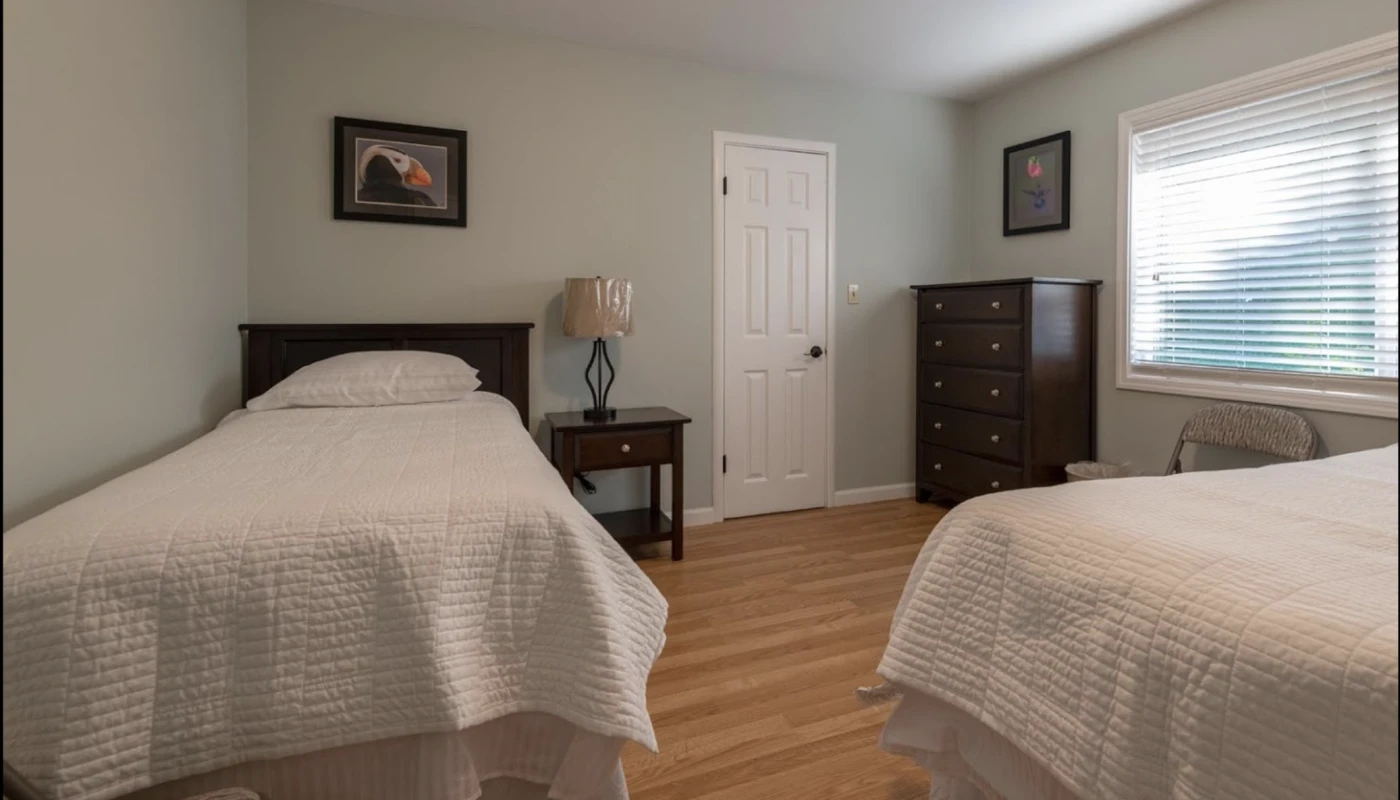
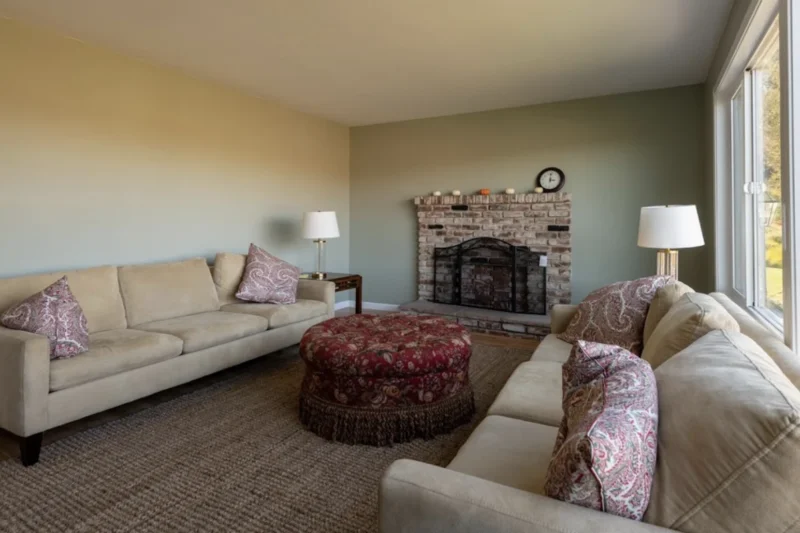
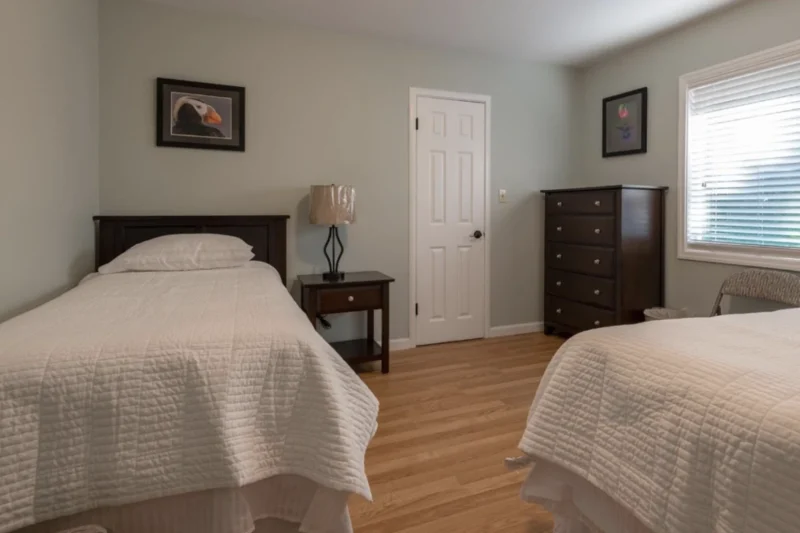
The facility information describes agricultural land near Petaluma, walking areas, communal activities, exercise equipment and vegetarian or vegan meal options. Its room descriptions contain differing numbers, so the useful question is what accommodation is actually available for your admission. Confirm whether a room is private or shared, the bathroom arrangement and whether any requested upgrade changes the quoted price.
Gardening, animal care, art, music and movement feature in the setting. Ask which activities are optional and how mobility, allergies, dietary needs or other limitations are accommodated. Countryside surroundings may affect transport and the ease of attending outside medical appointments, so discuss those logistics when relevant. A comfortable room and access to outdoor space are practical features, but they do not define the amount of clinical care. Compare them alongside the treatment schedule, eligibility and medical arrangements, with the needs of the individual taking precedence over assumptions about a rural retreat.
Clarify the medication plan and prescribing responsibilities
The medication-assisted treatment page lists medicines used in addiction care, including buprenorphine-containing treatment and naltrexone. It indicates that medication can be part of the program rather than assuming an entirely medication-free approach. The website is not a substitute for a prescriber’s explanation of which option is appropriate, its purpose, risks or the timing of treatment.
Before admission, provide a current medication list and ask how existing treatment will be reviewed. Clarify whether the center’s consulting clinician prescribes directly, whether another provider is involved and how prescriptions continue after discharge. Medication for acute withdrawal, ongoing treatment of a substance use disorder and emergency overdose response have different purposes; they should not be treated as interchangeable parts of a generic detox package. Do not alter an established prescription to fit an assumption about the program. An individualized plan should include the resident’s questions and a clear handoff to the next prescribing clinician.
Use the treatment rationale to assess fit
Olympia House’s published treatment philosophy emphasizes research, clinician judgment and patient consent. For a prospective resident, the practical question is how those principles shape the proposed plan. Ask why particular clinical methods are recommended for your presentation, how progress will be reviewed and what alternatives can be considered if you have concerns.
The page combines clinical approaches with broader ideas about wellbeing and spirituality. These elements need not have identical goals or evidence, and participation should be explained clearly. A reference to research on a therapy is also different from a measured outcome for Olympia House residents. Avoid interpreting general treatment statistics as an individual forecast. More useful comparisons include the actual professionals involved, frequency of relevant appointments, coordination of co-occurring care and arrangements after discharge. A plan that explains these details allows a person to evaluate the service on its own terms, alongside accommodation, location and cost.
Additional provider information checked October 18, 2026 against Olympia House publications. Conflicting descriptions of withdrawal care, appointment frequency and room totals are identified rather than silently resolved. Admission and medication decisions require confirmation with the treating professionals.
Sources and verification
Official provider overview; residential program; detox information; admissions and insurance. Checked October 10, 2026. Provider-published information; not an independent clinical assessment.