Laguna Treatment Center


Laguna Treatment Center 3 photos

Comparison facts and sources
Adult Orange County chemical-dependency recovery hospital in Aliso Viejo providing hospital-based medical detox and 24/7 inpatient/residential addiction treatment. It is one American Addiction Centers campus, not the wider network. · 24552 Pacific Park Drive, Aliso Viejo, California 92656
- Published fee information
- Quote required
- Before admission
- The published duration ranges are averages, not guaranteed stays. Network status can vary by specific plan, and this profile should remain limited to the Aliso Viejo campus rather than other AAC facilities.
- Continuing care
- A case manager can arrange transitional supportive housing and enrollment in an outpatient program, coordinate transport to an airport or local sober-living home, and maintain contact during transition. Alumni support is also encouraged.
Source record · October 15, 2026
Provider-published information checked October 15, 2026. Confirm eligibility, level of care, benefits, authorization, network status, estimated personal responsibility and aftercare directly with Laguna.
Luxury rehab comparison · Fees and inclusions · Selection methodology
Laguna Treatment Center is an adult substance-use treatment facility at 24552 Pacific Park Drive in Aliso Viejo, California. The provider’s current name is Laguna Treatment Center; it operates as a licensed chemical-dependency recovery hospital rather than under the legacy “Laguna Treatment Hospital” label.
Medical detoxification and residential care
Laguna provides hospital-based medical detoxification and inpatient residential addiction treatment, including care for co-occurring mental-health conditions. Current provider guidance gives an average detox stay of 7–9 days and a residential range of 21–90 days, although assessment, medical necessity, progress and insurance approval determine the individual plan.
The facility is in-network with several major commercial insurers and accepts most private non-government insurance. Coverage, deductibles, co-payments and authorization are plan-specific. Costs also depend on level of care, length of stay and clinical needs; admissions provides an individual estimate rather than a universal self-pay price.
A hospital-based addiction program in Aliso Viejo
Laguna’s current provider overview describes a chemical-dependency recovery hospital within American Addiction Centers. The emphasis is adult addiction treatment with attention to co-occurring mental health needs. That description distinguishes this program from a private holiday residence or a general wellness retreat. It does not mean that every medical or psychiatric emergency can be managed there; the admissions team still needs to assess the person’s present condition and whether a different hospital service is required.
The provider describes physicians, nurses, counselors and case managers working across the service. Published workforce totals are not the number of clinicians assigned to one patient or present on every shift. Ask who is available overnight, how psychiatric input is arranged and how urgent medical changes are escalated. For someone with both substance use and another health condition, clarify which concerns can be treated on site and which require outside appointments. This is particularly relevant when comparing a hospital-based withdrawal setting with a residential program whose medical support has a different structure. The appropriate choice depends on assessed needs alongside comfort, privacy and location.
Structure, therapies and family participation
The American Addiction Centers facility profile describes individual counseling, groups, cognitive behavioral therapy, dialectical behavior therapy, motivational interviewing and other approaches. Its sample day includes meals, recovery meetings, clinical sessions, medication or vital-sign checks and evening reflection. The schedule is illustrative, so ask what a normal week includes for your level of care and how much individual therapy is planned. A list of available methods does not mean every patient receives every intervention.
The same profile explains that family contact depends on the patient’s permission to release information. Family therapy may take place by phone, video or an arranged in-person meeting, with the treatment team coordinating visits. A relative who is paying for care should not assume that payment gives unrestricted access to clinical records. Before admission, discuss the preferred contact person, what information may be shared and how urgent family concerns can reach the team. For residents with children or caregiving responsibilities, make a practical communication plan. Family participation can then be integrated into treatment without making promises about an open visiting schedule or automatic disclosure of confidential information.
Accommodation and activities within a treatment setting
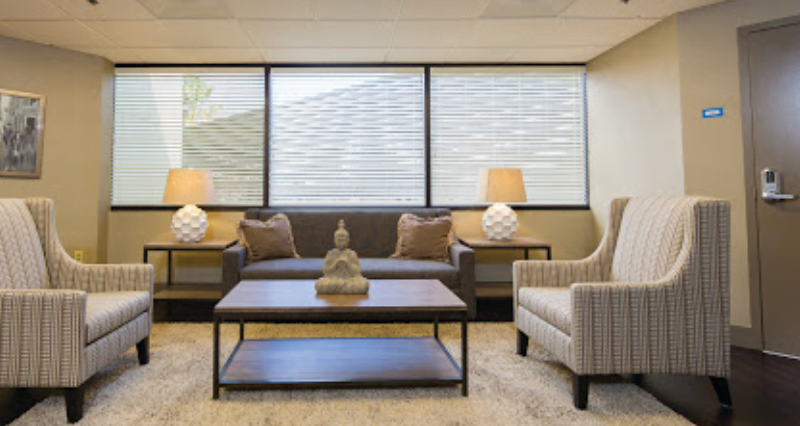
The network’s description of Laguna’s facilities identifies hotel-style accommodation, shared indoor and outdoor spaces, fitness facilities and a pool. It describes private-room upgrades as dependent on availability. A requested room type should therefore be confirmed in the admission agreement, including its price and any clinical reason that could change the allocation. Private accommodation should not be interpreted as one-client treatment or the absence of group programming.
The source also describes different peer-support approaches, including 12-step, Dharma and SMART Recovery options, alongside treatment tracks for particular groups. Ask which meetings are currently scheduled and whether an alternative is available when an approach does not fit your preferences. Recreation and comfortable surroundings have a different purpose from medical monitoring or psychotherapy. Participation may depend on stability, mobility, the schedule and individual clearance. Someone requiring accessible facilities or adjustments to physical activities should discuss them before arrival. When comparing programs, consider how the environment supports attending treatment consistently, rather than using the presence of leisure facilities as a measure of clinical suitability or likely outcome.
How the levels of care connect
Laguna’s current levels-of-care information describes medical detoxification, inpatient or residential care, virtual intensive outpatient treatment and continuing support. The stages involve different levels of structure and medical oversight. An appropriate plan may use more than one stage, but its sequence and duration should reflect assessment and progress rather than a fixed package selected only by the number of nights.
The provider describes nursing and medical support during inpatient care and case management for the transition afterward. Ask how the team decides that withdrawal has stabilized, whether further residential care is indicated and what needs to be in place before discharge. Relevant details include prescriptions, the next appointment, safe accommodation, transportation and a clinician who can review any new symptoms. If an outpatient service is proposed, establish whether it is Laguna’s own virtual program, another AAC facility or an independent local provider. Those are different arrangements with potentially different eligibility and costs. A written transition plan should identify the actual destination and responsible contact, rather than relying on a broad promise of a complete continuum.
Virtual IOP for eligible adults in California
The Laguna virtual intensive outpatient program is an outpatient option for adults with a primary substance use disorder across California. Its published group schedule is Monday, Wednesday and Friday evenings, from 6 to 9 p.m. The program also describes individual counseling every two weeks or according to clinical need, with family therapy when appropriate. Confirm the current schedule, time zone, clinician assignments and individual-session frequency before organizing work or childcare around it.
This pathway can follow residential treatment or serve as an initial placement for someone whose assessed needs are appropriate for outpatient care. It does not include a bed or continuous supervision. A prospective participant should have a workable place to join confidential sessions, reliable technology and a plan for support between appointments. Ask about location requirements, what happens if you travel outside California, and how the team responds to missed sessions or a worsening condition. Remote access can reduce travel, but the clinical decision remains whether this amount of support is sufficient. Confirm separately who manages medication and any medical or psychiatric appointments outside the group timetable.
Continuing care, alumni support and housing are different services
Laguna’s aftercare description covers treatment planning, community connections and alumni support. It also discusses outpatient and sober-living arrangements through Desert Hope, another AAC facility in Las Vegas. The source explicitly distinguishes that housing from an on-site Laguna sober-living program. A proposed referral should identify the actual city and provider; it should not be presented as accommodation included automatically with treatment in Aliso Viejo.
Someone returning home may need a different combination of local clinical appointments, medication follow-up, peer meetings and practical support. Ask the case manager which contacts have been confirmed, what information will be transferred with consent and who will follow up if an appointment falls through. Alumni events and the network’s app can provide connection, but they have a different role from scheduled clinical treatment. Housing costs, transport and outpatient charges also need separate clarification. For a move to another state or another facility, check the timing and admission criteria before leaving. The aim is a usable plan for daily life, with named contacts and realistic logistics rather than a list of possibilities.
Arrival, communication and expectations during the stay
The Laguna admissions FAQ describes intake paperwork, a belongings check, nursing assessment, tests and medical review. It states that patients receive a medical-provider evaluation within 24 hours and an evaluation under its psychiatric-assessment question within 48 hours. Confirm who performs each assessment and how an urgent concern is addressed sooner. The published average detox duration and residential range are planning guides, not an individualized medical recommendation or guaranteed discharge date.
The FAQ currently restricts personal electronics for the first five days, beginning the day after admission, followed by permitted use during free time under the facility policy. Arrange essential family, work or childcare communications in advance rather than assuming continuous access to a phone. Family visits are described in connection with scheduled sessions. Excursions are for eligible patients and should not be treated as an unconditional part of every stay. Give the team accurate information about recent substances, prescriptions and health concerns during assessment, and ask how medicines brought from home will be reviewed. These practical details can materially change whether the proposed stay fits the person’s responsibilities and needs.
Medication decisions beyond acute withdrawal
It is useful to distinguish medication used to manage immediate withdrawal from an ongoing medication plan for a substance use disorder. SAMHSA’s buprenorphine guidance explains that treatment duration is individualized and may be indefinite. This does not prescribe a medicine for any particular person or establish what Laguna will provide. It does show why a description of a short detox taper should not be taken as a universal rule that every medication must stop when residential care ends.
If you already receive medication for opioid use disorder, discuss it before admission and provide the prescriber’s details with consent. Ask whether the proposed plan continues treatment, changes it for a clinical reason or requires coordination with another service. The same planning should identify the follow-up prescriber and how gaps will be avoided when you return home. Do not stop or change a prescribed medicine simply to match a program’s marketing description. The appropriate plan requires a discussion with the treating professionals, including the person’s preferences, response to treatment, other medications and ongoing support.
Cost, commercial coverage and VA arrangements
The Laguna payment information describes commercial insurance, private payment, possible financing and VA Community Care arrangements. Exact costs depend on the level of care, length of treatment, clinical needs and policy terms. The site states that it is not in network with Medicare or Medicaid. Confirm your particular arrangement rather than assuming that a broad insurance statement or network-wide logo guarantees a covered admission.
Ask for the expected patient share after any deductible, coinsurance, authorization limit and separately billed service. If a private-room upgrade, transport or continued outpatient care is proposed, establish whether it is included in the estimate. Eligible veterans should confirm the relevant VA referral and authorization before relying on that funding route. Financing also requires its own terms, repayment schedule and total cost; availability is not the same as an affordable agreement. The payment page mentions several levels across the treatment continuum, so the written proposal should specify where each service takes place. A cost estimate should describe the actual plan and its assumptions, including what would happen financially if treatment is extended or changed.
Additional provider information checked October 18, 2026, using Laguna Treatment Center and American Addiction Centers publications. SAMHSA supplies the separate medication context. Program descriptions do not guarantee admission, coverage, a particular room or outcome; individual arrangements require confirmation.
Official information: admissions FAQ and typical length, levels of care, payment options and admissions. The facility lists 949-565-2377 on its admissions FAQ. Sources checked on October 10, 2026.