Iron Bridge Recovery Center


Iron Bridge Recovery Center 4 photos
Comparison facts and sources
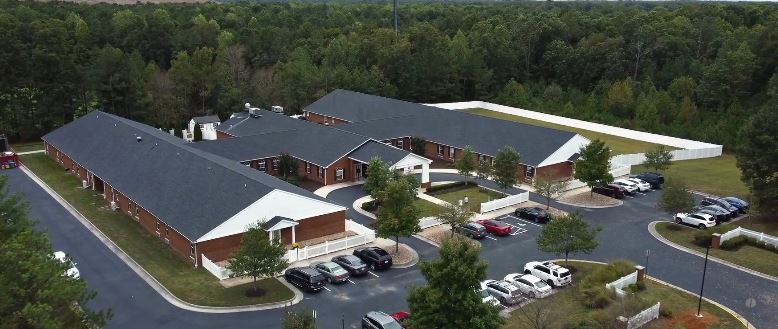
Chester campus with detox, residential and non-residential treatment pathways. Virtual IOP is remote care, not additional residential accommodation. · 6701 Court Yard Road, Chester, Virginia 23831; current official contact 804-729-8884.
- Published fee information
- Quote required
- Before admission
- Confirm the assigned care level, duration, room arrangement and coverage. Virtual IOP currently lists Monday, Tuesday and Thursday from 6–9 p.m.; verify time zone, physical-location eligibility and the current start date. Remote progress monitoring is not continuous emergency observation.
- Continuing care
- The provider advertises free alumni participation for treatment graduates, including weekly in-person or Zoom meetings, events, app access and check-ins. This is distinct from ongoing clinical care; confirm current arrangements.
Source record · October 19, 2026
Official Chester program and virtual scheduling descriptions reviewed October 19, 2026. Confirm individual suitability, attendance, accommodation and financial terms before admission..
Luxury rehab comparison · Fees and inclusions · Selection methodology
Iron Bridge Recovery Center serves Richmond-area clients from Chester, Virginia, with treatment for substance-use and co-occurring mental-health conditions.
Levels of care
The provider lists detoxification, residential treatment, partial hospitalization, intensive outpatient and virtual intensive outpatient care, dual-diagnosis treatment and a specialized program for veterans and active-duty service members. Residential treatment is typically 30 days, adjusted for individual need and progress. Other program placement and duration follow assessment.
Location and payment
Residential and outpatient services are listed at 6701 Court Yard Road, Chester, VA 23831. Iron Bridge says it accepts most major health-insurance plans and offers benefit verification; coverage and client costs are policy-specific. No universal weekly price is published.
A Chester program serving the Richmond area
Iron Bridge’s provider overview describes addiction treatment for adults, including people with co-occurring mental health concerns. The facility is in Chester, even though its program pages often use Richmond in their titles. For someone comparing travel options, the exact treatment address matters more than the metropolitan label.
The overview describes a continuum of services and private or semiprivate accommodation. It does not establish that every residential patient receives a private room. Ask which room arrangement is available, what personal or accessibility needs the facility can accommodate, and whether the proposed treatment is residential or attended during the day.
A useful comparison should identify the starting level of care and the reason for it. Detox, residential treatment and outpatient attendance have different purposes and staffing arrangements. The existence of several pathways within one organization does not mean that every patient must complete all of them or that all services are included in one price.
Medical detox and the transition into treatment
The detox page describes doctor-managed withdrawal care with licensed nurses and support available around the clock. Its purpose is medical assessment and stabilization when withdrawal requires that level of supervision. The appropriate plan depends on the substances used, symptoms, medical history and individual risk.
Before admission, explain previous withdrawal complications, recent substance use and current medication. Ask which needs the Chester facility can manage and when hospital assessment is necessary. A list of substances on a detox page does not establish that the same medication or withdrawal timetable applies to everyone.
Discuss the next stage before detox ends. The team should explain whether residential care, day treatment or another service is recommended, how the handover will work, and whether the insurer requires a separate authorization. Stabilization and longer-term therapeutic work are related but distinct parts of care. Completing withdrawal management does not make ongoing recovery needs disappear.
Residential treatment and the 30-day description
Iron Bridge’s residential service is described as a coed program for adults. The provider commonly uses approximately 30 days when describing a stay, while explaining that individual needs and progress affect duration. It is a treatment estimate rather than a fixed requirement or guaranteed completion point.
The live-in setting provides a structured community away from daily pressures. Ask how the week combines group work, individual appointments, medical review, recreation and time for rest. A full residential day should not be interpreted as a full day of one-to-one therapy.
Families should also establish communication arrangements, visiting rules and the role of the patient in setting goals. Before booking, ask how progress is reviewed and what would support a transition to less intensive care. The best comparison is the proposed clinical plan and its fit with the person’s needs, not a promise that one month will resolve every problem.
What the partial hospitalization schedule includes
The dedicated partial hospitalization page describes 20 hours of programming each week. It also lists a weekly appointment with a primary counselor and a weekly appointment with a Mental Wellness Provider. Group content includes relapse and safety planning, family education, recovery resources and 12-step material.
PHP is a day-treatment pathway. Its name should not be taken to mean an overnight hospital admission, and a person’s accommodation outside sessions needs separate consideration. Ask for the assigned days and times, whether the individual appointments fall inside or outside the quoted group hours, and how medication follow-up is organized.
The decision between PHP and residential treatment should account for safety and support between visits, not simply the number of hours advertised. Discuss travel, work responsibilities and what happens if attendance becomes difficult. A written schedule makes it easier to judge whether the program can be followed consistently after a residential stay or as an assessed starting point.
Virtual IOP has a specific evening timetable
The current virtual intensive outpatient program lists sessions on Mondays, Tuesdays and Thursdays from 6:00 to 9:00 p.m. This is remote treatment, not an additional residential program. Confirm the time zone, the participant’s physical location, current eligibility and the actual start date before relying on that timetable.
Remote attendance requires a practical place to participate privately and a plan for interruptions or loss of connection. Ask how individual appointments, medication review and family involvement fit alongside the evening groups. The published page also describes Trac9 progress monitoring; a questionnaire or app should not be interpreted as emergency observation.
Discuss whether the home environment offers enough support outside sessions and how to reach the team when concerns arise. The convenience of evening access does not establish suitability for someone who needs withdrawal management, overnight supervision or urgent psychiatric assessment.
Co-occurring conditions require coordinated assessment
The dual-diagnosis page describes care for substance use and mental health concerns together. It identifies physicians, nurses, addiction counselors and licensed therapists within the treatment approach, with residential and partial hospitalization options discussed.
For a prospective patient, the useful question is how their particular symptoms will be evaluated and followed. Ask who reviews a previous psychiatric diagnosis, who manages prescriptions, and whether treatment for the mental health concern is integrated with addiction work. Bring relevant records when available, including prior treatment responses and any recent changes in sleep, mood or behavior.
Examples of conditions on a general program page do not establish that every severity or specialist need can be managed at Chester. The assessment should clarify clinical exclusions and any need for another setting. It should also explain how progress will be reviewed after discharge, so that mental health care does not end merely because a residential addiction stay has finished.
Tactical Recovery and military referral requirements
Tactical Recovery is Iron Bridge’s program for veterans and active-duty service members. The provider describes individual and group treatment, collaborative discharge planning and attention to military experience. Its statements about VA Community Care participation and PsychArmor Veteran Ready training are provider-published descriptions, not an independent guarantee of eligibility or payment.
Ask which pathway is proposed and what referral or authorization is required. A day program remains outpatient even when it appears within a broader military-treatment overview. The page’s BridgeCare description refers to care with appropriate authorization while VA placement is being arranged; it should not be read as an automatic promise of a covered bed.
Practical questions include coordination with existing clinicians, medication continuity, family participation and plans for returning to the home community. Military experience varies, so the patient should be able to discuss what is relevant to their own care without assuming one treatment format fits every veteran or service member.
Alumni connection and clinical continuing care are different
The alumni program is advertised as free for graduates who complete treatment. Iron Bridge describes weekly in-person or Zoom meetings, events, check-ins and the CaredFor app. These activities provide ways to remain connected with a recovery community after leaving a formal program.
They should be distinguished from ongoing clinical appointments. Free alumni participation does not establish that future therapy, prescribing, testing or another treatment episode is included. Ask which services the discharge plan recommends and which belong to the alumni program.
Before leaving, confirm how to join meetings, whom to contact, whether events are accessible from home and what information the app shares. A person who prefers another recovery community can discuss that choice as well. The aim is a realistic support arrangement, with professional follow-up where needed, rather than an assumption that occasional social contact is a complete aftercare plan.
Insurance verification and a written cost estimate
Iron Bridge’s insurance verification page offers a review of benefits and states that the provider works with most major health insurance plans. It does not establish a universal weekly price or guarantee that a particular policy will pay for every service.
Ask for an estimate tied to the actual level of care, expected review points and network status. The useful figure is the projected patient responsibility, including deductible, copayments, coinsurance and any services outside authorization. Clarify whether medication, laboratory work, transport or accommodation connected to outpatient attendance is billed separately.
If the recommendation changes from detox to residential treatment or from residential care to PHP, ask whether new approval is needed and how the estimate will be updated. Financial planning should follow the specific clinical pathway rather than a broad statement that insurance is accepted.
Using the right contact route
The current contact page lists 804-729-8884 and explains that its online form is reviewed during regular business hours. A submitted form therefore should not be treated as a monitored crisis channel or confirmation of an admission appointment.
For a routine inquiry, provide a reliable callback method and ask what clinical information is needed to consider placement. If the inquiry concerns an existing patient, clarify the appropriate staff contact and the patient’s consent arrangements. The provider directs people with a physical emergency to 911 and identifies 988 for crisis support. Urgent needs should use an appropriate immediate-help route rather than wait for a general admissions response.
Understanding the team’s different responsibilities
The published leadership directory identifies separate responsibilities for admissions, clinical services, nursing, utilization review and other operations. For example, it lists Vicki Sterling for clinical services and Sabrina Mizelle for nursing. A leadership listing describes organizational roles; it does not mean that each named person will directly treat every patient.
Ask who will be responsible for the individual care plan, who handles medication questions and which team member helps with insurance authorization. These functions can involve different people. It is useful to know how concerns move between them, particularly if symptoms or the approved treatment period change.
A named contact and an explanation of review arrangements provide more practical clarity than a general claim about a multidisciplinary team. Patients should know how to raise a concern, request an explanation of their plan and participate in decisions about the next stage.
Recreation and whole-person activities within the plan
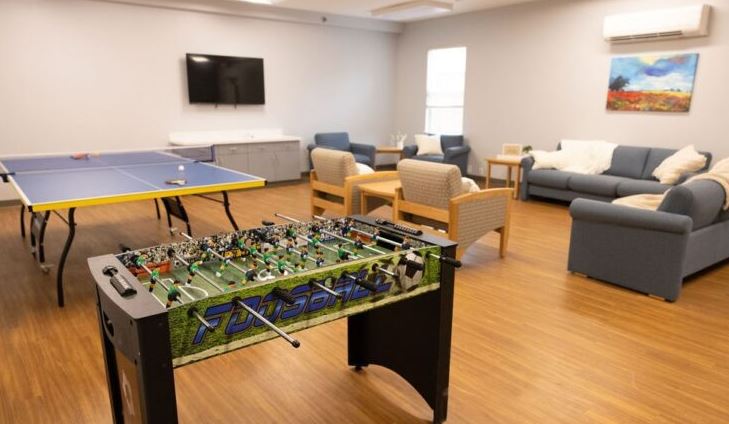
Iron Bridge’s description of its approach includes art, music, recreation, yoga and time in nature alongside clinical treatment. These activities can be part of the daily experience, but a broad list does not specify the frequency or availability of every option during a particular stay.
Ask which activities are offered in the intended pathway and how they connect with the patient’s goals. Someone with mobility limitations, pain, sensory needs or a preference not to participate in a particular activity should discuss alternatives. An appealing facility should be able to explain how participation is adapted rather than make one recreational format a condition of progress.
When comparing Iron Bridge with another program, keep these elements alongside the clinical schedule, staff responsibilities and discharge plan. Amenities can make a stay more manageable, but they do not establish a treatment outcome or replace the need for appropriate medical and psychological care.
Official source: Iron Bridge Recovery Center. Official source checked October 18, 2026.