Hannah’s House
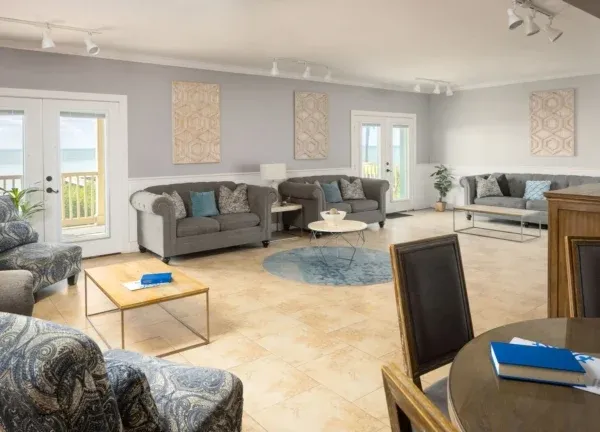


Hannah’s House 3 photos
Comparison facts and sources
Women-only medical detoxification and residential addiction treatment for adults on South Padre Island. Origins publishes separate men’s treatment and separate in-person or virtual outpatient care. · 207 W Aries Drive, South Padre Island, Texas 78597
- Published fee information
- Quote required
- Before admission
- Hannah’s House is the women’s South Padre detox and residential program; Harlingen outpatient care is separate. Current family-program pages give four days and two-and-a-half days, so confirm the actual dates and length before relatives arrange travel. Stay length and personal cost remain individualized.
- Continuing care
- Origins publishes outpatient step-down care, aftercare, alumni support and transitional or sober-living options; the appropriate arrangement is individualized.
Source record · October 19, 2026
Official Hannah’s House campus, program and family-schedule descriptions reviewed October 19, 2026. Current family-program durations differ; confirm the actual arrangement and individual admission terms.. Program licensing and accreditation should be confirmed directly for the selected Origins Texas service.
Luxury rehab comparison · Fees and inclusions · Selection methodology
Hannah’s House by Origins is Origins Texas Recovery’s women-only detoxification and residential program on South Padre Island, Texas. The current provider location page lists Hannah’s House at 207 W Aries Drive and accepts women aged 18 and older.
Published care includes medically supported detoxification, structured residential treatment, full 12-step program immersion, trauma-informed therapy and integrated support for co-occurring concerns such as anxiety, depression and PTSD. Origins’ in-person and virtual outpatient services are a separate step-down program.
Origins currently says most residential clients stay 30–90 days, depending on clinical needs and progress. It accepts most major health-insurance plans and offers benefits verification and flexible payment options; the exact covered amount and personal cost require an individual estimate.
Hannah’s House is the women’s South Padre Island program
The Origins Texas locations page identifies Hannah’s House at 207 W Aries Drive, South Padre Island, Texas 78597, with the local number (956) 405-6522. The men’s Origins Recovery Center is separately listed at 4610 Padre Boulevard. An Origins network phone number or a photograph from another campus should not be treated as proof that two programs share the same residence.
The network also lists outpatient and virtual care through Origins Recovery & Counseling in Harlingen and another facility in East Texas. For a Hannah’s House admission, confirm that the proposed bed, clinical team, and treatment agreement are for the women’s South Padre Island program. If continuing treatment is planned elsewhere, obtain the receiving location’s details separately. The official locations directory makes these distinctions clear and is more useful for travel planning than a general reference to Origins treatment in Texas.
The women’s program addresses substance use and related concerns
The dedicated Hannah’s House page describes residential addiction treatment in a women-only community, including support for co-occurring anxiety, depression, PTSD, and other mental health concerns. It discusses how relationships, trauma, work, parenting, and caregiving can affect an individual treatment plan.
Those topics are possible areas for assessment rather than assumptions about every woman entering treatment. Ask how the program would address the concerns that actually matter to you, including privacy, relationship safety, and responsibilities at home. The page mentions younger, midlife, mature, and professional women, but those descriptions do not establish a separate guaranteed group for each category. It also discusses outpatient flexibility across the network; that should not be confused with attending a live-in residential program while keeping an unrestricted work schedule. See the women’s treatment overview for the provider’s account of the program and the questions to raise about individual suitability.
Medical detox is a specific part of the described service
Origins’ detox page explicitly identifies Hannah’s House as its women’s detox setting and describes medically supervised withdrawal management for adults. It names physicians, nurses, and therapists as part of the service and says medical and mental health needs are considered from the beginning.
Admission should establish whether the person’s withdrawal risks and other medical conditions can be managed there or require a hospital. The provider discusses detox lasting from several days to longer, depending on the substance and medical history; no estimate should be used to set a personal medication taper or decide to stop medication without clinical advice. The page describes coordinated movement into residential care for many clients, with another appropriate level considered when needed. Its medical detox explanation also directs medical emergencies to 911. A planned detox admission is distinct from emergency hospital treatment and from the longer therapeutic work that may follow.
Residential treatment has an individualized duration
The residential page gives a usual stay of thirty to ninety days, based on clinical needs and progress. It describes a structured daily routine combining therapy, recovery work, family involvement, and wellness or experiential activities. The women’s program is identified separately within that wider residential model.
A useful admission discussion should distinguish a recommended initial stay from an insurance-authorized period and from the point at which the clinical team expects to reassess. The published range does not establish a fixed thirty-day package or promise that a longer stay will produce a particular result. Similarly, examples such as beach walks, yoga, fitness, or paddleboarding are provider-described activities, not guaranteed daily appointments. Ask which activities are suitable and currently available for your circumstances. The residential treatment overview helps explain the routine while leaving room for the actual plan, health needs, and program availability to determine what happens during a stay.
Co-occurring mental health care should have a coordinated plan
Origins’ dual diagnosis page describes collaboration between medical, psychiatric, and clinical teams, ongoing assessment, and medication management when appropriate. It discusses integrated treatment for a mental health condition occurring alongside substance use, rather than treating the two concerns as unrelated problems.
For Hannah’s House, ask how existing diagnoses, previous treatment, current medication, and any recent crisis will be reviewed. Clarify which clinician manages prescriptions and how information is shared with a current psychiatrist or therapist. A list of conditions and therapy methods is not evidence that every severity of illness can be managed in a residential addiction setting. Someone seeking treatment for a mental health condition without a substance use disorder should confirm eligibility rather than infer it from the term dual diagnosis. The provider’s integrated-care description is relevant to that assessment, but it does not replace a case-specific clinical recommendation.
Twelve-step immersion is central to the treatment model
The twelve-step page says the approach is integrated into residential life and that clients are supported to work through all twelve steps during treatment. It pairs that work with clinical therapies, including CBT, DBT, and trauma-informed care, rather than presenting peer meetings as the entire treatment program.
Origins also states that a religious belief is not required. It describes flexible interpretations of spiritual language, including community, nature, personal values, or a faith tradition. Prospective patients should discuss any concerns about the format, group participation, and how their beliefs will be respected. The program’s goal of working through the steps should not be turned into a guarantee about every patient’s pace or outcome. The twelve-step program explanation is particularly important when comparing Hannah’s House with providers whose central recovery model differs. Choosing a setting includes understanding the daily approach, not simply checking whether twelve-step meetings appear somewhere on a service list.
Confirm the family program’s current length before booking
Origins’ public family-program descriptions do not give one consistent duration. The dedicated family therapy page describes four consecutive days, while the current network homepage describes a monthly two-and-a-half-day in-person experience. These could reflect different arrangements or updates; the published pages do not resolve that question.
Request the current dates, length, location, participation requirements, and any charges before relatives book transport or lodging. The described content includes education, communication, boundaries, and planning for continuing care. Ask how participation is adapted when a relative cannot travel or when a relationship is unsafe. Family members can benefit from their own support, but they should not be told that they are responsible for guaranteeing the patient’s recovery. Clinical involvement and information sharing should respect the patient’s wishes and appropriate consent. A specific agreed schedule is more reliable than assuming either website duration applies to every admission.
Aftercare needs to work where the patient will live
The aftercare page describes continuing therapy, medication support, recovery coaching, check-ins, and help connecting with local recovery communities. It also discusses practical skills such as stress management, communication, and rebuilding everyday routines.
For someone returning a long distance from South Padre Island, the important details are the actual receiving services and their availability. Ask for appointment dates, the prescribing clinician, a plan for transferring relevant records, and any proposed outpatient or housing arrangement. A general promise of ongoing support does not establish that every service is delivered by Hannah’s House or included without additional charge. If work or caregiving will limit attendance, raise that early enough to build a realistic plan. The aftercare overview describes continuing support across the network; the personal discharge plan should translate those options into named contacts, practical responsibilities, and a way to request reassessment if needs change.
Alumni connection is different from continuing clinical treatment
The alumni page says an Alumni Care Coordinator is assigned at admission and begins working with patients during treatment. It describes support through phone, email, and in-person contact, as well as a BaseCamp app, a weekly alumni check-in call, a private online group, and events.
These connections may provide a way to remain in touch after leaving the residential setting. They should be distinguished from scheduled psychotherapy, psychiatric prescribing, or a service that monitors safety around the clock. Ask which activities are currently available, how to join from outside Texas, and whom to contact for a clinical issue rather than a social or peer-support question. Online participation also deserves a discussion about privacy and personal comfort. The alumni program page establishes the provider’s continuing-connection model without turning lifetime contact language into an unlimited promise of free medical care.
Assessment comes before coordinating travel
Origins describes a three-stage admission process: contact, assessment, and admission. The initial telephone assessment is presented as free and confidential, with an admissions specialist helping determine whether the program is appropriate. The team describes coordinating local airport transportation and, when needed, arranging a sober escort.
Confirm the Hannah’s House destination, an accepted admission date, and who is responsible for transport before buying a ticket. An offer to coordinate an escort does not establish that escort services or flights are included in the treatment price. Discuss medical needs during travel and whether stabilization is required before a long journey. Someone facing a medical emergency should use emergency services rather than rely on travel to a planned residential admission. The admissions process explains the provider’s intended coordination; the individual arrangements should specify the handoff, arrival location, and who can answer questions if plans change.
Clarify the quote and practical rules for the stay
The FAQ describes residential cost as including detox, psychiatric and medical care, individual therapies, housing, and meals, while directing patients to admissions for their actual price and insurance arrangements. It publishes no universal dollar package. Ask which services are included in the proposed Hannah’s House agreement, which require authorization, and what happens financially if the recommended duration changes.
The same FAQ says laptops, cell phones, and other electronics are generally not accessible unless previously arranged with admissions. Someone managing work, childcare, or other responsibilities should establish a communication plan before arriving rather than assume unrestricted device use. The FAQ also has specific rules for vaping products; request the current packing list and discuss prescribed medications directly with the team. The official FAQ provides practical starting points, while the written financial agreement and individual admission instructions should settle the details for the actual stay.
Sources
Official provider pages checked October 7, 2026: Hannah’s House identity, current address, phone, age and care levels; women’s program and insurance; medical detoxification and transition to residential care; residential duration, insurance and payment guidance.