Eagle Overlook Recovery


Eagle Overlook Recovery 3 photos

Comparison facts and sources
Small residential program for boys and girls ages 13–18 on a 54-acre campus, capped at 20 clients with no more than eight clients per licensed clinician. · Dahlonega, Georgia, United States
- Published fee information
- Quote required
- Before admission
- The official range is 30–90 days and the clinical team reviews progress rather than fixing an end date before assessment.
- Continuing care
- The clinical team reviews progress throughout treatment and plans aftercare with the family for the transition home; no fixed continuing-care duration is published.
Source record ·
Provider-published information checked October 16, 2026.
Luxury rehab comparison · Fees and inclusions · Selection methodology
Provider overview
Eagle Overlook Recovery is a residential substance-use treatment program for adolescents ages 13–18 in Dahlonega, Georgia. The licensed, Joint Commission-accredited program serves boys and girls with substance-use disorders, with or without co-occurring mental-health concerns, on a 54-acre campus capped at 20 clients.
Treatment and duration
The provider publishes a 30–90-day residential range based on clinical need. Care includes medical and psychiatric oversight, individual, group and family therapy, education support, peer support and structured outdoor or experiential activities. The program is residential rather than acute psychiatric hospitalization or medical detoxification.
Admissions, insurance and payment
Admissions are available at 706-867-0006. Eagle Overlook says it works with many major private insurers and offers self-pay, but does not accept Medicaid, TRICARE, CareSource or other government-funded plans. Out-of-state private coverage may be out of network. Benefits and out-of-pocket costs are verified before commitment; no standard cash price was published.
A small adolescent campus in Dahlonega
Eagle Overlook’s provider overview identifies a residential addiction program for adolescents ages 13–18 on a 54-acre property in Dahlonega, Georgia. Its stated capacity is 20 clients. The setting combines treatment rooms and living space with outdoor areas, giving adolescents a structured place to work on substance use away from their usual routines.
The age range and substance-use focus are central to evaluating this option. A family seeking help for a teenager should describe both substance use and mental-health concerns during screening, including any recent change in safety or functioning. Campus acreage and a small resident population describe the environment; they do not determine whether the program can manage an individual adolescent’s medical or psychiatric needs. The receiving clinical team still needs to assess that fit.
Length of stay follows the adolescent’s progress
The about page describes an individualized approach rather than a single identical course for every resident. Eagle Overlook says the total course can last up to 90 days and connects treatment planning with the adolescent’s needs, personal goals, and progress. The program also describes space for residents to examine values and their own understanding of spirituality.
That published timeframe is useful for preliminary family and school planning, but a planned departure date should remain part of the clinical discussion. Parents can ask what progress would support discharge, what could lead to an extension, and when those decisions are reviewed together. It is also helpful to explain the teenager’s beliefs, interests, and sources of motivation early, so the proposed approach is understandable to the person who will actually participate.
Admissions starts with a clinical conversation
Eagle Overlook’s admissions process begins with contact and a discussion of the teenager’s situation, followed by assessment and planning. The provider invites questions about treatment and insurance while gathering information needed to decide whether residential care is appropriate. Admissions guidance also covers preparation for arrival, including what to bring and how to address medications.
A useful initial conversation includes current prescriptions, recent treatment, school difficulties, substance-use history, and the family’s main concerns. Sharing this information before travel gives the program an opportunity to identify needs that require a different setting or additional arrangements. Families should receive a clear explanation of the assessment outcome and the proposed next step. An inquiry or insurance discussion should not be mistaken for clinical acceptance, an available bed, or a confirmed arrival date.
School support is planned with the student
The education program describes an education coordinator and daily classroom time. Students can work on assignments from their existing school or through online learning arrangements; the provider also discusses GED preparation where appropriate. Academic support sits alongside the treatment schedule rather than requiring the family to treat the two needs as unrelated problems.
Before admission, parents should identify the student’s current courses, school contacts, deadlines, and any learning accommodations. The school and treatment team can then clarify how assignments, attendance, and progress reports will be handled. GED work is a separate educational pathway that needs its own eligibility and planning discussion. Classroom access does not guarantee a particular grade, credit award, or on-time graduation, so expectations should be agreed with the school that will recognize the work.
Daily routines use a staged growth system
In its frequently asked questions, Eagle Overlook describes a structured day with education, therapy groups, psychoeducation, and recovery activities. Weekends include a different balance of groups, reflection, recreation, and visiting opportunities. The provider also outlines a four-level growth system and emphasizes verbal de-escalation and positive reinforcement in responding to behavior.
These details help a family discuss what daily participation will actually involve. Ask how the levels affect responsibilities and privileges, how expectations are explained to a new resident, and how parents hear about progress or difficulties. The teenager should have an understandable account of whom to approach when overwhelmed and how concerns are addressed. The published framework provides context for those conversations; it does not replace an individualized behavioral or safety plan.
Clinical roles and supervision should be clear
The current team page lists medical director Kambiz Aflatoon and clinical director Sarah Hartshorn-Chapman. It also distinguishes other counseling roles, including an intern working under supervision. Those role descriptions are more useful than assuming that everyone presented on a staff page provides the same service or has the same responsibility.
For an individual admission, families can ask who will manage the treatment plan, who handles medication questions, and who provides family updates. If an intern participates in care, the supervising clinician’s involvement should be explained. Published biographies describe the provider’s team; they do not establish that a named professional is assigned to every resident or present throughout every shift. Confirming the actual care team helps parents understand accountability without turning a staff directory into a promise of continuous individual access.
The approach combines several recovery methods
Eagle Overlook’s treatment approach includes cognitive behavioral therapy, dialectical behavior therapy, acceptance and commitment therapy, and experiential work. The provider describes a 12-step foundation alongside options such as SMART Recovery and encourages adolescents to explore beliefs and values that matter to them. Activities involving the outdoors or horses are described within the broader therapeutic program.
The practical question is how those approaches are selected and used for a particular resident. Families can ask which methods address the teenager’s current difficulties, how skills are practiced between sessions, and how progress is discussed. A long list of approaches should not imply that every resident receives every intervention or that each activity has the same clinical purpose. A specific treatment plan makes the connection between the program’s methods and the adolescent’s goals easier to assess.
Out-of-state families can participate remotely
The out-of-state family guide places the campus approximately 65 miles from Atlanta and explains that family therapy can take place by phone or video without a minimum in-person attendance requirement. Weekend visits are optional. The same guide distinguishes this residential substance-use setting from medical detoxification or acute psychiatric hospitalization.
For families traveling from another state, the remote arrangement can make regular participation more practical, but it still requires protected time and a reliable connection. Clarify appointment timing, which caregivers should join, and how the team will communicate between sessions. Travel plans should follow clinical acceptance and a confirmed arrival arrangement. Any immediate withdrawal or psychiatric stabilization need should be discussed before departure, so the family is not relying on distance from home to solve a level-of-care mismatch.
Capacity and clinician caseload describe different things
The residential program page describes a maximum of 20 clients and no more than eight clients per licensed clinician. It places individual, group, and family work within a residential schedule supported by medical and psychiatric oversight. These details offer a more concrete picture of the program than the general phrase “personalized treatment.”
A clinician caseload is not the same as a staff-to-resident ratio on every shift, and it does not specify how many individual therapy appointments a teenager receives each week. Parents can ask for those practical details separately, including the usual session schedule, access to medical review, and how coverage changes overnight or on weekends. Understanding each measure on its own terms helps families compare programs without assuming that one published number answers every staffing question.
Private insurance needs a plan-specific review
The insurance verification page offers a free, no-obligation benefits check and describes private insurance and self-pay arrangements. It excludes Medicaid, TRICARE, CareSource, and other government-funded coverage. A submitted policy or an insurer’s name alone does not establish the amount a family will owe for a particular residential stay.
Request a written explanation of the receiving program’s network status, authorization requirements, covered days, and expected family responsibility. If an extension becomes clinically appropriate, its payment arrangements need a separate discussion. Families can also ask how the benefits inquiry, a formal authorization request, and eventual claims differ, including what information is shared at each stage. This keeps the financial decision tied to the actual policy and proposed care rather than to a broad statement that the provider works with private insurers.
Co-occurring concerns belong in the same assessment
In its discussion of adolescent co-occurring treatment, Eagle Overlook describes addressing substance use alongside mental-health difficulties through coordinated assessment and therapy. The page discusses emotional regulation, coping skills, individual needs, and family involvement. It also connects treatment with preparation for ongoing support after residential care.
Families should describe existing diagnoses and symptoms without assuming that every difficulty already has a settled explanation. The team needs to understand how the teenager functions, what earlier treatment has involved, and which problems are most urgent. Ask how psychiatric review and counseling inform one another and how changes in the plan are communicated. A co-occurring treatment label is useful only when the proposed care addresses the actual combination of needs and remains within the residential program’s clinical capabilities.
Bedrooms are shared within a small residential setting
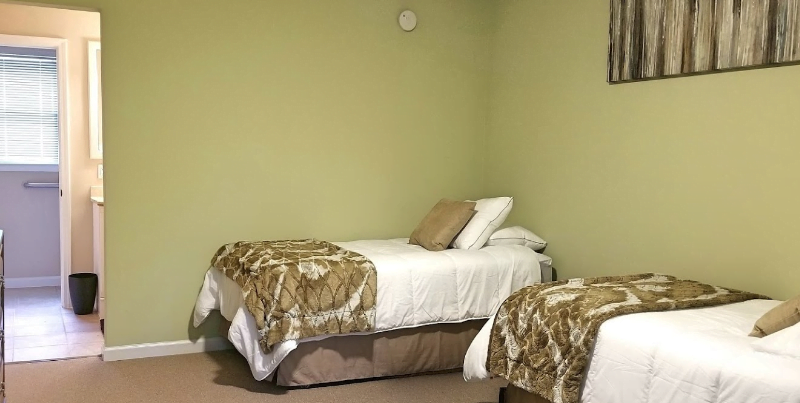
The campus and program description specifies two clients sharing a bedroom and bathroom. It also describes collaborative planning involving the adolescent, family, clinician, recovery advocate, and physician. Those details clarify both the living arrangement and the different perspectives intended to inform treatment.
Families comparing accommodation should therefore discuss room sharing directly, including the teenager’s sleep needs, privacy concerns, and any relevant sensory or medical requirements. A small census does not mean every resident has a private room. It is equally useful to understand how the adolescent participates in planning and how disagreements about goals are discussed. The published collaborative model provides a starting point for those questions, while the actual room assignment and clinical team remain matters to confirm for the admission.
Discharge planning connects treatment with home life
The teen alcohol-treatment page discusses continued therapy, recovery support, and relapse-prevention planning after residential care. It connects the next stage with the teenager’s home environment and the need to practice skills beyond the campus. The emphasis is on preparing for an ongoing recovery process rather than treating departure as the end of support.
A useful discharge plan identifies the first follow-up appointments, who will coordinate them, and how parents and school staff will support the transition. It should also explain what the family should do if concerns return or a recommended service is unavailable locally. These arrangements are especially relevant after an out-of-state stay, when the residential team and community providers may be in different places. The plan’s usefulness depends on clear responsibilities and workable local connections, not simply a list of suggested resources.
Provider sources reviewed October 19, 2026. Program details are attributed to Eagle Overlook’s published information and are not an independent clinical assessment or a guarantee of admission, staffing, insurance coverage, or outcomes.
Sources and verification
official provider home page; admissions and insurance; teen residential program. Checked October 16, 2026. Provider-published information; not an independent clinical assessment.