Discovery Point


Discovery Point 3 photos


Comparison facts and sources
Medical detox and residential treatment at Ennis and Waxahachie, with PHP, IOP, sober living and aftercare through Dallas outpatient services. · Texas network: Ennis and Waxahachie residential campuses; Dallas outpatient continuum
- Published fee information
- Quote required
- Before admission
- This is a network profile. Residential services must not be attributed to the Dallas outpatient site.
- Continuing care
- Aftercare is individualized and may continue for several months; individual therapy and peer support can continue for a year or more.
Source record ·
Provider-published information checked October 14, 2026.
Luxury rehab comparison · Fees and inclusions · Selection methodology
Discovery Point Retreat provides addiction and co-occurring mental health treatment in the Dallas area of Texas.
Its Waxahachie and Ennis facilities offer medical detox and residential care; Dallas provides outpatient treatment. Published options include partial hospitalization, intensive outpatient care, sober living arrangements and aftercare. Therapies include individual, group and family work, CBT and DBT, with medication-assisted treatment when clinically appropriate.
The provider works with major insurance plans and offers benefit verification. Confirm the facility, level of care, accommodation, duration and itemized patient costs with admissions. Services and amenities differ by location.
Waxahachie offers a residential setting with semiprivate rooms
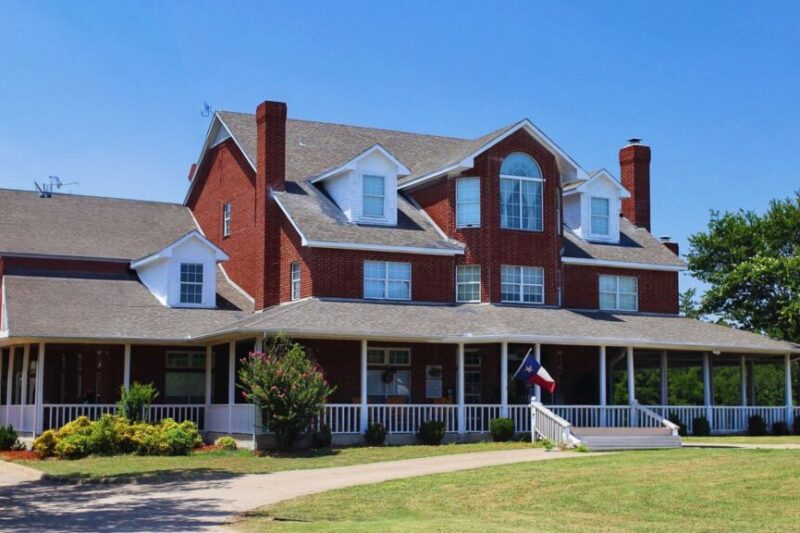
The Waxahachie location page identifies the campus on Hight Road and lists medical detox, residential treatment, and aftercare planning. The ranch-like setting includes semiprivate bedrooms, prepared meals, outdoor space, a gym, and seasonal pool access. These details describe a shared residential environment, not a private villa reserved for one client.
Confirm the bedroom arrangement, accessibility, dietary needs, and current availability of amenities before choosing a stay based on photographs. The location page contains both campus-specific services and references to the wider treatment continuum. Ask where each proposed phase will occur, especially when a plan includes PHP or IOP after residence. An assessment should explain why this setting suits the person’s clinical needs and what support is available between appointments. A room preference can matter to comfort, but it should be considered alongside the actual medical oversight, therapy timetable, and arrangements for continuing care.
Ennis is a separate campus with its own living arrangements
The Ennis facility description places treatment on Log Cabin Road and identifies detox and residential care. Its three-story ranch-style residence has semiprivate rooms, shared recreational areas, meals, and outdoor facilities. The program lists individual treatment planning and approaches including cognitive behavioral, dialectical behavior, and recreational therapies.
Someone considering Ennis should ask about the specific room and clinical schedule available there rather than applying details from Waxahachie. The building layout may be relevant to mobility or accessibility needs, which should be discussed before travel. Clarify where medical assessments and therapy take place and whether any service involves transportation elsewhere. A family comparing the two residential campuses can request a practical explanation of placement: clinical suitability, availability, accommodation, and the proposed next treatment level. Shared branding does not establish identical rooms, staffing arrangements, or amenities at both addresses, and the written admission plan should identify the chosen campus.
The Dallas address is an outpatient service
The Dallas location page identifies an outpatient center on Capitol Avenue, with PHP, IOP, and aftercare. It describes day and evening options and explicitly distinguishes the residential facilities in Ennis and Waxahachie. This matters for anyone searching for rehabilitation in Dallas who expects the clinical address to include an overnight bedroom.
For a local client, the main practical questions include the weekly timetable, commute, support at home, and ability to attend consistently. A person traveling to Dallas needs separate accommodation arrangements and should clarify any associated sober-living program. Ask where individual, group, and medication appointments occur and what support is available outside those times. Moving from a residential campus to the city should involve a documented clinical handoff, not simply a change of address. The care plan and financial estimate should distinguish outpatient treatment, housing, transport, and any additional services.
Medical detox is delivered at the residential campuses
The current detox program page states that Discovery Point provides medically supervised withdrawal care at Ennis and Waxahachie, with around-the-clock monitoring and medication when clinically appropriate. It explicitly says detox is not delivered at the Dallas outpatient center. That specific location statement should guide planning more than a general reference to “Dallas-area detox.”
The clinical assessment needs to establish whether detox is required and whether a residential detox service can safely meet the person’s needs. Provide a current medication list, substance-use history, previous withdrawal complications, and relevant medical records. Ask what would require hospital transfer and how the next phase is selected after stabilization. The program’s location map should not become a rule that every person must complete detox, residence, and outpatient treatment in the same order. Each transition should follow an individual assessment, with responsibility for medication, records, and transportation clearly assigned.
Residential treatment combines a shared day with individual planning
The residential program description presents live-in treatment with continuous support, a structured routine, therapy, and attention to co-occurring needs. The provider distinguishes a residential environment from more medically intensive hospital care. This is a useful point to clarify when a person needs significant physical or psychiatric monitoring as well as substance-use treatment.
Ask for a representative weekly schedule showing private therapy, groups, clinical reviews, recreation, and unscheduled time. Clarify which professionals are responsible for assessment and medication, and how the team decides that a lower level of care is appropriate. The website publishes treatment-result claims, but a percentage does not predict an individual’s outcome or replace a discussion of the methods, limitations, and actual service being proposed. The most useful comparison is whether the plan addresses this person’s needs, how progress is reviewed, and what concrete support follows the residential stay.
PHP places substantial treatment time within an outpatient day
The dedicated PHP description says clients receive approximately six hours of group therapy daily and at least one individual session weekly. It places PHP in Dallas, with evenings outside the treatment center, and describes it as a bridge from more intensive care. These are provider program details that should be checked against the actual schedule offered at admission.
The group-hour figure should not be counted as six hours of private psychotherapy. Ask how individual appointments, psychiatric care, and any additional therapies fit around the group schedule. A client also needs a suitable place to stay, transport, and a plan for time away from the center. The ability to return home at night does not necessarily make a full workday realistic. If PHP is recommended after residence, the team should explain the clinical reason for that transition and what would lead to a different level of support.
IOP offers day and evening options with ongoing responsibilities
The IOP page describes treatment at the Dallas outpatient center with day and evening options, group and individual work, and relapse-prevention planning. Its general explanation refers to several weekly sessions, but the exact calendar should come from the team for the specific client. Detox and residential services remain at Ennis and Waxahachie.
Someone balancing treatment with work or school should request the current days, hours, attendance expectations, and individual-session frequency before committing. Flexible options still require time and an environment that supports participation. Discuss transportation, caregiving, and what happens if a session is missed or symptoms worsen between appointments. A move from PHP to IOP should include updated goals and a clear handoff for medication and other care. The plan may need to become more intensive again if circumstances change; fewer hours are not automatically evidence that every treatment need has resolved.
Medication support should be prescribed for the individual
The medication-assisted treatment page describes assessment through physical and psychiatric examinations and says medication can be considered at different levels of care. It presents prescribing alongside counseling and behavioral treatment. The existence of a medication program does not establish that every listed drug is offered at every campus or appropriate for every client.
Before admission, explain existing prescriptions and identify the clinician currently managing them. Ask which medicines can be continued, who will review changes, and where follow-up prescribing will occur after discharge. The website’s broad discussion of medication and tapering should not be used as an individual stopping schedule. Treatment duration and any change in medication require a clinician’s assessment. Costs and access also matter: clarify pharmacy arrangements, insurance coverage, and whether an outside prescriber or specialist program is needed so that care is not interrupted when the person moves between locations or returns home.
Aftercare is a plan across services, not one fixed package
The aftercare page describes case management beginning early in treatment and a possible transition from Ennis or Waxahachie into Dallas PHP or IOP. It also identifies sober living through the Roots & Summit Program, individual therapy, alumni support, and peer connection. Those elements have different purposes and may involve different schedules and charges.
Ask which services are actually recommended and which appointments or housing places have been confirmed. The plan should identify the receiving clinicians, permission to transfer records, and responsibility for medication. A client returning elsewhere in Texas or another state may need a different local arrangement while maintaining alumni contact. Clarify which support is included, which is separately billed, and whom to contact if a referral fails. Aftercare becomes useful when it names real people, dates, and responsibilities; a list of possible programs does not itself create access to them.
SMART Recovery provides a secular option within the approach
The SMART Recovery page describes the use of secular self-management principles in personalized treatment. It emphasizes motivation, responding to urges, managing thoughts and behavior, and developing a balanced routine. This may be relevant for someone who prefers a nonreligious recovery framework or wants practical tools alongside clinical care.
Ask how these principles appear in the weekly program and which meetings or exercises are available at the intended location. A preference for SMART Recovery does not establish that every part of treatment uses one model, nor does it demonstrate superiority over other approaches for every person. Someone with previous recovery experience can explain which supports were useful and what they would like to retain. The clinical team should connect the chosen tools to the individual’s goals, co-occurring needs, and circumstances after discharge rather than treating a program label as a complete treatment plan.
Admission questions include privacy and practical arrangements
The provider’s frequently asked questions address communication, treatment funding, and program preparation. It says communications require approval and directs prospective clients to discuss individualized care and payment arrangements. A relative can help make an inquiry, but the person’s participation, preferences, and permission to share information remain central to arranging treatment.
Before travel, confirm the admitting campus, clinical acceptance, arrival time, required records, and current packing instructions. Discuss who may receive updates and how contact will work during different treatment phases. A promise to answer questions quickly is different from a confirmed bed or a completed clinical assessment. If a family member is organizing logistics, establish what they are authorized to arrange and which decisions require the prospective client’s involvement. Clear preparation is particularly useful when the person is transferring from another provider or needs uninterrupted medication and medical follow-up.
Insurance and housing costs need separate confirmation
The insurance guidance describes working with multiple insurers and checking benefits for treatment. Network status can vary by the actual plan and facility, and the site contains both location-specific and wider network statements. Request a decision for the receiving provider and proposed level rather than assuming that a brand-wide insurance list settles the question.
The written estimate should identify detox or residential charges, outpatient appointments, medication, laboratory work, transport, and any sober-living expense. Ask about authorization, deductible, coinsurance, and responsibility for services or days that are not covered. If the course changes, obtain an updated estimate. Private-payment or financing terms should separately explain deposits, repayment obligations, extensions, transfers, and early departure. A benefits check does not guarantee full reimbursement, and coverage of clinical treatment should not be assumed to include all accommodation or every part of the continuing-care plan.
The linked Discovery Point Retreat pages were checked on October 19, 2026. This is a network profile: Ennis and Waxahachie residential services, Dallas outpatient care, and related housing should be confirmed separately for the proposed admission.
Sources: Official provider information; current facility, care-level and insurance guidance. Public information checked October 5, 2026.