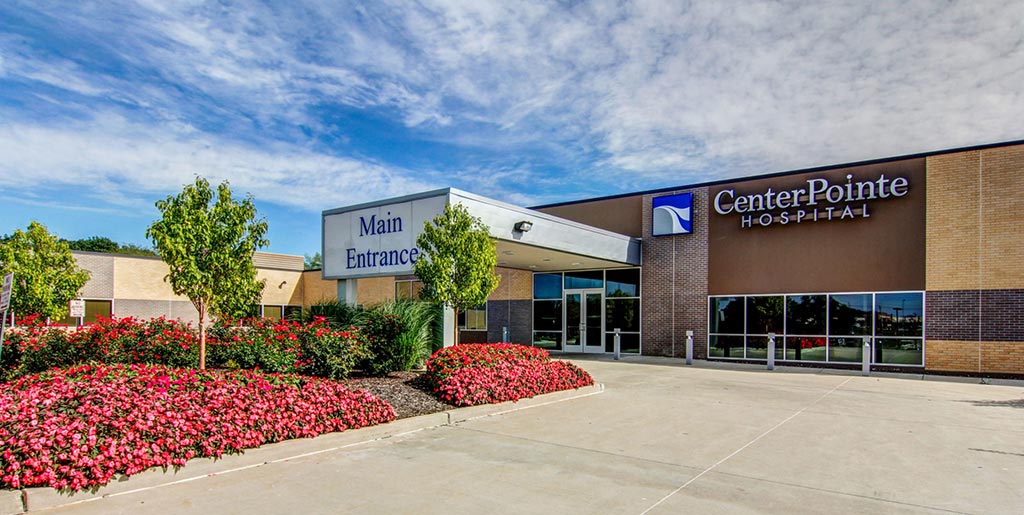
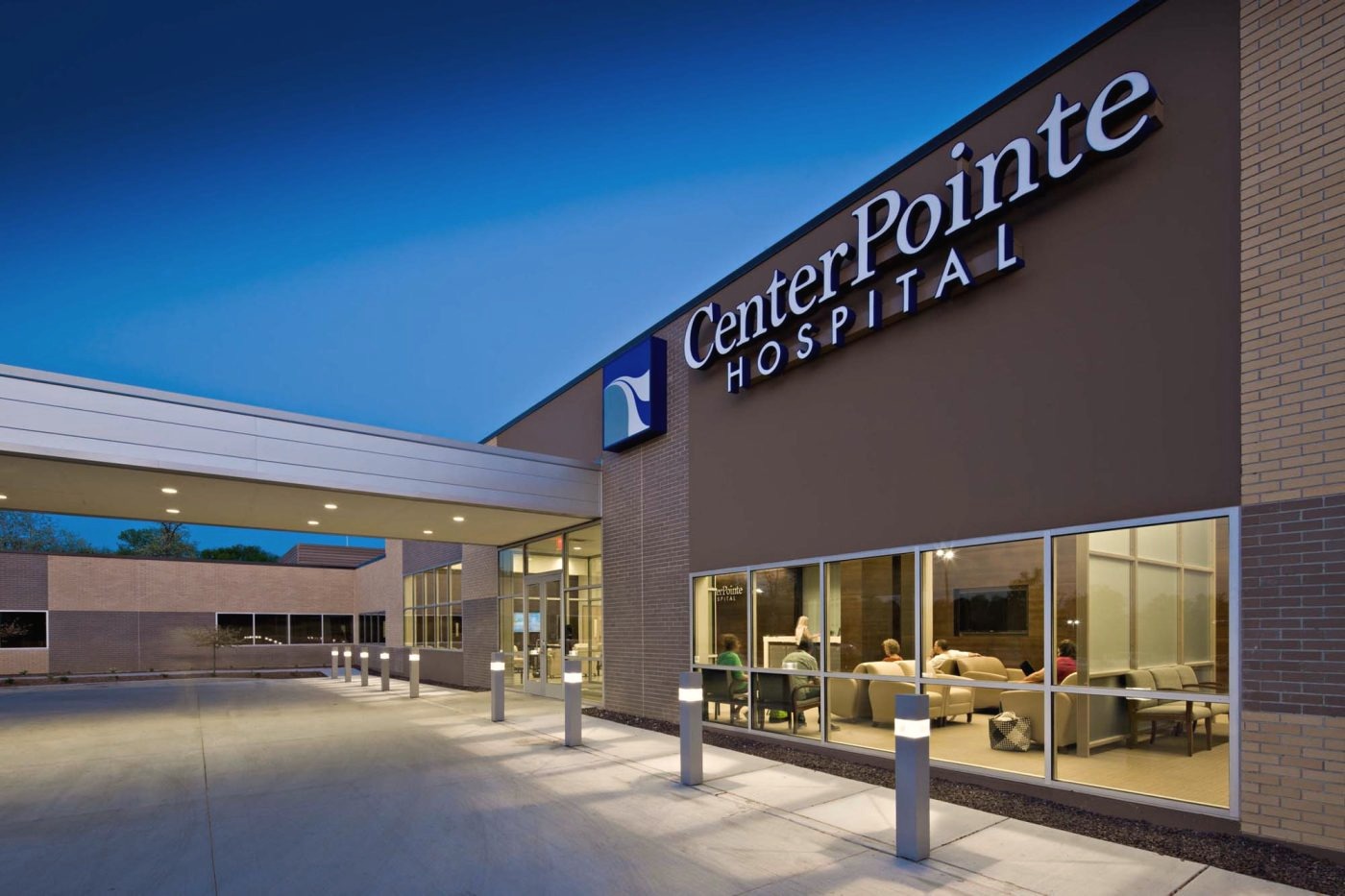
Exact St. Charles psychiatric and addiction hospital offering adult and senior inpatient care, adult residential addiction treatment, adult detox, and step-down outpatient care. PHP also serves adolescents ages 12–17. · 4801 Weldon Spring Parkway, St. Charles, Missouri 63304, United States
Published fee information
Quote required
Before admission
Typical stays are 7–10 days for adult inpatient and detox care, 14–28 days for adult residential treatment and 5–7 days for PHP; individual need and progress may shorten or extend care. PHP includes adolescents 12–17 and adults, while residential addiction treatment is adult-only.
Continuing care
Discharge planning starts during care. Residential and PHP teams provide recommendations and resources for the next level of care, and residential patients help create a personal aftercare plan.
Source record ·
Provider-published information checked October 16, 2026.
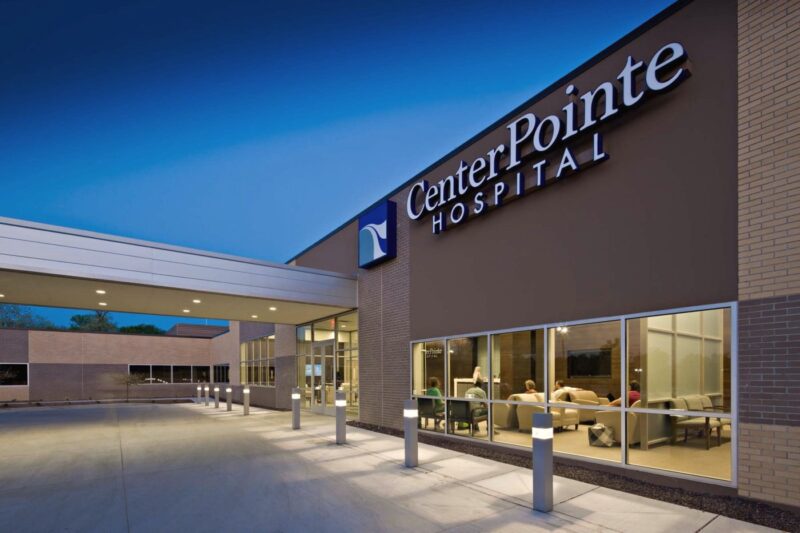
CenterPointe Hospital is a 150-bed psychiatric and addiction-treatment hospital at 4801 Weldon Spring Parkway in St. Charles, Missouri. Its current main program pages emphasize care for adults and senior adults, with some outpatient programming also available to adolescents.
Treatment and services
The hospital currently lists adult and senior inpatient psychiatric care, adult substance-use residential treatment, medical detox, partial hospitalization, intensive outpatient care, medication-assisted treatment and aftercare support. Adult inpatient care can address mental health, substance-use and dual-diagnosis needs. The current partial-hospitalization page identifies adolescents ages 12–17 and adults ages 18 and older; availability should be confirmed for the required program rather than inferred from older network material.
Duration, insurance and costs
The provider gives typical stays of seven to ten days for adult inpatient and detox care, 14 to 28 days for adult residential treatment, and five to seven days for partial hospitalization, with individualized variation. CenterPointe accepts most major insurance and lists Medicare, TRICARE, Missouri managed Medicaid, Ambetter, Healthy Blue, Home State Health, UnitedHealthcare and most commercial plans among past payers. Coverage and out-of-pocket cost require verification; no universal self-pay price or tax treatment was published.
When the adult inpatient program is relevant
CenterPointe’s adult inpatient program serves people aged 18 and older who need hospital-level support for significant behavioral health, substance-use or dual-diagnosis concerns. The provider describes stabilization as the immediate purpose, with continuous support when functioning or safety has deteriorated. Its published seven-to-ten-day average is a program description, not a fixed discharge date or a prediction for an individual patient.
Group treatment is central to the inpatient schedule, while individual and family therapy depend on assessed need. Medical detoxification, medication management and basic medical care may be included when appropriate. Ask which needs the hospital can manage directly, what would require another medical facility and who will coordinate care. The admissions team recommends calling ahead even though an initial assessment does not require an appointment. Someone facing immediate danger should seek emergency assistance rather than waiting to compare elective treatment packages.
Residential addiction treatment has a different purpose
The adult residential program is based at the St. Charles main campus and serves adults with substance-use disorders, including those with co-occurring mental health needs. CenterPointe describes round-the-clock support at a lower intensity than acute inpatient hospitalization. This distinction matters for someone whose main concern is psychiatric: the residential page presents mental health treatment in the context of an accompanying substance-use disorder, rather than establishing a standalone residential pathway for every diagnosis.
Published residential stays commonly range from fourteen to twenty-eight days, with actual duration determined individually. The program lists group, individual and family work, medication services, addiction education, SMART Recovery and 12-step options. Its wider activities include nutrition, mindfulness and practical sober-living skills. Request an example schedule for the proposed admission and clarify which elements are part of the personal plan. A long list of available therapies does not mean every participant receives every intervention at the same frequency.
Older adults and the Silver Lining service
The Silver Lining inpatient page describes care tailored to older adults with psychiatric, substance-use and dual-diagnosis needs. It identifies seniors aged 65 and older, but later says there are no age limits and that everyone is assessed individually. Those statements should not be converted into either a guaranteed admission at 65 or an unrestricted all-age service. Confirm the appropriate unit and eligibility with the assessment team.
The program may include medical detoxification, medication management, basic medical care and several forms of therapy. Its assessment considers medical history and current symptoms, with family involvement where appropriate. When discussing an older adult’s needs, provide information about mobility, cognition, daily assistance and existing medications. Ask which physical health or personal-care requirements can be supported on the unit. The advertised seven-to-ten-day stay is typical rather than mandatory, and discharge planning should reflect the person’s living situation and support available afterward.
Medical detox and the next stage of care
CenterPointe’s detox program page describes medically supported withdrawal for adults of all genders, with individual admission decisions. It says patients meet a psychiatrist or psychiatric nurse practitioner six days a week, alongside continuous multidisciplinary care. Medication may be used when clinically appropriate. These statements describe the hospital’s service; they do not establish which medicine or withdrawal approach is suitable for someone reading the page.
The provider gives a typical seven-to-ten-day duration but emphasizes variation. A planned stay should account for the substances involved, previous withdrawal experiences and relevant medical or psychiatric needs. The page identifies inpatient, residential, partial-hospitalization and intensive outpatient programs as possible next steps. Ask how the team will decide between them and whether a place or appointment can be arranged before discharge. Completion of withdrawal support is not the same as completion of a longer treatment plan, and the next level should follow assessed needs rather than a predetermined package sequence.
Partial hospitalization for adolescents and adults
The current partial-hospitalization page identifies adolescents aged 12–17 and adults aged 18 and older, with age-appropriate treatment. It describes four to five hours of programming a day and an average participation period of five to seven days. People may enter directly or move to the program from a more or less intensive level. They return home when sessions finish, so the home environment and available support remain part of the suitability discussion.
Group therapy forms the core of PHP. The page also lists weekly individual therapy, medication management and family work as needed, with a personal treatment plan rather than a uniform set of sessions. Ask about the current age-specific group, attendance days, transport and the response to difficulties outside program hours. The adolescent PHP listing should not be used to infer that every adult residential or detox service also admits adolescents. Confirm the actual program and its clinical criteria before arranging attendance.
Intensive outpatient treatment and daily responsibilities
CenterPointe’s IOP page describes a typical schedule of three hours per day on three days each week, often continuing for four to six weeks. It identifies adults and senior adults rather than presenting the same age criteria as PHP. The format is intended for people who need structured support but can manage outside a continuously supervised inpatient setting.
Groups are the principal form of therapy. The provider also describes possible weekly individual appointments, family therapy when needed and medication management. Before planning a return to work or other responsibilities, obtain the actual meeting times and understand the attendance expectations. Discuss how treatment will coordinate with an existing prescriber or therapist and how progress will be reviewed. An outpatient schedule may allow more of everyday life to continue, but it still requires a workable plan for transport, medication follow-up and support between sessions. The published average is a planning reference, not a guaranteed treatment endpoint.
Clarify the medication arrangement for opioid treatment
The hospital’s medication-assisted treatment page describes services for adults with opioid-use disorders across inpatient, residential and outpatient care. Its main medication section discusses Vivitrol when appropriate, while a later section mentions buprenorphine and naltrexone and an outpatient physician’s prescribing discretion. The page therefore provides a reason to ask about medication options, rather than assume every named medicine is available through every program.
Bring an accurate medication history and tell the team about current treatment with another prescriber. Ask who will review suitability, administer or prescribe the selected medication, monitor follow-up and arrange continuation after discharge. Do not change an existing prescription merely to fit a directory description or prepare for admission without clinical advice. CenterPointe describes counseling alongside medication services, including individual and group work. The useful comparison is how the proposed medication and therapeutic plan fit together for the particular person, including any practical or financial requirements for continuing care.
Discharge planning and the addiction aftercare group
The aftercare page says discharge planning starts at admission and is updated as treatment progresses. It describes involvement from the patient, relevant family members and the multidisciplinary team. Potential next steps include outpatient treatment, private therapy, senior services and other recommendations based on need. Those are individualized possibilities rather than an automatic promise of every listed service.
CenterPointe separately advertises an addiction-recovery support group for people who have completed treatment in one of its inpatient, residential or outpatient settings. The published schedule is Tuesday and Thursday, 6–7 p.m., at the St. Charles hospital, with no charge, no prior RSVP and ongoing access. Confirm the current meeting arrangements before traveling. This group focuses on addiction recovery and should not be confused with a psychiatric appointment, medication follow-up or a replacement for a personalized continuing-care plan. Clarify who will take responsibility for each of those needs after the hospital episode ends.
What the admission assessment considers
The admissions page directs prospective patients to the Assessment and Referral Department. The team gathers information about current concerns, psychiatric and medical history, previous treatment and social circumstances. Its purpose is to identify an appropriate inpatient or outpatient service, rather than simply assign the longest available stay. Hospital admission follows only when the assessment indicates that it is the suitable route.
Prepare a clear account of the recent changes prompting help, existing diagnoses, medications, allergies and current healthcare contacts. Include practical information that may affect the plan, such as available support at home or difficulty attending repeated appointments. If another clinician is already involved, ask how records and recommendations can be shared with consent. Families can also ask what happens when CenterPointe cannot meet the person’s needs. A completed inquiry or insurance check does not itself confirm a bed, an admission decision or the clinical appropriateness of a particular unit.
Insurance is verified for the individual service
CenterPointe’s insurance and payment page lists insurers that have paid for treatment in the past, including Medicare, TRICARE and Missouri managed Medicaid plans. It describes free benefits verification without a commitment to enter care. A payer’s appearance on that list does not establish current network status for a particular policy, age group or level of care.
Ask for the coverage decision that applies to the intended service, including authorization, approved days and estimated personal responsibility. If a plan pays only part of the cost, clarify how further treatment will be authorized and billed. The hospital says it can discuss payment plans or other financing possibilities with people who lack coverage, but individual arrangements need confirmation. Obtain the full proposed charges in writing before treating a flexible-payment discussion as an approved agreement. The available page does not publish a single cash price that applies to every inpatient, residential or outpatient episode.
Prepare for the assigned unit’s practical rules
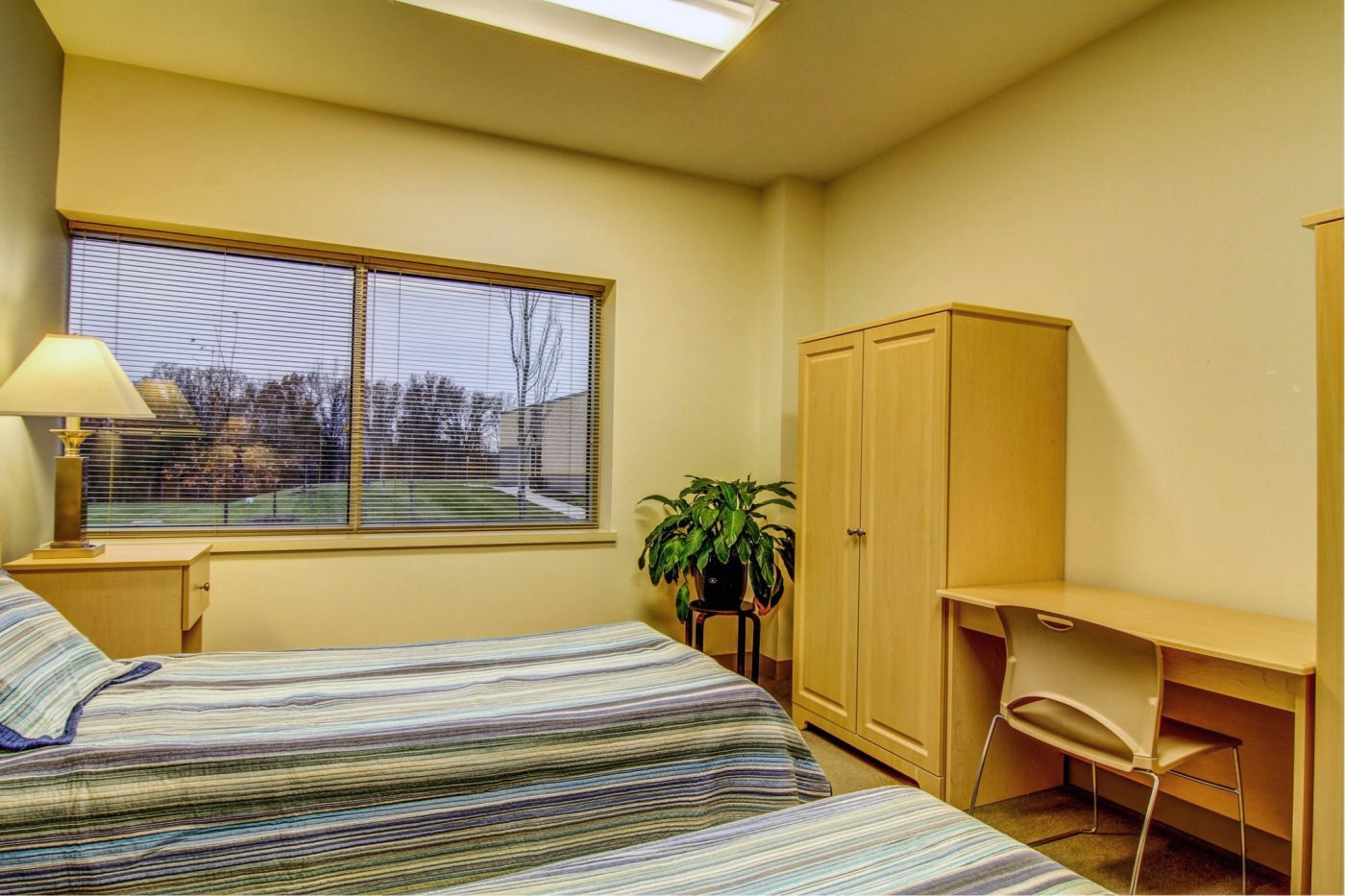
The packing guidance asks patients to bring identification, insurance information, healthcare contact details and a current medication list. It distinguishes inpatient supplies, such as provided scrubs and basic toiletries, from a short clothing list for residential treatment. Specialty medications or equipment may need discussion before arrival. Ask the hospital how necessary items will be reviewed, stored and returned rather than bringing unconfirmed supplies.
The rules prohibit electronic devices including phones, tablets and vape pens, along with valuables, sharp objects and outside food. The guidance also discusses permitted items such as hearing aids, glasses and a personal CPAP machine when needed. For someone who relies on technology or medical equipment, clarify the arrangements ahead of time. These are hospital-specific safety rules, not a description of unrestricted resort living. The practical preparation should follow the assigned unit’s current checklist and the patient’s clinical needs, especially when an admission is arranged at short notice.
Visiting and belongings during withdrawal protocols
The visitation page separates several named hospital units and instructs families to contact the hospital for further information. It also says belongings cannot be dropped off during the first 96 hours for patients assigned to the listed chemical-dependency detox protocols. The same page explicitly states that finishing that protocol does not determine discharge. That restriction should not be converted into a claim that every detox admission lasts four days.
Confirm visiting arrangements for the actual unit, including permitted visitors, identification, timing and any changes related to the patient’s care. Ask when essential belongings can be delivered and whether the clinical team needs to arrange an exception for necessary medical items. The page prohibits outside food and drinks throughout the hospital. Because older unit names remain on the visiting page, use the clinical program assessment to confirm current service availability rather than infer age eligibility or an open program from a unit label alone.