Burkwood Treatment Center
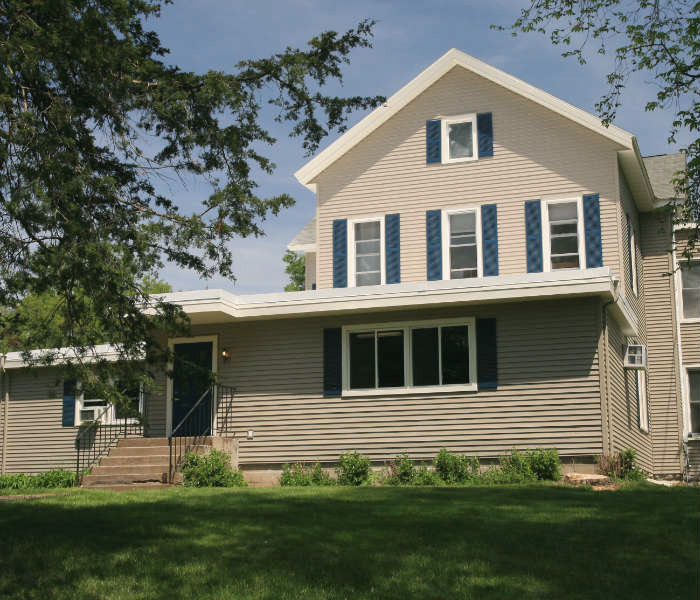


Burkwood Treatment Center 3 photos
Comparison facts and sources
Adult addiction provider with a residential campus and separate in-person/virtual outpatient services. · Residential: 615 Old Mill Road, Hudson, Wisconsin 54016; outpatient: 594 Outpost Circle, Suites D/E, Hudson, Wisconsin 54016
- Published fee information
- Quote required
- Before admission
- Residential and outpatient care occur at separate addresses. Stand-alone IOP may be entered directly and does not imply round-the-clock residential monitoring.
- Continuing care
- Continuing-care planning, general outpatient and aftercare services are described; the individual plan is determined before discharge.
Source record · October 14, 2026
Provider-published information checked October 14, 2026. Confirm program, housing, clinical eligibility and payer authorization directly with Burkwood Treatment Center.
Luxury rehab comparison · Fees and inclusions · Selection methodology
Burkwood Treatment Center is an addiction treatment provider in Hudson, Wisconsin, near Minneapolis–St. Paul. Its residential program serves adult men and women with alcohol or drug addiction and certain co-occurring mental health disorders.
Current official program pages describe residential care, family education, continuing-care planning, the MAAEZ intervention and the provider’s Way of Life curriculum. The provider reports an average residential stay of 40 days, while emphasizing that actual duration depends on individual need.
Burkwood also operates stand-alone in-person and virtual intensive outpatient programs. Residential care is based at 615 Old Mill Road, Hudson, WI 54016; outpatient care is listed separately at 594 Outpost Circle, Suites D/E, Hudson, WI 54016. The two settings should not be presented as one residential campus.
Treatment cost varies with clinical needs, length of stay and co-occurring conditions. Burkwood offers insurance validation but currently states that it does not accept Medicare or Wisconsin Medicaid; admissions should confirm benefits and the patient’s estimated responsibility.
A Hudson setting for structured addiction care
The Burkwood overview describes an adult addiction-treatment setting near Willow River State Park in Hudson, Wisconsin. Its residential approach combines individual counseling, educational and process groups, and practical recovery work. The provider presents the natural surroundings as part of the environment, alongside a structured daily routine.
Proximity to Minneapolis and St. Paul can make travel and family contact more practical for some people, but distance alone does not determine clinical fit. Clarify the recommended level of care and the needs that will be addressed before choosing a program for its location. Ask how much time is spent in groups, individual appointments and ordinary daily activities, and how accessibility or other support needs would be accommodated. Someone planning to return to the same community should also discuss the circumstances at home and how continuing care could connect with existing clinicians, work and family responsibilities after the residential episode ends.
Residential care combines treatment with an individualized discharge plan
The program overview describes residential care for adults with substance use disorders and suitable co-occurring mental health needs. Clients live at the center, participate in individual and group treatment, and contribute to their treatment and discharge plans. The provider reports an average stay of 40 days while stating that individual needs affect duration.
Use that average as a starting point for planning, rather than a promise that everyone leaves on the same day. Ask which goals will be reviewed, how progress is assessed and who communicates changes in the anticipated stay. The page lists a multidisciplinary team and approaches including CBT and EMDR, but the actual combination should follow assessment. A mention of a therapy does not mean it is automatically included at a fixed frequency. Discuss previous treatment experiences and what needs to be different this time so that the proposed residential plan addresses the person’s current situation.
Residential and outpatient appointments use different addresses
The location page lists residential care at 615 Old Mill Road and outpatient services at 594 Outpost Circle, Suites D/E, both in Hudson. These are separate destinations. A reference to the Burkwood name or to the wider Minneapolis–St. Paul area does not identify which building a person should attend.
Confirm the receiving address before arranging admission, a family session or an outpatient appointment. If moving between services, discuss how transport and living arrangements will work and whether another intake appointment is needed. A residential discharge does not itself reserve a place in outpatient care. Someone helping a relative should keep the agreed address, arrival time and appropriate contact number together. The location page describes a quiet residential setting near a state park, but it does not establish unrestricted access to the surrounding area. Ask about supervised outings and the practical arrangements attached to the particular care level.
Detox and medication arrangements must be settled before admission
The program FAQ states that Burkwood does not provide detox services. It says prescribed and over-the-counter medicines need a physician’s order and are stored at the nursing station rather than in client rooms. The provider can accommodate people already taking Suboxone or Vivitrol and may start Vivitrol when clinically indicated.
Discuss any need for supervised withdrawal with the assessment team before traveling. If another facility must provide stabilization, clarify when Burkwood can reassess admission and what records are needed. Do not interpret a general rule about substances as an instruction to stop a prescribed medicine yourself. Ask the clinical team to confirm acceptance of the exact prescription, who will manage it and how refills or copays are handled. Continuing an established treatment and starting a new medication are different decisions. The public FAQ gives useful boundaries, but the proposed medication plan still requires an individual discussion with the appropriate clinician.
Admission requires medical stability and voluntary participation
The admissions page identifies adults with a primary substance use disorder who are medically stable and agree voluntarily to treatment. It excludes people at high risk of harming themselves or others and those experiencing hallucinations, delusions or other psychotic symptoms. Decisions are made individually after review.
The first phone interview considers clinical fit, necessary records and financial arrangements. Admissions and clinical staff then make a decision and schedule arrival if the person is accepted. Explain current symptoms accurately, including recent changes that might affect safety or participation. A family member’s concern is a reason to seek assessment, not proof that residential admission is appropriate or agreed. If Burkwood cannot meet the person’s needs, the page describes referral to another provider. Ask how that next step will be arranged. Medical and nursing meetings during the first days help develop the plan, but they do not replace any stabilization required beforehand.
Outpatient treatment and linked housing have distinct requirements
The outpatient guide describes stand-alone in-person and virtual IOPs for adults who do not need continuous supervision. The intended course is ten weeks, with three-hour groups three days weekly and individual counseling weekly or every other week. Direct entry is possible without a previous Burkwood residential stay, subject to assessment and withdrawal-related eligibility.
The published in-person groups meet Monday, Tuesday and Thursday evenings; virtual groups meet on those days from late morning to early afternoon. Confirm current hours and eligibility from the patient’s physical location. The same page describes lower-intensity outpatient and aftercare services, which follow a different schedule. It also lists sober housing for men and requires residents to attend an afternoon IOP and meet house expectations. Ask which current program fulfills that requirement, since the detailed schedule separately names evening in-person and daytime virtual options. A housing arrangement is not equivalent to residential clinical monitoring, and its costs and availability should be confirmed separately.
MAAEZ and Way of Life describe the program’s learning approach
The curriculum page describes Making Alcoholics Anonymous Easier, or MAAEZ, as a group-based introduction to participation in 12-step recovery. It also describes Burkwood’s Way of Life system, built around a treatment manual and structured guidance combining several counseling and educational approaches.
Ask how these materials are used in the proposed program, how much independent work is expected and how a counselor helps connect the lessons with everyday decisions. Someone with previous experience of AA or other mutual-help groups can explain what was useful, difficult or unfamiliar. Discuss spiritual language, reading needs and preferences for peer support directly rather than assuming that every participant approaches the curriculum in the same way. A named method or a research reference on a provider’s page is not a prediction of an individual’s result. The practical question is how the approach fits the person’s needs and the rest of the treatment plan.
Family education is offered separately from sessions with the client
The family education program welcomes relatives and close friends, including those connected with current or past clients. Clients themselves are not present in these sessions. The published meeting is on the third Wednesday of the month from 5 to 7 p.m. at the Outpost Circle location, with a Zoom option.
This format gives relatives space to discuss communication, boundaries, self-care and what to expect when a loved one returns home. It differs from an individual family therapy session involving the person in treatment. Ask about registration, current dates and the appropriate format for the family’s situation. The page also discusses community groups and continuing-care resources, which can be explored without assuming every relative wants the same type of support. Participation should respect privacy and safety needs. An educational meeting can provide information and connection, but it does not guarantee repaired relationships or authorize disclosure of the client’s private treatment information.
The sample day balances structured work and personal time
The daily schedule includes goals and case-management work, primary groups, treatment-plan assignments, individual sessions, educational groups and MAAEZ. It also sets aside meals, medical needs, breaks and personal time. Guided imagery is described as voluntary, and the page mentions weekend family visits during a designated afternoon window.
Review the sample with the team when planning the stay. Ask how appointments, rest and individual needs fit around the main group schedule, and obtain the current visiting instructions rather than relying on a sample timetable alone. The day contains substantial treatment activity, so someone expecting extensive remote work or study should discuss that expectation beforehand. A period labeled personal time does not automatically change the program’s device or leave rules. It is useful to understand both the clinical commitments and the ordinary daily routines, including laundry, meals and contact with relatives, before arriving.
Packing guidance includes medication preparation and device restrictions
The packing list requests identification, insurance information, clothing, hygiene supplies and a ten-to-fourteen-day supply of current medicines with any required doctor’s orders. It explains that the clinic can refill or adjust medication only after meeting the person, usually after the first week. Laundry facilities are available, so a full stay’s worth of clothing is unnecessary.
Confirm medication details with the clinical team before arrival, especially if supply, storage or an existing prescribing arrangement needs coordination. Pack for the season and for activities that may include walks or exercise. The list excludes cellphones, laptops, tablets and other smart devices, so arrange essential communication or work matters in advance. Some grooming items are held securely rather than kept in bedrooms. Ask about anything unclear before bringing it, including the current vape policy. An item missing from the list should not be assumed acceptable, and the provider reserves the right to review belongings.
Continuing care should identify the next service and responsible clinician
The continuing-care overview describes individualized discharge planning based on changing needs and progress. Possible recommendations include transitional treatment, sober housing, IOP and follow-up medication management with a psychiatrist when indicated. The appropriate combination is selected for the person rather than automatically assigned to every graduate.
Ask for the receiving provider, appointment dates, necessary records and the plan for prescriptions. If housing is recommended, confirm that it has accepted the person and distinguish its rules and charges from those of the clinical service. Someone returning outside the Hudson area may need a different local arrangement. A discharge recommendation is useful, but the practical handoff should also explain what to do if an appointment changes or new difficulties emerge. Keep the names and contact details of the people responsible for each part of the plan. Continuing clinical care and informal peer support can complement one another, while serving different needs.
Payment options require an individual benefits check
The insurance and payment page lists plans and funding routes Burkwood has worked with, including private pay and some public or county arrangements. It explicitly excludes Wisconsin Medicaid; the site’s insurance notice also states that Medicare is not accepted. A named funding route is not confirmation of an individual’s eligibility.
Request a benefits review for the exact level of care and an estimate of personal responsibility. Confirm authorization requirements, covered days, copays, deductibles and services outside the approved benefit. If the plan involves a transition to outpatient care or sober housing, ask whether those arrangements are billed separately. A residential quote should not be assumed to cover every later service. Bring any funding decision or insurer reference number to the discussion and clarify who will contact the payer if circumstances change. Clinical acceptance and financial approval are separate steps, and both should be understood before the arrival is finalized.
Official sources checked October 10, 2026: program overview and average stay, residential and outpatient locations, intensive outpatient care, family program, cost guidance, and admissions and insurance.