Broward Addiction Recovery Center
Comparison facts and sources
Broward County public adult substance-use and co-occurring-disorder service, not one private luxury campus. Admissions/detox, residential and outpatient sites are distinct. · Central admissions/detox: 325 SW 28th Street, Fort Lauderdale, Florida 33315. General 954-357-4880; assessment scheduling 954-357-4851. Residential services are separately located in Coral Springs.
- Published fee information
- Quote required
- Before admission
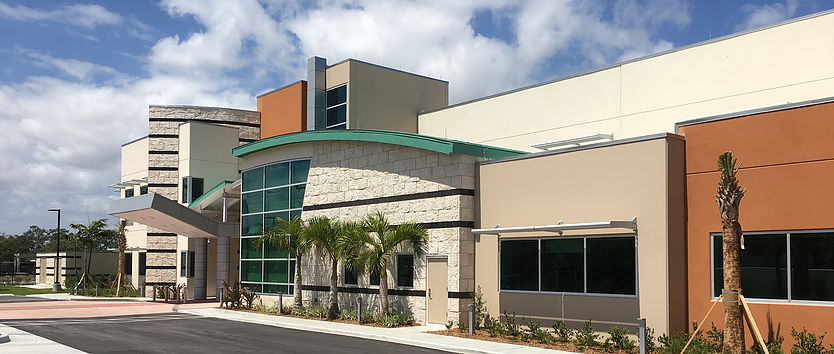
- No precise Coral Springs residential street address or universal fee/tax schedule was established here. The retained Fort Lauderdale photo does not depict the separate residential setting. Social and map destinations were not comprehensively reverified.
- Continuing care
- Alumni meetings, relapse-prevention work, family and community links, and discharge planning support ongoing recovery.
Source record · October 17, 2026
Scoped current official-source setting, duration, continuing-care and payment review; other fields and individual costs remain unverified.
Luxury rehab comparison · Fees and inclusions · Selection methodology
Broward Addiction Recovery Center (BARC) is Broward County’s public substance-use treatment provider for adults aged 18 and older. It serves people affected by substance use and co-occurring disorders and is not a private luxury-rehabilitation program.
Official county information lists detoxification, medication-assisted treatment, outpatient and residential services. Care may include individual, group and family therapy plus coordination with healthcare providers and community recovery supports. Detoxification is available 24/7, while hours and eligibility vary for other services. Current program sheets say residential treatment generally lasts 60 days, intensive outpatient treatment six to eight weeks and outpatient care about six months, while detoxification and all placements remain assessment-led.
Start by identifying the service the person actually needs
The official Broward Addiction Recovery Center overview places BARC within the county’s services for adults affected by substance use and co-occurring disorders. This profile should therefore be used to understand a public treatment pathway, with clinical assessment guiding the next step. A photograph or general program description cannot establish which setting a particular person will use.
A useful initial discussion explains the main substance-related concern, other health conditions, current treatment, and practical circumstances such as housing and work. The person may need a different starting point from someone with the same substance history but different medical or support needs. Ask what information BARC needs to assess that situation and which service will make the placement decision.
Families can help organize information and support the person’s participation, but should avoid arranging travel around an assumed residential admission. Confirm the specific service, location, assessment arrangements, and next contact. Co-occurring mental health concerns belong in that assessment; the county overview alone does not establish admission to a standalone psychiatric hospital or every type of specialist mental health treatment.
Assessment hours, medical triage, and payment questions
BARC’s admissions information sheet distinguishes medical triage for people needing detoxification from the admissions assessment service. It describes medical triage as available around the clock. Assessment operates seven days a week from 7 a.m. to 9 p.m., with the final assessment starting at 6 p.m. Appointments should be scheduled ahead; walk-ins are seen when time permits.
These are different access arrangements, so a person should explain whether they are requesting a planned assessment or need urgent evaluation. The admissions team assesses treatment needs and may recommend an appropriate level of care or another community resource. An assessment appointment does not itself confirm a residential bed.
The same sheet says BARC accepts many public, private, and commercial insurance plans and may offer qualifying uninsured or underinsured people a sliding-scale fee. Ask about the exact service, plan participation, required authorization, and patient responsibility. A public provider or sliding scale does not mean every service is free. Request information about the documentation needed for financial eligibility and any costs that remain after coverage is applied.
Residential care is based in Coral Springs
The county’s residential treatment sheet describes a 92-bed, dormitory-style program in Coral Springs for adult men and women. It is separate from the central admissions and detoxification building in Fort Lauderdale. Services generally last 60 days, with the individual plan determining what is appropriate.
The published model has an initial phase focused on stabilization, recognizing substance-use triggers, managing cravings, and developing practical skills. A subsequent phase emphasizes community support, family involvement, and a workable discharge plan. The sheet also describes job-readiness activities, which should be understood as preparation and community connections rather than a promise of employment.
Family involvement can include counseling and approved community activities with supportive relatives. Ask about current participation and pass arrangements instead of assuming unrestricted visits. The document also identifies a perinatal program and support for nonpregnant women with children aged seven and younger. Those descriptions require program-specific assessment; they do not establish accommodation for every child or guarantee pregnancy outcomes. Admissions must determine whether residential placement is suitable before the person plans to move into the program.
Compare intensive outpatient care with standard outpatient care
BARC’s outpatient service sheet describes intensive outpatient treatment as an expected six-to-eight-week program, with groups at least three times weekly for three hours a day, plus individual counseling. Standard outpatient treatment is described as approximately six months, adjusted to individual needs. These are program descriptions rather than universal prescriptions for every patient.
The sheet includes individual, group, and family sessions, cognitive behavioral and motivational approaches, emotional regulation skills, and connections with community support. It also describes peer mentors from other agencies. Clarify which sessions and supports are part of the person’s actual treatment plan and how responsibilities are shared when another organization participates.
Listed outpatient locations include the BARC Central Facility, Edgar P. Mills Center, and the Family Success Center in Carver Ranches. Published operating hours extend from morning into evening on weekdays, but the document explicitly says every level of care is not offered throughout those hours. Confirm the assigned site and exact weekly schedule before arranging work, childcare, or transportation. Outpatient suitability requires an admissions assessment rather than self-selecting a convenient timetable.
Medication treatment is assessed individually
The BARC medication-assisted treatment sheet describes medication together with counseling and behavioral support for opioid or alcohol use disorders. It lists Sublocade, Suboxone, and Vivitrol as options used when appropriate. Listing several medicines does not mean they are interchangeable or that each person will be prescribed one of them.
The admissions and clinical assessment should establish which options fit the person’s condition, current medication, treatment history, and other medical needs. Tell the team about existing prescriptions and the clinicians involved in care. Ask how prescribing, appointments, medication access, and follow-up would work within the recommended program. The public sheet cannot answer those individual clinical questions or establish a particular medicine’s availability on the day of admission.
BARC also describes naloxone education for consumers and caregivers as part of harm reduction. Families can ask how to participate and what further instruction the treating team recommends. Medication decisions and overdose-response education serve different purposes; neither should be reduced to a promise that treatment removes every risk. Ongoing support and a clear plan for changes in care remain important discussion topics.
Local eligibility and referrals involving other agencies
The Broward County agency directory describes BARC as serving adult county residents and identifies admissions as voluntary. It also says the service accepts individuals involved with the criminal justice system, the Department of Children and Families, and ChildNet. These statements establish possible referral contexts, not a guarantee that every referred person meets the criteria for every program.
When another agency is involved, clarify why the referral is being made and what assessment is requested. The person should understand which decisions belong to BARC’s treatment team and which remain with a court, supervising agency, or child-welfare professional. Entering treatment should not be represented as guaranteeing a particular legal or family-case outcome.
People who live outside Broward County should check eligibility before assuming that the same arrangements apply to them. Referring professionals should also confirm what information is needed and how it may be shared. Keeping the clinical plan, administrative requirements, and any outside obligations distinct helps the person prepare for the process without confusing a referral with an accepted placement.
Read the privacy notice before deciding how others participate
BARC’s privacy notice effective February 1, 2026 explains its handling of health information, consent, requests for records, and complaint routes. It describes information used for treatment, payment, and healthcare operations as well as circumstances in which other disclosures may occur. It should not be summarized as a promise that information can never be shared.
Before involving a family member, employer, or outside agency, ask the team to explain the relevant consent and communication arrangements. A person may want practical support from a relative while still having questions about which treatment details that relative can receive. Those preferences should be discussed directly rather than assumed from the fact that someone helped arrange an appointment.
The notice also describes requesting confidential communications and asking for restrictions, with conditions and limits explained in the document. Ask for a copy and clarification when anything is unclear, including how to raise a privacy concern. The notice is useful for an informed conversation; this profile cannot decide how a particular disclosure request or legal circumstance will be handled.
Household stability may require a separate county referral
Broward’s Family Success Centers describe case management and potential emergency help with rent, mortgage, or utility costs for eligible residents experiencing an unexpected income loss. Their process considers documentation and whether the household can maintain bills after assistance. This is a separate county support route with its own requirements.
For a person planning treatment or returning home, housing and household finances may need attention alongside clinical care. Ask a case manager whether this or another local resource is relevant, and identify the actual application steps. The current county page directs applicants to an orientation and online application, with eligibility assessed through supporting information.
Assistance is not automatic because someone attends BARC, and the Family Success description does not establish payment of rehabilitation fees or a guaranteed place to live. It also includes limits concerning previous assistance. Check the current requirements before relying on support in a household budget. Raising these questions early can make discharge planning more concrete by separating confirmed arrangements from applications that still need a decision.
Plan transportation around the confirmed treatment location
The Broward County Transit website provides trip-planning tools, schedules, rider alerts, and information about fixed-route buses, community shuttles, and paratransit. These resources can help someone assess whether an assigned outpatient schedule is workable. The starting point should be the exact treatment address supplied by BARC, since its services are delivered at more than one location.
Plan both the outward and return journey, especially for evening sessions. Check walking distances, transfers, accessibility needs, and the time required to arrive before treatment begins. A route that reaches the general neighborhood may not provide a suitable journey for someone with limited mobility or a tight connection after a group finishes.
Paratransit is a distinct service, so ask the transit provider about its eligibility and booking requirements rather than assuming access follows from attending treatment. Also discuss what to do if transportation is interrupted. The public transit information does not establish that BARC supplies transport or free passes. Confirm any assistance offered through the treatment plan and keep an alternative contact arrangement for missed or delayed journeys.
Official county program sheets and public resources reviewed October 19, 2026. Individual eligibility, placement, availability, payment, and scheduling require confirmation with the relevant service.
Explore related guidance on treatment in Florida and alcohol addiction treatment.
BARC’s central admissions and detox facility is at 325 SW 28th Street, Fort Lauderdale, FL 33315; its residential program is separately located in Coral Springs. The general line is 954-357-4880. BARC accepts many public, private and commercial insurance plans, and uninsured or underinsured clients may qualify for a sliding-scale fee; benefits, eligibility, patient costs and any additional charges still require confirmation through admissions. Source: Broward County BARC overview, checked October 17, 2026.