EHN Bellwood Toronto


EHN Bellwood Toronto 3 photos

EHN Bellwood Toronto is a licensed hospital and private treatment center for adults with addiction and mental-health disorders. It is EHN Canada’s Toronto facility at 175 Brentcliffe Road.
Current programs include inpatient addiction and mental-health care, trauma and psychological-injury treatment, concurrent trauma and addiction treatment, mood/depression/anxiety care, eating-disorder treatment, obsessive-compulsive-disorder treatment, support for healthcare professionals, family services and a hybrid inpatient/online addiction pathway. Published program lengths vary: the core addiction program starts at seven weeks; trauma and mood programs are seven weeks, concurrent trauma and addiction is nine weeks, OCD treatment is 12 weeks, and the hybrid pathway combines two inpatient weeks with eight virtual-treatment weeks and 12 months of aftercare.
The core addiction program has an individual treatment plan
Bellwood’s Toronto addiction program describes inpatient care starting at seven weeks, with duration varying by need. Its team includes medical, psychiatric, nursing, counseling, nutrition and recreation professionals. The provider combines an abstinence-based approach with medication-assisted treatment when needed, alongside individual therapy, groups, education and relapse-prevention work.
Explain current prescriptions, substance use, previous withdrawal experiences and mental-health concerns during assessment. Ask whether medically supervised withdrawal is part of the proposed admission and how it connects with the rest of the stay. The published model does not require every person to follow an identical sequence or receive every listed intervention.
The program describes family support and a year of aftercare for eligible patients. Obtain the actual continuing-care agreement, including the funding route and participation requirements. A general aftercare statement should be checked against the individual placement, particularly when applying for subsidized care.
Concurrent trauma and addiction has its own program
The concurrent trauma and addiction program is identified separately, with a published nine-week inpatient format. Its described methods include Cognitive Processing Therapy, Prolonged Exposure, CBT, DBT, individual and group psychotherapy, substance-use relapse-prevention work and medication support when indicated. Bellwood describes small cohorts and a year of aftercare.
This program may be relevant when both trauma symptoms and substance use need coordinated attention. Give the assessment team information about both concerns instead of asking for a trauma program without mentioning current use, prescribed medicines or withdrawal risk. The team should explain how the selected track addresses the interaction between the conditions.
Ask how trauma-focused sessions are introduced, which clinician coordinates them, and what support is available between sessions. The nine-week description is a program framework to discuss, not proof that every applicant is suitable or that symptoms will resolve within that period. Discharge planning should identify ongoing care for both needs.
The trauma pathway is distinct from the combined program
Bellwood’s trauma, PTSD and psychological-injury program lists seven weeks of inpatient treatment. Its published approach includes Cognitive Processing Therapy, Prolonged Exposure with occupational therapists, and CBT. The page describes small cohorts and includes one year of aftercare.
Ask admissions to explain why this pathway, rather than the concurrent addiction pathway, fits the person’s clinical history. Names alone do not establish the required level of medical support, readiness for particular trauma therapies or whether another service should come first. Any current substance use remains relevant to that discussion.
The provider’s example day combines meals, reflective practice and treatment activities, while expressly recognizing that individual experiences vary. Use it to understand the general rhythm rather than to plan around a guaranteed daily timetable. Before committing to time away, request the proposed start date, current attendance expectations and arrangements for appointments or responsibilities that cannot simply be postponed.
Mood and anxiety care includes planning for life at home
The mood, depression and anxiety program describes a seven-week inpatient option with psychiatric care, small groups and an individualized plan. Published components include CBT, DBT, one-to-one psychotherapy, education, physical-health support and medication treatment when appropriate. The provider also describes maintenance planning to identify warning signs and support the return home.
This is a mental-health pathway to assess according to symptoms, functioning and previous treatment; a diagnosis alone does not establish that residential or inpatient care is necessary. Ask how the team will review existing treatment, coordinate prescribing and assess whether this setting matches the person’s current needs.
Bellwood describes family education and offers a family drop-in route. Confirm who can participate, whether permission is needed to discuss personal clinical information, and what practical responsibilities family members will have after discharge. Pricing is provided after a suitability assessment, so request the proposed services, financial terms and any continuing-care arrangements together.
The hybrid option changes setting after two weeks
The hybrid addiction pathway combines two inpatient weeks with eight weeks of virtual treatment and 12 months of aftercare. The first phase provides stabilization and may include medically supervised detoxification when necessary. Treatment then moves to EHN Online’s Virtual Intensive Therapy Program.
The entire course therefore should not be described as a two-week residential program or as ten weeks spent at Bellwood. Its suitability depends partly on what happens after leaving the inpatient setting. Discuss the home environment, access to a private room and reliable technology, work commitments, and the clinical support available locally.
Ask which virtual sessions are required, how progress and safety are reviewed, and what happens if remote participation becomes impractical. Confirm where the patient may be physically located during online care and whether coverage continues across the transition. A flexible format can reduce time away from home, but the published structure does not establish that it provides the right level of support for every applicant.
The OCD service is a specialist adult pathway
The OCD inpatient program identifies a 12-week adult service delivered in partnership with Sunnybrook Health Sciences Centre’s Frederick W. Thompson Anxiety Disorders Centre. Its stated focus is obsessive-compulsive disorder within the structure of inpatient care, with skills intended to carry into everyday life.
Identify OCD as the reason for the inquiry and ask what assessment, previous-treatment records and referral information the specialist team needs. The existence of this program does not mean that general anxiety, unwanted thoughts or repetitive habits automatically meet its admission criteria. The clinicians should explain the treatment formulation and proposed goals in terms the patient understands.
Discuss how progress will be reviewed and how the transition home will be prepared. A named hospital partnership describes the published program relationship; it does not guarantee a particular outside consultant, hospital bed or funded placement. Confirm the actual care team, location and financial arrangement for the proposed admission.
Healthcare professionals can discuss a dedicated support track
Bellwood’s healthcare-professional addiction program lists a seven-week inpatient format, individualized treatment and preparation for returning to work. It describes an abstinence-based approach with medication-assisted treatment when needed, and access to aftercare. The provider supplies pricing after a complimentary suitability assessment.
A professional seeking treatment should distinguish the clinical admission from any employer, occupational-health or regulatory process. Ask who will coordinate documentation, what information requires consent to share, and whether a separate return-to-work evaluation or monitoring arrangement will be needed. Participation does not itself establish fitness to resume a particular role.
Coverage also requires a program-specific discussion. An employer benefit or professional support scheme may have authorization and reporting requirements beyond ordinary insurance verification. Request the anticipated costs and written scope before agreeing to a placement. The recovery plan should explain both ongoing clinical support and any separately arranged professional obligations, without treating aftercare as an automatic licensing clearance.
OHIP-funded beds have different continuing-care terms
The OHIP guidance says most Bellwood treatment is private, with limited subsidized addiction places for eligible Ontario residents who have a valid OHIP card and a substance-use disorder. It identifies adult eligibility, ages 18 and older, and expressly states that subsidized beds do not include aftercare.
That exclusion matters when comparing a publicly funded placement with a private program that advertises a year of follow-up. Ask what community services will be arranged after discharge, whether separate funding is available, and who is responsible for making appointments. Do not assume that a benefit described on another program page transfers to the subsidized route.
People from other provinces are directed to explore assistance through their own provincial healthcare arrangements. The page does not promise approval or a place. Confirm eligibility, available capacity and the proposed treatment before arranging travel or leave from work. General provincial healthcare coverage is not evidence that every Bellwood mental-health program is publicly funded.
Rooms and amenities are separate from the clinical recommendation
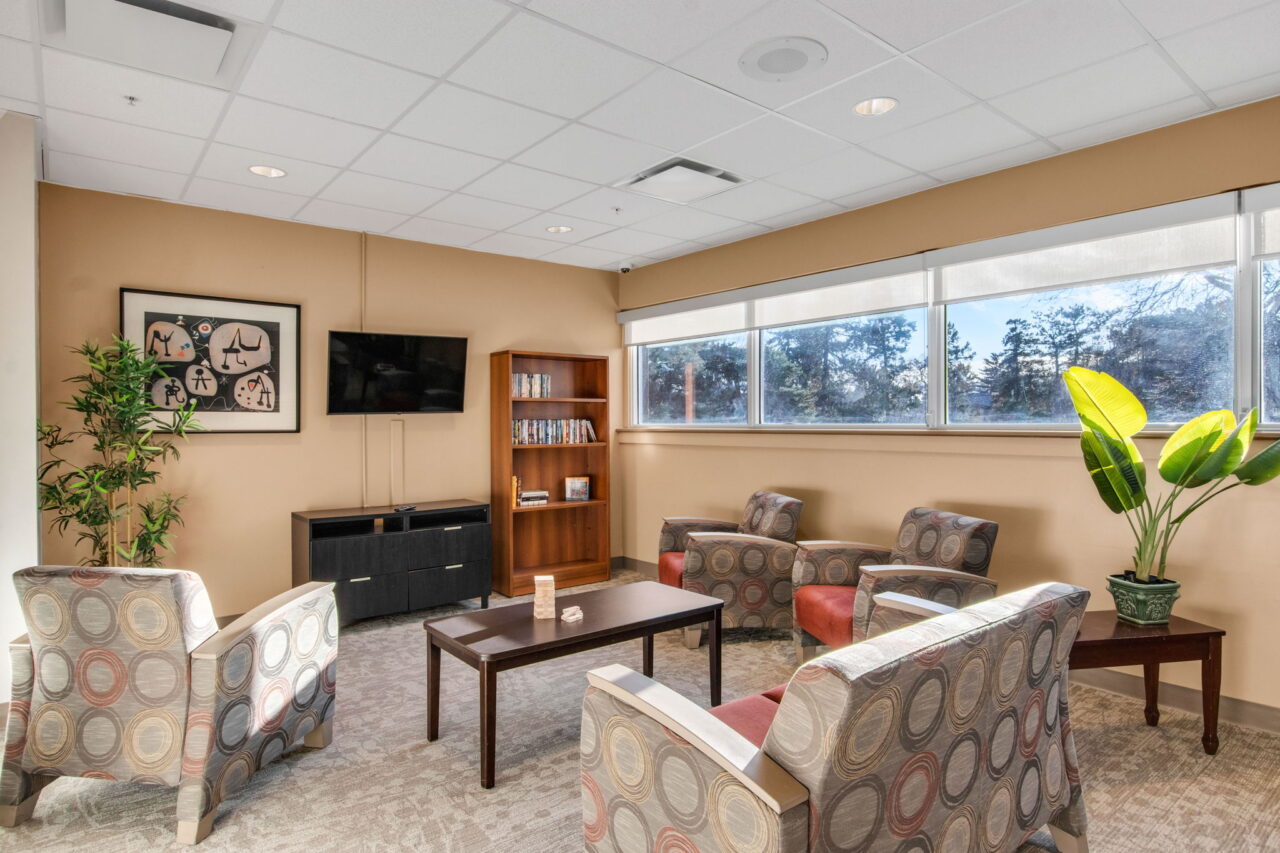
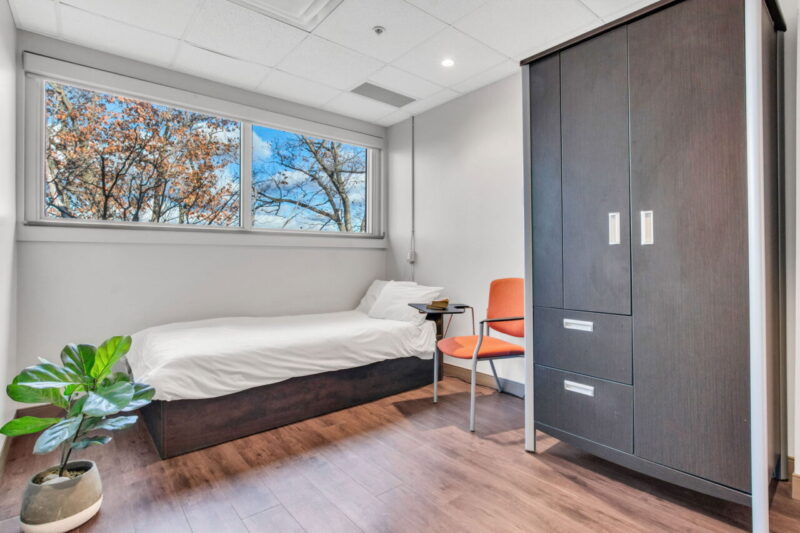
The facility information describes private and shared accommodation, community lounges, chef-prepared meals and the alumni-run Thrive Café. It also lists fitness activities and onsite access to massage, chiropractic care and acupuncture. These are features to clarify within the proposed stay, rather than substitutes for an appropriate treatment plan.
Ask which room type is available for the program, whether changing rooms affects the price, and how accessibility or dietary needs can be accommodated. A photograph or a general room listing does not reserve a specific room. Likewise, the availability of an additional wellness service does not establish that it is included, clinically recommended or suitable for every patient.
The facility page identifies the Toronto address as 175 Brentcliffe Road. Confirm arrival instructions for that site and the program’s own intake arrangements. References to other EHN facilities describe a wider network, not additional wards or accommodation at the Toronto hospital.
Confirm the team responsible for the particular program
The published Bellwood team lists Andrea Groff as executive director, Omer Vandevyvere as clinical director, Dr. Dalia Rosen as medical director, Dr. Kalam Sutandar as a psychiatrist and Judy Dixon as senior nursing manager. It also describes counselors, dietitians, family therapists and recreation professionals.
These are provider-listed roles, not an independent credential review or a promise that each named person will personally treat every patient. Ask who will oversee the selected program, which professional will be the main contact, and how medical and therapy decisions are coordinated. For a complex presentation, identify who will review information from existing clinicians before admission.
Before discharge, establish who will take responsibility for follow-up and how records will reach that person with consent. A large multidisciplinary team is most useful when the patient understands the practical division of responsibilities and knows whom to contact about a clinical concern, an appointment or a treatment-plan change.
Official EHN program, team, facility and funding information was reviewed October 19, 2026 through saved complete official retrievals and substantive indexed official passages. Indexed crawl dates vary; this is not an independent licensing or clinical-outcome assessment.
Explore treatment in Canada, trauma treatment considerations and OCD care options.
The facility lists 1-866-499-0037. Most treatment is private; limited OHIP-funded addiction beds are available to eligible Ontario residents, but the provider states that subsidized beds do not include aftercare. Private program coverage depends on the insurance plan, and fees, availability and patient cost require admissions confirmation. Sources: Bellwood overview and FAQ, addiction program, trauma program, concurrent program, hybrid program, OHIP guidance and contact page, checked 2026-10-13.