Austen Riggs Center


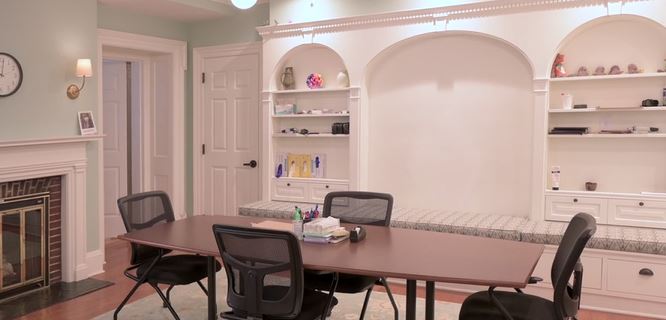
Austen Riggs Center 3 photos
Comparison facts and sources
Residential psychiatric evaluation and treatment for adults 18+ with complex psychiatric difficulties; not a locked acute hospital and not a primary addiction-treatment program. · 25 Main Street, Stockbridge, Massachusetts; open, voluntary adult residential psychiatric treatment setting.
- Published fee information
- USD 97,000 / The current six-week evaluation and treatment period costs USD 97,000, including a USD 2,500 admission consultation fee. Continued care is billed at the applicable daily rate.
- Before admission
- Admission requires voluntary participation in an open setting. Active or primary substance-use disorder is not admitted; only abstinent co-occurring cases may receive substance-use support. Confirm the conflicting published median-stay figures directly.
- Continuing care
- After six weeks, patients may continue residential care or move to step-down, transitional, day-treatment or aftercare programming. The Aftercare Program continues individual treatment after therapeutic-community participation ends.
Source record · October 15, 2026
Provider-published information checked October 15, 2026. Confirm current program fit, admission criteria, duration, payer arrangements and itemized patient cost directly with admissions.
Luxury rehab comparison · Fees and inclusions · Selection methodology
Provider overview
Austen Riggs Center is an open, voluntary residential psychiatric treatment program for adults aged 18 and older in Stockbridge, Massachusetts. It is not a locked acute-care hospital, addiction-rehabilitation campus or skilled-nursing facility; admission depends on whether a person can participate safely and voluntarily in its open therapeutic community.
Treatment and eligibility
Most patients begin with a six-week residential evaluation and treatment period combining intensive psychodynamic psychotherapy, psychiatric evaluation and medication management, psychological testing, therapeutic-community participation, activities, nursing and medical services, and family meetings when indicated. Austen Riggs does not admit people whose substance-use disorder is active or primary. It may support abstinent patients whose substance-use history is secondary to a complex psychiatric condition.
Duration, cost and insurance
There is no fixed total stay: some patients leave after six weeks and others continue in residential, step-down, transitional, day-treatment or aftercare programming. Current official pages conflict: the residential overview reports a median stay of approximately six months, while the current cost page reports approximately five months. No single median should be treated as definitive without admissions confirmation. The six-week evaluation and treatment period costs USD 97,000, including a USD 2,500 admission consultation fee. Residential treatment is private pay, is not in-network and is not eligible for Medicare or Medicaid reimbursement; out-of-network reimbursement may be possible, and limited need-based assistance of up to 35% may be available.
What participation in the open setting requires
Austen Riggs’ guidance on program fit makes the open, voluntary setting central to treatment. Patients are expected to attend therapy, participate in community life, and discuss difficult experiences with staff. The program does not rely on locked doors or a system of privileges to manage movement. It requires a person to be able to work with the team on safety within that environment.
This makes clinical suitability more important than choosing an attractive residential setting. A history of complex symptoms or repeated treatment does not by itself establish that Riggs is appropriate. The admissions team assesses the person’s current ability to participate and the support required. If safety or daily functioning presently needs a more controlled setting, another level of care may be necessary first. The open model is a specific treatment approach with requirements that should be understood before admission.
The initial six weeks combine evaluation and treatment
The six-week program includes active treatment from the beginning. Psychotherapy, psychiatric and medical review, psychological testing, community participation, activities, and family meetings when appropriate contribute to an understanding of the person’s difficulties. Near the end, the multidisciplinary team meets in a formal case conference, with the patient invited to contribute to the discussion.
The resulting formulation brings together the team’s observations and recommendations. The next step may be outpatient care, another specialist setting, or continued treatment at Riggs. The six-week period therefore has a purpose of its own and should not be understood simply as a deposit on a longer stay. Before beginning, discuss how findings will be communicated and how any recommendation will be coordinated with existing clinicians. Continued residence is one possible outcome of the evaluation, rather than an automatic requirement for every person.
Intensive psychodynamic psychotherapy
The psychotherapy description places regular work with a doctoral-level psychologist or psychiatrist at the center of care. Sessions ordinarily take place four times a week, with exceptions for holidays, illness, or clinician absence. The work explores emotional experience, relationship patterns, personal history, current difficulties, and the meaning of symptoms. The developing relationship with the therapist is itself part of what is examined.
This is a different experience from a residential timetable built mainly around a sequence of brief educational groups. The provider emphasizes continuity and depth, while acknowledging that the process can be slow or unsettling. Community life and other services provide settings in which experiences between sessions can become part of the work. Someone considering Riggs should discuss whether they want this exploratory approach and how it relates to previous treatment, current goals, and the practical demands of living away from home.
How psychological testing contributes to the formulation
The testing service uses personality and cognitive assessment during the initial six weeks. The provider describes the aim as understanding characteristic ways of thinking, feeling, and managing difficulties. Findings are integrated into the clinical case conference alongside what has been learned through therapy, community life, and other parts of the evaluation.
The page explains that the team generally undertakes a fresh assessment even if a person has completed testing before, although recent results may sometimes be used. For longer stays, repeat testing may help examine change. This makes earlier assessment reports useful material to discuss during admission, without assuming they eliminate the need for further work. The assessment should be understood as one contribution to a broader clinical picture, rather than a single test that determines a person’s identity or guarantees a definitive answer to every diagnostic question.
Family work and the clinical social worker’s role
The family-work description assigns an important role to a clinical social worker. Families typically meet with a social worker on admission and may contribute to a multigenerational history during the initial evaluation. With the patient’s authorization, support and discussion can take place by telephone, video, or in-person meetings. The work considers current relationships and their wider history.
Family meetings may involve the patient, relatives, social worker, and psychotherapist. The focus is on understanding patterns of interaction and preparing for future challenges, rather than making relatives passive recipients of updates. The social worker may also help the family discuss the financial demands of treatment. For someone arriving with longstanding family tension, these are distinct conversations to prepare for: what information may be shared, how family members can participate, and how treatment and financial responsibilities will be discussed while respecting the patient’s role.
Activities that develop skills beyond the patient role
The Activities Program is deliberately organized around learning and making things. Artisans and teachers lead pursuits such as visual arts, woodworking, ceramics, fiber arts, theater, and horticulture. The Lavender Door studio is on Main Street beyond the main campus. Participants are approached as students developing skills, with opportunities for individual instruction and workshops.
This is a distinctive part of the Riggs setting. It creates experiences of concentration, frustration, collaboration, and achievement outside the formal therapy relationship. The greenhouse and other practical activities also provide ways to contribute to everyday community life. The program should not be confused with a promise that every activity is a clinical therapy or that a person must already have artistic ability. Its stated role is to make room for capacities and interests that can be obscured when someone is understood only through symptoms or treatment history.
Living at the Inn during the first phase
The Inn Residential Programs begin in the main residence, where the provider describes accommodation for up to 45 patients and nursing availability around the clock. Bedrooms are mostly single rooms, with a mixture of private and shared bathrooms. Community spaces include a dining room, library, gym, and common areas. The nursing station is close to patient rooms.
The Inn is also part of the treatment structure. Twice-daily program groups provide opportunities to get to know others, seek peer support, and examine patterns that arise in relationships. Nursing staff support communication, self-management, safety, and medication education. Remaining beyond the first six weeks does not necessarily mean moving immediately to a different residence; many patients continue in an Inn program. The appropriate accommodation and support level are clinical decisions, so room preferences should be discussed alongside the needs identified during evaluation.
Step-down residences and increasing independence
The step-down programs use smaller residential settings to develop independent living and relationship skills after the initial evaluation. The Elms offers seven beds on the campus, while Lavan Hall is a 16-bed residence on Main Street. These programs involve different amounts of structure and community participation, with continued access to nursing support at the Inn in an emergency.
The longer pathway may also include living locally while attending day treatment. In the Aftercare Program, individual treatment continues after participation in the Therapeutic Community and Activities Programs ends. These are distinct stages with different expectations and daily rates. Progressing to them depends on the person’s clinical situation and ability to make use of greater independence. A longer-term plan should explain how work, education, volunteering, or family roles will be reintroduced, and which treatment relationships will continue during each transition.
Admission consultation and possible waiting time
The admission process begins with a review of clinical and medical information, discussion of the open setting, and consideration of costs. The final in-person consultation is described as a three-hour process, usually on the anticipated admission day. It includes a patient-led campus tour and meetings involving the prospective patient, admissions staff, and family or other participants as appropriate.
An initial indication of fit is not the same as an unconditional admission offer. The consultation remains part of the clinical decision. The provider also describes a waiting list after preliminary review, with timing varying from one to several weeks. Existing clinical support remains important while waiting, and any stabilization or sobriety expectations are discussed individually. For someone traveling to Massachusetts, clarify the decision process and contingency arrangements before making assumptions about immediate entry. The time and financial commitment are discussed before the person begins the residential program.
What the initial fee includes and excludes
The cost page lists $97,000 for the six-week evaluation and treatment period, including the $2,500 admission consultation. It describes a refundable $60,000 payment on admission that is applied to treatment costs. Included elements cover the core evaluation and treatment services, room and board, and the clinical case conference. Medication, outside medical or dental care, externally ordered tests, and personal expenses are listed separately.
Continued treatment is billed at the applicable program rate. Residential care is private pay, and the person accepting financial responsibility remains responsible for keeping the account current even when seeking out-of-network reimbursement. The provider describes third-party assistance with possible insurance claims and limited need-based financial support. Those arrangements should be reviewed before admission, including payment timing and the cost of a possible extension. A six-week quotation should not be treated as the price of an indefinite residential course.
The limit on active or primary substance use
The substance-use eligibility page is explicit: Riggs does not admit people whose substance use disorder is active or primary. It may treat adults whose substance use is secondary to a psychiatric condition and who have achieved abstinence. Support can include certified substance-use counselors, groups, and psychiatric treatment integrated into the broader plan.
The distinction affects both referral and continuity. If a patient returns to active use and cannot promptly restore abstinence, the provider may recommend discharge to a dedicated substance-use service before a return is considered. Someone seeking detox or primary addiction rehabilitation should therefore discuss a different initial pathway. For an abstinent person with a co-occurring history, the admission conversation should establish how recovery support will fit with intensive psychiatric treatment. The existence of substance-use support at Riggs must not be mistaken for an unrestricted addiction-treatment admission policy.
Stockbridge and the meaning of an open campus
The campus description places Austen Riggs on Main Street in Stockbridge, in the Berkshire region of western Massachusetts. Residences, treatment spaces, and community activities are situated within a town setting. The provider describes an environment resembling a small college campus, where the absence of locked doors is connected to expectations of autonomy, communication, and shared responsibility.
The surroundings are therefore part of the treatment model, rather than simply a leisure amenity. Daily interactions and choices outside appointments become material for reflection with the clinical team. The campus tour can help a prospective patient understand how residences, therapy spaces, and ordinary town life relate to one another. It is also an opportunity to discuss mobility and access requirements. A person choosing Riggs should be comfortable considering both the freedoms of the setting and the sustained participation it asks of residents.
Source check: October 18, 2026, for the additional provider details above.
Sources and verification
Official admissions overview; cost and insurance; residential treatment and duration; substance-use eligibility. Checked October 10, 2026. Provider-published information; not an independent clinical assessment.