Anchor Hospital


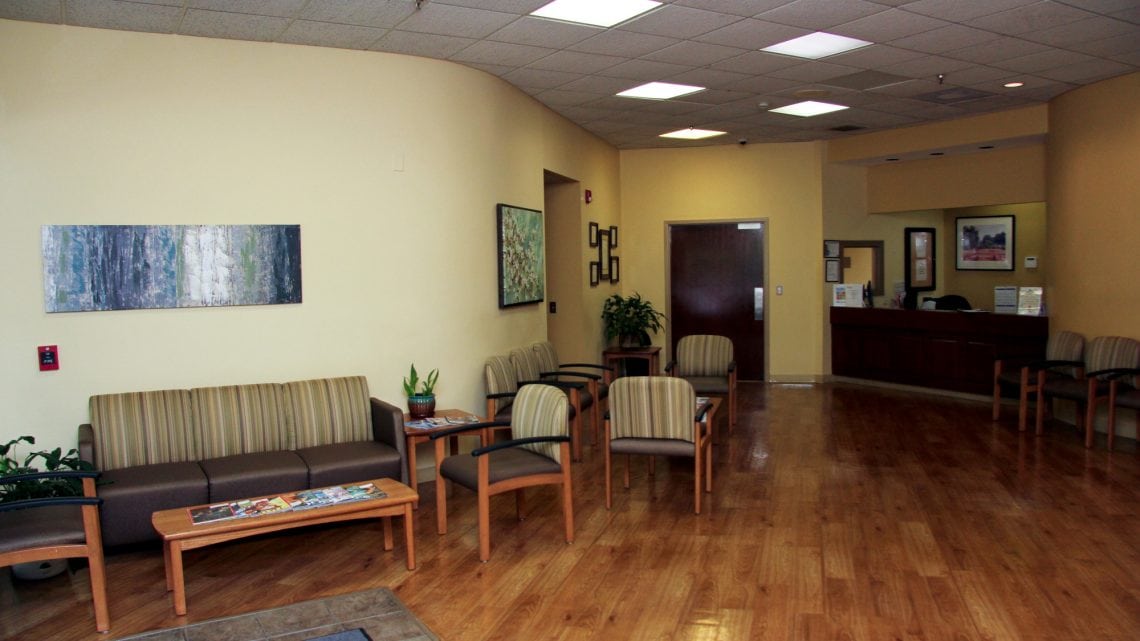
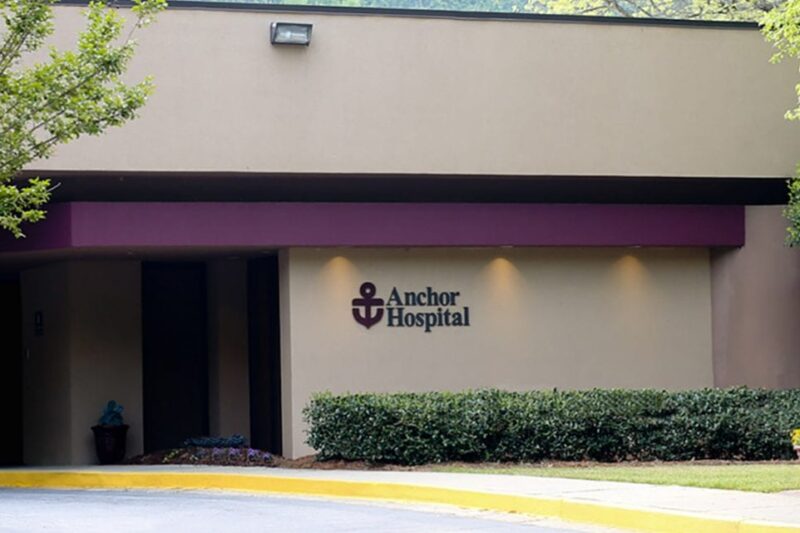
Anchor Hospital 3 photos


Comparison facts and sources
Atlanta behavioral-health hospital providing inpatient psychiatric and substance-use care, with Branches outpatient programs operating as a service of Anchor Hospital. · 5454 Yorktowne Court, Atlanta, Georgia 30349
- Published fee information
- Quote required
- Before admission
- Branches outpatient treatment is a service of Anchor Hospital and should not be presented as identical to 24-hour inpatient hospitalization or as occurring in every case at the main hospital address.
- Continuing care
- Anchor publishes a step-up and step-down continuum between inpatient, PHP and IOP, but does not identify a separate branded aftercare program on the checked pages; discharge and continuing-care arrangements require confirmation.
Source record · October 14, 2026
Provider-published information checked October 14, 2026. Confirm level of care, program location, current availability, insurance authorization, expected payment and discharge planning directly with Anchor Hospital.
Luxury rehab comparison · Fees and inclusions · Selection methodology
Anchor Hospital is an Atlanta behavioral-health hospital providing psychiatric and substance-use treatment for adolescents, adults and seniors. Its inpatient hospital and the separate Branches College Park outpatient service have distinct programs and contact details.
The hospital’s official program overview lists inpatient psychiatric and addiction care, adolescent and older-adult tracks, services for active military members and veterans, and outpatient care. Branches College Park offers adult PHP and IOP plus virtual adult and adolescent IOP; the provider states that adult PHP commonly lasts two to four weeks.
Adult inpatient care begins with a crisis assessment
Anchor’s adult inpatient service treats people eighteen and older experiencing a psychiatric or substance use crisis. Its description identifies a continuously operating hospital program with twenty-four-hour nursing, individual and group therapy, family sessions, and expressive activities. The psychiatric unit uses the S.E.L.F. framework: Safety, Emotions, Loss, and Future.
The addiction program describes a twelve-step approach drawing on Alcoholics Anonymous and Narcotics Anonymous. Medical detox may be included when indicated, alongside physician care, education, coping-skills work, and relapse-prevention planning. This is an assessed hospital service, so a preferred length of stay should not determine the starting level of care.
Discuss recent substance use, current prescriptions, previous withdrawal complications, psychiatric symptoms, and relevant medical needs with the assessment team. The adult inpatient description explains the available framework; the individual plan should identify the receiving unit, monitoring needs, and how readiness for discharge will be reviewed. Ask separately about the mix of private appointments and group-based treatment.
Co-occurring treatment brings psychiatric and substance use needs together
The dedicated adult dual-diagnosis page describes integrated psychiatric evaluation and treatment during inpatient care. Anchor says the plan addresses both psychiatric symptoms and chemical dependency, with short- and long-term goals tailored to the patient. Its listed team roles include nurses, social workers, psychologists, substance use counselors, expressive therapists, and program specialists.
These are descriptions of roles within a multidisciplinary service, rather than a guaranteed staffing ratio or a fixed number of appointments with each professional. Ask who will coordinate medication review, how prior diagnoses will be reassessed, and which clinician will communicate with the existing outpatient team. Relevant records can help that discussion when the patient authorizes their release.
The co-occurring inpatient program also includes family and referring-professional input when appropriate. Participation should reflect the patient’s preferences, privacy, and relationship safety. Before discharge, establish which ongoing psychiatric and substance use services are needed and whether they will be provided through Branches or an outside service.
The adolescent unit has a separate treatment focus
Anchor describes a dedicated adolescent psychiatric unit with daily treatment adapted to teenagers’ needs. Its published components include the S.E.L.F. framework, individual and group therapy, family sessions, and expressive therapies such as art and recreation. The stated approach emphasizes safety and awareness of the effects of trauma.
A parent or guardian should ask about the unit’s current age criteria, the proposed treatment group, educational arrangements, and how communication with home will work. The adolescent inpatient page does not supply one universal stay or a complete school timetable. The age range on a different outpatient program should not be substituted for an inpatient admission decision.
Discuss current risks, previous hospital care, medications, learning or sensory needs, and the teenager’s own concerns during assessment. Clarify how the young person participates in planning, which conversations can be private, and when supporters receive updates. Family work can have practical goals around communication and discharge without implying that every relationship is safe or that participation guarantees a particular outcome.
Older-adult services address acute behavioral and daily-living needs
The older-adult program describes short-term acute care in secure units, with twenty-four-hour nursing, family sessions, expressive activities, assistance with daily living, and assessment of cognitive impairment. Anchor says its physicians and clinical staff have experience working with people referred from nursing homes and assisted-living settings.
That experience can be relevant when a change in behavior occurs alongside established medical or cognitive difficulties. A referring team should explain the person’s usual level of function, recent changes, prescribed medicines, mobility, communication, and existing support arrangements. Ask which medical needs the unit can manage and what would require evaluation or treatment elsewhere.
The older-adult service description is for an acute behavioral health program. Confirm discharge planning with the receiving home, family, or community service early in the stay. A short hospital admission does not by itself secure a new long-term residence, ongoing personal assistance, or approval from an insurer for every recommended service. Establish who will coordinate each part of the transition.
Branches College Park is the outpatient service
Branches College Park operates as a service of Anchor Hospital at 5448 Yorktowne Drive, Atlanta. Its outpatient contact is 404-470-9500. This is a useful distinction from the main hospital address and number when arranging an assessment, a daily appointment, or transport.
The Branches program overview describes adult PHP and IOP, virtual adult IOP, and virtual adolescent IOP. It identifies mental health and substance use concerns, including co-occurring presentations, and explains that the level of support can change as needs change. An outpatient appointment requires a plan for the hours outside treatment as well as the sessions themselves.
Ask which program has accepted the referral, whether attendance is in person or online, and which clinicians will carry responsibility for continuing prescriptions and reassessment. The grounds include outdoor and recreational spaces, but access to campus amenities does not define the clinical program. Confirm the receiving entrance and timetable before traveling, particularly when moving directly from hospital care into a different level.
Adult PHP offers daytime treatment with an optional residence
The adult PHP page describes treatment for people eighteen and older, generally five to seven days weekly from 8:30 a.m. to 12:30 p.m. Most participants are described as attending for two to four weeks. The plan includes groups, skills work, and weekly individual contact with a psychiatrist or nurse practitioner.
Anchor also describes a sixteen-bed, coed campus residence for PHP participants. Residents receive three cafeteria meals daily and seven days of programming. Ask about current availability, bedroom arrangements, supervision, accessibility, and any separate housing charge before relying on this option.
The PHP and housing information distinguishes this outpatient level from an inpatient admission. Its published support arrangements need to be matched to the particular living option and clinical need. Family involvement and weekend visits are described as subject to consent and benefit to treatment. The two-to-four-week range is a provider estimate; the team should explain the individual’s proposed duration and criteria for moving to less intensive care.
Adult IOP allows a choice of three weekday mornings
Branches’ in-person adult IOP is offered Monday through Friday from 8:30 to 11:30 a.m. Participants choose three days, totaling nine hours weekly. The provider describes a usual course of three to six weeks for people sufficiently stable and independent to live at home.
The listed work includes process groups, education about a diagnosis, coping skills, nurse-practitioner wellness education, and expressive activities. Practical topics may include family relationships, self-esteem, triggers, daily routines, and preparing for responsibilities outside treatment. Ask how any individual appointments or medication review fit around the group timetable.
The adult IOP page also describes discharge referrals to healthcare providers and housing resources, with help applying for benefits when relevant. Referral assistance does not establish eligibility for housing, Social Security, or veterans’ benefits. Confirm the actual receiving contacts and deadlines. The ability to choose attendance days can assist planning, but clinical suitability and the program’s current capacity still need assessment.
Adolescent PHP takes place after the school day
The dedicated adolescent PHP page identifies ages thirteen to seventeen and publishes a Monday-through-Friday schedule of 4 to 8:30 p.m. It is intended for teenagers who need more structure than ordinary outpatient appointments while being able to remain outside twenty-four-hour inpatient care. It may also follow a hospital stay.
Family therapy is described as built into the program twice weekly. Ask which supporters should participate, how sessions fit the teenager’s school and evening routine, and whether transport or remote participation needs can be accommodated. School attendance during the day still leaves a substantial evening commitment, including travel and time for meals and rest.
The adolescent PHP information says treatment may begin within twenty-four hours of approval; this is conditional on admission approval and availability. The assessment should confirm whether this program, a different outpatient service, or inpatient care is appropriate. Verify the specific insurance plan and proposed start date before rearranging school or making travel commitments.
Virtual adult IOP follows a defined evening schedule
Anchor’s virtual adult IOP is for people eighteen and older in Georgia. The published schedule is Monday, Wednesday, and Friday from 5 to 8 p.m. It describes small-group work, DBT-based programming, and support from licensed and master’s-level counselors, with programming designed under psychiatric leadership.
Online attendance removes the commute but still requires a suitable private space, a reliable internet connection, and a device with a camera and microphone. Ask how attendance, confidentiality, technical interruptions, and communication between sessions are handled. Confirm what will happen if symptoms change or the person needs care beyond the online program.
The virtual adult program page names most commercial plans, managed Medicare, and TRICARE among its payment routes, subject to benefits verification. A remote program should not be assumed to accept someone temporarily staying outside its service area. Confirm the location from which the patient may participate, the current timetable, and the assigned clinical contacts before making this the continuing-care plan.
Military and veteran care requires program-specific coordination
Anchor describes inpatient and outpatient services for military service members and veterans, including treatment for PTSD symptoms and other behavioral health concerns. Its TRICARE page lists psychiatric crisis evaluation, substance use treatment, possible medically supervised detox, rehabilitation, and co-occurring care.
The published treatment menu includes approaches such as narrative exposure therapy, trauma-focused CBT, ACT, family groups, and expressive activities. These are possible components of an individualized plan. Ask which intervention is recommended, who delivers it, how readiness is assessed, and what follow-up would be needed after leaving the current level of care.
The military and veteran program description establishes a referral option, not automatic authorization for every service member or veteran. Confirm the exact benefits route, referral requirements, receiving unit, and financial responsibility. Discuss any employer, command, or professional communication with the clinical team before records are shared. Treatment participation should not be represented as guaranteeing duty clearance, a benefits decision, or resolution of trauma symptoms within a fixed stay.
Hospital charge files are different from a personal estimate
Anchor publishes price-transparency information and explains that hospital charges are not the same as expected payment. The amount associated with a particular admission depends on the services delivered and the patient’s financial arrangements. The published files are a starting point for questions rather than a complete quote for an individual stay.
Ask for an estimate tied to the recommended level of care, expected duration, and specific insurance policy. Identify deductibles, copays, coinsurance, authorization limits, and services that could be billed separately. If a PHP residence is proposed, confirm how lodging, meals, and treatment appear in the agreement.
The hospital’s charge and payment explanation should be read alongside the admission team’s estimate. Anchor’s site also distinguishes independent physicians from hospital employment, so it is useful to ask about professional bills as well as facility charges. Clarify whom to contact if the care plan or expected stay changes and request the financial terms in writing before relying on an advertised charge.
Program descriptions and practical admission details reviewed against official provider pages on October 19, 2026. Individual eligibility, scheduling, capacity, payment, and treatment decisions require confirmation with the receiving program.
Identity, services, address, contacts and insurance guidance were rechecked on October 10, 2026. Call 678-251-3226 for assessments or 678-251-3200 for the hospital. Anchor’s current contact page lists 5454 Yorktowne Court, Atlanta, GA 30349. The hospital works with most major carriers, Medicare, managed Medicaid and TRICARE, but not traditional Georgia Medicaid; benefits and personal costs require verification.