Alsana – Birmingham

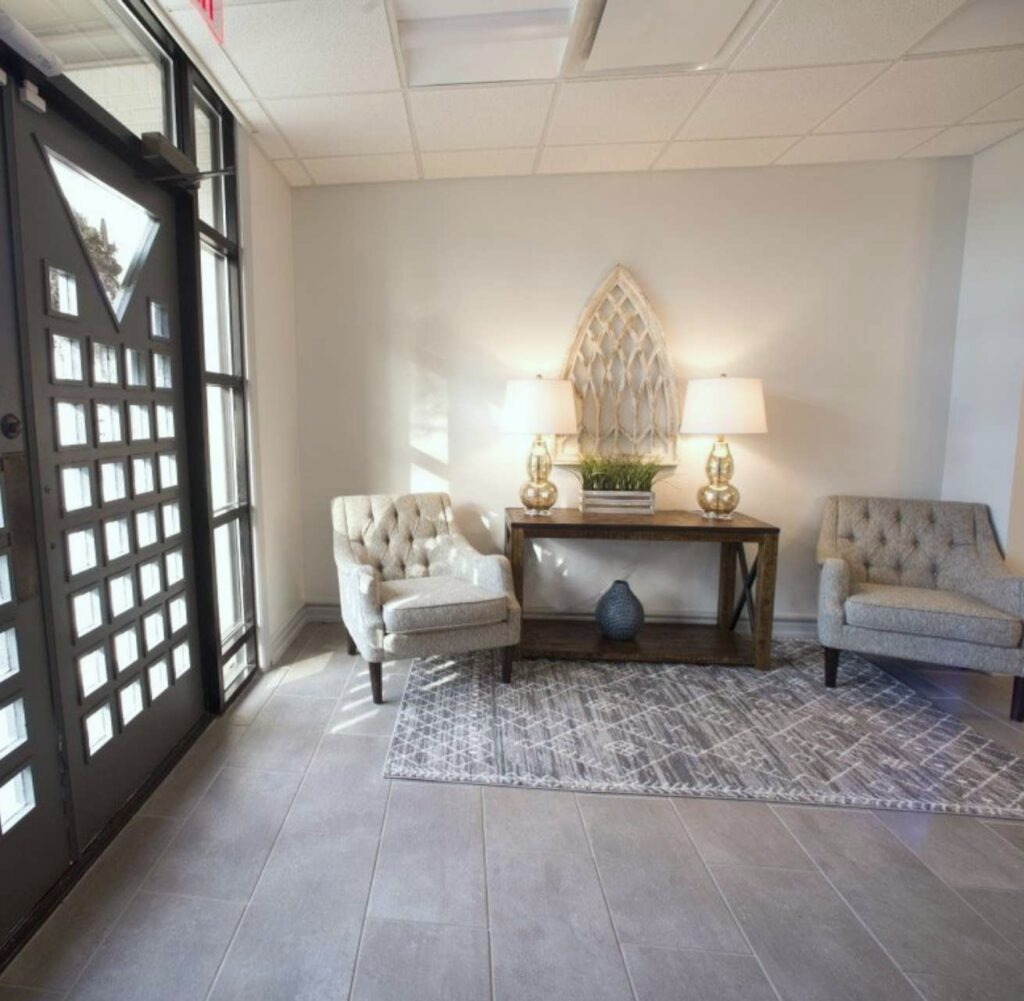
Alsana – Birmingham 2 photos


Comparison facts and sources
Birmingham-specific eating-disorder campus for adults of all genders. Residential care is delivered at the Birmingham residential community; PHP and IOP are separate step-down/day-treatment levels. Alsana also operates other campuses and virtual services, which are not presented here as Birmingham facilities. · 5101 Cyrus Circle, Birmingham, Alabama 35242
- Published fee information
- Quote required
- Before admission
- The published duration figures are program averages, not guarantees. This profile is scoped to Birmingham; other Alsana campuses and virtual programs must not be represented as Birmingham facilities.
- Continuing care
- Alsana recommends step-down care before returning home and offers discharge planning, an alumni program, lower outpatient levels and virtual services in more than 40 states.
Source record ·
Provider-published information checked October 14, 2026.
Luxury rehab comparison · Fees and inclusions · Selection methodology
Alsana – Birmingham is an eating-disorder treatment campus at 5101 Cyrus Circle in Birmingham, Alabama. The provider lists residential treatment alongside partial hospitalization and intensive outpatient care at this location.
Alsana describes treatment for anorexia, bulimia, binge-eating disorder and other eating and co-occurring mental-health conditions. Published average stays are 30–45 days for residential care and 45–60 days for PHP or IOP, but placement and duration depend on clinical assessment and individual circumstances.
Alsana says it works in network with many major insurers. Coverage, authorization and personal cost are plan-specific and require verification; the provider does not publish one universal self-pay price.
The Birmingham campus and the right starting level
The current Birmingham residential page describes eating-disorder care for adults of all genders at the Cyrus Circle campus. Residential treatment, partial hospitalization and intensive outpatient treatment are connected services, but admission to one does not automatically include the others. This matters when comparing a residential room with a day-program place: the clinical schedule, overnight support and accommodation arrangements differ.
The local residential description includes continuous on-site nursing, individual psychotherapy, nutritional appointments, psychiatric input and supported eating. It also lists supportive-other sessions. These are useful indicators of the program’s structure, rather than a promise that every patient’s timetable will be identical. A prospective patient should receive a named starting program, the clinical reasons for that recommendation and an explanation of how the team decides when a different level becomes appropriate. A campus tour or attractive bedroom cannot answer those clinical placement questions.
What the admissions assessment needs to establish
Alsana’s admissions information describes an initial telephone assessment, clinical review, benefit verification with permission and medical clearance. The sequence can vary with the person’s condition and proposed admission. Existing clinicians can help by supplying relevant records and clarifying current medical and nutritional needs, with the patient’s consent.
A significant limitation is explicit: Alsana says its centers do not provide intravenous or tube feeding. Someone who needs services beyond the center’s medical capacity may need hospital treatment before this program is suitable. The residential label should therefore not be read as equivalent to an acute medical hospital. The same admissions page describes its quoted stay ranges as averages, influenced by clinical recommendations and insurance authorization. Families should budget around an individualized plan and review points, rather than treating an average as a required course or a guaranteed discharge date. Ask what happens if medical clearance is delayed or the assessment recommends another setting.
How residential care organizes the day
The national residential program description presents a structured environment combining nursing, psychiatric review, individual and group therapy, nutrition counseling, meals and snacks with support, and processing after meals. Published appointment frequencies describe the intended service model; the actual plan should reflect the patient’s assessment and the Birmingham team’s current arrangements.
The value of this setting is the opportunity to work on eating and related difficulties throughout an organized day, with support available between scheduled appointments. It does not remove the need to check the program’s medical limits. Someone already working with a therapist, dietitian or physician should establish whether those professionals will contribute information, receive progress updates or resume care afterward. The transition plan should explain how supported practice will transfer to ordinary meals, work and relationships at home. Residential care is one possible step within that process, not a requirement for every adult with an eating disorder.
Birmingham day treatment and nearby housing
The separate Birmingham PHP and IOP page describes services on the same campus as residential treatment. Adults may enter these programs directly when appropriate or use them after a more intensive level. PHP is described as six to eight hours of programming each day, with individual, group, nutritional and psychiatric components.
The page also discusses nearby recovery-compatible apartments. These are accommodation options associated with attending treatment, rather than evidence that every outpatient participant receives overnight clinical supervision. Apartment amenities belong to the housing community and should not be confused with facilities inside the treatment center. Before traveling, obtain separate answers about the clinical program, housing eligibility, supervision, transport and charges. For a person stepping down from residential care, the practical change is substantial: more responsibility for evenings and time away from the team needs to be reflected in the transition plan and in the support available outside scheduled sessions.
What partial hospitalization does and does not provide
Alsana’s broader day-treatment description gives a schedule of six to eight hours daily, five to seven days a week, depending on the program. It includes group work, individual therapy, nutrition appointments, psychiatric input and supported eating. The provider explicitly distinguishes this from overnight supervision.
That distinction is central to choosing PHP. A person needs an appropriate plan for evenings, mornings and any days without attendance, whether living at home or in separately arranged accommodation. Recovery-compatible apartments may involve an additional charge. An insurance authorization for day treatment should not be assumed to pay those living costs. The provider’s example timetable can help explain the rhythm of the day, but the written admission offer should identify the actual weekly attendance requirement. If employment, caregiving or a long commute would make that timetable unworkable, discuss the conflict before accepting a place rather than relying on an assumed flexible schedule.
The role of intensive outpatient treatment
The IOP description offers a less intensive schedule with approximately four hours of programming per day, therapy groups, individual appointments and nutritional support. It describes assessment at entry and discharge, with the possibility of maintaining connections to an existing outpatient team. IOP should be selected because its support matches the person’s needs, rather than simply because it occupies fewer hours.
A useful plan explains which meals or daily situations will be practiced within treatment and which need support elsewhere. It also names who will coordinate medical follow-up and medication if those responsibilities remain outside the program. Alsana discusses a short intensive option separately from its ordinary IOP pathway; that option should not be mistaken for a standard treatment length. People comparing costs should establish whether consultations, apartment accommodation and any external clinicians are part of the same bill. A reduction in scheduled hours is most useful when the responsibilities outside treatment are equally clear.
Adult services and the limits of a national program list
Alsana’s adult treatment overview lists anorexia, bulimia, binge-eating disorder, ARFID and other eating disorders, alongside co-occurring concerns. It describes in-person programs for adults of all genders and also refers to virtual services. That network-wide information provides context, but it does not establish that every listed service or age group is available in person at Birmingham.
For this profile, the Birmingham residential service is an adult program. References elsewhere to adolescent virtual treatment should not be interpreted as an adolescent residential admission route at this campus. Likewise, a co-occurring diagnosis on a national list does not establish that the center offers a separate primary psychiatric or addiction program. The admissions discussion should identify the main treatment need, any conditions that require parallel specialist care and the clinicians responsible for each. For virtual care, confirm eligibility where the patient will physically attend sessions before making it the planned continuation of an Alabama admission.
Participation for family and supportive others
The Family and Supportive Others Program is offered to people who currently have a loved one in treatment at Alsana. The provider lists an online weekly support and skills group, educational material, updates and opportunities to connect with other supporters. This is a defined support program, distinct from the patient’s individual treatment and from any separately scheduled family therapy.
For an adult patient, participation should respect consent and the person’s choice of supportive relationships. A partner, friend or other trusted person may be more appropriate than assuming that every relative should attend. Before enrollment, clarify who may join, how meeting times translate to the attendee’s time zone and what confidentiality rules apply. Useful involvement can focus on communication, meal support agreed with the treating team and the transition home. It should not turn a supporter into an unofficial clinician or make the patient responsible for educating everyone around them while undertaking treatment.
Checking Alabama insurance benefits and personal costs
The insurance page includes an Alabama-specific list as well as broader statements about insurer relationships. It describes checking benefits with the policyholder’s permission and helping explain expected out-of-pocket costs. An insurer appearing on a list does not establish that a particular policy, treatment level or proposed duration has been approved.
Ask for the exact Birmingham program and billing entity to be checked, including residential, PHP or IOP as appropriate. The estimate should separate deductibles, coinsurance, authorization limits and services or housing that may be billed outside the main program. If a step-down is planned, determine whether a new authorization is needed and who will request it. The provider says it can help with an insurance denial and relevant appeal information, but that assistance is not a guarantee of payment. A written explanation of financial responsibility is particularly valuable when clinical recommendations and the insurer’s approved number of days differ.
Food preferences, values and nutritional treatment
Alsana publishes a vegan-inclusive programming description. It frames dietary values as something to explore within treatment, rather than automatically excluding a person because they identify as vegan. This is a useful starting point for a conversation with the clinical and nutrition teams, not a guarantee that every requested menu or food restriction will be provided unchanged.
Before admission, explain relevant ethical, cultural, religious, allergy-related and medical requirements so the team can distinguish them and describe the proposed approach. The practical questions concern food preparation, available alternatives, documented allergies and how disagreements about a meal plan will be discussed. A supportive assessment should avoid assuming that one dietary identity explains all of a person’s symptoms. At the same time, a public statement about inclusion does not replace an individualized nutritional assessment. Request the actual Birmingham arrangements and the process for reviewing them during treatment, rather than relying only on a national program label.
Support while arranging admission and after discharge
The transitional recovery coaching service offers complimentary individual support during the admissions process. The published activities include telephone or video conversations, appointment reminders, help completing pre-treatment steps and support for caregivers. This is particularly relevant when uncertainty or practical barriers make it difficult to complete an assessment, arrange records or follow through with an agreed admission plan.
Coaching is described as an admissions support service; it should not be mistaken for medical stabilization or a substitute for an established treatment team while waiting. Clarify how to contact the coach, when support is available and which concerns require a clinician instead. The admission plan should also identify the separate arrangements that will apply after discharge. Keeping these stages distinct prevents a complimentary pre-admission service from being interpreted as indefinite individual therapy. The aim is a workable sequence from assessment to treatment and onward care, with named responsibilities and realistic expectations at each transition.
Compare the eating-disorder treatment guide and Alabama treatment options for help distinguishing settings and local services.
Provider sources reviewed October 19, 2026. Service availability, admission suitability, schedules and costs require confirmation with the Birmingham team.
Sources
Official provider pages checked October 7, 2026: Birmingham residential campus; Birmingham campus; admissions, durations and insurance.