Comparison facts and sources
residential_addiction · Webster, Texas, United States
- Published fee information
- Quote required
- Before admission
- Treatment FAQ describes a typical minimum 35-day residential stay with options up to 90 days, individualized.
- Continuing care
- Individual counseling/group support, alumni connection, family resources and referrals as agreed.
Source record · 2026-10-20
Official provider information checked October 20, 2026.
Luxury rehab comparison · Fees and inclusions · Selection methodology
The Well is an addiction treatment provider in Webster, Texas, serving the Houston area with medical detoxification, residential care, and separate outpatient programs. Its facility information identifies the residential campus on Professional Park Drive and the outpatient office on Gemini Street. That distinction matters when planning an admission: the two settings have different purposes, and an outpatient appointment does not include a residential stay. The provider combines clinical treatment with a comfortable campus and ongoing support options.
The Well describes a residential capacity of 28 clients. Its accommodation FAQ specifies semi-private bedrooms with private bathrooms, a useful qualification when comparing it with programs that promise a bedroom for each resident. The program’s luxury positioning should therefore be understood through the overall environment, amenities, and service model rather than an assumption that every sleeping room is private. Prospective residents should confirm the exact room arrangement and clinical plan before making a decision.
The Webster residential campus
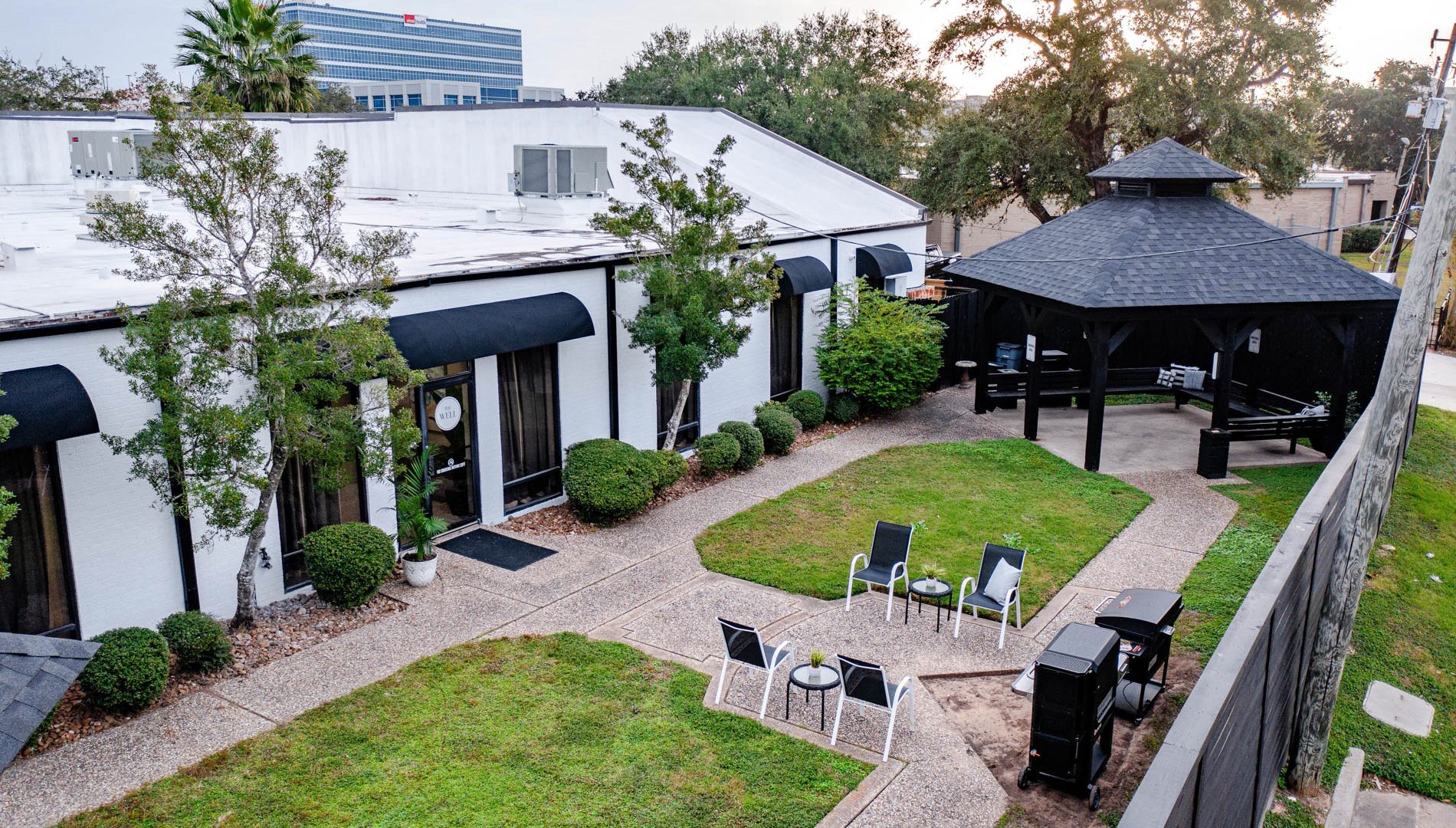
The official facility page gives the residential address as 20 Professional Park Drive, Webster, Texas 77598. It describes private therapy offices, small-group rooms, lounges, and indoor and outdoor areas for residents. The provider also identifies a one-story layout and accessible rooms and bathrooms. Someone with a mobility or other accessibility requirement should still discuss the particular room, route, and daily schedule before arrival so the team can confirm that the proposed placement meets those needs.
The same page describes a staffed front desk, controlled entry, visitor check-in, and a privacy fence. These are practical features of the campus, not a guarantee that every aspect of a stay can be arranged without limits. Visitors and outside contact should follow the program’s current rules. A resident who values personal space can ask how bedrooms are assigned, how shared living is organized, and where quiet time is available between appointments. Those specifics explain the experience more clearly than a broad claim of privacy.
Bedrooms, meals, and recreation
The accommodation FAQ states that client rooms are semi-private with private bathrooms. “Private bathroom” should not be confused with “private bedroom.” Confirm the number of occupants and how room assignment is handled for the proposed admission. The provider says professional housekeeping maintains the facility daily and that residents can use an on-site washer and dryer with laundry supplies. Personal comfort items such as books, photographs, pillows, or blankets may be brought within the program’s guidance.
Menus are described as reviewed by a staff dietitian, with freshly prepared meals served in a shared dining room. The Well says it can accommodate a range of dietary needs, including vegetarian, low-sodium, low-sugar, and low-fat options. The campus also has pickleball and basketball courts and separate smoking and nonsmoking gazebos. Gym access is through scheduled visits to a local facility, rather than a claim of a full on-site fitness center. Specific dietary or physical requirements should be discussed before arrival.
Medical detoxification and the next phase
The medical detox program describes assessment and medically supervised support during withdrawal. The broader treatment FAQ states that this includes care under a doctor and 24-hour nursing support, with medication when appropriate. These are the provider’s published service details. Eligibility and the necessary monitoring depend on individual circumstances, so a person should discuss current substance use, medication, prior withdrawal experiences, and relevant medical concerns before assuming the program is suitable.
The Well distinguishes detoxification from the subsequent residential phase. Its detox page describes planning for further treatment, which may involve residential care or an appropriate outpatient level. The published timetable is general and should not be treated as a personal prediction. Ask whether the proposed residential duration includes detox, how readiness for the next phase is assessed, and what information is needed from existing clinicians. A clear admission plan explains the sequence and identifies which team is responsible at each stage.
Residential duration and clinical structure
The treatment FAQ describes residential care as typically beginning with a minimum 35-day stay, with options extending up to 90 days according to needs and progress. This is a program description that should be confirmed in the individual proposal. The resident should understand the initial recommendation, when it will be reviewed, and how an extension would be discussed. These details affect leave, family arrangements, finances, and the practical plan for returning home.
The residential program describes individualized treatment created by a multidisciplinary team. It includes individual and group work, family involvement, psychiatric support, and selected wellness activities. A sample schedule can show how those components fit together and how much time is allocated to different types of care. The public material does not establish a universal number of weekly individual psychotherapy sessions, so that detail should be requested for the proposed plan rather than inferred from the word “personalized.”
Substance use and co-occurring mental health care
The Well’s treatment overview describes care for alcohol and a range of other substance use concerns, including opioids, prescription medication, stimulants, and other drugs. It also presents an integrated approach to accompanying mental health concerns such as depression, anxiety, and trauma. These are the provider’s stated areas of care, not evidence that every presentation or severity level is appropriate for the residential campus. The admission assessment needs to establish fit for the individual.
The listed clinical approaches include cognitive behavioral therapy, dialectical behavior therapy, motivational interviewing, trauma-informed counseling, and psychiatric care when needed. Some program material also names EMDR. These should be understood as available approaches selected through assessment, rather than a fixed checklist for every resident. Ask what the team proposes to prioritize, who will deliver the services, and how current outside treatment will be incorporated. Medication management and psychotherapy have different roles, and both should be clear in the proposed plan.
Family involvement and shared expectations
The residential page describes family therapy and educational opportunities for loved ones. Family work can involve different goals, from understanding substance use to discussing communication and the environment the resident will return to. Ask which participants are appropriate, whether remote meetings can be arranged, and how the resident’s consent governs information sharing. A family member’s involvement in travel or payment does not automatically define their role in clinical discussions, so expectations are best established early.
The campus’s visitor procedures also need to be distinguished from family therapy. A scheduled clinical session and a social visit have different purposes and may follow different arrangements. Relatives should confirm timing and any preparation before traveling to Webster. If the resident will continue into outpatient or aftercare services, ask whether family support continues and in what format. This helps the transition reflect the real household and relationships involved rather than assuming every family needs the same schedule or type of contact.
Outpatient care at a separate location
The facility page identifies the outpatient office as 950 Gemini Street, Suite 2, Webster, Texas 77058. The intensive outpatient program is designed for clients who attend scheduled treatment while living elsewhere. Its FAQ describes a typical schedule of three days per week, around three hours per day, with the exact plan individualized. These are different circumstances from living at the Professional Park Drive campus with round-the-clock residential support.
IOP includes individual counseling, group therapy, family opportunities, education, and case management. It may follow a more intensive program or serve people whose needs are appropriate for outpatient care. A person considering this transition should confirm housing, transport, timing, and how the program fits with work or family obligations. The provider also advertises partial hospitalization, which involves a different level of time commitment. The presence of several options does not mean every resident must complete them in one fixed sequence.
Continuing care and the alumni community
The aftercare program describes individualized ongoing support through counseling, groups, an alumni network, relapse-prevention planning, family resources, and referrals where needed. It also mentions help navigating community, education, or vocational resources. These are possible elements of a plan, not a guarantee that every service is included in the residential fee or delivered directly by the same clinician. Ask which components are proposed and how frequently contact will occur.
The aftercare page welcomes inquiries from people who completed treatment elsewhere as well as former Well clients, while noting that the program primarily serves its alumni. Eligibility and arrangements should be confirmed directly. For a residential client, the practical priority is to leave with identifiable next steps: the first therapy or prescribing appointment, the intended peer support, and any housing plan. Alumni connection and ongoing clinical care serve different purposes, so the handover should distinguish them clearly.
Fees and admission planning
The treatment information says The Well accepts private payment and selected private insurance plans. No fixed current official residential tariff was verified on the pages reviewed. A prospective resident should request a written quotation connected to the recommended duration and services, along with individual benefit verification where relevant. The proposal should explain detox, residential treatment, outpatient care, and aftercare separately if they involve different charges or authorization. A general statement that insurance is accepted does not establish the resident’s final responsibility.
Frequently asked questions
Are the bedrooms private?
The facility FAQ describes semi-private client rooms with private bathrooms. Confirm the number of occupants and the specific room arrangement before admission. A private bathroom is not the same as a bedroom occupied by one person.
Do residential and outpatient programs use the same address?
No. The residential campus is on Professional Park Drive, and outpatient programs meet at the Gemini Street office. Use the current instructions for the specific service when arranging travel or a transfer.
How long does residential treatment last?
The treatment FAQ describes a typical minimum of 35 days with options up to 90 days, individualized to need and progress. Ask how that recommendation applies to the proposed admission and whether it includes the detox phase.
Explore related treatment options
For further comparison, explore treatment centers in Texas and addiction treatment providers. Review each provider’s clinical setting, accommodation, admissions requirements, and continuing-care arrangements.
Sources
Official provider information reviewed October 20, 2026.