Wernham House
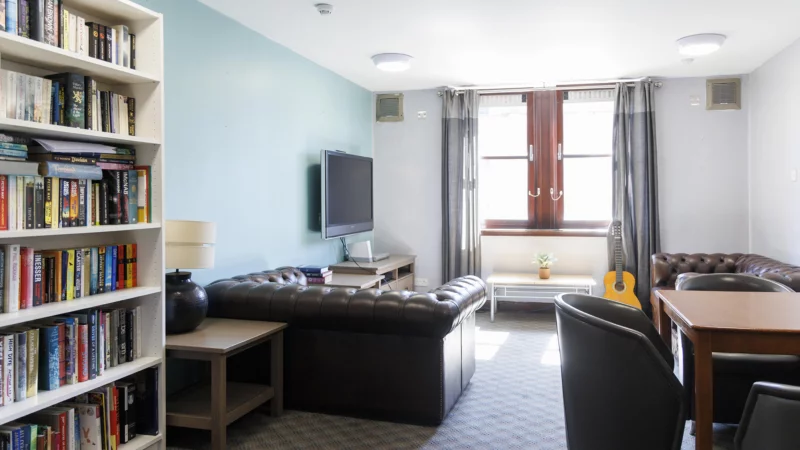
Wernham House is Aberdeen Cyrenians’ referral-only residential and respite service for adults affected by alcohol and substance-related harm. It is 24/7 supported accommodation and care rather than a walk-in private rehabilitation clinic. The service uses a harm-reduction and independent-living model for people with multiple or complex support needs.
Current provider information describes one-to-one and group activities intended to reduce isolation, alcohol and risk-management planning, tailored care plans, medication and meal support, help accessing other services, and practical or emotional support to build independent-living skills. It does not publish psychotherapy, a specific room type or private-clinic treatment packages, so those details should not be inferred.
What supported living at Wernham House involves
Wernham House combines a place to live with practical and emotional support for adults whose alcohol or substance use is part of a more complicated care situation. Aberdeen Cyrenians describes residents as potentially having overlapping needs, including acquired brain injury. Its independent-living service description emphasizes individual plans, a named key worker, voluntary engagement, and goals developed with the person receiving support.
This makes the daily working relationship particularly important. A prospective resident and referring worker should discuss what the person can already manage, where help is needed, and how progress will be reviewed. Goals may concern maintaining routines, reducing isolation, managing alcohol-related risks, or reconnecting with community life. They need not be reduced to completing a predetermined course of therapy.
The provider also describes respite breaks within its supported-living offer. A referral should distinguish a temporary respite arrangement from longer residential support and explain what will happen afterward. The same organization provides several types of assistance, so the agreed plan should identify Wernham House explicitly and describe the support assigned to that placement.
The Social Work referral is the route into the service
The Aberdeen Cyrenians referrals hub assigns Wernham House referrals to the Social Work Integrated Alcohol Services team. This is more specific than the general contact options displayed elsewhere on the charity’s website. Sending an inquiry can clarify the process, but it does not establish a residential placement or replace the required professional referral.
For a useful discussion, describe the person’s current living arrangements, alcohol or substance-related concerns, support already involved, and immediate practical difficulties. Ask which professional will coordinate the assessment and how the person will participate in decisions. If several agencies are involved, agree who will communicate with Wernham House so that important information and consent are handled consistently.
The hub separates residential referrals from the charity’s other routes for housing, independent living, abuse support, and basic necessities. A referral to one of those services should not be interpreted as admission to Wernham House. Eligibility, funding responsibilities, timing, and the proposed support agreement should be resolved through the residential pathway before anyone makes moving arrangements.
Choosing residential support or another community service
The charity’s complete service directory can help a person and referring professional identify which difficulty needs attention first. Alongside residential care, it describes housing assistance, support with household finances and digital access, and practical help for people facing instability. Some community services allow self-referral, whereas residential supported living has its own access requirements.
These distinctions matter when a person needs help with a tenancy, benefits correspondence, online accounts, or essential household items but does not have an agreed residential care need. Community assistance may address an immediate obstacle while the appropriate assessment proceeds. It should not be presented as a substitute for a required clinical assessment or as evidence that accommodation has been secured.
For someone considering a move from Wernham House, the directory also provides topics for discharge or transition planning. Ask which practical services might be appropriate, who will make any referral, and when contact should begin. Availability and eligibility belong to each service; support from the same charity does not automatically create a continuous package covering every future need.
Mental health support has several different access routes
Aberdeen Cyrenians’ mental health, well-being, and substance-related harm page describes both community support and more structured independent-living services. Its Support and Emergency Essentials service offers adults emotional and practical assistance, help accessing other agencies, and support with basic needs. The page gives that community service a different access route from Wernham House.
Someone who is isolated, struggling with everyday tasks, or unsure where to ask for help may therefore have a useful first conversation without already having a residential referral. That conversation can help identify the appropriate next contact. It does not establish that Wernham House provides specialist psychiatric admission, medical withdrawal treatment, or a particular psychotherapy.
When mental health needs are part of a residential referral, explain which clinicians or community teams are already involved and which responsibilities should remain with them. A practical plan should distinguish daily support, specialist treatment, and action if the person’s condition worsens. Clear responsibilities help the person understand whom to approach for different problems instead of expecting one service to provide every kind of care.
Check the service registration as well as the referral information
The Care Inspectorate entry for Wernham House identifies it as a Care Home Service and provides a service-specific inspection history. Its identifying number, CS2003000231, helps distinguish the actual registered service from the charity’s wider collection of programs. The entry lists the most recent inspection as November 19, 2025.
Registration and inspection records answer different questions from an admissions conversation. They identify the regulated service and provide published oversight information. They do not reserve a room, confirm that a particular person’s needs can currently be met, or determine the person’s funding arrangement. Those matters still require an individual discussion through the referring team.
Use the current entry when checking a proposed placement, particularly if another document gives a different service name or address. Read the latest report together with its date and the areas evaluated rather than relying on a single badge or isolated score. Where a question remains about the building, support arrangements, or a previously identified improvement, ask the service how it is addressed now.
What the November 2025 inspection actually found
The inspection report completed November 19, 2025 describes a registered capacity of up to 18 adults, with 16 people supported during the visit. Inspectors graded well-being, leadership, staffing, and care planning Very Good, while the setting was graded Good. These are separate evaluations from a dated inspection.
The report describes individual bedrooms, shared living areas, medication support, and coordination with outside professionals. Managed alcohol plans were agreed with residents, staff, and social work and reviewed as circumstances changed. This is evidence of the care arrangements observed then, rather than a promise about a new resident’s current room or personal plan.
The report also records mixed feedback about meals, some residents feeling bored or lonely, and work to improve activities. It notes building limitations and exploration of alternative premises with partners; that does not confirm a move. A prospective resident should ask about current accessibility, bedroom arrangements, food preferences, activities, and any changes since inspection. The balanced report is more useful for that conversation than an overall quality label that hides its qualifications.
Everyday activities can support individual living goals
In its 2024–2025 annual report, Aberdeen Cyrenians describes an activities coordinator working with Wernham House residents. Examples include accompanied outings, social activities, and support with ordinary trips such as shopping or attending a medical appointment. The account emphasizes adapting participation to confidence and mobility rather than expecting every person to join the same activity.
These examples help explain the practical side of supported living. A person may want to rebuild confidence leaving the building, spend time with other people, or practice an everyday task with someone they trust. Meaningful goals can be small and specific, and a person should be able to explain which activities are enjoyable, tiring, inaccessible, or unwanted.
The report covers a past reporting period, so its photographs and examples are not a current activity timetable or guaranteed excursion package. Before a placement, discuss present staffing, accessible transport arrangements, opportunities to participate, and how individual preferences are incorporated. Participation should be considered alongside the person’s care needs and choices, rather than used as a measure of whether they are trying hard enough.
Understanding the provider’s incident reporting information
Aberdeen Cyrenians publishes a Duty of Candour report for April 2025 through March 2026. The report says no incident meeting that particular reporting threshold occurred across its services during the period. That statement concerns a defined category and timeframe; it should not be read as a claim that no accidents, concerns, or other incidents ever occurred at Wernham House.
The document describes responsibilities for identifying relevant incidents, staff training, notification processes, and learning from events. For a person entering supported care, its practical value is that it provides a starting point for discussing communication when something goes wrong. Ask how concerns can be raised, who will respond, and how the resident will be involved in follow-up.
Families or other supporters should also clarify how they may participate with the resident’s agreement. An organizational report cannot answer every individual question about confidentiality or communication. The service should explain the arrangements that apply to the person, including how to request further information or assistance if a concern remains unresolved.
Agree responsibilities before a residential placement begins
The charity’s governance information identifies Aberdeen Cyrenians as a registered Scottish charity and charitable company, with trustees overseeing strategy, finances, and organizational accountability. It also provides routes to annual reports, inspection information, and other published records. This helps establish who operates the service without implying that charity registration is a medical qualification.
For an individual placement, translate that organizational background into a clear support agreement. Ask the referring team which body authorizes the placement, what financial responsibilities apply, how changes in support needs will be reviewed, and what happens if the arrangement becomes unsuitable. Any proposed length of stay should be understood in that personal context.
It is also useful to agree how the resident can express preferences, invite a trusted supporter into discussions, and raise concerns about everyday care. These are questions for the current service and referring professionals; published charity accounts cannot establish personal eligibility or available funding. A clear agreement gives the resident a practical basis for understanding the placement and taking part in decisions as needs change.
Official provider and regulator information reviewed October 19, 2026. Inspection findings and organizational reports retain their stated dates; individual placement arrangements require confirmation.
Explore related guidance on treatment in Scotland and alcohol-related treatment decisions.
Referrals are made by the Social Work Integrated Alcohol Services team. Service inquiries use management-wernham@weareac.org; the resident visiting address is 7 Virginia Street, Aberdeen AB11 5AZ. Fees, public-funding arrangements, eligibility and length of stay are determined through the referral pathway and are not published for direct self-referral. Sources: independent-living support and Wernham House, referral pathway and all support services, checked 2026-10-13.