Ventura Health and Rehabilitation Center


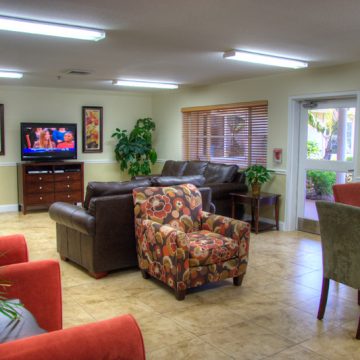
Ventura Health and Rehabilitation Center 3 photos

Ventura Health and Rehabilitation Center in Boynton Beach, Florida provides nursing-home care, short-term rehabilitation, and longer-term support. Its official website and services page describe physical rehabilitation and nursing services. It is not an addiction-treatment center. Here, rehabilitation refers to care associated with illness, injury, surgery, and functional needs, so a person seeking substance-use treatment should look for a provider offering that specific service.
The facility is located at 7900 Venture Center Way, Boynton Beach, Florida 33437. The published telephone number is 561-736-6000. A useful admission inquiry starts with the person’s present care needs, the referring clinician’s recommendations, the proposed length and purpose of the stay, and the expected payment arrangements. A service appearing on a website does not establish that a suitable bed or treatment schedule is available immediately.
Short-term rehabilitation after hospital care
Ventura lists short-term care and orthopedic rehabilitation among its services. These are relevant topics for someone discussing a possible transfer after a hospital stay or procedure. The receiving team needs to review the person’s medical information and determine whether the facility can provide the required nursing and therapy. The website does not publish a standard length of stay or a recovery timetable that applies to every admission.
Ask the referring team and Ventura to explain the main goals of the proposed stay. Those goals might concern a particular mobility task, personal-care activity, or medical need, but they should come from the individual’s assessment. Establish who will review progress, how relatives or representatives can participate with permission, and what would prompt a change in the plan. A proposed discharge date should be discussed alongside the support that will be available at the next setting.
Physical, occupational, and speech therapy
The provider advertises physical therapy, occupational therapy, and speech therapy. This list identifies the types of rehabilitation to ask about; it does not specify a universal number of sessions or a daily timetable. Before admission, ask which disciplines are recommended, who will perform the evaluation, and how the treatment plan connects to the person’s practical priorities.
Request details about individual appointments, group activities if applicable, weekend arrangements, and what happens when a session cannot take place. Someone hoping to return home can ask the team to discuss the tasks and environment they will encounter there, such as steps, bathroom access, or help with meals. Clarify whether the team will recommend equipment or caregiver instruction. These questions help turn a broad promise of rehabilitation into an understandable plan without assuming a particular outcome.
Long-term care, respite, and ongoing nursing needs
Ventura’s service list also includes long-term care, wound care, respite care, and pharmacy management. The Florida HealthFinder record additionally lists around-the-clock on-site registered-nurse coverage, hospice care, and tracheotomy services. Confirm the specific clinical needs with the admissions team; a directory service entry does not establish that every condition or level of complexity can be accommodated.
For a longer stay, discuss everyday routines as well as clinical tasks. Ask how personal preferences, communication needs, meals, activities, and family contact will be included in planning. For respite, establish the intended dates, medication handover, and arrangements for returning to the usual home or care setting. If another organization will provide a service such as hospice, clarify its role, the facility’s responsibilities, and how the teams communicate before making assumptions about what is included.
Assessment and a care plan the resident can understand
Medicare’s skilled-nursing guidance explains that a team uses medical orders, health needs, and assessments to set goals and decide which services are needed. The resident, family, or representative can take part in planning. This is general guidance about skilled nursing, rather than a claim that a particular Ventura assessment or meeting has already been arranged.
Ask when the first care-planning discussion will occur, who attends, and how to request another review if needs change. A useful conversation should explain the goals, assigned responsibilities, and how the team will judge progress. Request an explanation of unfamiliar terms and keep a record of the agreed next steps. If the resident has difficulty communicating, discuss how their preferences will be understood and who is authorized to receive information or act on their behalf.
Preparing records and medication information
Before a transfer, ask which records Ventura needs from the hospital, current clinician, or another facility. Relevant material may include the discharge summary, current medication orders, recent assessments, and information about equipment or ongoing appointments. The receiving team should specify what is required and how it should be transmitted. Relatives should not assume that a referral automatically means all records have arrived or that admission has been accepted.
Clarify how existing prescriptions will be reviewed and supplied, who should be contacted about discrepancies, and what happens to medications brought from home. Ask about any outside appointments that need to continue during the stay and who arranges transportation. A complete handover also includes practical details such as glasses, hearing aids, communication devices, and the contact information of the person responsible for decisions. Confirm these arrangements before the transfer day when possible.
Rooms, accessibility, and seeing the setting
The Florida facility record lists 99 licensed beds, with 31 private rooms and 34 rooms containing two beds. Those figures describe the registered room configuration, not current vacancies or a promise of a private room. Ask which accommodation is actually offered, whether a room supplement applies, and what could cause the assignment to change.
The provider invites prospective residents and families to arrange a tour. Use that opportunity to ask about the specific unit, bathroom arrangements, call systems, storage, personal belongings, and access to shared spaces. Explain mobility or sensory needs in advance. Photographs can help illustrate a building, but they do not confirm the room that will be assigned or how a particular person’s needs will be met. If visiting in person is impractical, request a clear description of the proposed accommodation.
Understanding the listed rate and payment sources
The Florida HealthFinder profile lists a daily rate of $370 and payment categories including insurance or HMO, Medicaid, Medicare, and workers’ compensation. Treat this as published reference information rather than an individual quote. The amount ultimately paid depends on the admission, covered services, benefit rules, and any separate charges. The published figure does not establish personal eligibility for any payment program.
Request a written estimate that identifies accommodation, nursing, therapy, medication, equipment, transport, and any services billed separately. Ask what deposit or payment agreement applies and who handles questions if an insurer changes its authorization. For someone considering a longer stay, discuss how payment would work after any short-term benefit ends. An explanation of an accepted payment category is different from confirmation that a particular policy will cover the proposed stay.
Medicare skilled care and long-term care are different benefits
Medicare’s skilled-nursing coverage page describes time-limited Part A coverage when eligibility requirements are met. These include a need for daily skilled services and, generally, a qualifying inpatient hospital stay; exceptions can apply. Hospital observation time is treated differently from inpatient admission. Ask the hospital discharge team and the relevant plan to confirm eligibility for this specific transfer instead of relying on the fact that the building accepts Medicare.
Medicare also explains that it generally does not cover long-term custodial nursing-home care when that is the only care needed. A resident can therefore need continued support even after a particular skilled benefit ends. Review the proposed coverage, remaining benefit days, possible personal charges, and alternative funding with the appropriate professionals. A maximum benefit period is not a guarantee that every stay will be covered for that entire time.
Contact, visits, and communication during the stay
Ventura’s contact page gives the Boynton Beach address, main telephone number, and info@venturahrc.com. The site links a visitation policy, but families should ask for the current rules and any temporary arrangements before traveling. Establish the best contact for routine updates, care-plan questions, billing, and an urgent concern while the resident is at the facility.
Agree on who will receive updates with the resident’s permission and how information will be shared when more than one relative is involved. Ask how to arrange a conversation with the treating team and how concerns should be escalated if the first contact cannot resolve them. For relatives who live far away, discuss telephone or video contact and participation in meetings. These practical arrangements should be confirmed with staff rather than inferred from office hours or a general website contact form.
Plan the next setting before discharge
Medicare’s discharge-planning checklist encourages patients and caregivers to understand the next care setting, instructions, medicines, follow-up, and available help. For a Ventura stay intended to lead home, ask early what support will be needed and who will arrange it. If another facility is being considered, clarify who accepts the referral and how the handover will occur.
Before leaving, request understandable instructions, a current medication list, appointment details, and a named contact for unresolved questions. Confirm that any necessary equipment and transport are arranged and that the receiving caregiver understands the plan. If the proposed destination cannot meet the person’s needs, raise that concern with the discharge team before the transfer. The goal is a clearly coordinated transition, not simply reaching a scheduled departure date.
Check current public records alongside the care proposal
The Florida record reviewed for this profile identifies Ventura Operations LLC and a nursing-home license term ending November 2, 2026. Because that date is close to this review, recheck the current record when making arrangements. Licensing information establishes a regulatory record; it does not guarantee a particular experience, outcome, or available bed. Review the full record and any inspection information alongside the facility’s response to the person’s specific needs.
When comparing options, keep the proposed nursing and therapy plan, accommodation, communication arrangements, and payment terms together. Ask each facility the same practical questions so the answers are comparable. For a person whose primary need is addiction or psychiatric treatment, this nursing-home profile should not substitute for identifying an appropriately equipped treatment provider. A placement decision should follow the person’s clinical needs and a current admission assessment.
Source review
Provider, Florida HealthFinder, and Medicare information reviewed October 22, 2026. General Medicare guidance is identified separately from Ventura’s published service descriptions. Confirm current licensing, admission eligibility, staffing arrangements, room availability, coverage, and charges before making commitments.