Axiom Behavioral Health


Axiom Behavioral Health 3 photos

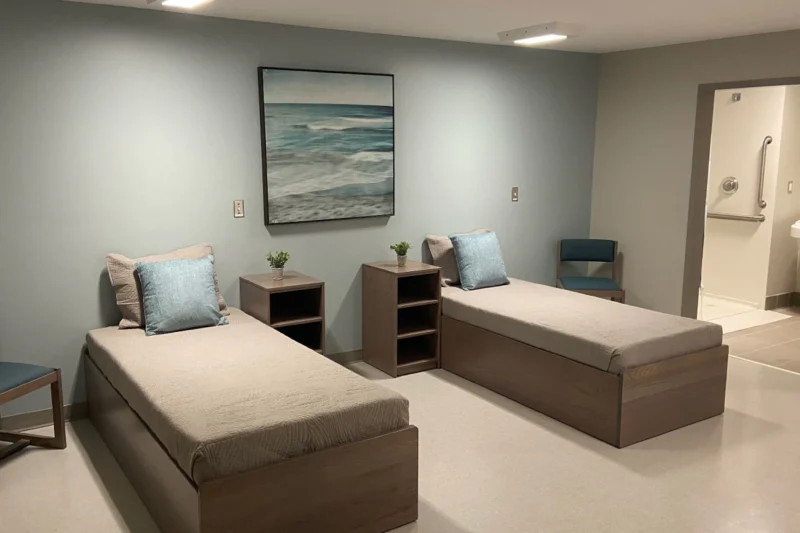
Axiom Behavioral Health, formerly The Willough at Naples, is an 87-bed psychiatric hospital at 9001 Tamiami Trail East, Naples, Florida. It provides adult psychiatric and substance-use treatment; it is not a skilled-nursing facility.
Current programs include acute inpatient psychiatric care, adult dual-diagnosis treatment in inpatient and partial-hospitalization settings, medically monitored drug and alcohol detoxification, and prescription-drug rehabilitation. The dual-diagnosis program is for adults age 18 and older, and treatment is based on multidisciplinary assessment and individual needs.
The provider says most major insurance plans, including Medicare, are accepted. It also publishes financial-assistance information and hospital price-transparency files, while warning that final charges and out-of-pocket costs vary with services and coverage. Ask for the proposed duration and a written estimate of the program’s total personal costs. The main number is 239-775-4500, and admissions can be reached around the clock.
Choosing the right Axiom program
The current hospital overview groups Axiom’s services into four programs: adult psychiatry, dual diagnosis, drug and alcohol detox, and prescription-drug rehabilitation. These names describe different clinical needs within the same Naples organization. A person seeking psychiatric stabilization should explain those needs at the outset, rather than assume that every admission begins with an addiction program. Someone seeking help with substance use should also disclose psychiatric symptoms and existing treatment so the admissions team can identify the appropriate assessment.
The former Willough name still appears in historical references, but the current provider identifies itself as Axiom Behavioral Health. Its references to Fort Myers, Miami, and southern Florida describe communities it serves; they do not establish separate Axiom hospital campuses in those cities. Confirm the actual receiving unit, proposed level of care, and admission arrangements before organizing travel. A program description is a starting point for that conversation, not an assurance that a particular bed or service is available.
Accommodation and individual needs
Axiom’s hospital description emphasizes an environment adapted to patients’ physical, emotional, and social needs. It describes comfortable beds and private bathrooms. A private bathroom does not establish that every patient receives a private bedroom, and the published hospital capacity does not show current vacancies. Ask about the room assignment for the proposed unit, accessibility needs, bathroom arrangements, and any personal assistance required during a stay.
The provider also describes doctors, therapists, nurses, and administrative staff working within its hospital model. Comfort features should be considered alongside the clinical setting and the individual’s ability to participate safely. For example, a family comparing accommodation should also explain mobility limitations, communication needs, dietary requirements, or an existing medical condition. Those details help the hospital assess fit. The useful comparison is the care and support the person would actually receive, rather than an assumption that a coastal location establishes a particular luxury service or unrestricted access to the surrounding area.
Acute psychiatric assessment and discharge planning
The adult psychiatric program describes acute inpatient treatment for conditions including depression, anxiety, bipolar disorder, and other psychiatric difficulties. Its assessment process considers physical, social, and emotional health when deciding whether inpatient care or partial hospitalization is appropriate. Published components include psychiatric and multidisciplinary assessments, medication evaluation, group treatment, crisis evaluation, cognitive screening, and family counseling.
Axiom describes stabilization followed by a transition to a lower level of care when appropriate. Social workers and the treatment team begin discharge planning from admission, including arrangements for returning home or moving to another living situation. Before admission, ask which assessments are planned, who will manage medication, and how information will reach the next clinician. Before discharge, clarify the follow-up appointments and practical arrangements rather than relying on a general promise of aftercare. The listed services do not mean that every patient receives every assessment, the same number of sessions, or a predetermined hospital stay.
Adult dual-diagnosis treatment
Axiom’s dual-diagnosis program is specifically described for adults 18 and older who have substance-use problems alongside a psychiatric illness. It is offered in inpatient and partial-hospitalization settings. The provider names opioid, methamphetamine, and alcohol problems among the substance-use concerns it addresses while also assessing psychiatric symptoms.
The published program includes medication evaluation, group therapy, family education, psychological assessment or treatment, nutritional consultations, recreational therapy, illness education, and relapse-prevention work. Community-service connections form part of discharge planning. Ask how the two conditions will be addressed in one treatment plan and how progress will be reviewed; the presence of two diagnoses does not establish a fixed course length or make every listed intervention necessary.
Partial hospitalization also needs to be discussed as a separate placement decision. Confirm its actual schedule, the person’s accommodation outside treatment hours, and what happens if their needs change. The hospital’s descriptions of inpatient comfort should not be assumed to apply to a daytime program.
Medical detox and the next stage of care
The drug and alcohol detox service describes medical monitoring and an around-the-clock team supporting withdrawal management. It links that phase with subsequent assessment and treatment for substance use and co-occurring mental-health needs. This is more useful information for comparison than treating detox as a complete recovery program or assuming that everyone seeking help requires the same withdrawal process.
Explain the substances used, current prescriptions, relevant medical history, and previous withdrawal experiences to the assessing clinician. Ask which monitoring and prescribing arrangements would apply to the proposed admission, how the team responds to a change in medical needs, and how the next stage will be arranged. The page does not establish a universal detox duration or a medication protocol for an individual patient.
Decisions about stopping or changing prescribed medication belong with the treating team. A general description of a detox service should not be used to plan an unsupervised medication change or to assume that a hospital can manage every medical complication.
Prescription-drug rehabilitation
The prescription-drug rehabilitation page describes individualized adult treatment followed, when appropriate, by inpatient addiction and mental-health services. Listed components include cognitive behavioral therapy, group therapy, nutritional consultations, family support, recreational therapy, relapse-prevention planning, and connections with community services.
When discussing this pathway, distinguish the medication being taken, the condition it was prescribed for, and the specific concern that prompted the inquiry. That gives the clinical team a more useful history than the drug name alone. Ask how ongoing treatment for pain, sleep problems, or a psychiatric condition would be coordinated with the rehabilitation plan, and which clinician will communicate with an existing prescriber.
The program description does not establish that all prescriptions will be stopped or that psychiatric symptoms will disappear after substance use changes. It also does not provide an individual taper, fixed detox timetable, or guaranteed outcome. Request a plan that explains both the immediate treatment goals and continuity of needed care after discharge.
Understanding the published clinical team
The staff page lists Leonard A. Lado, MD, as medical director, Suresh Sarma, MD, among its doctors, and Kavitha Gudur, MD, under medical services. It also describes an interdisciplinary approach that combines medical care, education, and skill development. These listings help identify the kinds of professionals involved, but they do not identify the clinician who would be assigned to a particular admission.
Ask who is responsible for psychiatric prescribing, general medical issues, individual treatment planning, and communication with family or outside clinicians. Clarifying these roles is especially useful when psychiatric symptoms and substance use are being addressed together. A named medical director should not be interpreted as a promise of daily appointments with that person.
Patients can also explain preferences or needs affecting communication and participation. The provider describes age-appropriate, culturally sensitive, patient-centered care; the practical question is how those commitments would be applied to the individual, including how concerns about treatment can be raised with the team.
Family participation and support after a setback
Axiom’s frequently asked questions discuss family support in dual diagnosis, including encouragement, education, healthy boundaries, and participation in family therapy where appropriate. They also describe treatment as a combination of medication and psychosocial care tailored to the individual. This supports a conversation about the family’s role without making relatives responsible for controlling another person’s recovery.
Ask which family meetings are available, who may participate, and how the patient’s preferences and permission shape information sharing. Relatives may also need their own support. A family session should have a clear purpose, such as understanding the treatment plan or preparing for a transition home, rather than an assumed obligation to reconcile every relationship.
The FAQ acknowledges that setbacks can occur. Before discharge, ask whom to contact if symptoms or substance use return and when a fresh clinical assessment would be needed. Family education and continuing support should not be interpreted as a guarantee against recurrence or as unlimited access to hospital treatment.
Financial assistance and separate professional bills
The financial-resources policy directs patients to the Business Office for a financial assessment. It describes eligibility-based charity care for uninsured patients, possible payment arrangements, and help examining coverage. There are no standard discounts; a payment arrangement or cost reduction depends on the assessment. Ask for the decision and its scope before relying on assistance.
The hospital also warns that clinicians and other outside services may bill separately and may have different insurance participation from the facility. A hospital benefit check therefore does not settle every professional charge. Request an estimate for the proposed hospital care and identify any separate physician, laboratory, consultation, or transportation bills that may apply. Confirm deductibles, copays, coinsurance, authorization requirements, and any payment schedule with the relevant parties. The published policy offers a process for discussing costs, not a universal free-care entitlement or an exact final quotation.
Using the hospital’s price-transparency files
The price-transparency page links a machine-readable standard-charge file and a consumer-facing shoppable-services file. These can help someone investigate how the hospital presents charges and payer arrangements. They should not be read as a single weekly rehabilitation price or as the amount every patient will owe.
The hospital expressly says that personal costs depend on the services actually received and the terms of insurance coverage. When comparing options, ask which service and unit an estimate refers to, what period it covers, and what happens financially if the clinical plan changes. A listed charge, an insurer’s negotiated amount, and the patient’s share answer different questions.
Keep the estimate with the proposed care plan so later changes can be discussed clearly. The useful outcome is a written understanding of the expected services and financial responsibility. The downloadable files do not guarantee either the eventual length of treatment or a final bill.
Admissions access and administrative hours
The contact page distinguishes continuous patient care from administrative office hours. It lists the office as open Monday through Friday, 8 a.m. to 5 p.m., while the admissions line can be reached at any time. That distinction matters when someone needs a clinical admission discussion outside normal business hours but also has a separate billing, records, or administrative question.
The hospital is on Tamiami Trail East in Naples, south of St. Andrews Boulevard. Its directions describe approaches from Fort Myers, Miami, and Fort Lauderdale. Those travel routes do not establish satellite treatment sites. Confirm the arrival entrance, assessment arrangements, and whether admission has actually been accepted before setting out.
The contact form is another way to make an inquiry, but submitting it does not secure a place or establish an immediate clinical response. Families arranging transport should ask how the person will be received and what information or belongings the hospital wants brought to the assessment.
This guide uses the linked official provider information reviewed on October 19, 2026. Services, staffing, eligibility, and financial arrangements require individual confirmation.
Official sources
Hospital identity and licensing; Adult acute psychiatric care; Dual-diagnosis eligibility and levels of care; Medical detox; Address and contact; Financial resources; Hospital price transparency. Checked October 13, 2026.