


Priory Wellbeing Centre Canterbury 3 photos
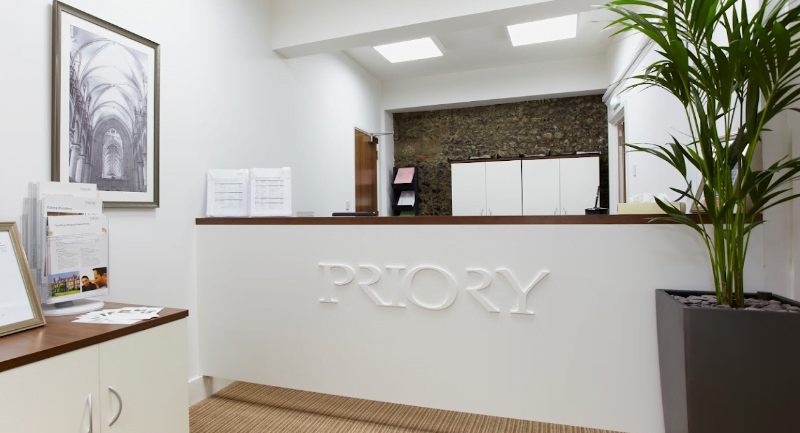
Priory Clinic Canterbury: private outpatient care
Priory currently presents this city-center service as Priory Clinic Canterbury. It provides private outpatient support for adults, adolescents and children, as well as couples. Services include assessment and therapy for mental-health conditions, addictions and eating disorders, plus private autism assessments for adults and children.
Treatment format and setting
Treatment is outpatient and can include one-to-one therapy, couples therapy and family counseling. Program length is individualized rather than fixed. The clinic has links with Priory Hospital Hayes Grove and Priory Hospital Ticehurst House for people who need more intensive support; the Canterbury clinic itself should not be described as residential.
Access, fees and location
Self-pay and private medical insurance are available. Priory’s current page advertises mental-health assessments from £49 and lists Aviva, AXA, Bupa, Cigna, Healix, Vitality and WPA among accepted insurers; exact fees and coverage depend on the service and policy. The clinic is at 92B Broad Street, Canterbury, Kent CT1 2LU. Call 01227 452 171.
A city clinic for planned outpatient appointments
The current Priory Clinic Canterbury page describes a service for adults, children, adolescents, and couples. The appointment model is outpatient: the person attends for assessment or therapy and leaves afterward. The clinic’s links with Hayes Grove and Ticehurst House concern access to other Priory services when more intensive care is needed.
Those referral connections do not turn Broad Street into a residential hospital. Ask which service is proposed, where it takes place, and who will make the clinical decision if the level of support needs to change. A recommendation to another hospital also requires that receiving service’s assessment and acceptance.
Priory advertises flexible appointments, including evening access, at Canterbury. Confirm the chosen clinician’s actual availability and whether appointments are in person or online. Explain school, work, communication, mobility, or other practical requirements before booking. The useful comparison is between the appointments and support you will receive, rather than between the clinic’s city-center setting and the accommodation offered by an entirely different residential provider.
What the advertised adult assessment price covers
Priory’s adult mental health assessment page distinguishes a £49 digital assessment from a £99 virtual consultation. The digital route involves an online questionnaire, generally taking forty-five to sixty minutes, followed by clinical review. It is offered to self-paying adults and is intended to help identify suitable next steps.
The £99 option involves a conversation with a therapist, usually around forty-five minutes. These entry assessments are different from a psychiatrist’s diagnostic consultation, a medication review, a full autism assessment, or a course of treatment. The page says the digital option does not include a formal written report.
It also excludes urgent crisis presentations and needs requiring a more complex assessment. If medication, an established diagnosis, or another clinician’s recommendation is the main issue, explain that before choosing the lowest advertised price. People using insurance are directed toward a different booking conversation. Confirm the correct route, what the assessment produces, and the fees for any recommended appointments afterward; the entry price does not cover every later service.
The digital assessment for a young person is separate
The young people’s assessment page advertises a £69 digital route for self-paying families with children ages four to seventeen. Parents or guardians provide information, and young people ages thirteen to seventeen can complete their own questionnaire. The provider describes a clinical review within forty-eight hours, subject to the service’s current arrangements.
The purpose is to identify appropriate next steps, which may include therapy, a psychiatric consultation, or another service. Questions about autism or ADHD do not make this a diagnostic assessment for either condition. A recommended specialist assessment is a separate process with its own cost.
The page says this route is unsuitable for crisis, high-risk, or complex needs requiring a multidisciplinary service. It also does not provide a formal written report. Ask how the child’s views, the parent’s information, and privacy will be handled, and what feedback is available. If school documentation, medication advice, or a formal diagnosis is needed, say so before paying. The appropriate appointment depends on the purpose of the assessment, not only the child’s age.
A full autism assessment has several stages
The autism assessment pathway describes a fuller process after initial screening. It can include developmental history, a recognized diagnostic interview, observation by specialists, multidisciplinary review, an outcome report, and a feedback discussion. Priory lists a starting price of £2,222 for the full assessment, with fees varying by route and consultant.
The screening fee and the full-assessment price should not be confused. Ask Canterbury which clinicians and appointments are proposed, whether any existing assessment can be used, and what is included in the quote. A psychiatrist-led route may have a different fee. The provider’s general four-to-six-week estimate depends on availability and the complexity of the case.
With appropriate agreement, relevant people may contribute developmental information; school input may also be needed for a child. Discuss what happens if an informant or older records are unavailable. An assessment does not necessarily result in an autism diagnosis. The feedback should explain the findings and recommended support, including what happens when another explanation better fits the person’s needs.
Matching adult psychiatric needs to the clinician
The published profile for Dr. Adam Kasparek identifies Canterbury as his main clinic and describes experience in general adult and liaison psychiatry. Listed areas include mental health difficulties alongside physical symptoms, pain-related concerns, perinatal mental health, and adult neurodevelopmental assessment. The profile also describes admission rights at Ticehurst House.
These details can help someone ask for an appropriate assessment, but they do not establish that every concern will be managed in one appointment or that a hospital bed is available. Explain the main question: diagnostic clarification, medication review, ongoing psychiatric care, or advice about another level of treatment. Ask what records would help the consultation.
The clinician profile contains professional history as well as current service information. Past leadership roles should not be treated as current appointments, and provider-listed expertise is not an independent credential certification by this directory. Confirm present appointment availability, the consultation fee, follow-up arrangements, and communication with the usual prescriber or general practitioner. If treatment occurs elsewhere in Priory, clarify who coordinates the transfer and subsequent review.
Child and adolescent psychiatry has its own pathway
The profile of Dr. Anja Malmendier-Muehlschlegel describes a consultant child and adolescent psychiatrist with Canterbury as the main clinic. Her listed interests include neurodevelopmental assessment, eating difficulties, and a range of young people’s mental health needs. The provider discusses both psychological approaches and prescribing within appropriate psychiatric care.
A child’s needs should be matched to the actual service rather than inferred from an adult appointment list. Explain age, current symptoms, developmental history, school concerns, existing support, and any medication. Ask whether the initial appointment is a general psychiatric assessment or part of a defined specialist pathway.
Parents or guardians should clarify how the young person participates, how information from school or other clinicians is obtained, and how feedback will be shared. An outpatient consultation does not provide overnight supervision or an emergency placement. If risk or medical needs require another setting, establish that before booking. Confirm who handles prescriptions, ongoing reviews, and communication with community services, along with the separate costs and authorization for those appointments.
Individual therapy should have agreed goals
Priory’s individual therapy description explains work between a patient and therapist, with goals agreed around the person’s concerns. It discusses approaches such as cognitive behavioral and dialectical behavior therapy, chosen according to assessment. The format describes how care is organized; it does not mean every therapist provides every method.
Ask the Canterbury clinician which approach is proposed and why it fits. Explain what has helped or felt unhelpful in previous therapy, along with any communication, sensory, cultural, or practical needs. The first appointment can be used to clarify the problem, expectations, and how progress will be reviewed.
Confirm session length, frequency, fees, and the arrangements for contact between appointments. Individual therapy is different from an informal check-in or access to an on-call psychiatric team. If the person needs more support than scheduled sessions can provide, discuss how that will be recognized and addressed. A workable plan should also explain how therapy ends or transitions to another service, without assuming that a fixed number of sessions is appropriate for everyone.
Couples appointments address a shared concern
The couples therapy page describes structured conversations about relationship difficulties, communication, separation, and challenges that interact with mental health. It gives general appointment lengths of fifty minutes to an hour, while recognizing that the number and type of sessions depend on the couple’s circumstances.
Ask Canterbury about the available therapist, whether appointments are joint or include individual conversations, and the goals being proposed. A partner’s involvement in someone’s treatment is not automatically the same as a separate course of couples therapy. Clarify which service is being booked and whether it has a different fee or insurance arrangement.
Both people should understand confidentiality, information sharing, and the expectations for participation. Raise concerns about safety, coercion, or whether joint sessions are appropriate before they begin. The purpose can be clearer communication or decision-making rather than an assumption that the relationship must continue. A general example of twelve sessions is not a requirement or a promise of resolution; review the actual plan with the therapist as the work develops.
Funding depends on the appointment and policy
Priory’s funding guide distinguishes self-payment from private medical insurance. Insurance users are asked to confirm the covered treatment, any referral requirements, the insurer’s authorization code, and personal costs before arranging care. A policy may authorize a particular number of sessions rather than every service a clinician recommends.
The guide specifically requires a general-practitioner referral for the insured young-person treatment pathway. Self-paying digital assessment routes have their own published arrangements. Ask which pathway applies instead of assuming that one referral rule covers every product or appointment.
Confirm the selected Canterbury clinician’s fee, follow-up costs, excess, and any limits on psychological testing or specialist assessment. If the plan moves to another Priory hospital, check that placement separately. Priory also operates publicly funded services elsewhere, but its guide says private services cannot be accessed through NHS or local-authority funding. The wider organization’s funding mix therefore does not establish an NHS-funded appointment at this clinic. Obtain a clear explanation of the accepted payment route before treatment begins.
Reading the CQC record with its inspection date
The Care Quality Commission location record uses the registered name Priory Wellbeing Centre–Canterbury and identifies Priory Healthcare Limited as the provider. It displays an overall Good rating from the report published August 8, 2018. The same assessment rated the safe domain Requires improvement, with the other published domains Good.
The date and domain detail matter: this is an inspection record, not an October 2026 inspection or a rating of every current clinician. The clinic’s present marketing name and the registered service name can differ without proving that they are separate locations. Use the address and provider details to match the record.
Prospective patients can read the regulator’s report and ask the clinic about its current arrangements for safety, communication, and raising concerns. A historical overall rating does not establish individual suitability, immediate availability, or the outcome of treatment. Combine that record with the current assessment, the clinician’s credentials, and a clear explanation of the care offered. Confirm any detail that is material to the proposed appointment directly.
Official Canterbury, clinician, assessment and funding pages, plus the CQC location record, reviewed October 19, 2026. The CQC rating remains a historical 2018 assessment. Initial screening prices are distinct from diagnosis and treatment fees; availability, eligibility, coverage and the complete individual quote require confirmation.
Related guides: depression care and anxiety treatment options.
Source
Official Priory Clinic Canterbury page — current name, outpatient scope, age groups, autism assessments, referral links, address, fees and insurance; checked October 15, 2026. CQC location record — registered name, provider, address, phone and current overall Good rating; checked October 15, 2026.