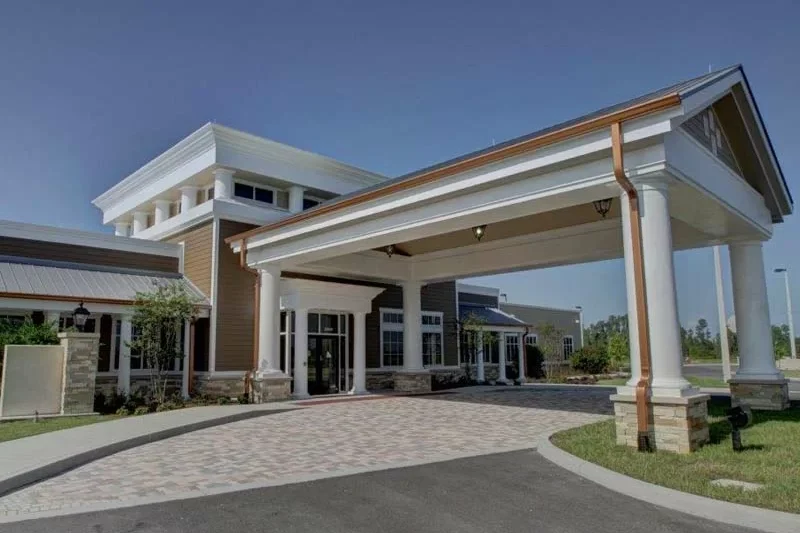
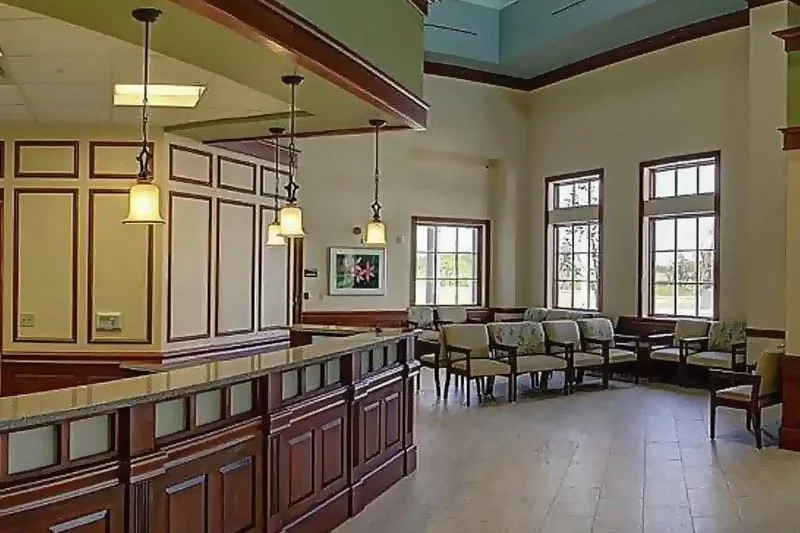
North Tampa Behavioral Health is a psychiatric hospital at 29910 State Road 56 in Wesley Chapel, Florida. It provides mental-health and substance-use care for adults and senior adults and also operates adolescent inpatient and virtual intensive-outpatient programs.
The hospital’s current continuum includes medically assisted detoxification, inpatient psychiatric and addiction treatment, partial hospitalization and intensive outpatient care. Published conditions include depression, anxiety, bipolar disorder, psychosis and schizophrenia, trauma-related concerns, self-harm, suicidal ideation, substance use and co-occurring disorders. A separate eating-disorder program is not established by the provider’s current program directory; ask about assessment of nutritional and medical needs when seeking care.
Care is individualized by program and progress. For senior adults, the provider publishes an average inpatient stay of seven to 10 days, an average two-week PHP stay and an IOP range of one to 16 weeks. Its adolescent virtual IOP also typically lasts one to 16 weeks. Outpatient programs may serve as a step-down from inpatient care, and adolescent care includes discharge planning. North Tampa lists commercial, Medicare, managed-Medicaid and military plans; individual practitioners may have different network participation, and an exact estimate should be obtained before admission.
What adult inpatient treatment is designed to provide
North Tampa’s inpatient program is a hospital service for people who need a closely supervised setting. Its description emphasizes assessment, psychiatric and nursing involvement, and an individualized treatment plan. That makes the relevant admission question the level of clinical support needed, rather than the appeal of a residential setting. The hospital describes doctors, nurses and other treatment professionals working together, with care available throughout the day and night.
During treatment, staff review symptoms and progress and adjust the plan. Group work and recreational activities form part of the published program, alongside clinical services. A family comparing options should ask which unit would receive the patient, how often the responsible prescriber will review them, and how updates will be communicated with appropriate permission. North Tampa also describes planning for the next stage of care, which may include partial hospitalization or intensive outpatient treatment. Moving to another level requires a clinical decision; an inpatient admission does not establish a fixed discharge date or guarantee a place in a particular outpatient group.
Addiction treatment and medically supported withdrawal
The hospital’s adult addiction program describes detoxification, inpatient treatment, partial hospitalization and intensive outpatient services. These are different stages or options within its continuum, rather than a single package that every patient must complete. Assessment should identify whether withdrawal management is necessary and what psychiatric or medical needs must be addressed at the same time.
The published team includes psychiatric and nursing professionals and counselors. Individual sessions are scheduled within inpatient care, while the partial-hospitalization description makes individual work dependent on need. Group therapy is described across the three treatment levels. Family sessions are available when requested and clinically appropriate, and the outpatient service describes a monthly family support group. Those arrangements should be clarified separately from the patient’s own appointments. North Tampa says discharge planning starts at admission. Ask how the discharge plan will cover continuing prescriptions, the next clinical appointment and a suitable treatment setting; completing withdrawal management alone does not answer each of those practical questions.
Adult outpatient schedules and attendance
The adult outpatient page publishes distinct schedules. Partial hospitalization is in person, Monday through Friday from 11 a.m. to 4:40 p.m., with lunch available. The page describes an initial psychiatric evaluation and weekly psychiatric or advanced-practice review. This is a substantial weekday commitment even though patients do not stay overnight.
Daytime intensive outpatient treatment is offered virtually or in person on Monday, Wednesday and Friday, from 11 a.m. to 2:20 p.m. The evening substance-use IOP is also listed in both formats, on those same days from 5:45 p.m. to 8:55 p.m. These are the hospital’s published timetables, not a promise that every track has an immediate opening. Confirm the relevant group, format and current hours before arranging work leave, transport or childcare. Medication coordination is described where appropriate, but attendance in a therapy group should not be assumed to include every prescription or appointment. Ask who remains responsible for prescribing and how contact with an existing clinician will be coordinated.
Senior-adult care and day-to-day support needs
North Tampa’s senior-adult program addresses primary mental-health or substance-use needs. It describes accommodating some assistance with activities of daily living and certain equipment needs. Dementia is described as a secondary concern when another qualifying mental-health problem is present; this is not a general dementia placement service. The same page excludes severe neurodevelopmental conditions.
Its published averages are seven to ten days for inpatient treatment and two weeks for partial hospitalization. Intensive outpatient treatment is described as initially meeting five days a week before reducing to three, with an overall range of one to sixteen weeks. These figures describe this program’s usual patterns and do not set an individual patient’s stay. Families should explain mobility, personal-care assistance, cognition, falls, medications and equipment needs before transport. Ask the receiving unit to confirm exactly what it can support, rather than relying on a general hospital description. The patient’s psychiatric needs and practical care requirements both matter when the team determines whether this setting is appropriate.
Adolescent inpatient care is a separate pathway
The adolescent inpatient program serves ages twelve through seventeen. North Tampa describes a typical stay of five to seven days, with length determined by the young person’s needs. Assessments are available around the clock, either through a scheduled visit or a walk-in assessment. An assessment determines the appropriate next step; it is not confirmation that admission has already been approved.
The page describes daily groups, individual therapy typically once a week, family sessions when needed, and psychiatric services according to the treatment plan. Those frequencies should not be read as a guarantee that a short admission contains a particular number of individual or family appointments. The hospital also says discharge planning begins at admission. Parents or guardians can use the assessment to clarify communication permissions, involvement in treatment decisions, school coordination and the plan after discharge. Ask which concerns the unit can safely manage and whether another medical or psychiatric setting is needed first. The age range and hospital setting are different from the adolescent virtual IOP described below.
Who the adolescent virtual IOP is intended to serve
The virtual adolescent IOP is described for ages thirteen through seventeen, meeting three hours a day on three days a week. Its published duration is one to sixteen weeks, depending on the individual plan. Participants need to be stable enough to attend remotely without continuous supervision and willing to take part in groups. The provider distinguishes this program from treatment for someone in an immediate crisis.
A previous formal diagnosis is not required to request assessment, but the assessment still needs to establish that the program fits. Published approaches include cognitive behavioral therapy, dialectical behavior therapy and motivational interviewing. Groups are central; family involvement is arranged as needed, and the page describes weekly nursing medication reviews. That should not be interpreted as a weekly psychiatrist appointment for every participant. Before enrolling, confirm the required technology, a private place to attend, the states from which participation is allowed, and arrangements if symptoms worsen. The virtual format does not by itself establish suitability for every teenager who has difficulty attending school or leaving home.
Admission criteria and medical limitations
The general admissions guidance describes an initial telephone screen followed by a comprehensive face-to-face assessment. It also makes clear that outpatient care can sometimes begin directly; previous inpatient treatment is not a universal prerequisite. Adult criteria on this page should be read alongside the hospital’s separate adolescent program descriptions.
The general guidance lists limitations involving complex medical care, wound or catheter care, dialysis, acute infection, uncontrolled seizures and some needs for assistance with daily activities. It also distinguishes primary dementia from dementia accompanied by another qualifying psychiatric concern. Because the senior-adult page describes some accommodations, families should ask the actual receiving unit to reconcile the general criteria with the proposed patient’s needs. Provide an accurate account of diagnoses, current treatment and assistance required. A favorable telephone conversation is not a substitute for the clinical assessment or a guarantee that a particular medical need can be managed. Confirm the destination and acceptance decision before arranging a transfer from another facility.
Checking insurance for the hospital and its clinicians
North Tampa’s insurance information lists commercial coverage, Medicare, managed Medicaid and military-related plans. A company’s name on a hospital list does not confirm benefits for a specific patient, program or clinician. The provider specifically warns that independent practitioners may participate in different networks from the hospital.
Ask for verification of the proposed level of care, any required authorization, the relevant dates and the patient’s estimated responsibility. It is useful to distinguish the hospital’s bill from professional services and to establish whether an outside clinician will issue a separate charge. Families should also ask what happens financially if the treatment plan changes from inpatient to outpatient care or an insurer authorizes fewer days than expected. Keep the provider’s estimate and the insurer’s explanation together so unresolved differences can be addressed before planned treatment. Neither a benefits check nor a listing on this directory is an assurance of payment, an available bed or approval for a particular length of stay.
What the published self-pay daily rate includes
The hospital’s patient financial information publishes an uninsured inpatient rate of $850 per day. Its stated inclusions cover accommodation, meals, nursing available around the clock, therapies and ordered medications, laboratory work and radiology. Physician and other professional charges are separate. This is a daily hospital rate, not an all-inclusive rehabilitation package or an estimate of how many days someone will need.
The same page describes income-based charity assistance and conditional discounts or payment arrangements. Eligibility and the final amount need individual review. The hospital says a financial counselor will meet with patients within 24 business hours of admission, but a person planning care can request clarification beforehand. Ask for the applicable rate, separately billed professionals, any services outside the quoted scope and the terms of any proposed discount. A useful written estimate should name the program and explain its assumptions. Avoid multiplying a published average stay by the daily rate and treating the result as a guaranteed total bill.
Official program and financial information reviewed October 19, 2026. Availability, suitability, schedules, coverage and individual costs require confirmation with the hospital.
Sources checked October 13, 2026.