NOLA Detox and Recovery Center
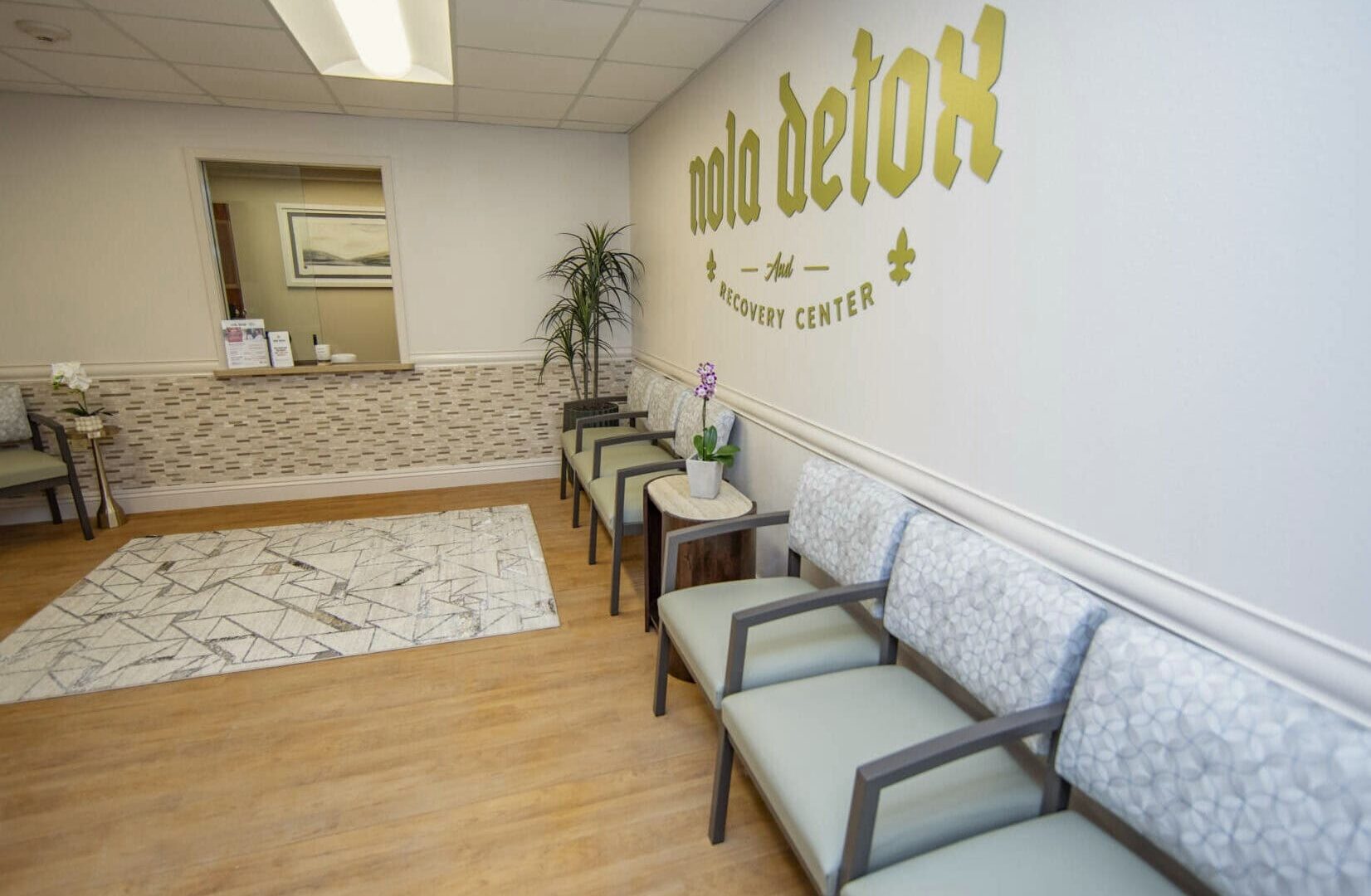

NOLA Detox and Recovery Center 2 photos

Provider overview
NOLA Detox and Recovery Center provides adult addiction treatment across separate New Orleans and Slidell locations. The provider lists a New Orleans residential center, a separate New Orleans outpatient center, and inpatient and outpatient services in Slidell.
Campus-specific care
This profile uses the residential-campus address at 4201 Woodland Drive, New Orleans. Current official pages describe medical detoxification, medication-assisted treatment, inpatient care and outpatient care across the organization; admissions must confirm which campus offers the needed service.
Insurance, duration and continuing care
NOLA Detox’s location page lists commercial insurance and Medicaid for New Orleans, and commercial and VA coverage for Slidell, while also retaining a general statement that both campuses accept Medicaid. Confirm the selected campus and plan before arranging care. Private pay and some scholarships are also advertised. Treatment length is individualized, and no universal program duration or weekly self-pay price is published on the cited pages. Outpatient care and ongoing recovery support may follow inpatient treatment.
Understand the full continuum before choosing a stay
The provider overview connects medical detox, inpatient residential treatment, intensive outpatient care, recovery residences, and aftercare. Its description of support lasting a year or longer refers to that wider continuum. It should not be read as a promise that every patient spends a year in a residential bed or receives an identical sequence of services.
Ask the clinical team to describe the proposed starting point, the criteria for moving to another level, and the services that would continue after discharge. Confirm where each phase happens and who coordinates the transition. The organization lists separate treatment addresses, so references to continuity with one provider should not replace an actual location and appointment plan. Compare the planned clinical work and supervision as well as the surroundings.
Keep the three treatment addresses distinct
The location directory identifies the Woodland Drive residential center, the Behrman Place outpatient center, and the Lindberg Drive inpatient and outpatient services in Slidell. Use the specific location name when discussing a referral, insurance benefits, transport, or a family visit.
The page also advertises transportation assistance from communities including Baton Rouge, Lafayette, Metairie, and Houma. Those are areas served, not evidence of additional NOLA residential campuses. Confirm pickup eligibility, the destination, timing, and return arrangements before relying on transport. A shared telephone number makes access simpler, but the clinical program and financial arrangements still need to be confirmed for the receiving site.
Local culture alongside clinical care
The organization’s history and approach identify Chris Copeland and Dan Forman as founders and describe the influence of their hospitality backgrounds. The provider incorporates New Orleans food, music, and community experiences into its approach to recovery. This gives the program a particular local character, but cultural activities should be considered alongside the actual medical and therapeutic plan.
Ask how those activities fit around appointments and groups, whether participation is optional or adapted to individual needs, and what dietary or accessibility arrangements are possible. A familiar local environment may be relevant to someone planning to remain in the area after treatment, while another person may need a different setting. The decision should reflect their assessment and support needs.
The provider describes professional medical, therapy, and nursing roles as part of its organization. Hospitality features do not establish a particular staff-to-patient ratio, individual appointment frequency, or a guarantee of recovery.
Medical detox and medication planning
The medical-detox program describes a medical evaluation followed by individualized monitoring and withdrawal management. It says patients receive around-the-clock medical supervision and that medication may be incorporated when appropriate. The provider also discusses continuing medication-based addiction care beyond the initial withdrawal phase.
Ask which clinician will manage the proposed medication plan, how existing prescriptions will be reviewed, and how care will continue after the person changes treatment levels. Published medication examples are not a prescription for an individual or evidence that every medicine serves the same purpose. The site says the length of medication-assisted treatment is individualized rather than a fixed number of days.
Detox and a longer-term treatment plan address different parts of care. Confirm the follow-up before the initial phase ends, including the next appointment and prescribing arrangements. A broad program description should not be used to decide independently when to stop medication or to assume that every withdrawal or medical complication can be managed in the same setting.
How the residential phases are described
The inpatient-treatment page organizes care into stabilization, preparation, action, and vision. Stabilization includes rest, withdrawal support when needed, and access to nursing care. Preparation emphasizes education and therapy. The action phase focuses on practicing recovery skills and peer connection, while the vision phase develops an individual post-treatment plan, often involving IOP.
The page describes CBT-informed therapy and medication options as parts of individualized care. It also specifies that substance-use disorder must be the primary diagnosis when treatment addresses associated psychiatric or behavioral concerns. Its wide list of conditions should therefore not be interpreted as unrestricted admission for any primary mental-health or eating-disorder need.
Ask how phase progression is decided and what the patient’s actual daily schedule will contain. The four phase names do not establish four equal time blocks, a fixed stay, or a guaranteed outcome. Clarify the level of medical support and arrangements for needs that require another service.
IOP schedule and prescribing arrangements
The outpatient page describes a three-month IOP with three-hour sessions four days weekly and daytime or evening options. It lists individual counseling, groups, education, coping-skills work, and medically supported treatment. Confirm the current session times and expected course for the selected location; a published program outline is not an individual attendance plan.
The medication FAQ makes a useful distinction: medical providers can discuss options and issue prescriptions when appropriate, but medications are not kept on site at IOP. Ask where prescriptions are filled, how appointments are scheduled, and how communication with an outside prescriber works. Do not assume the outpatient site has the same medication storage or supervision as a residential unit.
IOP allows patients to live at home or in separately arranged accommodation. The assessment should consider support outside sessions and whether this level fits the person’s needs. Continuing care after IOP may involve follow-up visits, support groups, referrals, and family work.
The Slidell setting and program options
The Slidell campus page describes inpatient treatment, medical detox, IOP, veteran-focused care, and links with partner recovery residences. It emphasizes private-pay and commercial-insurance arrangements, with commercial and VA coverage also listed. General insurance statements elsewhere on the site should not replace a campus-specific benefit check.
The page describes a boutique environment with king-sized beds, shared community spaces, yoga, outdoor campfires, and meals developed with Copeland’s Restaurant. Its accommodation FAQ refers to private accommodations, but prospective patients should still confirm the specific room assignment and included services. These details belong to the Slidell description and should not automatically be transferred to Woodland Drive or a partner sober-living house.
The provider describes inpatient duration broadly as several weeks to months, depending on individual needs. Ask for the proposed clinical plan, review dates, financial estimate, and discharge options. A retreat-like environment does not remove the need to assess the appropriate level of care.
Recovery residences are partner housing
The recovery-residence page describes off-campus partner sober-living homes in Uptown New Orleans. These are presented as structured, substance-free housing with house rules, peer accountability, and coordination with outpatient treatment. They are distinct from the Woodland Drive residential treatment center and from an inpatient medical bed.
The provider says residents can participate in individual and group outpatient work, relapse-prevention education, and skills sessions, alongside recovery meetings and community support. Ask which organization operates the proposed house, what clinical services occur elsewhere, and how transport and scheduling are coordinated. A partnership does not mean that every house has the same staffing or admission rules.
Before agreeing to move, request the housing cost, deposit or other charges, medication policy, visitor rules, and arrangements if clinical needs increase or the placement ends. Confirm that accommodation is available and appropriate. A description of a continuum does not itself reserve housing or establish insurance payment for it.
Veteran-focused addiction treatment
The veteran program describes services in New Orleans and Slidell, including trauma-informed care, individual counseling, veteran-focused groups, and connections with longer-term veteran and community resources. It discusses substance use alongside concerns such as PTSD, depression, and anxiety. Those descriptions should be matched to the person’s actual assessment rather than assumed to apply identically to every veteran.
The page gives a typical inpatient range of 30–90 days while emphasizing individual needs. Confirm the proposed duration and review process for the receiving campus. Ask how any existing VA or community treatment will be coordinated and which aspects of care are delivered directly by NOLA.
NOLA says VA benefits may help cover treatment, with eligibility and paperwork requiring review. Veteran status alone does not establish funding, authorization, or acceptance into a specific program. Family education and support can also be discussed, with participation and information sharing arranged around the patient’s preferences and permission.
Who coordinates treatment at each campus
The published team directory lists J. David Hammond, MD, FASAM, as chief medical officer, Geshia Ordoyne, RN, as chief clinical officer, and Erin McBurney, LCSW-BACS, as clinical director. It separately identifies a Slidell executive director, lead counselors for Slidell and Algiers, a Slidell lead nurse, and an IOP coordinator. This helps distinguish organization-wide leadership from campus and program roles.
Ask who will actually provide medical reviews, individual counseling, nursing support, and transition planning in the proposed program. A leadership listing does not guarantee appointments with that named person or a specific number of sessions. Patients moving from residential care to IOP should know who becomes their main contact and how clinical information will transfer.
Families can also clarify the appropriate route for practical questions. Admissions, clinical planning, and billing have different responsibilities, and a clear contact arrangement can prevent important questions from being left unanswered during a change in care.
Admission, transport, and financial assistance
The admissions page describes calling or texting the team, checking insurance, receiving a clinical recommendation, arranging transport where available, and completing intake on arrival. It advertises same-day admission but also states that admissions are by appointment. Confirm acceptance, timing, the receiving address, and the agreed transport plan before traveling.
The page says treatment scholarships are sometimes available and invites uninsured or underinsured people to discuss private-pay options. That is an opportunity to ask about assistance, not a promise of a funded place. Request the applicable eligibility criteria and what any support would cover.
Ask for a written estimate tied to the proposed program, including the expected duration, services, and personal share after insurance. An initial benefit check is useful, but changes in the level or length of care may affect the final amount. Keep residential treatment, outpatient appointments, and any separately arranged housing clear in the financial discussion.
Patient participation and communication
The published patient-rights policy says the document is provided and reviewed during admission. It describes participation in treatment planning, explanations of proposed care and medication, information about expected charges and duration, and a process for raising grievances. It also addresses communication preferences and requests concerning disclosure of personal information.
Ask the team to explain these arrangements in plain language and provide the current policy. Clarify who may receive updates, how to request a treatment-plan review, and whom to contact with a concern. The policy’s discussion of residential communication also allows for individualized restrictions; it should not be read as a guarantee of unrestricted phone access or visits at every stage.
Understanding the rules before admission is part of evaluating fit. Patients can ask about risks, alternatives, preferences for a counselor, and practical support needs without treating a website summary as the complete consent or privacy agreement for their care.
Alumni connection after formal treatment
The alumni program describes opportunities for graduates and families to remain connected through local events. Examples include crawfish boils, campfires, New Orleans Pelicans games, and sober gathering spaces during Mardi Gras. These illustrate the program’s community emphasis; they are not a fixed calendar or a guarantee that every event is currently available.
Ask alumni relations how to hear about events, who can attend, and whether any charges, registration, or transport arrangements apply. Someone returning to another city may also want to discuss what connection is practical from a distance.
Alumni contact is different from ongoing medical treatment or a new clinical admission. Keep scheduled therapy, prescribing, and other follow-up arrangements separate and explicit. Community participation can form part of an individual continuing-care plan, but it should not be assumed to provide around-the-clock clinical monitoring, emergency help, or a guaranteed outcome after discharge.
This guide uses linked official provider information reviewed on October 19, 2026. Confirm campus-specific services, eligibility, accommodation, coverage, and availability directly.
Official sources
Sources checked October 13, 2026.
- Locations, contact and insurance
- Admissions and payment options
- Detox, medication-assisted treatment and levels of care