GateHouse Treatment
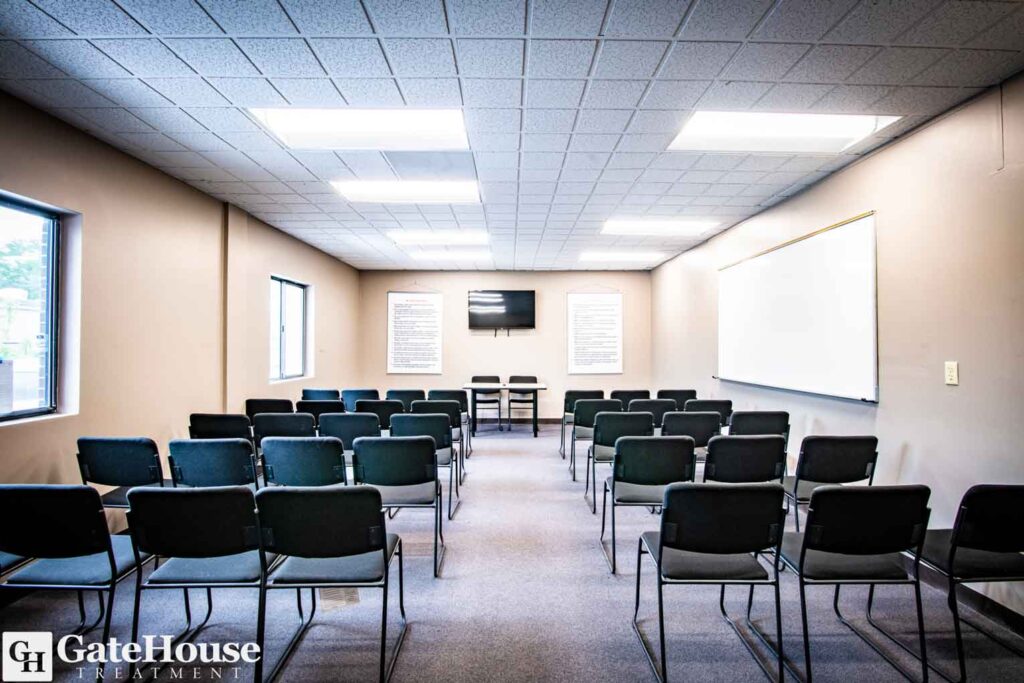


GateHouse Treatment 3 photos
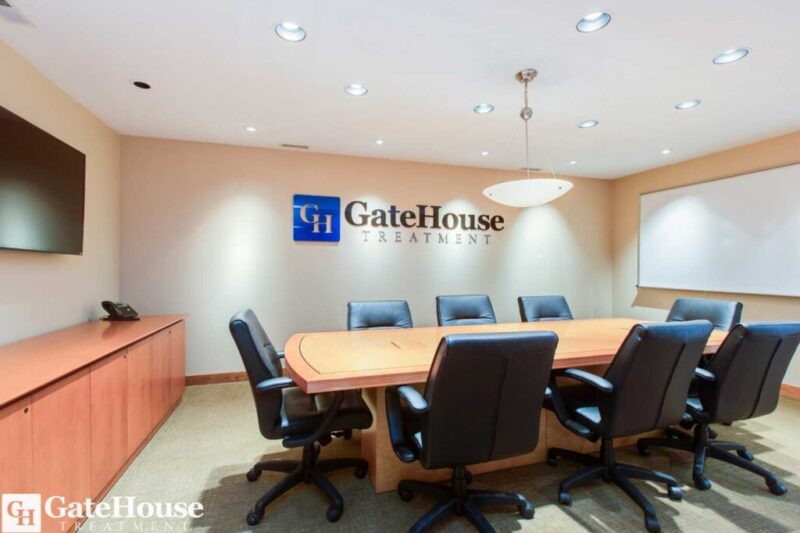

GateHouse Treatment provides addiction and co-occurring mental health treatment in Nashua, New Hampshire. Its current published contact address is 491 Amherst Street, Suite 105, Nashua, NH 03063.
The provider lists partial hospitalization, intensive outpatient and outpatient programs, medication-assisted treatment, family programming, case management and supportive community housing. Its Nashua location page explicitly states that GateHouse does not provide drug or alcohol detoxification or medical emergency services; PHP is positioned after separate medical detox when needed.
GateHouse advertises acceptance of most major insurance plans, including MassHealth/Medicaid, and offers to explore options for uninsured people. Benefits and out-of-pocket costs require verification. Treatment length varies case by case; the provider publishes a PHP schedule of six hours per day, six days per week, but no universal total duration or weekly self-pay fee.
The Nashua service and its clinical limits
GateHouse’s Nashua location page describes PHP, IOP, outpatient care, and connections with sober living. It explicitly states that the location does not provide drug or alcohol detoxification or medical emergency services. That limit is essential when comparing it with a provider that operates an inpatient withdrawal unit.
The relevant question is whether the person is ready for the proposed day or outpatient program and what support is needed outside treatment hours. Someone requiring detoxification may need another service first, with a coordinated transition afterward. Ask who assesses that requirement and which organization would provide the care. GateHouse’s broader treatment menu includes medication and co-occurring mental-health support, but those descriptions should not override the location’s explicit limits. Confirm the correct arrival address and appointment instructions rather than treating the website’s general admissions availability as an emergency service.
How the levels of care connect
The levels-of-care overview describes a progression from more structured treatment toward outpatient participation in ordinary life. GateHouse says the course depends on individual needs rather than a single fixed duration. Its lower-intensity outpatient description includes weekly meetings with a primary therapist and case manager, together with two group sessions per week.
The same page describes employment and recovery-community participation as part of its approach at that stage. Discuss how those expectations would apply to the person’s health, circumstances, and goals, rather than assuming a prescribed sequence fits everyone. Establish what must be achieved before changing levels and which appointments continue after the transition. The overall program should be compared as a proposed course of care, including practical responsibilities and housing where relevant, rather than adding several published stages together and treating the result as a mandatory stay.
PHP attendance and support
GateHouse’s PHP page publishes six hours of treatment per day on six days each week. It describes individual and group work, family involvement, medication oversight, and practical support. The page also describes residences with staff present around the clock and transportation to treatment.
Those housing arrangements need to be distinguished from the hours of clinical programming. Staff presence at a residence does not by itself mean continuous nursing or hospital-level observation. Ask which residence is proposed, who is present overnight, and how urgent medical needs are handled. For the treatment day, obtain the actual group and individual appointment schedule and clarify how medication appointments are incorporated. Family sessions are described as available in several formats; confirm the current arrangements for the people who would participate. PHP suitability and any need for prior detoxification should be settled before enrollment.
IOP and responsibilities outside treatment
The intensive outpatient program combines individual, group, and family work with support for mental-health and substance-use concerns. GateHouse presents IOP as a way to continue structured treatment while spending more time in work, school, or ordinary community life. Its description also discusses medication supervision and the possibility of sober living arrangements.
The program label does not provide a universal weekly calendar. Ask for the proposed number of sessions, their duration, the individual appointment frequency, and whether participation is in person or virtual. Where a residence is involved, establish its separate rules, staffing, transportation, and charges. Where the person lives at home, discuss how the clinical team considers that environment and coordinates support between sessions. Moving into IOP should have a clear rationale and follow-up plan, rather than being understood only as a cheaper or more convenient version of a higher-intensity program.
The separate evening telehealth IOP
GateHouse’s evening IOP page describes a fully virtual program meeting three or five evenings per week for approximately three hours per session. It includes group work, therapy addressing substance use and co-occurring concerns, and case or medication support according to the plan. The page emphasizes suitability for someone able to participate safely from a stable living environment.
This is a different practical arrangement from attending the Nashua center during the day. Confirm which evening track is recommended, the current time zone and calendar, and whether individual or prescribing appointments occur outside the groups. Ask how privacy during sessions and communication between appointments are handled. Remote participation does not supply a staffed residence or a withdrawal unit. The assessment should establish whether the person can use outpatient treatment safely and which local support is required if needs change.
What ordinary outpatient work can address
The outpatient service page describes counseling, medical appointments, and case management that can address practical obstacles to recovery. GateHouse connects this stage with a return to everyday responsibilities and discusses help coordinating needs such as healthcare, finances, or legal matters. Those examples describe areas for support rather than guaranteed resolution of a particular problem.
A useful outpatient plan identifies which clinician remains responsible for treatment and which practical tasks belong to the case manager or an outside professional. Discuss how appointments fit around employment, family commitments, and transportation, and how missed sessions or worsening symptoms are handled. Where several organizations are involved, agree on communication permissions and responsibilities. The outpatient page also contains broader descriptions of more intensive services, so obtain the timetable for the actual program being offered rather than assuming every activity mentioned online belongs to ordinary outpatient care.
Medication options and continuity
GateHouse’s medication-assisted treatment description names options including naltrexone and buprenorphine products. It presents medication within a wider plan that includes counseling and ongoing clinical contact. The appropriate medication, if any, depends on an individual prescribing assessment, and the website’s list should not be used to choose or change a prescription independently.
Someone arriving with an existing prescription should clarify who will manage it, how the prescribing team obtains records, and how the next appointment or administration is arranged. Ask which services occur at GateHouse and which require another clinician, pharmacy, or treatment program. Also discuss the monitoring and follow-up expected when moving from PHP to IOP or outpatient care. Medication availability does not establish on-site medical detoxification, and a program’s recovery philosophy should not be treated as a reason to interrupt established treatment without the responsible clinician’s guidance.
Family education and the weekend program
The family program describes a two-day family weekend covering education, communication, relationships, and the challenges families encounter around substance use. The provider also discusses opportunities to understand treatment and prepare for changes at home. This gives relatives a defined program to ask about, rather than assuming all family contact takes place through updates from the treating clinician.
Clarify who can attend, whether the next weekend is in person, what other family sessions are available, and which services are included financially. Families can use the discussion to plan communication, boundaries, and realistic support after treatment. Participation should respect the patient’s circumstances and appropriate consent, including situations in which a particular relationship is unsafe or unavailable. The educational program should not be interpreted as a diagnosis of relatives, a requirement to forgive harmful behavior, or a guarantee that a family relationship will be repaired.
Case management and practical planning
GateHouse’s case-management service describes work on individual goals and practical needs. Examples include employment preparation, education, budgeting, coordination around legal obligations, and planning for discharge. The provider lists help with resumes, job searches, and connections to educational or vocational opportunities.
These activities can be relevant when a treatment plan needs to work in ordinary life, but their scope should be clear. A case manager can help organize referrals and tasks without replacing an attorney, employer, financial adviser, or educational institution. Agree on a manageable set of goals, which actions the patient will take, and what assistance the program can provide. Before a transition, establish the next appointments, housing arrangement, and outstanding responsibilities. A completion certificate or referral should not be treated as a guarantee of employment, course admission, funding, or a particular legal outcome.
Sober living, transport, and house expectations
The safe-housing page describes several named residences with shared living facilities, kitchens, laundry, internet access, and house expectations. It discusses house meetings, testing for alcohol or drug use, and rules that change with residents’ progress. These are communal recovery residences, not evidence of a private room or an exclusive single-client service.
GateHouse describes transport for treatment and certain other appointments or activities, while stating that residents become responsible for travel to work once employed. Confirm the arrangements for the particular house and stage, including room sharing, visitors, curfews, medication handling, testing, and additional costs. Housing support should be assessed separately from clinical treatment hours. Ask what happens if the residence is no longer suitable or if a resident needs more medical support, and how a move would be coordinated without losing contact with the treating team.
Virtual sessions and the published evening hours
The general telehealth page publishes evening group hours of 6–9 p.m. on weekdays and describes flexibility for individual appointments. It also lists case management and other remote support. This broader weekday window should not be confused with the three- or five-evening attendance plan assigned within the separate evening IOP.
Obtain a written weekly calendar for the actual service, including the applicable time zone, any individual appointments, and the type of professional leading each component. The provider distinguishes some clinician-led groups from other support offerings; not every online activity should be assumed to be a psychotherapy session. Ask what technology, private space, location eligibility, and contingency arrangements are required. A remote appointment can make travel easier, but the treatment team still needs a plan for missed connections, changing symptoms, and any in-person care that becomes necessary.
Alumni contact after the main program
The alumni program describes monthly meetings and special events intended to maintain connections after treatment. GateHouse also discusses involvement from families and opportunities for people who have completed the program to remain part of a recovery community. These activities offer a different form of contact from scheduled clinical appointments.
Before discharge, ask how to join, where the current calendar is published, and whether any activities are available remotely. Establish which clinician will continue counseling or medication management and how the alumni program fits alongside those appointments. A monthly meeting or social event does not establish unlimited therapy, prescribing, or emergency access. If circumstances make returning to a gathering difficult, ask about other appropriate community connections. The transition plan should remain workable even when an alumni event is postponed or a person’s location, employment, or family commitments change.
Checking the financial plan before enrollment
GateHouse’s contact and benefit-verification page offers a route to check insurance and discuss treatment. Its listed funding routes include private plans and certain public coverage arrangements, but those references do not establish that every plan pays for every level of care or residence. The assessment and benefit review need to refer to the same proposed program.
Request the expected personal contribution, authorization requirements, and separate charges for housing, medication, transport, or outside medical appointments where applicable. If funding is uncertain, ask what assistance or alternative referrals can actually be offered without assuming a grant or free place is available. The written agreement should explain what happens when a person changes levels, leaves earlier than anticipated, or receives a different coverage decision. This creates a clearer comparison than a generic insurance logo list or an unexplained weekly price.
Official sources
Nashua facility and detox limitation; Levels of care; Insurance verification; Discharge and aftercare planning; Alumni support. Checked October 13, 2026.